
REVIEW · JEWISH HERITAGE AND GHETTO TOURS
Krakow: Jewish Ghetto Guided Tour
Old stone, heavy stories, and clear walking directions. This guided Jewish Ghetto tour in Krakow focuses on key sites in Podgórze, with a guide to keep you oriented fast and explain what you are seeing.
I like the way it hits the essentials in a tight schedule, plus the small-group feel (up to 20 people) that makes questions easy. I also love the walkable route, where you reach spots that car tours usually miss.
One thing to consider: today’s neighborhood is modern, so the ghetto does not look like the past. The setting can feel different, but the guide’s context helps you “place” what happened.
In This Review
- Key highlights you’ll feel right away
- Krakow’s Jewish Ghetto Tour in Podgórze: what you’re really signing up for
- Your time budget and what makes it good value at $15.60
- Meeting point, end point, and the walking reality
- Stop 1: the Ghetto Wall Fragment, your first hard anchor
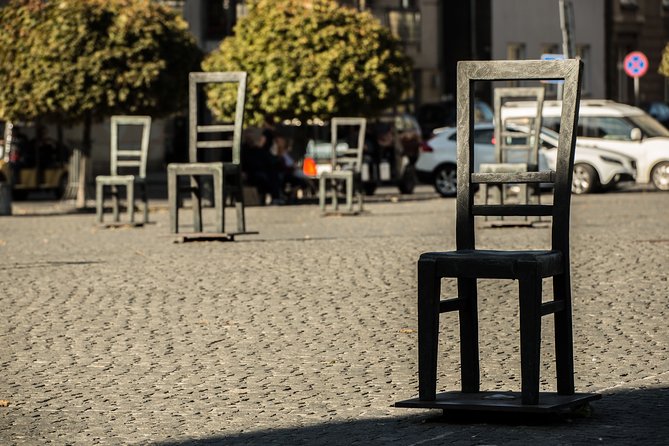
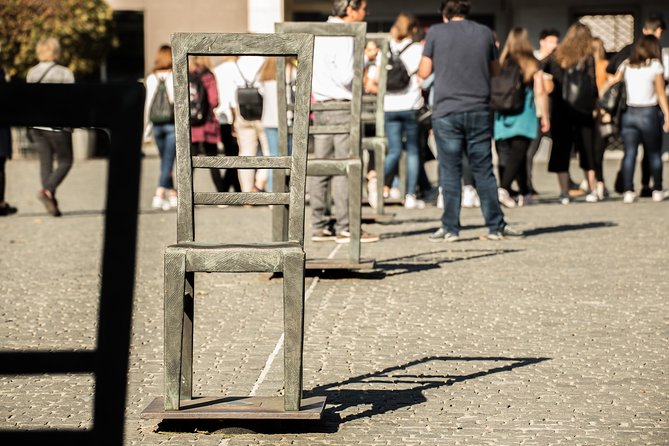
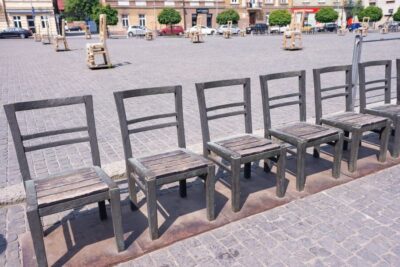
- Stop 2: Ghetto Heroes Square and the Chair Memorial
- Stop 3: Under the Eagle Pharmacy (Eagle Pharmacy Museum)
- How the guide approach affects your experience
- What you should expect in the streets, not in a museum
- Group size, language, and pace: why it matters
- Weather and comfort: rain or shine
- When to book this Krakow ghetto tour
- Who this tour is best for
- A few practical tips so you get more out of every minute
- Should you book this Krakow Jewish Ghetto guided tour?
- FAQ
- How long is the Krakow Jewish Ghetto guided tour?
- Where does the tour start and end?
- Is the tour in English?
- What stops are included on the walking route?
- Is admission included for all sites?
- What should I know about weather and arriving late?
Key highlights you’ll feel right away
- Short and focused timing: About 1 hour, with three meaningful stops.
- Walking route with navigation handled: You are not guessing your way between sites.
- Ghetto Wall Fragment as your first anchor: A physical reminder right at the start.
- Ghetto Heroes Square and the Chair Memorial: A clear memorial tied to deportations.
- Under the Eagle Pharmacy story: Includes the courageous role of Tadeusz Pankiewicz and his staff.
- Practical reviews signal smooth pacing: People repeatedly praised guide pace and clear explanations.
Further Jewish heritage and ghetto routes documented in Krakow
- Krakow: Schindler’s Factory & Ghetto Guided Tour
★ 4.7 · 1,694 reviews - Krakow: Jewish Quarter and Former Ghetto Tour
★ 4.9 · 1,441 reviews - Krakow: Bike Tour of Old Town, Jewish Quarter and the Ghetto
★ 4.9 · 1,155 reviews - Krakow: Kazimierz, Schindler’s Factory & Ghetto Guided Tour
★ 4.8 · 460 reviews
Krakow’s Jewish Ghetto Tour in Podgórze: what you’re really signing up for
If you want Holocaust-era context in Krakow without turning the day into a research project, this tour does that job. It concentrates on a handful of places in the Podgórze area that tell the story step by step: confinement, deportations, and life-saving acts.
The format is simple. You meet at Lipowa 4, 32-051 Kraków, then you walk between stops that you can actually reach on foot. The whole experience runs about 1 hour, and the group size stays small, up to 20 travelers, so it does not feel like a mass procession.
This is also a practical choice if you are mixing major Krakow sights with something more serious. An hour is short enough to fit between a museum visit and dinner, but long enough that the guide can connect the dots.
Your time budget and what makes it good value at $15.60
At $15.60 per person, you are paying for a guided walking route that saves you time and guesswork. In places like this, that matters. Without a guide, it is easy to see memorials and building remnants but miss how each location fits into the larger story.
The value here is the pacing and the “why” behind each stop. Instead of wandering and trying to interpret things alone, you get an organized path: ghetto wall remains, a memorial square tied to deportations, and the Under the Eagle Pharmacy site.
Also, this is offered in English (one language per group). If English works for you, you can show up and focus on the content, not translation logistics.
Meeting point, end point, and the walking reality
You start at Lipowa 4, 32-051 Kraków, Poland. The tour ends at Apteka pod Orłem, Plac Bohaterów Getta 18, 33-332 Kraków, Poland.
That matters because you finish near the pharmacy area, not back at the first stop. If you plan dinner after, build in a little buffer so you do not feel rushed.
The walking itself is the core of the experience. This is not a sit-and-watch lecture. It is a guided walk where each stop is close enough to keep the story moving, and far enough that you experience the neighborhood as you go.
Stop 1: the Ghetto Wall Fragment, your first hard anchor
Your tour begins at a Ghetto Wall Fragment, the remains of the barriers that once separated residents from the rest of Krakow. This is your first “anchor” because it is physical, and it hits before the memorials.
You are looking at something that is literally left behind, and that changes how you process everything that comes next. It is hard to stay abstract when the location is right there in front of you.
The stop is about 20 minutes, and admission is free. That means your time goes mainly to the guide’s framing, not ticket lines or museum logistics.
Practical note: even when stops are short, bring comfortable shoes. Reviews repeatedly point out the importance of foot-friendly footwear, and it is easy to see why once you start walking the route.
Below are the other Krakow trips we have logged
- From Krakow: Auschwitz-Birkenau Guided Tour & Hotel Pickup★ 4.5 · 33,358 reviews
- From Krakow: Auschwitz-Birkenau Guided Tour & Hotel Pickup★ 4.5 · 29,340 reviews
- Krakow: Auschwitz Guided Tour with Optional Hotel Pickup★ 4.5 · 15,280 reviews
- Krakow: Auschwitz-Birkenau Guided Tour with Pickup & Lunch★ 4.5 · 9,800 reviews
- Krakow: Auschwitz-Birkenau Guided Tour Pickup/Lunch Options★ 4.5 · 9,057 reviews
Stop 2: Ghetto Heroes Square and the Chair Memorial
Next comes Ghetto Heroes Square, described as the heart of the ghetto, tied to deportations to extermination camps. This stop is emotional in a way that is hard to explain on paper, but clear in person because the space is designed to communicate loss.
The memorial centerpiece is the Chair Memorial, with each chair representing lives lost. The guide’s job here is to help you understand that it is not just symbolic art. It is meant to slow you down and force recognition.
This stop is also about 20 minutes, with free admission. You get time to stand, look, and absorb, instead of racing through for photos.
One thing I would plan for: the square is surrounded by today’s city life. That can feel strange at first, especially when your brain expects the past to look a certain way. The guide helps you connect the modern surroundings to the historical reality.
Stop 3: Under the Eagle Pharmacy (Eagle Pharmacy Museum)
The final stop crosses the square to Under the Eagle Pharmacy, associated with the story of Tadeusz Pankiewicz and his staff. This is the part of the tour that shifts from brutality to courage.
The focus is on how medicine and help were preserved for people trapped in the ghetto. It is not a “happy ending” stop, but it is one of the most important counterpoints in the itinerary because it shows human action under extreme pressure.
This stop lasts about 20 minutes. Admission to the museum is not included, so if you want to enter, plan for that additional cost on the spot.
From a practical standpoint, I like this structure. You end at a place where the historical story connects to an institutional setting where artifacts and interpretation may be easier to absorb. Even if you choose not to go inside, you still leave with a clear message.
How the guide approach affects your experience
The biggest repeat theme from guide feedback is not just content, it is delivery. People consistently praised the guide’s pace and clarity, and the way answers to questions were handled without making the tone feel rushed.
You may meet different guides depending on the day. The names that come up in feedback include Olga, Anna, and Phil/Phillip. Those guides were described as passionate and engaged, with calm, approachable communication, plus a sensitive tone for difficult material.
One detail that stood out is that some guides use printed images to support what you are seeing. That can be a big help when the modern street layout makes the past harder to visualize.
What you should expect in the streets, not in a museum
This is not a tour where everything looks like old photos. The ghetto setting today is altered, and that is just reality. One reviewer even flagged that you should not expect the ghetto to look exactly as it once did.
That does not make the tour less valuable. It can be more valuable, because you are practicing the real skill of travel history: interpreting places in their current form.
If you come with that mindset, you will get more out of the stops. Watch for how the guide points out specific remnants and explains what used to be there. Your understanding becomes more concrete, because you are not only reading about it, you are observing the space and hearing what it used to mean.
Group size, language, and pace: why it matters
This tour caps at 20 travelers, and that small limit changes the feel. Smaller groups tend to move more smoothly, and you get enough room for questions without the guide feeling like they have to triage.
Language is English only for the group. If you are traveling with mixed language needs, you will want to confirm that English works for your party.
Most importantly for comfort, it is a 1 hour experience. That duration is a sweet spot. Long enough for context at three stops. Short enough that you can still do the rest of Krakow the same day without feeling drained.
Weather and comfort: rain or shine
The tour runs in all weather, rain or shine. That means you should plan for a walk outdoors, even if the forecast looks questionable.
Bring suitable outer layers and footwear you can trust on sidewalks. If it is wet, you do not want to slip while you are trying to look closely at memorial details.
When to book this Krakow ghetto tour
On average, this tour gets booked about 18 days in advance. If you are visiting in a busy season or have a tight itinerary, booking ahead is your best move.
This is especially true for an English tour, since language options are limited to the group that is scheduled. Lock in your time slot early, then build your other Krakow plans around it.
Who this tour is best for
This guided walk is a strong fit if you want:
- A guided, time-efficient way to understand Krakow’s Jewish Ghetto sites in Podgórze
- A route where you are not searching for addresses or figuring out connections between stops
- A respectful overview that includes both memorial sites and stories of help, including Tadeusz Pankiewicz
It is also a good option if you are combining this with other major Krakow activities. For example, if you are also planning something like Schindler-related sights, this tour can serve as a focused companion piece.
If you are someone who needs a very long museum-style experience, you might still do this, but you may want to pair it with additional visits afterward.
A few practical tips so you get more out of every minute
I recommend you treat this like an outdoor briefing first, and a reflection time second.
- Wear comfortable shoes. You will walk and stand for short periods at each stop.
- Arrive about 10 minutes early. Once the group leaves, late arrivals cannot join, and tickets are not refundable.
- If you plan to enter the Under the Eagle Pharmacy museum, expect that admission is not included in the tour price.
Should you book this Krakow Jewish Ghetto guided tour?
Yes, you should book it if you want a focused, well-paced introduction to the Kraków Jewish Ghetto in Podgórze, with a guide to connect the physical sites to what happened there.
It is not trying to cover everything about the era in one hour. Instead, it chooses key places that are easy to understand and hard to forget, then adds the historical context that makes those places matter. Between the Ghetto Wall Fragment, the Chair Memorial, and the story at Under the Eagle Pharmacy, you get a clear arc without spending your whole day in transit or planning.
If you are short on time, this is a smart way to spend it.
FAQ
How long is the Krakow Jewish Ghetto guided tour?
It runs for about 1 hour.
Where does the tour start and end?
You start at Lipowa 4, 32-051 Kraków, Poland. The tour ends at Apteka pod Orłem, Plac Bohaterów Getta 18, 33-332 Kraków, Poland.
Is the tour in English?
Yes. The tour is offered in English (and group tours operate in only one language).
What stops are included on the walking route?
The tour includes the Ghetto Wall Fragment, Ghetto Heroes Square with the Chair Memorial, and Under the Eagle Pharmacy (Eagle Pharmacy Museum of Krakow).
Is admission included for all sites?
Admission is free for the first two stops. Admission for Under the Eagle Pharmacy / the museum is not included.
What should I know about weather and arriving late?
The tour goes ahead in all weather. You should arrive 10 minutes before the start time. If the group has already departed, latecomers cannot join and tickets cannot be refunded.
More Tours in Krakow

More Tour Reviews in Krakow
Jewish Heritage and Ghetto Routes in Krakow


Recently written up around Krakow

More Jewish Heritage and Ghetto Tours.
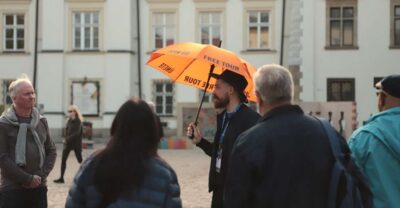
 ★ 4.7Schindler’s Factory & Ghetto Guided TourFrom $571,694 reviews
 ★ 4.9Jewish Quarter and Former Ghetto TourFrom $191,441 reviews
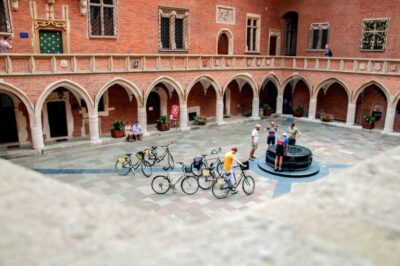 ★ 4.9Bike Tour of Old Town, Jewish Quarter and the GhettoFrom $371,155 reviews
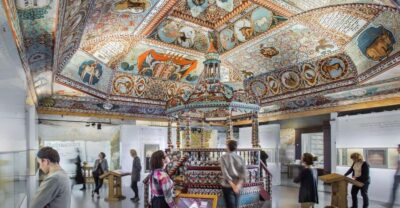 ★ 4.7POLIN Museum of the History of Polish Jews TicketFrom $121,142 reviews
 ★ 4.8Kazimierz, Schindler’s Factory & Ghetto Guided TourFrom $81460 reviews
 ★ 5.0Full Bike Tour – the Old Town, Jewish Qtr & the Ghetto NEW BIKESFrom $35437 reviews
 ★ 4.9Warsaw Ghetto Private Walking Tour with Hotel PickupFrom $84369 reviews
 ★ 4.9Bike Tour of the Old Town, Kazimierz, and the GhettoFrom $26350 reviews
Also on these Poland lists