
REVIEW · JEWISH HERITAGE AND GHETTO TOURS
Krakow: Jewish Ghetto Guided Walking Tour
A short walk with heavy weight. I like how this Kraków Jewish ghetto guided walk makes WWII feel real, not abstract, by pointing out ghetto wall remnants in place. I also appreciate the human-scale stories tied to specific stops, especially at Ghetto Heroes Square and the Under the Eagle Pharmacy.
One watch-out: with a tight 1 hour schedule, you will cover a lot of ground, so if you want long photo pauses or super slow pacing, plan to take a second pass on your own later.
In This Review
- Key moments that make the tour worth your time
- Podgórze in 60 minutes: why this format works
- Start near Schindler’s Factory: the context you need first
- Finding the Ghetto Wall remnants: seeing boundaries in stone and structure
- Ghetto Heroes Square: a memorial built from absence
- Under the Eagle Pharmacy and the story of resistance
- Wartime streets and buildings: how the city shaped the experience
- Price and value: is $15 a smart use of your Kraków time?
- Languages, guide style, and how to get the best experience
- Should you book this Kraków Jewish Ghetto walking tour?
- FAQ
- How long is the Krakow Jewish Ghetto guided walking tour?
- What is the price per person?
- Where do I meet the guide?
- Which languages are available for the live guide?
- What does the tour include?
- Are entrance fees included?
- What are the weather plans for the tour?
- How early should I arrive?
- Is there free cancellation?
Key moments that make the tour worth your time
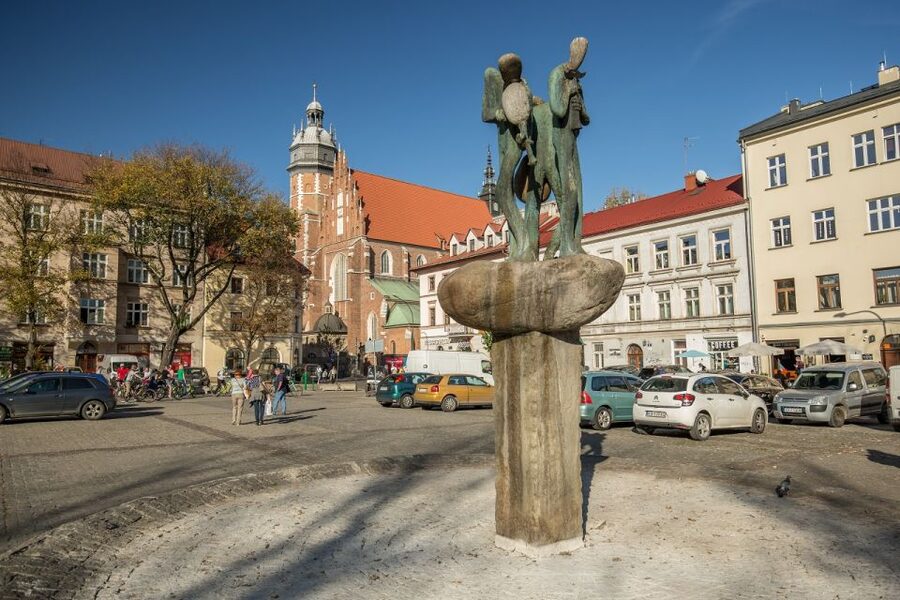
- Remnants of the Ghetto Wall, so the boundaries are visible, not just described
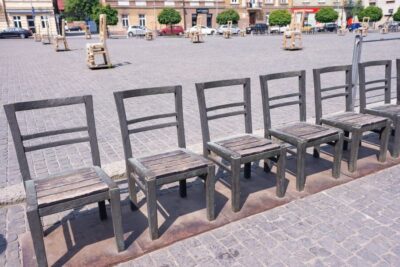
- Ghetto Heroes Square and its memorial with empty metal chairs
- Under the Eagle Pharmacy, where resistance stories connect to real acts of help
- Preserved wartime streets and buildings that you can see as you walk
- A licensed, live guide who keeps the focus on perspective and lived experience
Further Jewish heritage and ghetto routes documented in Krakow
- Krakow: Schindler’s Factory & Ghetto Guided Tour
★ 4.7 · 1,694 reviews - Krakow: Jewish Quarter and Former Ghetto Tour
★ 4.9 · 1,441 reviews - Krakow: Bike Tour of Old Town, Jewish Quarter and the Ghetto
★ 4.9 · 1,155 reviews - Krakow: Kazimierz, Schindler’s Factory & Ghetto Guided Tour
★ 4.8 · 460 reviews
Podgórze in 60 minutes: why this format works
This tour is short by design, and that is part of the value. At 1 hour, you get a guided narrative that ties the stops together, instead of bouncing between landmarks with no connective tissue. You leave with a clearer mental map of how this district changed under Nazi occupation, and why ordinary places became stages of fear, survival, and resistance.
What I like most is the approach: the tour is not just about what happened, it’s about how people experienced it day by day. You’ll hear context that connects industry, forced labor, and everyday survival, which helps you understand the district as more than a list of tragic events. And because it is a walking route, the story lands where it belongs, in the street level reality of Podgórze.
Start near Schindler’s Factory: the context you need first
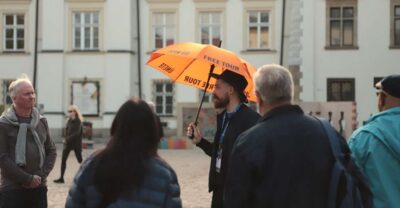
The walk begins at the main entrance to the Schindler’s Factory Museum area, on the right-hand side, where your guide holds an excursions.city sign. That opening matters. Before you get to memorials and wall fragments, you get the historical frame for what the area became during World War II.
Expect your guide to explain how Nazi rule transformed this part of Kraków, including how industry and labor practices were forced into the daily rhythm. The goal is to help you connect what you see later, the boundaries, the square, and the pharmacy, to the larger system people were trapped inside. If you have never visited this part of Kraków before, this first segment is what keeps the rest from feeling like disconnected points on a map.
Tip from how guides are praised in recent feedback: look for a clear speaking pace and be ready with questions early. In particular, I’ve seen solid comments about guides such as Elena for being friendly and easy to follow, and Renata for clarity and availability. Even without names, the pattern is the same: good guiding here turns “walking tour” into real understanding.
Finding the Ghetto Wall remnants: seeing boundaries in stone and structure
After the opening context, the route moves toward surviving fragments of the former Ghetto Wall. This is one of the most powerful parts of the experience because you are not reading about confinement in a book. You are standing near the actual physical reminders of separation.
Your guide will point out what these remnants mean: the wall was not just a boundary line on a document. It was the mechanism that restricted movement and reinforced the reality of being cut off from the rest of the city. Seeing these fragments also gives you something practical for your own thinking. When you look down a street and then back at the wall fragments, you can start to imagine how daily routines would have changed, even on days that did not involve immediate deportations.
Drawback to keep in mind: because wall fragments can be visually subtle, you benefit from listening closely during narration. If you are the type who keeps earbuds in or treats the guide like background noise, this stop will not hit as hard.
Ghetto Heroes Square: a memorial built from absence
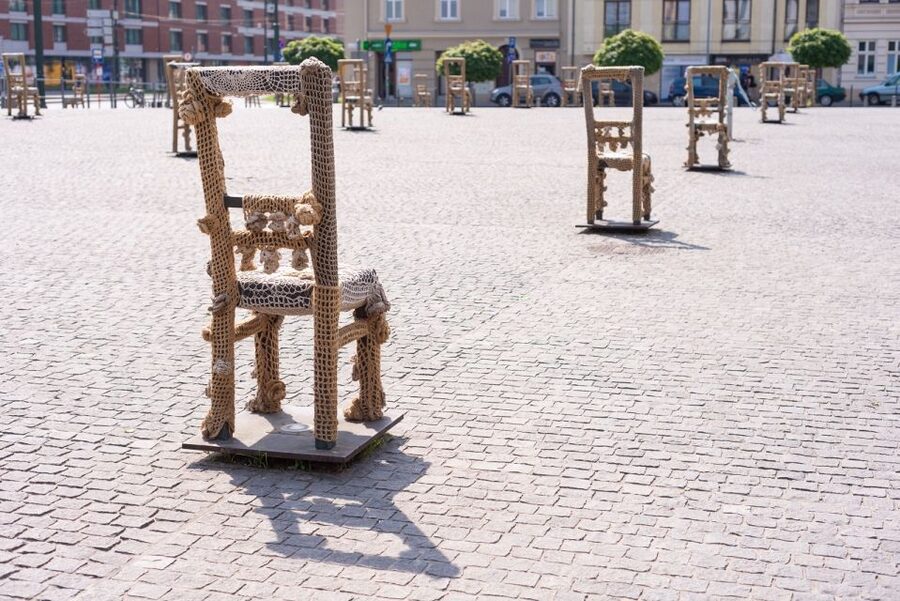
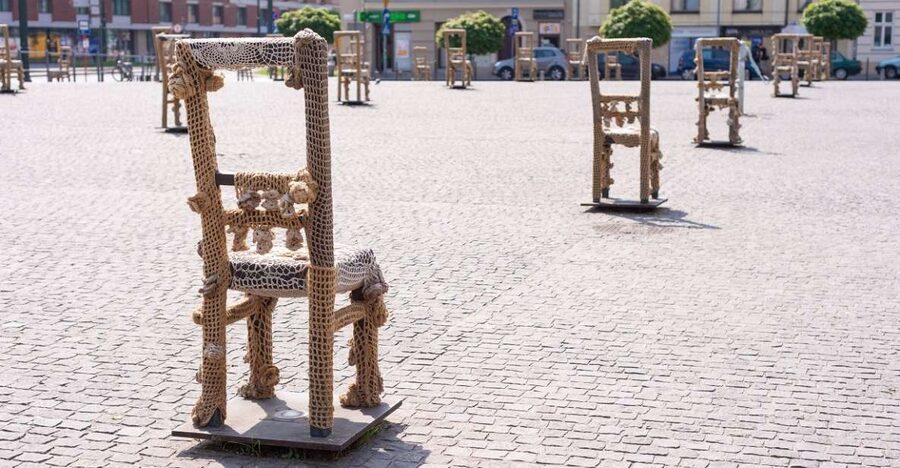
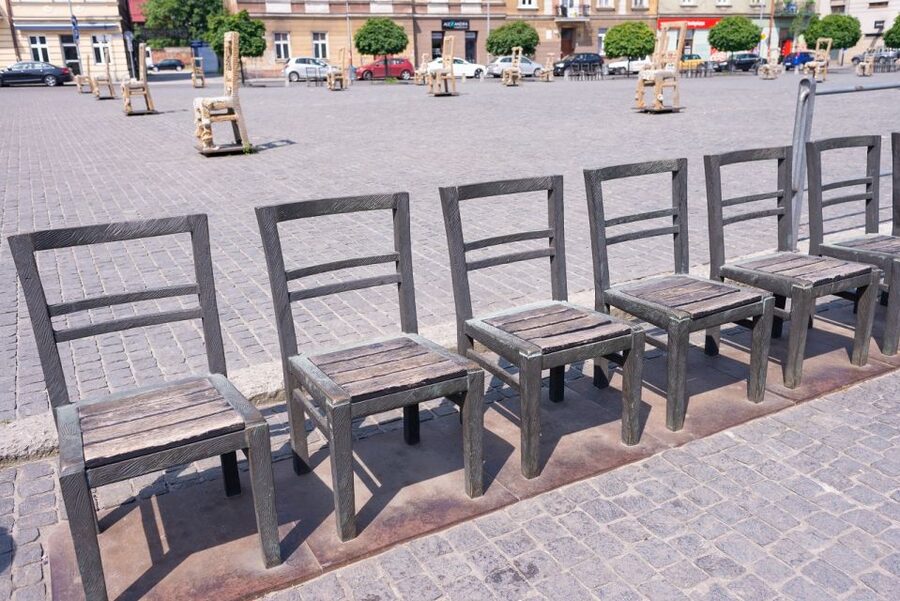
Next comes Ghetto Heroes Square, described as the former center of the Kraków Ghetto and connected with deportations. Today, it functions as a place of remembrance, and the memorial is made of empty metal chairs. Your guide will explain the symbolism and help connect it to the human cost of what took place here.
This stop works well because it shifts the tone from structural details to public memory. At wall remnants, the story is about enforced boundaries. At the square, it becomes about collective loss, and it invites reflection. The chairs are striking because they are quiet, and they force you to picture individual lives without turning them into a checklist of names or dates.
If you are visiting on a day when your legs are a bit tired, do not rush this square. Take a moment to look at the memorial before moving on. Even if you only stand still for a minute, it helps the guide’s narration land. This is also the part where your questions will be most meaningful, since the tour focuses on resistance, survival, and the transformation of everyday spaces under occupation.
Below are the other Krakow trips we have logged
- Old Town Krakow & Wawel Castle Walking Tour★ 5.0 · 1,508 reviews
- Creepy Krakow: 2-Hour City Walking Tour★ 4.7 · 1,131 reviews
- Krakow: The Old Town Walking Tour★ 4.8 · 794 reviews
- Kraków: Old Town & Wawel Castle Walking Tour in English★ 4.8 · 532 reviews
- Krakow: Evening Walking Tour with Spooky Stories★ 4.7 · 500 reviews
Under the Eagle Pharmacy and the story of resistance
Across the square, the tour moves to the historic Under the Eagle Pharmacy. This is not just a building stop, it is a story anchor.
You’ll learn about resistance at the pharmacy, including the role of Tadeusz Pankiewicz and his staff, who provided vital assistance to ghetto residents. In many tours, these kinds of facts can feel like they are delivered from a distance. Here, because the stop is part of a walking route you have already contextualized, the narrative feels grounded in a real location people could reach.
What makes this stop especially valuable is the emphasis on moral choices and compassion, not just danger. Your guide will frame the pharmacy as a place where help became possible, and where courage took practical form. That matters because it gives you a fuller view of survival. The tour does not only show deprivation and confinement. It also highlights how resistance could involve ordinary, human actions in the middle of terrifying circumstances.
Practical note: this is often where people want to take close-up photos. If there are rules in place for the area, follow your guide’s cues and keep moving. Even when you are respectful with photography, the pacing here depends on listening so you get the full story.
Wartime streets and buildings: how the city shaped the experience
A key promise of this walk is exploring preserved wartime streets and buildings. Even without museum-style stops, you will notice how the district’s streetscape carries traces of the past. Your guide will weave those physical observations into the narration, helping you understand how industry, forced labor, and everyday life were interlinked in this district.
This is where I think the tour earns its 1-hour length. In a short time, you learn enough to start building a mental model. You can look at a street and think: this was part of a system, not just a backdrop. You understand why boundaries mattered, why public squares became pressure points, and why places like the pharmacy stood out as sites where people chose to help despite the risk.
It is also a good reminder that history is not only inside buildings. It is in the street grid, the spacing of buildings, and the feeling of being watched or restricted. A guided walk helps you experience those connections in real time.
Price and value: is $15 a smart use of your Kraków time?
At $15 per person for a 1-hour guided walking tour, this is priced like a practical add-on that can slot into a busy day. The value comes from what is included: a professional licensed guide and a focused walk through the former Nazi Jewish Ghetto in Podgórze.
The key trade-off is that you are not paying for extras like entrance fees to attractions. Those are not included, so if you plan to go inside any sites on your own later, budget separately. Still, for many visitors, the guided narrative plus multiple high-impact stops is the best use of time. It is especially good if you want context on your first visit to this part of Kraków, rather than piecing things together later.
Who will like this most?
- First-time visitors to Kraków who want meaningful context without a long day
- Travelers who prefer a guided route that connects multiple sites into one story
- People who value perspective on daily life, survival, and resistance
Who might hesitate?
- Travelers who want a lighter, casual sightseeing vibe, because the subject matter is heavy
- People who dislike walking and prefer longer, slower visits with more time per stop
Languages, guide style, and how to get the best experience
The tour runs with live guides in German, Italian, French, Spanish, and English. That matters because it lets you get the narration in your own working language, which is huge when the subject involves nuanced human choices.
From recent feedback patterns, the strongest tours here are the ones that keep a followable pace and answer questions. One comment highlighted that a host spoke at a speed visitors could follow and took time to address questions. Another praised Elena for friendliness and for making it easier to truly understand what the ghetto was like, not just see it as another neighborhood.
So here is my practical advice: arrive a little early and settle before the group starts moving. If you are unsure what the guide’s first explanation will cover, you will miss the beginning, and that beginning is what makes later stops click.
Should you book this Kraków Jewish Ghetto walking tour?
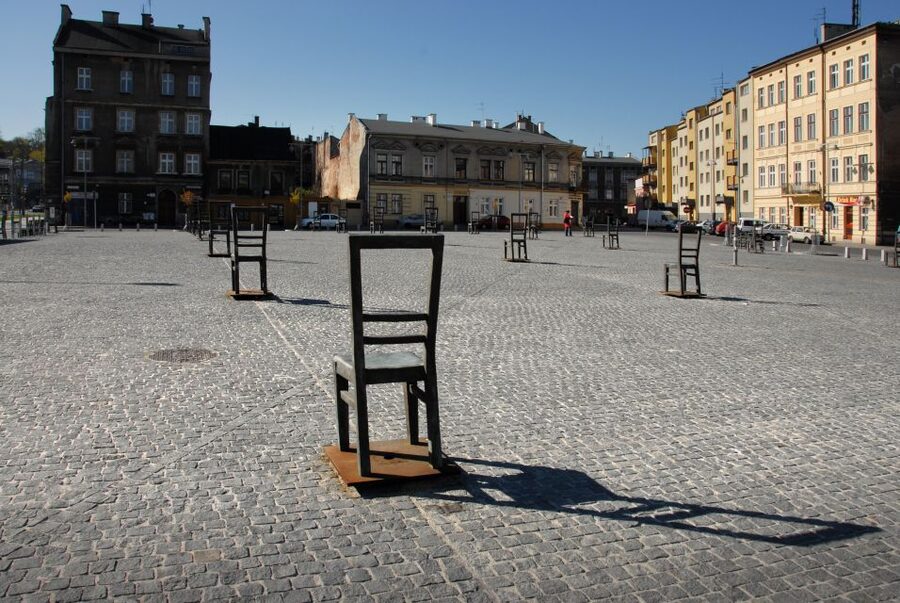
I recommend booking if you want a focused, guided way to understand Kraków’s WWII Jewish ghetto in Podgórze without turning it into a checkbox. The combination of ghetto wall remnants, Ghetto Heroes Square with its empty chairs memorial, and the Under the Eagle Pharmacy story gives you a full arc in just an hour: boundaries, public loss, and the courage of resistance.
Skip it or consider a different option if you want lots of free time to browse and linger. The tour is designed to move with purpose, so you get clarity fast, not slow contemplation.
If your goal is to come away with a more personal, grounded understanding of how everyday places became sites of fear, survival, and moral courage, this one is a strong fit.
FAQ
How long is the Krakow Jewish Ghetto guided walking tour?
It lasts 1 hour.
What is the price per person?
The price is $15 per person.
Where do I meet the guide?
Meet in front of the main entrance to the Schindler’s Factory Museum, on the right-hand side. The guide holds an excursions.city sign.
Which languages are available for the live guide?
The tour is offered in German, Italian, French, Spanish, and English.
What does the tour include?
It includes a professional licensed guide and a walking tour through the former Nazi Jewish Ghetto in Podgórze.
Are entrance fees included?
No, entrance fees to any attractions are not included.
What are the weather plans for the tour?
The tour takes place as planned in all weather conditions.
How early should I arrive?
Please arrive 10 minutes before the tour begins, since latecomers will not be able to join and tickets cannot be refunded after the group departs.
Is there free cancellation?
Yes, you can cancel up to 24 hours in advance for a full refund.
More Tours in Krakow

More Tour Reviews in Krakow
Jewish Heritage and Ghetto Routes in Krakow

Recently written up around Krakow

More Jewish Heritage and Ghetto Tours.
 ★ 4.7Schindler’s Factory & Ghetto Guided TourFrom $571,694 reviews
 ★ 4.9Jewish Quarter and Former Ghetto TourFrom $191,441 reviews
 ★ 4.9Bike Tour of Old Town, Jewish Quarter and the GhettoFrom $371,155 reviews
 ★ 4.7POLIN Museum of the History of Polish Jews TicketFrom $121,142 reviews
 ★ 4.8Kazimierz, Schindler’s Factory & Ghetto Guided TourFrom $81460 reviews
 ★ 5.0Full Bike Tour – the Old Town, Jewish Qtr & the Ghetto NEW BIKESFrom $35437 reviews
 ★ 4.9Warsaw Ghetto Private Walking Tour with Hotel PickupFrom $84369 reviews
 ★ 4.9Bike Tour of the Old Town, Kazimierz, and the GhettoFrom $26350 reviews
Also on these Poland lists