
REVIEW · JEWISH HERITAGE AND GHETTO TOURS
Krakow: Plaszow Concentration Camp Guided Walking Tour
Płaszów hits hard. This guided walk connects Ghetto Heroes Square to the on-the-ground reality of Plaszów, then threads in Oskar Schindler’s life-saving effort. Two things I really like are the guide’s on-site way of explaining how the camp worked, and the focus on specific places you can still stand in front of today, including the memorial areas tied to Jewish cemeteries.
One thing to plan for: this is heavy material, and it’s a walking tour on uneven ground, so comfortable shoes and a steady pace matter more than you might expect.
In This Review
- Key highlights you should know before you go
- Ghetto Heroes Square, where the machinery of control began
- Plaszów concentration camp on the ground, not in a textbook
- The specific places you’ll walk past, and why they matter
- How guides make sense of what is missing
- The Schindler thread, why it belongs in the camp story
- Price and value: what you’re paying for
- Logistics you can actually use on the day
- Who should book this Plaszów walking tour
- Should you book it or skip it?
- FAQ
- What language is the tour offered in?
- How long is the Kraków Plaszów concentration camp guided walking tour?
- Where does the tour start?
- Where does the tour end?
- Is there an entrance fee included for the stops?
- Do I need a printed ticket?
- How big are the groups?
- What fitness level do I need?
- What time should I arrive before the tour starts?
- What is the cancellation policy?
Key highlights you should know before you go
- Ghetto Heroes Square as a starting point: a real logistics hub of control and transport in the ghetto era, renamed after the war.
- Plaszów’s story told through surviving traces: stops include the Grey House, roll-call square, and remnants tied to the Jewish cemeteries.
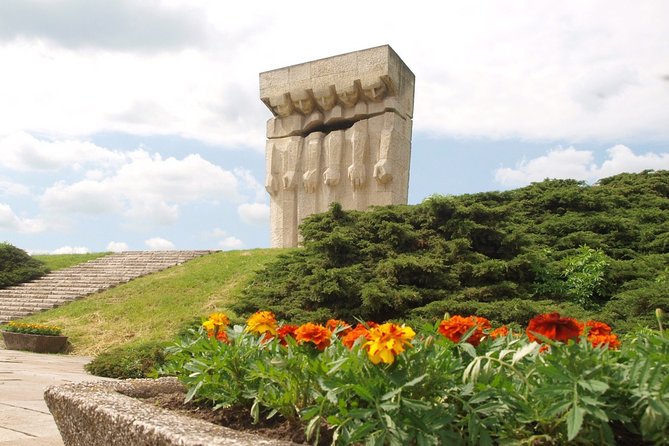
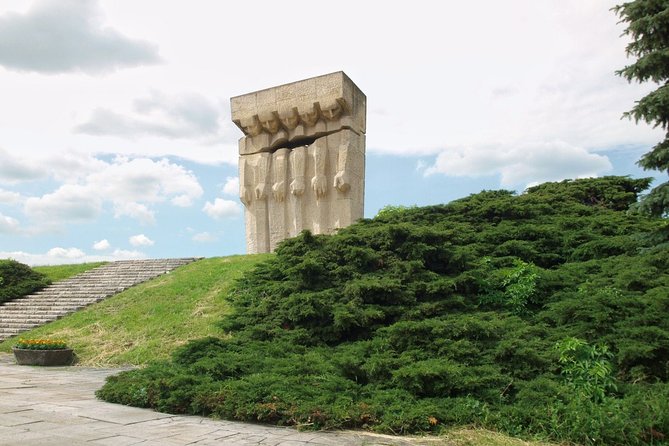
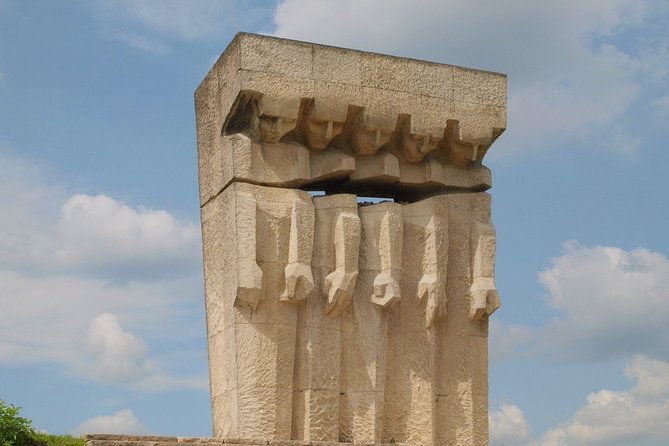
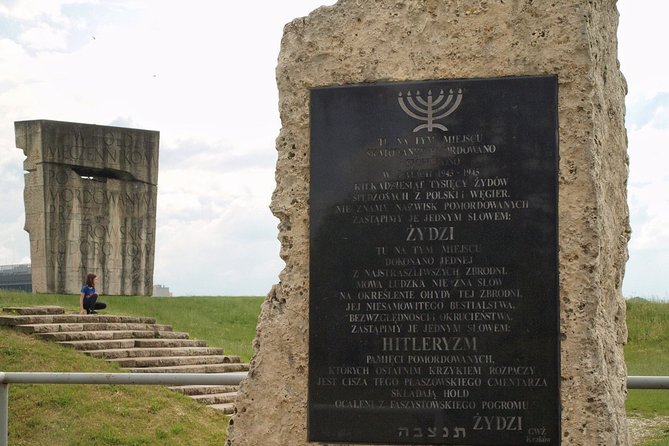
- Memorials you can’t ignore: reflection at the Monument of Torn-Out Hearts is part of the walk.
- Camp layout explained, not just named: you learn how living, hospital, administrative, and industrial areas were organized.
- Schindler’s connection is practical and human: work permits via the Plaszów registry and later transfers that saved over a thousand people.
Further Jewish heritage and ghetto routes documented in Krakow
- Krakow: Schindler’s Factory & Ghetto Guided Tour
★ 4.7 · 1,694 reviews - Krakow: Jewish Quarter and Former Ghetto Tour
★ 4.9 · 1,441 reviews - Krakow: Bike Tour of Old Town, Jewish Quarter and the Ghetto
★ 4.9 · 1,155 reviews - Krakow: Kazimierz, Schindler’s Factory & Ghetto Guided Tour
★ 4.8 · 460 reviews
Ghetto Heroes Square, where the machinery of control began
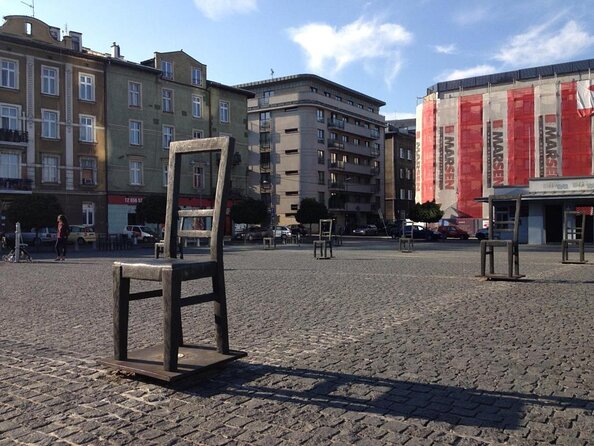
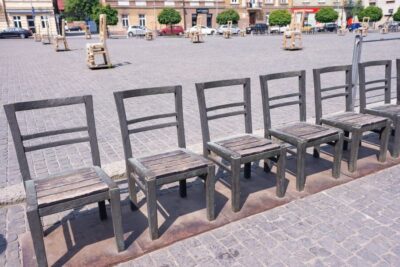
Your tour starts at Plac Bohaterów Getta, in the area marked by Apteka pod Orłem (Plac Bohaterów Getta 18). This spot is the Square of Ghettos Heroes, known back then as Plac Zgody. It’s not just a memorial plaza. It was the logistical heart of the Kraków ghetto, where control, registry, and departures for transports were run.
What I like about beginning here is how it sets your brain in the right gear. It helps you see the camp story as something created and operated by systems, not just an idea. Even before you reach Plaszów, you’re primed to notice how people were processed, counted, and moved.
This stop is short, about 15 minutes. That’s smart. You get the historical frame without turning the whole experience into one long lecture at street level.
Plaszów concentration camp on the ground, not in a textbook
Plaszów Concentration Camp was created by Nazi German occupiers in October 1942 on the grounds of two Jewish cemeteries in Kraków. It began as a forced-labor camp for Jews from the liquidated Kraków ghetto. Later it also held Poles in a penal-labor section, and by 1944 it functioned as a transit camp for Hungarian Jews being sent onward to Auschwitz.
On the walk, you’ll cover how the camp changed over time, including the redesignation in January 1944. You’ll also hear the hard numbers tied to imprisonment and murder, plus the fact that executions took place at several sites inside the camp. The effect is sobering because the tour doesn’t treat death as a distant statistic. It treats it as something that shaped daily movement through the site.
Plaszów is large, and only parts are still visible. That can be frustrating if you expect perfect ruins. But that’s also why the guide’s job matters. A good guide helps you read what survives, and understand what’s missing.
Expect to spend about an hour at this core camp area. The pace is usually steady, with moments to pause at memorial points.
The specific places you’ll walk past, and why they matter
The camp portion is where the tour gets most concrete. The guide pieces together the story using the physical traces that remain. You’ll learn what each location meant, even when the ground today looks quiet.
Key stops typically include the Grey House, the ruins of the pre-burial hall, and traces of the Jewish cemeteries. You’ll also hear about the roll-call square, a place tied to control and forced routine. Another detail you may find especially hard to process is how fragments of gravestones were once used to pave roads. It’s one of those reminders that desecration was built into everyday infrastructure.
The tour also explains how the camp was organized into sections that functioned like mini-worlds: living, hospital, administrative, and industrial areas. That doesn’t mean the camp was orderly in a moral sense. It means it was structured for operation. Understanding that structure is, honestly, part of what makes the story harder to forget.
There’s also reflection at major memorials, including the Monument of Torn-Out Hearts. This isn’t wordplay. It’s a formal memorial element built into the site experience, and the guide uses it to slow down and connect the walking with remembrance.
If you’ve seen Schindler’s List, this is the section where the connections start clicking into place. One practical tip: don’t treat film scenes like a map. Let the guide explain how the story was grounded in real locations and real mechanisms.
How guides make sense of what is missing
Plaszów today is not a theme park set, and it’s not a fully intact ruin. The meaning comes from how the tour reconstructs the camp’s layout using visible survivors plus context for what no longer stands.
That’s where the reviews really point the same direction: the best guides use photos from when the camp existed, alongside what you can see on-site now. In Kraków, you’ll also sometimes be moved by tram between key points, which helps you cover distance without turning the walk into just “walking from A to B.”
Guides like Bartholomew, Barbara, and Phil get praise for being clear, patient, and intensely specific about where you are and what you’re looking at. If you’re the type who likes to ask questions, this kind of guide usually gives you room to do that without rushing you.
Here’s a good mindset for this part. Think of the tour like a guide for your eyes. You’ll still be looking at open space and partial remnants, but the guide helps you understand what those shapes and locations represented in the camp’s functioning.
Below are the other Krakow trips we have logged
- Old Town Krakow & Wawel Castle Walking Tour★ 5.0 · 1,508 reviews
- Creepy Krakow: 2-Hour City Walking Tour★ 4.7 · 1,131 reviews
- Krakow: The Old Town Walking Tour★ 4.8 · 794 reviews
- Kraków: Old Town & Wawel Castle Walking Tour in English★ 4.8 · 532 reviews
- Krakow: Evening Walking Tour with Spooky Stories★ 4.7 · 500 reviews
The Schindler thread, why it belongs in the camp story
Oskar Schindler is not an add-on here. His story is presented as inseparable from Plaszów’s history. Through his enamelware enterprise, he sought work permits for Jewish prisoners registered through Plaszów. That meant navigating the camp registry system in a way that could shield people from further transports.
Later, Schindler organized transfers to his wartime plant in Brunnlitz. That part is often described as saving over a thousand lives, and the tour frames it as real life choices made inside a brutal system.
What I like about the way Schindler is included is that it turns the story from names and dates into decisions with consequences. You start understanding how bureaucracy and paperwork could become a tool for survival, not just oppression.
If you already know the broad Schindler’s List narrative, this tour is still worth doing because you’ll connect the story to the places where the registration and transport chain mattered.
Price and value: what you’re paying for
The price is $30.04 per person for about a 2-hour guided experience in English. The sites listed for each stop show admission ticket free, which matters because it keeps the cost focused on the guide and the walking interpretation.
For this kind of subject, value usually comes down to two things: clarity and pacing. You want a guide who can explain camp organization without turning it into dry facts, and you want enough time at the key points to register what you’re seeing.
The small group size helps. There’s a maximum of 25 travelers, and that size usually means you can hear the guide and ask questions without feeling lost in a crowd. You also get a mobile ticket, which is convenient in a city where you’ll likely juggle transit, maps, and schedule.
Booking wise, it’s common to reserve around 39 days in advance on average. That’s not a guarantee, but it’s a signal. If you’re traveling in busy months or on a tight schedule, I’d book ahead so you’re not hunting for an opening.
Logistics you can actually use on the day
This tour uses a start point at Apteka pod Orłem, Plac Bohaterów Getta 18, and it ends at Henryka Kamieńskiego 57. The end location is near a bus stop, which is helpful if you plan to keep moving afterward.
You should arrive about 10 minutes early. Once the group departs, latecomers can’t join, and tickets can’t be refunded. For a tour like this, arriving late can also mean missing the initial context that makes the camp stops easier to understand.
The tour is in English only, and it’s a single-language group. You’ll get confirmation at booking time, and it’s close to public transportation.
Physical fitness is listed as moderate. This is a walking-focused experience, so I’d plan for uneven ground and a steady pace. If your legs get tired quickly, treat this as a real walking day, not just a short stroll through a historical area.
Who should book this Plaszów walking tour
This tour fits best if you want a guided walk that helps you connect multiple pieces: ghetto departure logistics, the camp’s evolving function, the physical layout, and Schindler’s role in saving lives.
You’ll probably enjoy it if:
- You’ve seen Schindler’s List and want the real location context.
- You like learning by standing in place, not just reading plaques.
- You value a guide who can explain camp organization in plain language.
It might feel less suited if:
- You’re looking for light, relaxed sightseeing. This is hard subject matter.
- You prefer self-paced visits with no structured narrative.
- You have trouble with moderate walking over an extended site area.
Should you book it or skip it?
I’d book this tour if you care about understanding Plaszów through the places where its systems operated. The format works, because it doesn’t just list sites, it explains what those sites meant, including the Grey House, the roll-call area, and the memorial stop at the Monument of Torn-Out Hearts. Plus, the Schindler thread is handled in a way that connects paperwork and transport to survival, not as a separate story sitting beside the camp.
I’d consider skipping if you want something purely visual and casual, or if walking for a couple hours is hard for you. You can still see the area on your own, but you would likely miss the structure that makes the ground make sense.
FAQ
What language is the tour offered in?
The tour is offered in English.
How long is the Kraków Plaszów concentration camp guided walking tour?
It runs for about 2 hours.
Where does the tour start?
The tour starts at Apteka pod Orłem, Plac Bohaterów Getta 18, Kraków.
Where does the tour end?
The tour ends at Henryka Kamieńskiego 57, Kraków.
Is there an entrance fee included for the stops?
Admission tickets for the listed stops are free.
Do I need a printed ticket?
No, the tour uses a mobile ticket.
How big are the groups?
The group size has a maximum of 25 travelers.
What fitness level do I need?
A moderate physical fitness level is recommended.
What time should I arrive before the tour starts?
Arrive about 10 minutes early. If the group departs, latecomers cannot join and tickets cannot be refunded.
What is the cancellation policy?
Free cancellation is available. You can cancel up to 24 hours in advance for a full refund.
More Tours in Krakow

More Tour Reviews in Krakow
Jewish Heritage and Ghetto Routes in Krakow

Recently written up around Krakow

More Jewish Heritage and Ghetto Tours.
 ★ 4.7Schindler’s Factory & Ghetto Guided TourFrom $571,694 reviews
 ★ 4.9Jewish Quarter and Former Ghetto TourFrom $191,441 reviews
 ★ 4.9Bike Tour of Old Town, Jewish Quarter and the GhettoFrom $371,155 reviews
 ★ 4.7POLIN Museum of the History of Polish Jews TicketFrom $121,142 reviews
 ★ 4.8Kazimierz, Schindler’s Factory & Ghetto Guided TourFrom $81460 reviews
 ★ 5.0Full Bike Tour – the Old Town, Jewish Qtr & the Ghetto NEW BIKESFrom $35437 reviews
 ★ 4.9Warsaw Ghetto Private Walking Tour with Hotel PickupFrom $84369 reviews
 ★ 4.9Bike Tour of the Old Town, Kazimierz, and the GhettoFrom $26350 reviews
Also on these Poland lists