
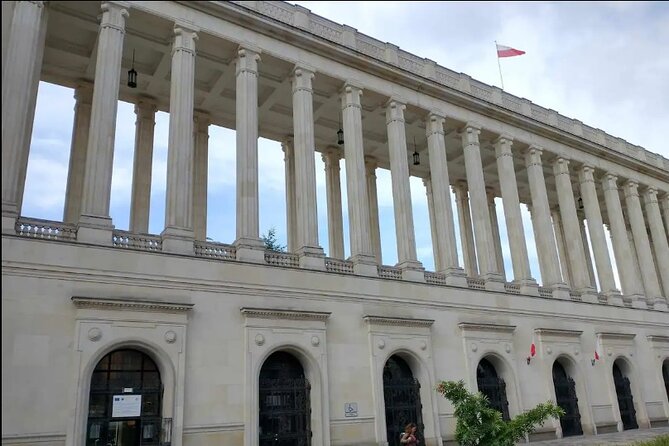
REVIEW · WARSAW CITY TOURS
Life Behind the Iron Curtain Warsaw Walking Tour
Cold War Warsaw gets personal fast. This walk connects socialist realism to daily life, with stops that explain how the system worked, and how people made it survivable.
I like the tone here: guides like Olivia and Agnieszka bring witty, family-level storytelling alongside clear facts. I also like the route logic, you cover the city’s main power display spaces on foot, then end near where you can keep exploring.
One drawback to plan for: it is still a walking tour (about 3 km), and it is not recommended if long distances are hard for you.
In This Review
- Key things that make this tour worth your time
- Constitution Square, the designed “center” that reveals the plan
- Marszałkowska Street: the boulevard built for control
- Memoriał Wolnego Słowa and the subject everyone tried to hide
- Socialist realism stops that you can read like a sign
- Centrum Bankowo Finansowe and Cedet: the comedy and the constraint
- Central Warsaw movement: Central Station and the sense of being directed
- Palace of Culture and Science: the symbol you will keep seeing
- End point at Emilii Plater 54: what to do after the walk
- Price, time, and the value of a 2.5-hour route
- What to know before you go, so the tour fits your day
- Should you book this Warsaw Iron Curtain walking tour?
Key things that make this tour worth your time
- Constitution Square sets the scene, including the planned new center that never became what the state wanted
- Marszałkowska Street shows how the regime used a wide boulevard for parades and marches
- Memoriał Wolnego Słowa turns history into a conversation about censorship and espionage
- Socialist realism details are discussed with the practical question, did people actually like this style
- Cedet and the empty-store reality help explain why shortages and propaganda went together
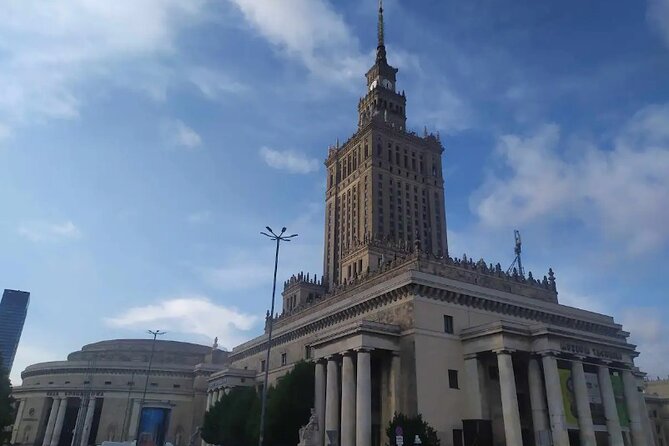
- The Palace of Culture and Science gets read as a symbol, not just a landmark
Warsaw rebuilt itself twice over. Here is how else we saw it
- Warsaw: Chopin Concert in the Old Town
★ 4.8 · 2,287 reviews - Warsaw: Traditional Galar Cruise on The Vistula River
★ 4.6 · 1,640 reviews - Warsaw: Old Town Highlights Walking Tour in English
★ 4.7 · 1,516 reviews - Warsaw Concert: Chopin – Painted by Candlelights with Wine
★ 4.8 · 1,442 reviews
Constitution Square, the designed “center” that reveals the plan
You start at Konstytucji Square, and the first big lesson lands quickly: communist Warsaw was not just politics, it was architecture with an agenda. You’ll hear how certain spaces were imagined as the new heart of the city, and how that vision shaped what people saw every day.
Then the guide shifts from buildings to behavior. You learn that power did not only enforce laws, it choreographed movement through space, so daily routines felt watched even when you were just walking home.
If you are the kind of person who likes understanding why a city looks the way it does, this start works. You are not memorizing facts, you are learning how the regime tried to script life.
Marszałkowska Street: the boulevard built for control
Next comes Marszałkowska Street, the wide, parade-ready stretch that was made for public displays. This is where the Cold War mindset becomes physical. When a government wants to impress, it does it with scale, symmetry, and mass events you cannot ignore.
This stop matters because the tour does not treat history like a film you watch from a distance. You get the idea of how marches and parades reinforced hierarchy, and how the same street could feel both ordinary and threatening depending on the day.
A practical tip: this is an easy segment to photograph, but try not to lock into picture-taking mode. Let the guide talk through the “why,” because that is where the street turns from scenery into evidence.
Memoriał Wolnego Słowa and the subject everyone tried to hide
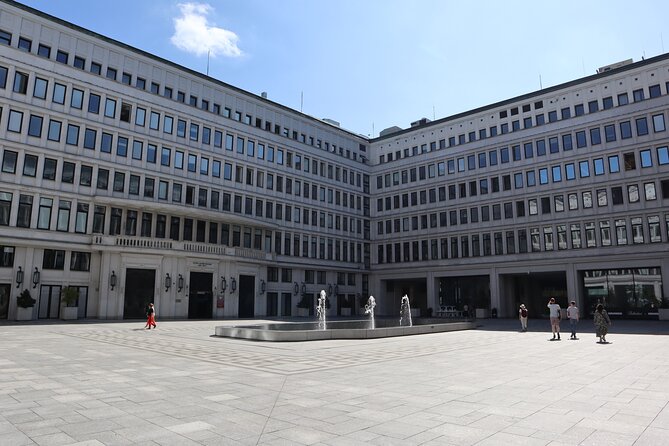
At Memoriał Wolnego Słowa, the tone becomes more pointed. You’ll talk about censorship and espionage, and how the regime managed information flow so tightly that even words could be risky.
This is also where you’ll hear the most human angle in the whole route. The tour frames repression as a lived experience: fear, self-censorship, and the constant sense that someone might be listening.
I appreciate that the guide pushes beyond slogans. You see how control worked through systems people had to navigate, not just through dramatic acts.
Socialist realism stops that you can read like a sign
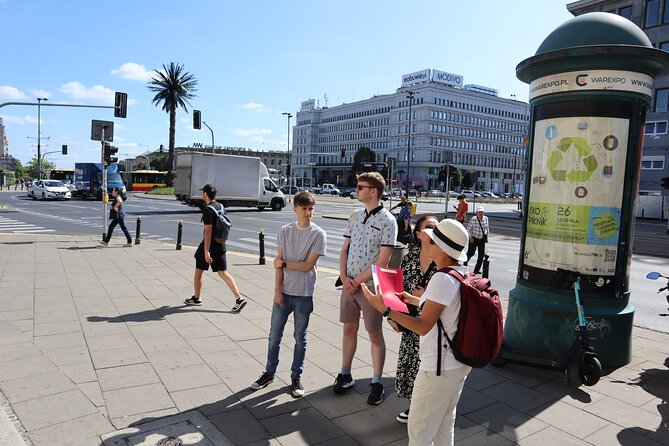
One of the highlights is getting a hands-on look at socialist realism. The guide will show examples of the style and walk you through the argument behind it: it was supposed to look official, optimistic, and unshakeable.
Here is the useful part for your trip. The tour does not ask you to like it. It asks you to notice what the design was trying to communicate, and why many Poles had a more complicated reaction than the posters suggested.
You’ll likely find yourself looking at details more than before. That is the whole payoff of this kind of tour. It trains your eyes to see political messaging in ordinary urban surfaces.
Below are the other Warsaw trips we have logged
- Warsaw: Old Town Guided Walking Tour★ 4.9 · 599 reviews
- Half-Day Polish Food Walking Tour with Guide and Dinner★ 4.5 · 381 reviews
- Warsaw: Warsaw Ghetto Private Walking Tour with Hotel Pickup★ 4.9 · 369 reviews
- Old Town Warsaw Walking Tour★ 4.5 · 333 reviews
- Warsaw: Jewish History Guided Walking Tour in English★ 4.7 · 324 reviews
Centrum Bankowo Finansowe and Cedet: the comedy and the constraint
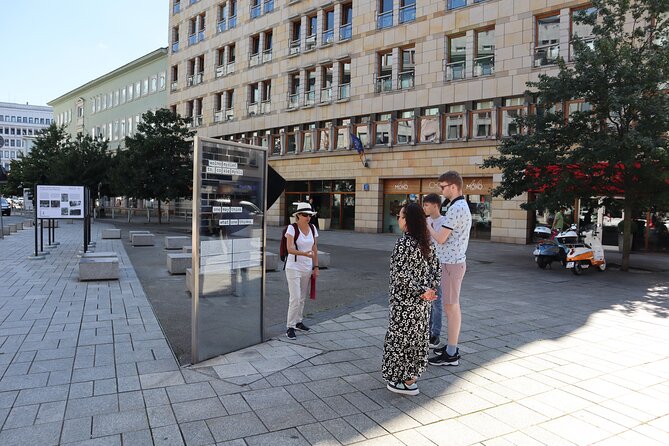
As you continue, you reach areas around Centrum Bankowo Finansowe and the Central Department Store Cedet. These stops help answer a very real question about communist life: how could a system promise abundance while stores looked empty?
The tour talks about the absurdity on the street level, including the social ritual of shop interactions that became a punchline. You learn why people heard what can I get you? as a joke rather than an offer, because the state controlled both the supply and the expectations.
This section is especially valuable if you like history that explains everyday friction. You will not just get the “shortage” idea. You’ll get how people adapted, joked, and improvised just to keep daily life functioning.
One note: the humor is part of the point, but it is not light in a careless way. The guide uses wit to make the mechanisms easier to understand, not to sugarcoat the cost.
Central Warsaw movement: Central Station and the sense of being directed
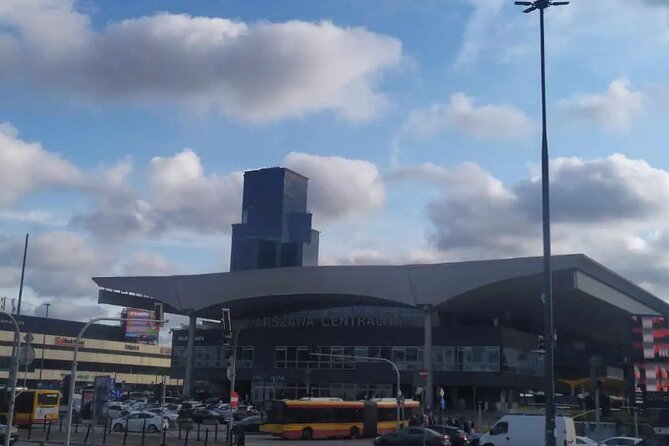
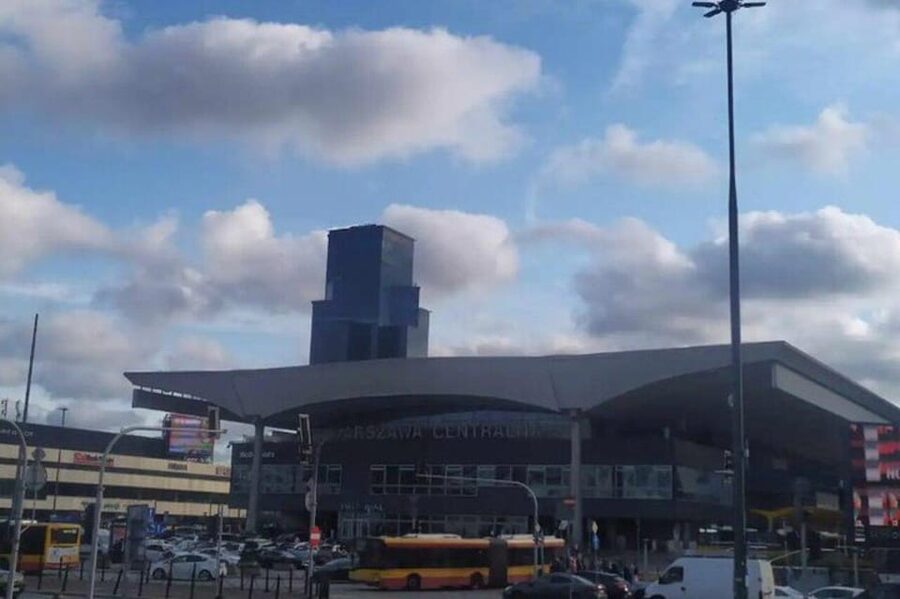
Then you pass Dworzec Centralny Warszawa, a major transport point that acts as a reminder that the regime still depended on movement. When governments control information and travel, they also control where people can go, and when.
Even though you are walking past a modern transit hub, the guide connects it back to the older system’s logic: the state made sure Poles did not travel too far, and that constraint shaped how people planned their lives.
This stop is less about a single object and more about learning to think in systems. You start noticing how infrastructure can be political, even when it looks purely practical.
Palace of Culture and Science: the symbol you will keep seeing
The route ends at the dramatic Palace of Culture and Science area, and the guide uses it as a case study for symbolism. This building is often treated as a landmark, but here you get its real function in the story: a statement from the era of Soviet influence.
If you are planning to visit the viewing terrace, keep in mind the tour does not include that entry fee. That said, the guide’s context can help you decide if the terrace is worth adding on, since the value is not only the views, it is the ability to recognize what you are looking at.
I like how the tour keeps you grounded here. You are not meant to walk away with only a political lecture. You are meant to understand why the building became a cultural reference point, and why people still react to it differently.
End point at Emilii Plater 54: what to do after the walk
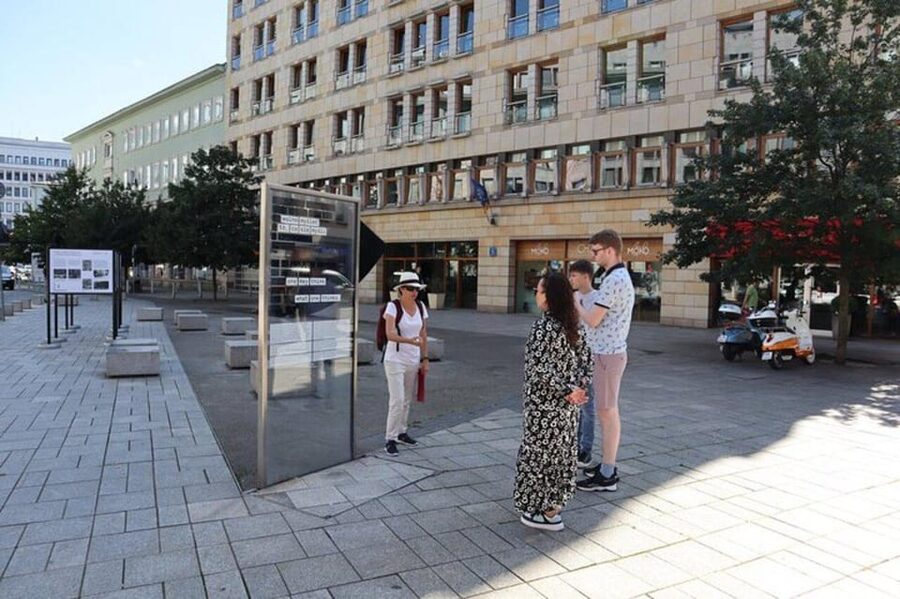
You finish at Emilii Plater 54, and that is a gift because it sets you up to keep exploring without feeling like you are done with the city. After a tour like this, it is easy to see Warsaw as a set of “sites.” The goal is the opposite.
Use the last minutes of your walk to pick one or two directions for the rest of the day. If you felt the architecture angle most, head back toward the central streets and look for the stylistic messages again. If censorship and daily adaptation grabbed you, look for museums or exhibitions that handle people’s experiences, not just dates.
The included info pack can help with that next step. You get a full pre-tour primer with FAQ-style context, plus visual aids and suggestions for where to eat and what to see. That kind of planning support matters because Warsaw rewards follow-up.
Price, time, and the value of a 2.5-hour route
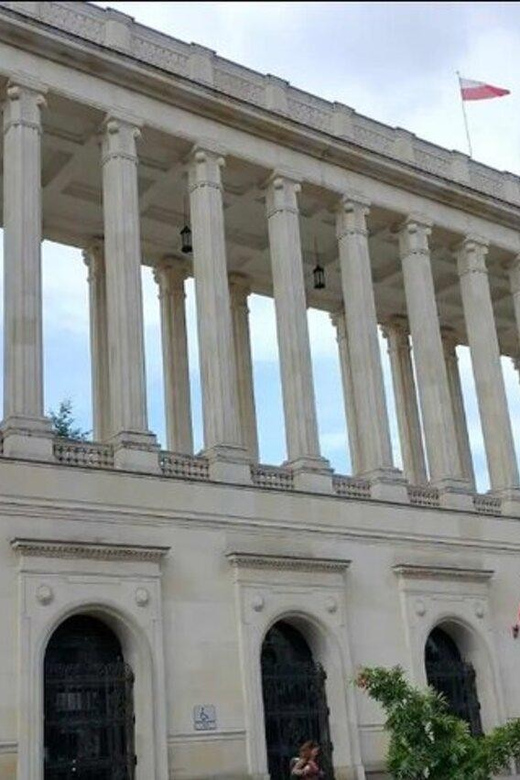
At $32 per person for about 150 minutes and roughly 3 km, this is priced like a serious specialty walk, not a quick loop. You are paying for interpretation, and that is the difference between reading about the Iron Curtain online and actually understanding how it shaped street life.
This tour also does something that raises the value: it connects multiple themes in one route. You cover parade streets, propaganda style, censorship, and how commerce worked under a system of constraints. When you see all of that in one connected story, the $32 feels more like an investment in clarity.
Timing matters too. Two and a half hours is long enough to get real context, but short enough that you can still fit in a museum or a meal plan afterward.
Group setup is another practical plus. You can book private or small groups, and that helps you ask questions without feeling rushed. The tone from the guides in the past reviews also suggests they can adapt to different personalities and pacing needs.
What to know before you go, so the tour fits your day
A few straightforward points will help you have an easier experience. The tour is English, and it is wheelchair accessible. At the meeting point, look for the guide holding a white and green umbrella, so you do not waste the first minutes hunting.
The walk is not described as a long-distance endurance hike, but it is still a walking tour. If your legs need frequent breaks, plan ahead and be honest with yourself about the walking portion.
Also note the viewing terrace is not included. If you want that extra viewpoint, budget separately.
Finally, this is the kind of tour where questions are welcome. The guides in the past are praised for answering lots of queries and building a clear picture that stays human. If you enjoy dialogue, you’ll likely get more out of it.
Should you book this Warsaw Iron Curtain walking tour?
Book it if you want Warsaw to make sense beyond monuments. This is the right choice when you care about how politics shaped daily life, because the tour is built around real mechanisms like censorship, staged public space, and propaganda art you learn to read.
Consider another option if you prefer history told mostly through indoor exhibits, or if walking 3 km is likely to be uncomfortable. For many people, though, the balance here is ideal: focused route, strong storytelling, and enough context to carry into your next stop.
If you only have one Warsaw walking tour, this one is a smart pick. It gives you the lens to reinterpret the city as you go, not just a stack of dates to remember.
More Tours in Warsaw


More Tour Reviews in Warsaw
Warsaw, Keep Looking
Recently written up around Warsaw



More Warsaw City Tours.
 ★ 4.8Chopin Concert in the Old TownFrom $262,287 reviews
 ★ 4.6Traditional Galar Cruise on The Vistula RiverFrom $201,640 reviews
 ★ 4.7Old Town Highlights Walking Tour in EnglishFrom $261,516 reviews
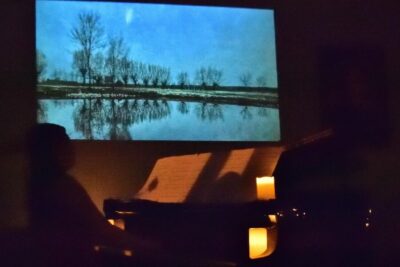 ★ 4.8Warsaw Concert: Chopin – Painted by Candlelights with WineFrom $251,442 reviews
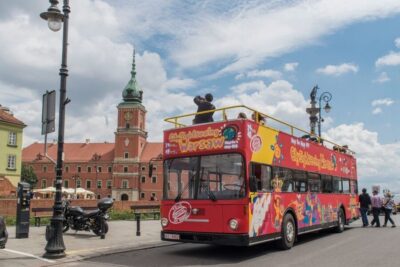 ★ 3.6City Sightseeing Hop-On Hop-Off Bus TourFrom $411,415 reviews
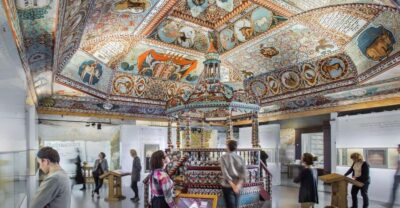 ★ 4.7POLIN Museum of the History of Polish Jews TicketFrom $121,142 reviews
 ★ 5.0#1 Pub Crawl Warsaw with Optional Premium 1 Hour Open BarFrom $28790 reviews
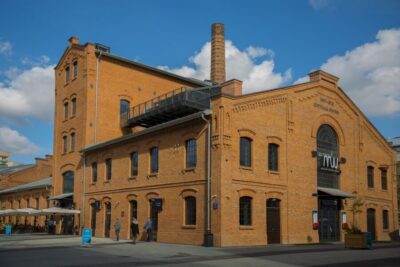 ★ 4.6Polish Vodka Museum Tour with TastingFrom $22788 reviews
Also on these Poland lists