
REVIEW · WARSAW CITY TOURS
Majdanek – German camp from II World War – Private Tour – 1 DAY TRIP FROM WARSAW
Majdanek has a way of slowing your thoughts. You’ll see how this Nazi camp site turned into a state museum, then you’ll walk through key barracks that explain what prisoners faced. I like that the visit is private for your group, so you can ask questions and talk things through without feeling rushed. I also like the door-to-door transfers, because the drive time gets handled for you. One thing to consider: this is a physically demanding outdoor visit in a place that can feel cold, wet, and emotionally heavy.
You’ll head out early from Warsaw, then spend about 4 hours at Majdanek, where the museum buildings span the years 1941 to 1944. Expect lots of walking between structures, plus panels and exhibitions that focus on arrivals, daily life, and persecution. After that, you’ll have a lunch break at a regional restaurant before the return to your accommodation.
The best part of a private guide here is context. You’re not just reading placards, you’re learning how to connect what you see in each barracks to what happened on the ground. With a small maximum group size (up to 15), the day stays controlled and human, not chaotic.
In This Review
- Key things to know before you go
- From Warsaw to Lublin: A long day made easier by pickup
- Majdanek State Museum: 70 buildings and the Window of Time
- Barracks 43, 44, 45: how the story moves from ghetto to camp
- Barracks 47 and 62: multimedia learning and survivor-centered focus
- Barracks 52 shoes and the proof of persecution
- Living conditions: III Field buildings 14 and 15
- Weather, smell, and the real feel of being outside
- Private tour in English: why small groups work here
- Lunch at a regional restaurant: a practical reset
- Price and value: what you’re paying for at $276.67 per person
- Practical tips for your one-day Majdanek plan
- FAQ
- FAQ
- What time does the trip start?
- How long is the tour in total?
- Is transportation included from Warsaw to Majdanek?
- How is the guiding handled?
- What does lunch include?
- Is this a free-cancellation trip?
- Should you book this Majdanek one-day private tour?
Key things to know before you go
- Door-to-door Warsaw pickup saves you from juggling train times and taxi schedules in two directions.
- Private English guide for just your group means you can ask questions and pause when you need to.
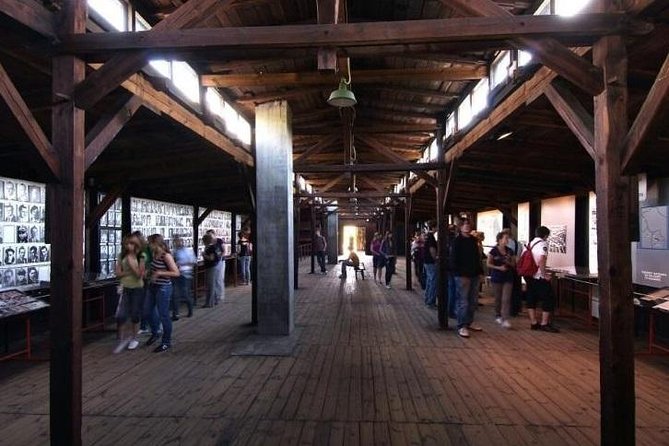
- Majdanek’s 70 historical buildings cover multiple aspects of the camp across 1941 to 1944.
- The steel Window of Time lets you view a fragment of an original road built by prisoners.
- Lunch is included at a regional restaurant, with drinks not included, so plan for that.
- One-day pace, about 11 hours total includes transfers, museum time, and the return drive.
More wartime history routes we have written up in Warsaw
- World War 2 in Warsaw walking tour in English
★ 4.7 · 237 reviews - Warsaw for WWII Buffs – private tour with hotel pickup
★ 5.0 · 166 reviews - From Warsaw: Tour of the Wolf’s Lair, Hitler’s HQ by Car
★ 4.7 · 116 reviews - Majdanek Concentration Camp & Lublin Full Day Private Tour from Warsaw
★ 5.0 · 70 reviews
From Warsaw to Lublin: A long day made easier by pickup
This is an early start, with pickup beginning at 7:00 am and a total schedule of about 11 hours. The big practical win is that you’re not trying to piece together public transport from Warsaw to Lublin while also carrying time-sensitive tickets and coping with schedule changes. Your driver and coordinator handle the round-trip transport from your hotel or apartment.
In real terms, that means you can treat the day like one plan, not five small problems. It also keeps the day smoother if you’re traveling with family, because you can move as a group instead of splitting up into different directions and meeting points.
One small planning note: since you’re starting in the morning and returning in the evening, it helps to pack like you’ll be out for most of the day. Even if you only spend 4 hours inside the museum grounds, you’ll still be standing, walking, and moving between buildings outside.
Majdanek State Museum: 70 buildings and the Window of Time
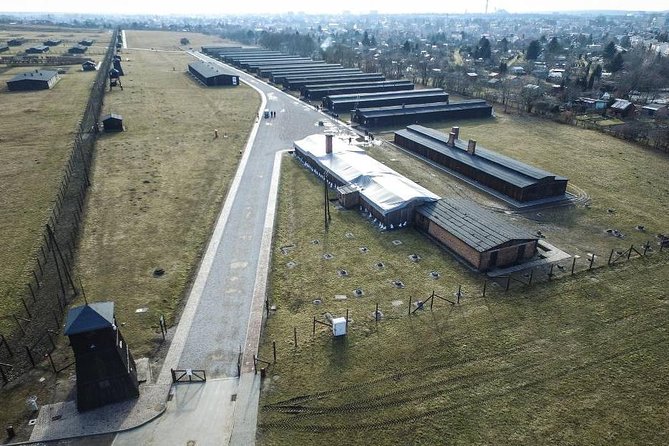
Majdanek State Museum sits on the site of the German concentration camp from World War II. The museum experience is spread across 70 historical buildings, and it covers the period from 1941 to 1944. That scale is why a guide matters. Without guidance, you can end up hopping from place to place without understanding how each area fits into the bigger story.
One feature I’d highlight is the steel Window of Time. It’s designed so you can see a fragment of the historical road built by prisoners at Majdanek. It’s not just a visual trick. It’s a way to make the past physical. You’re looking at a piece of infrastructure that prisoners created, and that turns the walking paths into something more than lines on a map.
As you move through the grounds, you’ll notice the museum uses barracks and exhibition spaces to connect themes: arrivals, occupation, survival conditions, and specific categories of persecution. It’s also designed so you can cover a lot in one day, but you will still want to slow down when something hits emotionally. This is one of those visits where your body will feel it even if your mind tries to stay rational.
Barracks 43, 44, 45: how the story moves from ghetto to camp
The tour hits multiple barracks, and each one focuses on a different angle. Barracks 43 is centered on They Arrived at the Ghetto… And Went into the Unknown… This part matters because it helps you understand that the camp story did not begin with barbed wire. It began with people being pushed into systems of transport and selection, and then being made to face the unknown.
Then Barracks 44 shifts to Lublin under German Occupation. That’s a different type of context, the local situation around the camp. For me, this kind of segment is useful because it connects what you’re seeing at Majdanek to the wider reality outside the camp walls.
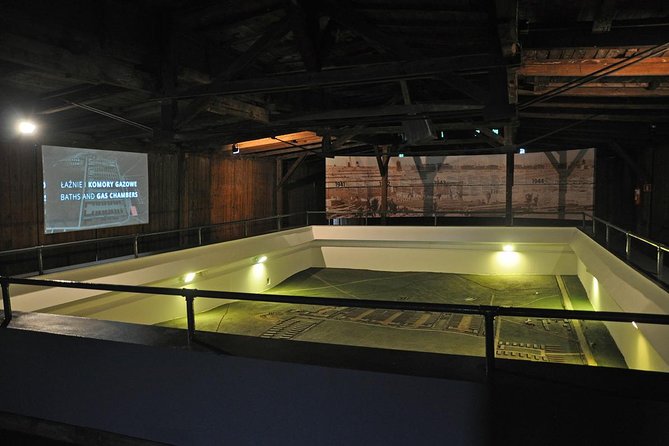
Barracks 45 includes a scale model of the camp, plus an exhibition titled Majdanek. Past and present. If you’re the type who needs orientation, this is one of the best stops in the whole sequence. A model gives you a mental framework for the layout, then the surrounding exhibitions fill in the human details.
Even if the titles sound straightforward, what changes is how you see later sections. When you understand spatial relationships early, the rest of the visit lands harder, because you can picture where things occurred.
Barracks 47 and 62: multimedia learning and survivor-centered focus
After the model and historical layout tools, the tour goes into exhibitions that aim for emotional and informational clarity. Barracks 47, called Shrine, is a multimedia exhibition. Multimedia can be a polarizing format anywhere, but here it serves a specific purpose. It helps deliver testimony and remembrance in a way that plain panels sometimes can’t.
Then Barracks 62, The Prisoners of Majdanek, is the kind of exhibition that centers people rather than only structure. This is where the camp becomes less about geography and more about prisoners as individuals caught in a system.
A practical tip: pace yourself here. These sections can feel heavy fast. If you need a reset, step outside the exhibition space for a minute, breathe, and let the guide’s framing settle before you move on.
Also, be ready for the mood of the grounds. One past visitor noted the silence feeling strong, plus the presence of crows during the visit. Even if your day is different, the overall atmosphere can be quiet and striking, so give yourself permission to be still when you need to.
Warsaw rebuilt itself twice over. Here is how else we saw it
- Warsaw: Chopin Concert in the Old Town★ 4.8 · 2,287 reviews
- Warsaw: Traditional Galar Cruise on The Vistula River★ 4.6 · 1,640 reviews
- Warsaw: Old Town Highlights Walking Tour in English★ 4.7 · 1,516 reviews
- Warsaw Concert: Chopin – Painted by Candlelights with Wine★ 4.8 · 1,442 reviews
- Warsaw: City Sightseeing Hop-On Hop-Off Bus Tour★ 3.6 · 1,415 reviews
Barracks 52 shoes and the proof of persecution
Barracks 52 focuses on shoes of the victims of Aktion Reinhardt. This is one of the most confronting items on the route. The museum’s decision to present everyday objects in a dedicated exhibit is intentional. It forces you to confront scale and loss without relying on abstract language.
It’s also a reminder that persecution was not only about ideology. It was about systems that stripped people of identity, possessions, and safety. Seeing physical remains like this can be disturbing, and that’s normal. If you’re sensitive, consider where you’ll want to stand and how long you’ll want to look. There’s no prize for rushing through the hardest images.
If you’re bringing kids or teens, this is a good place to gauge their readiness. A private guide can help you decide how much detail to take in, but you still know your family best.
Living conditions: III Field buildings 14 and 15
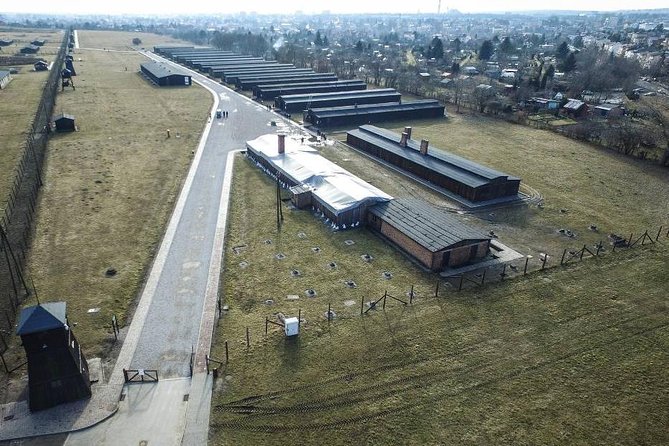
The tour also includes Barracks 14 and 15 in the III Field area. The idea of including the field spaces matters because it connects daily living conditions with the broader machinery of the camp. These sections help you understand that the camp was not only an event. It was routine, enforced and sustained.
The grounds include multiple structures, so your route will feel like a sequence of lessons. The advantage of a private tour is that if you pause, the guide can adjust pacing, rather than pushing everyone at the same speed.
Weather, smell, and the real feel of being outside
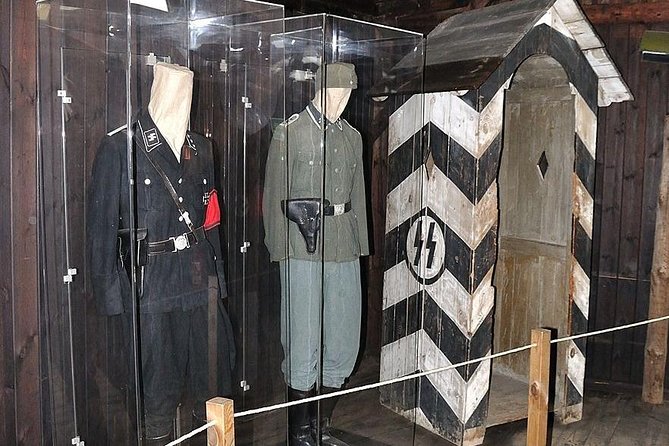
Majdanek is outdoors for much of the experience. In one recorded visit in April, it was cold and a bit rainy. On that same day, a visitor noted a very strong odor in parts of the site, plus the sense of quiet and corvids overhead.
You don’t need to panic about this, but you should plan for discomfort. Bring layers, wear waterproof shoes if you have them, and pack something warm for breaks. If you’re sensitive to smells, that’s not an emergency, it’s just information. Give yourself space to step back when you want a moment.
The tour requires a strong physical fitness level. That doesn’t mean you need to be an athlete, but you should be ready for uneven paths, stairs or ramps between buildings, and hours of walking while focusing on heavy material.
Private tour in English: why small groups work here
This is a private guided tour in English, with your group only. There’s a maximum of 15 travelers, which keeps the experience more controlled than big coach tours.
The emotional value of a private group is simple: you can ask questions and slow down without feeling like you’re holding up a crowd. For families, that freedom can make the day more manageable, because you can pause when something is hard and then continue when everyone is ready.
Even with a private setup, respect the space. This is not a place for casual chatter. A good guide will keep the tone appropriate while still making information clear and understandable.
Lunch at a regional restaurant: a practical reset
Lunch is included in a regional restaurant, and drinks are not. This matters more than it sounds. A long museum day needs a food break that is reliable and timed, not something you have to scramble to find after hours of walking.
I like that the lunch is built into the package, because it reduces decision fatigue. You can focus on the visit, then eat, then return to Warsaw without trying to find a last-minute place near the camp.
Bring cash or a card for drinks and small extras, since souvenirs and postcards are not included either.
Price and value: what you’re paying for at $276.67 per person
At $276.67 per person, this is not a budget day trip. The value comes from what’s bundled into that price: door-to-door transport between Warsaw and the Lublin area, entry tickets, a private English guide for your group, lunch, and local parking. Taxes and handling charges are included too.
If you tried to DIY it, you’d likely end up paying for multiple pieces: transport for two directions, tickets, and then a guide if you wanted the context that makes the visit click. And if you miss a connection or arrive late, you lose the planned flow of the route.
So the cost makes more sense if you want:
- less logistics stress,
- a timed and guided route through specific barracks,
- and a day that stays manageable for your group.
If you prefer total independence and you’re comfortable planning transport, you might be able to spend less on your own. But that trade-off is time and uncertainty, and with an emotionally serious site, I personally think the structured approach is worth serious consideration.
Practical tips for your one-day Majdanek plan
Here’s how I’d set yourself up so you get the most out of the day.
Wear comfort first. You’ll be walking between multiple buildings and exhibition areas. Choose shoes that handle wet ground and small distances. Pack warm layers even in mild seasons, because outdoor cold can sneak up on you.
Bring a small weather plan. Cold and light rain are possible, and you might not control the conditions. A compact umbrella or rain shell can make the visit more tolerable.
Plan your mindset. This site is designed to prompt reflection and learning. If you start feeling overwhelmed, take a moment outside an exhibition space. A private guide can help you choose pacing, but you still control when you pause.
Know what you’re going to see so you’re not lost. Key stops include barracks with a scale model, a multimedia shrine, the shoes exhibit tied to Aktion Reinhardt, and the Window of Time. When you know these are on the route, you can watch for the meaning, not only the facts.
FAQ
FAQ
What time does the trip start?
Pickup starts at 7:00 am.
How long is the tour in total?
The duration is approximately 11 hours.
Is transportation included from Warsaw to Majdanek?
Yes. Door-to-door transport is included from your hotel or apartment in Warsaw to the Lublin city area, and transport returns to your accommodation.
How is the guiding handled?
You get a private guided tour in English for your group only, with entry tickets to Majdanek Camp included.
What does lunch include?
Lunch in a regional restaurant is included. Drinks for lunch are not included.
Is this a free-cancellation trip?
Cancellation is free. You can cancel up to 24 hours in advance for a full refund, based on the experience’s local start time.
Should you book this Majdanek one-day private tour?
I’d book it if you want a structured day with minimal travel stress, a private English guide, and enough time to cover major exhibition stops without rushing. The door-to-door transport plus lunch included is a practical combo, especially for a 7:00 am start.
I’d think twice if you dislike long car days, you struggle with walking in an outdoor environment, or you already plan to handle transport and admissions on your own with minimal guidance. This site is physically demanding and emotionally intense, so comfort and pacing matter.
If you’re looking for a respectful, well-organized visit where context helps you make sense of what you’re seeing, this one-day private trip is a strong choice.
Further East from Warsaw


Warsaw, Keep Looking


Wartime History in Warsaw

Recently written up around Warsaw

More Warsaw City Tours.
 ★ 4.8Chopin Concert in the Old TownFrom $262,287 reviews
 ★ 4.6Traditional Galar Cruise on The Vistula RiverFrom $201,640 reviews
 ★ 4.7Old Town Highlights Walking Tour in EnglishFrom $261,516 reviews
 ★ 4.8Warsaw Concert: Chopin – Painted by Candlelights with WineFrom $251,442 reviews
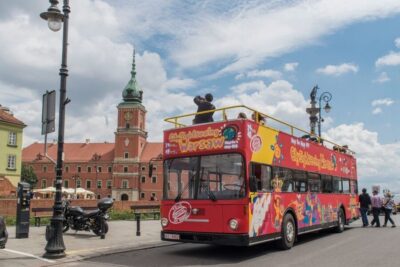 ★ 3.6City Sightseeing Hop-On Hop-Off Bus TourFrom $411,415 reviews
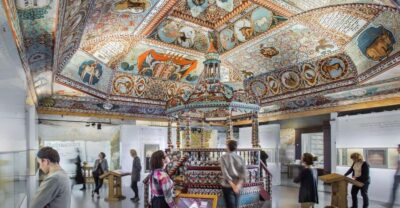 ★ 4.7POLIN Museum of the History of Polish Jews TicketFrom $121,142 reviews
 ★ 5.0#1 Pub Crawl Warsaw with Optional Premium 1 Hour Open BarFrom $28790 reviews
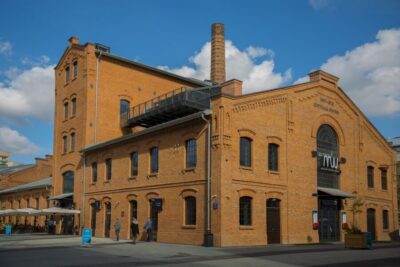 ★ 4.6Polish Vodka Museum Tour with TastingFrom $22788 reviews
Also on these Poland lists