
REVIEW · WARSAW CITY TOURS
Warsaw for WWII Buffs – private tour with hotel pickup
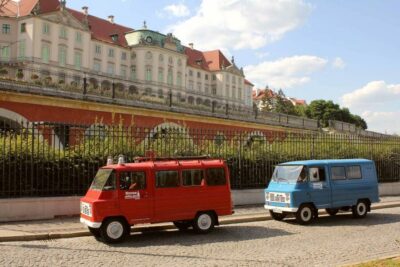
WWII Warsaw changes how you see the city. This private tour uses a retro Żuk minibus to move you through key sites without feeling like you are racing. You get a clear story line, English guidance, and hotel pickup for a smooth start.
I like two things most. First, the guides, such as Konrad or Tom, blend solid facts with a calm, conversational pace, so the history lands instead of turning into a lecture. Second, you are not just looking at big memorials, you are also seeing preserved Ghetto Wall fragments and street-level details that show how the city was physically divided.
One thing to plan for: these vintage vehicles often have no air conditioning and may have limited comfort features. If you are sensitive to warmth or have trouble getting in and out, wear good shoes and consider that the ride can be a little bumpy.
In This Review
- Key things I’d circle before you book
- A Retro Żuk Makes WWII Warsaw Feel Personal
- Hotel Pickup, 3 Hours, and Why Timing Matters
- Late 1930s to 1939: The Backstory That Makes Everything Else Make Sense
- Waliców and the Warsaw Ghetto Walls, Where the City Still Remembers
- Chłodna Street, a Bridge for Occupiers, and the Logic of Control
- Muranów, the Memory-Heavy Neighborhood Behind the Straight Streets
- The Monument to the Ghetto Heroes and the POLIN Area
- The Eastern Losses: Katyń, Gulags, and September 1939
- The Warsaw Uprising Monument, and the Price of Trying to Regain Independence
- Price, What You Actually Get, and Is It Good Value
- The Retro Vehicle: Fun Ride, Real Comfort Checks
- Who Should Book This Warsaw WWII Tour?
- Should You Book This Warsaw for WWII Buffs?
- FAQ
- How long is the Warsaw for WWII Buffs private tour?
- Is this tour private, or will I be with other groups?
- Do I get hotel pickup in central Warsaw?
- What language is the guide?
- How do the stops work during the tour?
- Do I need tickets or pay admission at the stops?
- What about kids and seat boosters?
- What kind of vehicle is used?
- Is there a refund if plans change?
Key things I’d circle before you book
- Retro Żuk transport for WWII-focused routes, with walking between stops
- Hotel pickup and drop-off within 3 km of the city center to save time
- English-speaking local guide who can answer questions and adjust to your interests
- Ghetto Wall sections and street geometry at places like Waliców and Chłodna Street
- Memorial stops tied to real events including the 1943 Ghetto Uprising area
- A political timeline that reaches beyond WWII, into the Soviet occupation and aftermath
More wartime history routes we have written up in Warsaw
- World War 2 in Warsaw walking tour in English
★ 4.7 · 237 reviews - Warsaw for WWII Buffs – private tour with hotel pickup
★ 5.0 · 166 reviews - From Warsaw: Tour of the Wolf’s Lair, Hitler’s HQ by Car
★ 4.7 · 116 reviews - Majdanek Concentration Camp & Lublin Full Day Private Tour from Warsaw
★ 5.0 · 70 reviews
A Retro Żuk Makes WWII Warsaw Feel Personal
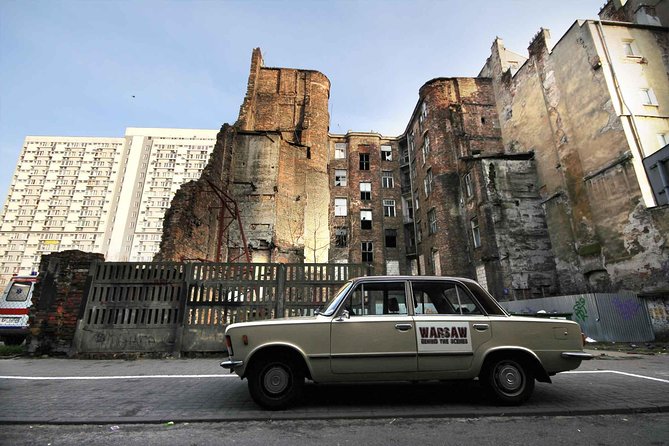
There is something about riding through Warsaw in a restored Żuk that makes the past feel closer. You trade modern tour buses for a car that looks like it belongs to another era, and that visual shift helps you “tune in” before you reach the first WWII scars in the city.
The structure is also practical. In about three hours, you get a connected story of how Poland got pulled into war, how Warsaw lived under occupation, and how resistance and retaliation played out in the streets and neighborhoods. You are not hopping between random spots, you are following an arc.
You can also expect the guide to keep it human scale. Names like Karol, Martin, Marcin, and Lucas show up in people’s experiences, and the common thread is a tone that mixes facts with reflection, not just facts on a timetable. If you ask questions, you are likely to get straight answers.
Hotel Pickup, 3 Hours, and Why Timing Matters
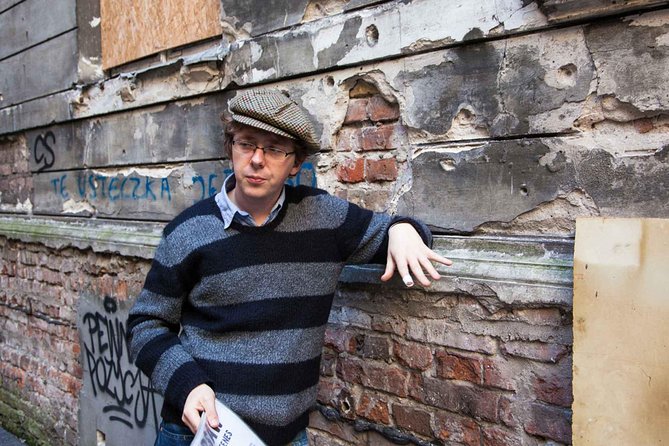
This tour is designed to fit real itineraries. The stated length is about three hours, but remember that pickup and drop-off time counts into that total. If your hotel is farther or hard to reach by car, you might be guided toward a closer meeting point to avoid wasting time.
The pickup radius is within 3 km of the city center. That is a huge help if you are staying near the main sights, because you avoid “getting there” stress right before you step into heavy history.
The ride itself is only part of the schedule. Between short transfers, you get walking segments at each stop, and those segments are your chance to see small things, like how a wall fragment sits in today’s street fabric. In winter, the vehicles have heating, but they are still vintage, so plan for cooler or warmer conditions depending on the season.
Late 1930s to 1939: The Backstory That Makes Everything Else Make Sense
The tour begins in central Warsaw, where the scars of WWII are woven into the cityscape. The guide sets the stage with the political climate of the late 1930s, then moves into the German invasion of Poland in 1939 and the simultaneous Soviet occupation of eastern Poland.
This matters because it prevents the history from feeling like a single dramatic date. You start to see the bigger picture: why Warsaw became a key target, how occupation power shaped daily life, and why resistance could take different forms depending on what was happening around you.
You do not need to buy tickets at these stops. The schedule lists admission as free, which keeps the tour moving and keeps you focused on the narrative rather than logistics.
Waliców and the Warsaw Ghetto Walls, Where the City Still Remembers
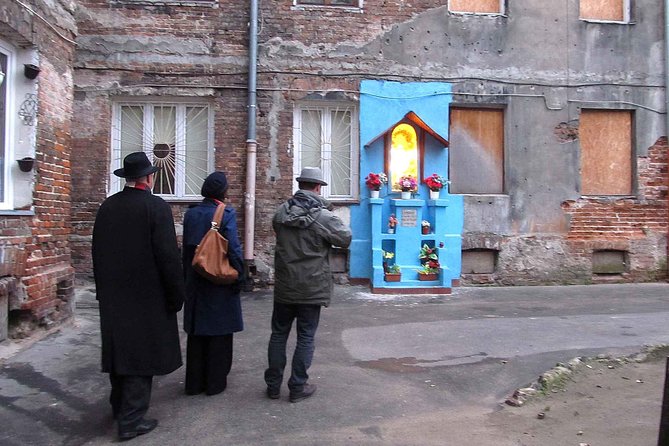
The ghetto section of the tour is where the experience becomes uncomfortably real in the best possible way. On Waliców, you hear about the Jewish population before the war, then the Nazi creation of the Warsaw Ghetto in 1940. The scale is hard to grasp from a distance, so seeing what remains helps your brain “locate” the story in a real place.
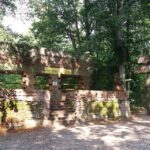
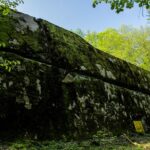
Today, several fragments of the former ghetto wall remain hidden between buildings and along old property lines. The guide takes you to one of these preserved sections so you can understand how the physical boundaries divided neighborhoods and shaped everyday movement.
A second Waliców moment adds another layer. The area includes the Waliców tenement house, described as a ruined remnant that remains standing, plus another preserved fragment of ghetto wall. It is not polished into a theme park exhibit. It sits there, quietly damaged, and that is part of what makes it hit.
Warsaw rebuilt itself twice over. Here is how else we saw it
- Warsaw: Chopin Concert in the Old Town★ 4.8 · 2,287 reviews
- Warsaw: Traditional Galar Cruise on The Vistula River★ 4.6 · 1,640 reviews
- Warsaw: Old Town Highlights Walking Tour in English★ 4.7 · 1,516 reviews
- Warsaw Concert: Chopin – Painted by Candlelights with Wine★ 4.8 · 1,442 reviews
- Warsaw: City Sightseeing Hop-On Hop-Off Bus Tour★ 3.6 · 1,415 reviews
Chłodna Street, a Bridge for Occupiers, and the Logic of Control
At Chłodna Street, the tour gets into street-level mechanics. In 1941, the ghetto was divided into two parts by Chłodna Street, which served as an East-West transfer traffic corridor.
Then comes the detail that I think makes the whole section powerful. There was a wooden bridge built near the intersection of Chłodna and Żelazna streets to connect the two parts of the ghetto. The bridge reached high enough to allow “Aryan” trams, German military transports, and cars to pass beneath it, exactly as you see in historic photographs.
This is one of those moments where history stops being abstract. You start seeing how occupation power worked through infrastructure, not just through armed force. The city’s layout became a tool, and the tour helps you spot that.
Muranów, the Memory-Heavy Neighborhood Behind the Straight Streets
Next is Muranów, which can look, at first glance, like any other residential district with blocks of flats. That is the point. The guide shows how a neighborhood can appear ordinary while still carrying major history under the surface.
You get the feeling that you cannot trust first impressions here. Warsaw can look repaired, modern, and livable, yet the past is still mapped into the blocks. With good guidance, you learn to read the city again, not as a postcard, but as a place with layers.
This section also supports the earlier ghetto wall moments. When you connect Waliców and Chłodna Street to Muranów, the boundary story turns into a neighborhood story, and the occupation story turns into a community story.
The Monument to the Ghetto Heroes and the POLIN Area
The tour then heads to the area of the Monument to the Ghetto Heroes and the POLIN Museum of the History of Polish Jews. You are guided near where the first armed clashes of the 1943 Ghetto Uprising occurred.
I like that the tour does not treat remembrance as one fixed stop and then move on. Instead, it links physical space to a specific resistance moment, and then to today’s ongoing dialogue and remembrance among Polish, Jewish, and German communities.
The POLIN area is also a good reality check. Even if you do not step inside the museum on this tour, the location itself tells you that this is not a closed chapter. The city is still processing these events, and you are learning that processing as part of your visit.
The Eastern Losses: Katyń, Gulags, and September 1939
Then you shift from the ghetto story to the broader tragedy of the eastern Polish population under Soviet attack. At the Monument to the Fallen and Murdered in the East, the guide covers the Soviet attack on September 17, 1939, about two weeks after WWII began in Europe.
You hear what happened next: deportations, executions, and victims of the Katyń massacre. The monument was erected after the fall of the USSR to honor Poles deported to Gulags in Siberia and those killed in executions and Katyń.
This is the section that helps you understand that WWII in Poland had multiple oppressors and multiple forms of terror. A lot of visitors know the German occupation story well, but the eastern losses deepen your understanding of the full wartime picture.
The Warsaw Uprising Monument, and the Price of Trying to Regain Independence
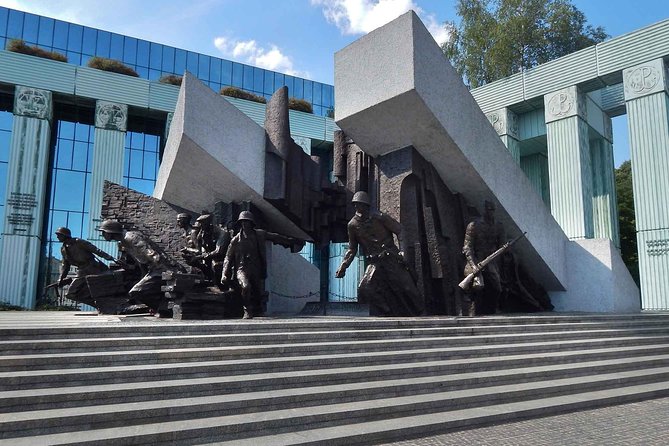
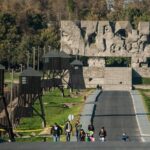
The final stop focuses on the Warsaw Uprising of 1944. The tour frames it as the city’s last attempt to regain independence before the Red Army arrived.
After the uprising’s defeat, Nazi forces systematically destroyed much of Warsaw. Then the Soviet army entered the empty ruins in January 1945, which the guide connects to the start of a new communist rule period.
Even if you already know the uprising from books, standing in the correct place and hearing it placed into a wider political timeline changes how it feels. It becomes less like a chapter ending and more like a hinge point that shaped decades afterward.
Price, What You Actually Get, and Is It Good Value
At $169.38 per person, this is not a cheap impulse buy. But you are paying for two practical things that matter in a city tour: private guiding and door-to-door comfort near the center.
You get:
- a professional English-speaking local guide
- transport by retro communist minibus
- hotel or apartment pickup and drop-off within 3 km of the city center
For a three-hour private experience, that combination often beats piecing together separate tickets, taxis, and museum hopping unless you already have a very efficient plan. Also, the tour includes stops listed as admission free, which helps the “total cost” math.
One note on “private” that affects value. Each minibus holds up to 8 passengers, but the activity is described as private, meaning only your group participates. If you are traveling as a small group, you usually get the full benefit of a more customized narrative without sharing it with strangers.
The Retro Vehicle: Fun Ride, Real Comfort Checks
The Żuk ride is part of the charm, and people consistently mention the nostalgia factor. You will get heated comfort in winter, and the vintage vehicles are used mainly for the transfer between stops, with walking segments on arrival.
Still, it is worth planning realistically. Classic vintage minibuses may not have air conditioning, and some may not have seat belts. That can be fine for many people, since it is allowed for historic vehicles, but it means you should think about comfort if you have mobility issues.
If you are traveling with a senior or someone who struggles to step in and out, wear slip-resistant shoes and give yourself extra time. One review experience even flagged that the vehicle may not match exactly what you expect from the name description, so I would treat “retro Żuk” as the key promise, not the exact model details.
Who Should Book This Warsaw WWII Tour?
This tour is a great fit if you want your WWII visit to feel guided, paced, and connected. It also works well for families with older kids, since children over 150 cm can participate without boosters.
If you are traveling with children under 150 cm, plan ahead. Seat boosters are mandatory under Polish law, and you should contact the operator in advance to check seat booster availability.
It is also ideal if you like history that talks to the present. Several guides in people’s experiences are described as passionate, interactive, and able to connect events to the broader political climate. If your goal is understanding the “why” behind what you see, this tour is built for that.
Should You Book This Warsaw for WWII Buffs?
I think you should book it if you want a guided route that hits the major WWII Warsaw themes in a short time window, plus the Soviet occupation aftermath. The private setup and hotel pickup make it easy to do without wasting half a day on transit.
I would hesitate only if comfort needs are strict. Vintage vehicles without air conditioning, possible limited seat belt features, and getting in and out can be challenging. If that is you, ask about the vehicle details and plan for a slower walking pace.
If you do go, do one thing that makes the whole trip better. Come with at least one question you care about, whether it is about the ghetto, the uprising, or how Warsaw’s story changed after 1945. With the right guide, you will get answers, not just dates.
FAQ
How long is the Warsaw for WWII Buffs private tour?
It is about 3 hours in total.
Is this tour private, or will I be with other groups?
This is a private tour or activity, and only your group will participate.
Do I get hotel pickup in central Warsaw?
Pickup and drop-off are offered within 3 km of the city center. If your location is farther or inaccessible by car, the operator can suggest a closer meeting point.
What language is the guide?
The tour includes a professional English-speaking local guide.
How do the stops work during the tour?
You will travel by retro minibus between locations and have walking segments at each stop. Comfortable clothing and suitable footwear are recommended.
Do I need tickets or pay admission at the stops?
Admission tickets are listed as free for the stops included in the tour.
What about kids and seat boosters?
Children over 150 cm (4 ft 9 in) can participate. For children under 150 cm, seat boosters are mandatory, so you should contact the operator in advance to check availability.
What kind of vehicle is used?
The tour uses a retro communist minibus (Żuk). Some vehicles may not have air conditioning, and some may not have seat belts due to historic vehicle rules. Heating is available for the winter season.
Is there a refund if plans change?
Yes. You can cancel for a full refund up to 24 hours in advance of the experience start time.
If you want, tell me your travel dates and where you are staying in Warsaw, and I’ll help you think through whether the 3 km pickup range and the walking segments will feel easy for your group.
More Tour Reviews in Warsaw

Warsaw, Keep Looking
Wartime History in Warsaw
Recently written up around Warsaw

More Warsaw City Tours.
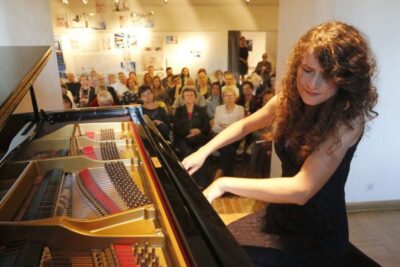 ★ 4.8Chopin Concert in the Old TownFrom $262,287 reviews
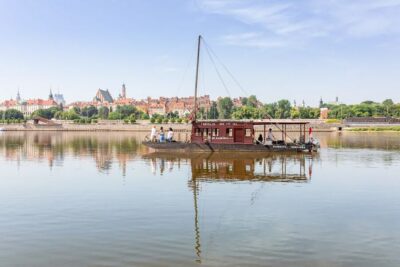 ★ 4.6Traditional Galar Cruise on The Vistula RiverFrom $201,640 reviews
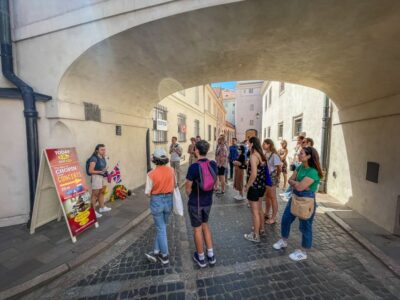 ★ 4.7Old Town Highlights Walking Tour in EnglishFrom $261,516 reviews
 ★ 4.8Warsaw Concert: Chopin – Painted by Candlelights with WineFrom $251,442 reviews
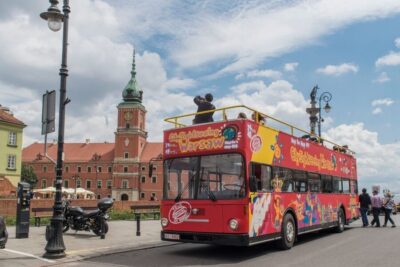 ★ 3.6City Sightseeing Hop-On Hop-Off Bus TourFrom $411,415 reviews
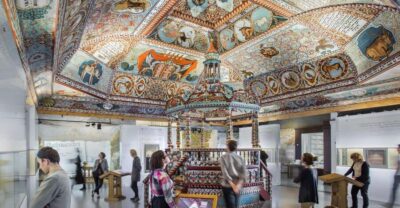 ★ 4.7POLIN Museum of the History of Polish Jews TicketFrom $121,142 reviews
 ★ 5.0#1 Pub Crawl Warsaw with Optional Premium 1 Hour Open BarFrom $28790 reviews
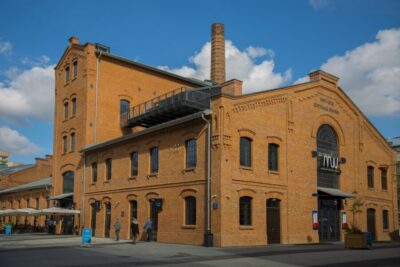 ★ 4.6Polish Vodka Museum Tour with TastingFrom $22788 reviews
Also on these Poland lists