
REVIEW · WARSAW CITY TOURS
World War 2 in Warsaw walking tour in English
Warsaw feels different after this walk. What makes it click is the local Polish guides (born and raised in Warsaw) plus the war photographs and family stories that make the past feel immediate. One thing to consider: this is heavy material, and it is still an outdoor walking tour, so you need patience for the seriousness and proper cold-weather gear.
If you want the “why” behind Warsaw’s WWII story, this tour does a smart job connecting decisions made by occupiers to the lived reality on the streets. You will walk through key places tied to the Nazi German District, Adolf Hitler Square, the former Jewish Ghetto, execution sites, and the Polish Resistance strongholds of the 1944 Warsaw Uprising.
You also get a small-group setup and English live guidance, which matters when the topic is complex and you want time for questions. Guides mentioned in recent tours, like Magda, Goska, and Piotr, are consistently praised for clarity and for keeping the group moving without losing the emotional weight of the subject.
In This Review
- Key things that make this WWII Warsaw tour worth your time
- Why Warsaw’s WWII story needs feet, not just a screen
- Finding the group fast: the Orange Umbrella and the tall column
- Former Nazi German District and Adolf Hitler Square: where power was staged
- The former Jewish Ghetto: resistance shaped by unbearable constraints
- Execution sites and Polish Resistance strongholds in 1944
- The pacing reality check: 150 minutes with serious, steady walking
- English guidance that does more than recite dates
- Cold weather tips that will keep you in the tour, not just watching from afar
- Price and value: $20 for 2.5 hours of human context
- Who should book this WWII Warsaw walk, and who might want a different option
- Should you book this WWII Warsaw walking tour?
- FAQ
- Where do I meet the guide?
- How long is the tour?
- What is the price?
- Is the tour in English?
- Is it wheelchair accessible?
- Is there free cancellation?
Key things that make this WWII Warsaw tour worth your time
- Orange Umbrella meeting point near a 20-meter-tall column with a statue, so you can find the group fast
- Small groups guided by Poles born and raised in Warsaw, with war photographs and personal family memories
- WWII sites in the right order, from Nazi-controlled space to ghetto resistance and the 1944 uprising
- English live guidance that helps you follow the political and human story, not just dates
- Steady pacing that works well for most visitors, but it is not designed as a slow stroll
More wartime history routes we have written up in Warsaw
- World War 2 in Warsaw walking tour in English
★ 4.7 · 237 reviews - Warsaw for WWII Buffs – private tour with hotel pickup
★ 5.0 · 166 reviews - From Warsaw: Tour of the Wolf’s Lair, Hitler’s HQ by Car
★ 4.7 · 116 reviews - Majdanek Concentration Camp & Lublin Full Day Private Tour from Warsaw
★ 5.0 · 70 reviews
Why Warsaw’s WWII story needs feet, not just a screen
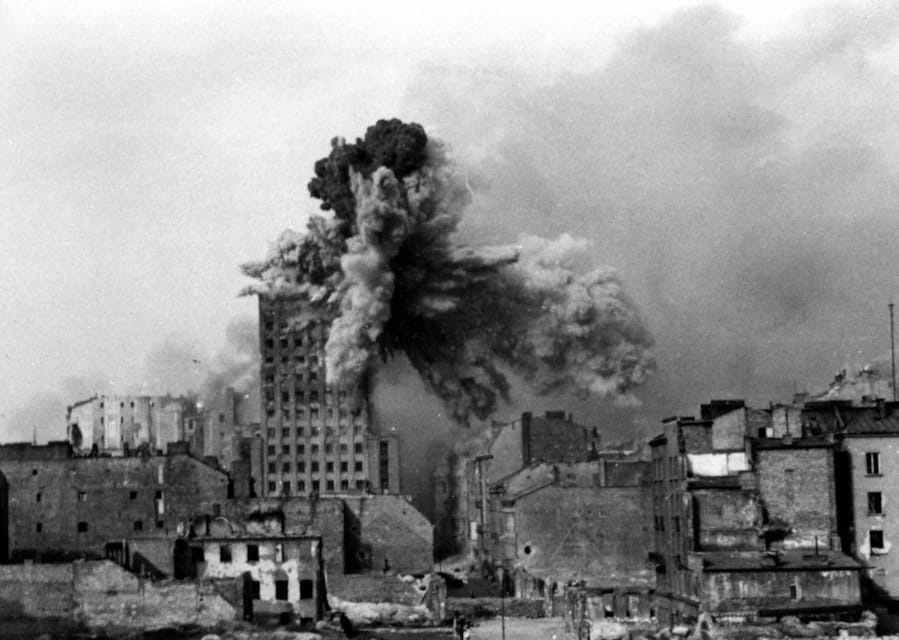
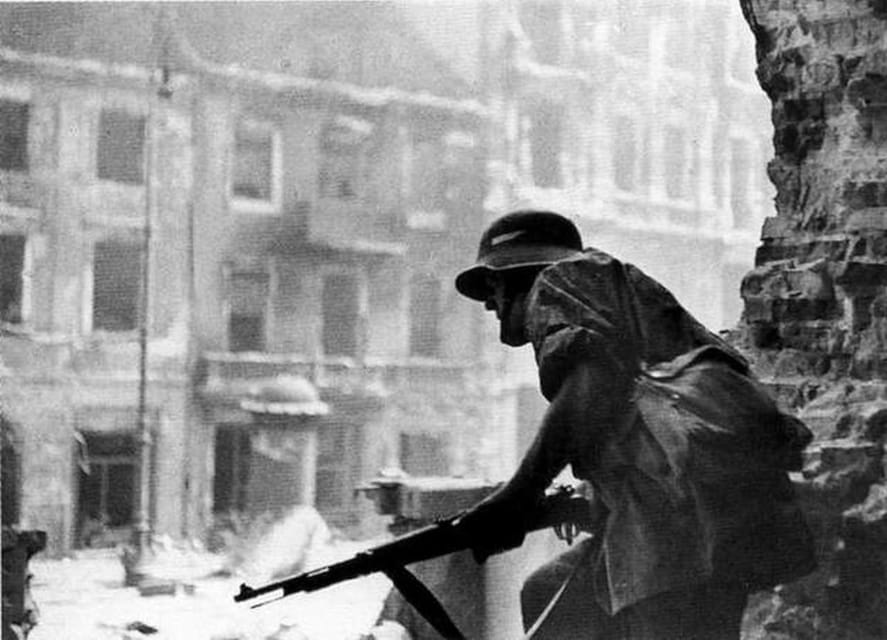
Warsaw was one of the cities that suffered the most in World War 2. This is not a war story stuck in textbooks. It happened in a real place, on real streets, to real neighbors who had to keep going under occupation, censorship, and terror.
What I like about this tour is that it treats Warsaw as more than a backdrop. You see how occupiers reorganized the city, how civilians adapted and survived, and how resistance formed under conditions that were designed to crush it. The tour also includes the two uprisings tied to Warsaw’s occupied communities, including the 1943 Jewish Ghetto Uprising and the 1944 Warsaw Uprising.
And then there is the human scale. Family stories, paired with period photographs, help you understand what buildings and street corners really meant back then. That is the difference between “I know what happened” and “I can picture it.”
Finding the group fast: the Orange Umbrella and the tall column
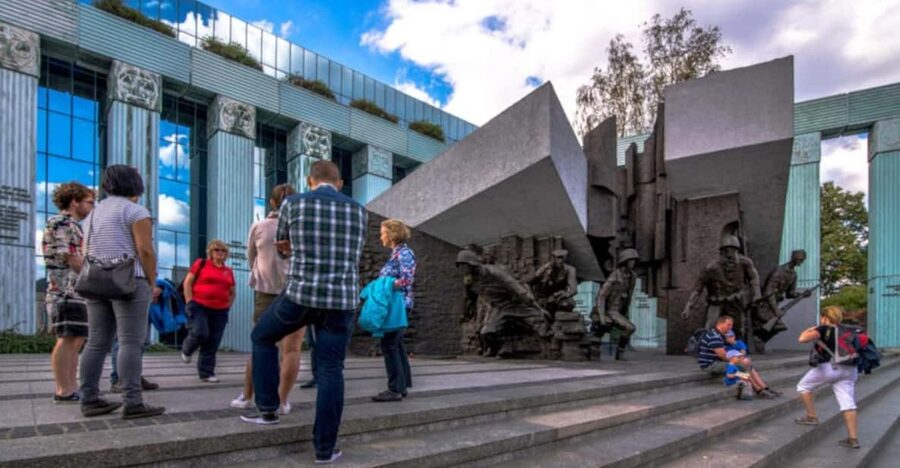
Meeting is simple. Look for a guide holding an Orange Umbrella, standing close to the tall, 20-meter-high column with a statue on top. If you show up a few minutes early, you will save yourself the usual first-day stress.
This matters more than it sounds because this tour is only about 150 minutes. When you start late, you lose the flow. And with WWII sites, the timing of context matters: the guide needs you with them, not ten steps behind.
Former Nazi German District and Adolf Hitler Square: where power was staged
One of the tour’s core strengths is that it doesn’t just point at sites. It explains what those places represented. You start with the Nazi German District and then move toward Adolf Hitler Square, two locations that stand for occupation power and the machinery of control.
In practice, this part works because you get a sense of how the occupiers tried to reshape the city’s identity. Even if many streets and buildings have changed since the war, the guide ties what you see today to what the area meant back then, often using period photos and maps.
The best way to enjoy this segment is to think like the guide. Ask yourself: what were these spaces designed to do to people nearby? Where was authority made visible? Where did propaganda live in the street-level experience? The tour nudges you toward those questions, and that makes the history feel sharper.
The former Jewish Ghetto: resistance shaped by unbearable constraints
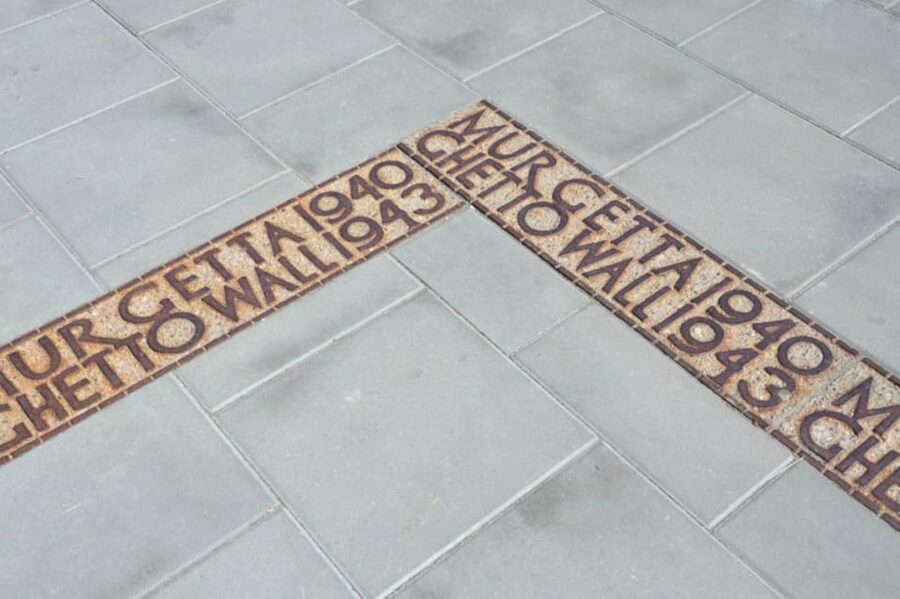
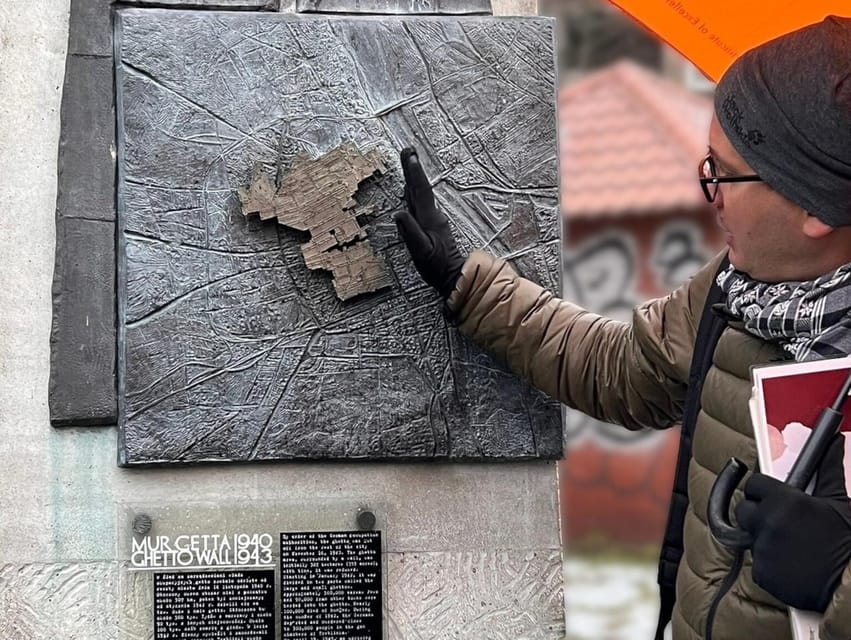
Next comes the former Jewish Ghetto area, a place tied to one of the most important resistance moments in Warsaw, the 1943 Jewish Ghetto Uprising. The guide frames this not as a single event but as a brutal reality that people endured for years, then answered with courage when there was no safe option left.
What I appreciate here is the balance. The tour stays grounded in what happened, but it also brings in personal memories and family stories. That combination is powerful because the ghetto story can become abstract if you only hear the military facts. Family narratives help you understand how ordinary people carried fear, hope, anger, and resolve at the same time.
Also, pay attention to how the guide uses photographs. In a place where the original environment may be gone or altered, old images do the job of rebuilding the scene. One review highlighted how photos showed Warsaw before, during, and after the war, which is exactly what you want on a walking tour.
Warsaw rebuilt itself twice over. Here is how else we saw it
- Warsaw: Chopin Concert in the Old Town★ 4.8 · 2,287 reviews
- Warsaw: Traditional Galar Cruise on The Vistula River★ 4.6 · 1,640 reviews
- Warsaw: Old Town Highlights Walking Tour in English★ 4.7 · 1,516 reviews
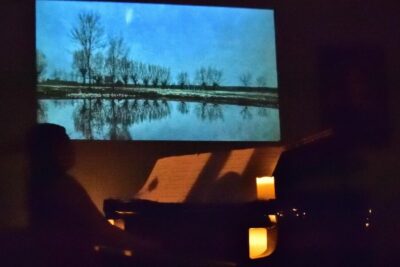
- Warsaw Concert: Chopin – Painted by Candlelights with Wine★ 4.8 · 1,442 reviews
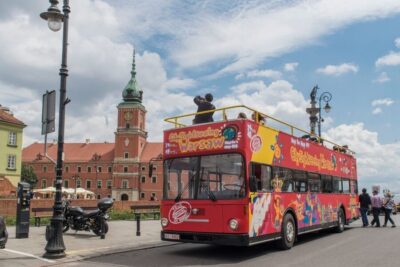
- Warsaw: City Sightseeing Hop-On Hop-Off Bus Tour★ 3.6 · 1,415 reviews
Execution sites and Polish Resistance strongholds in 1944
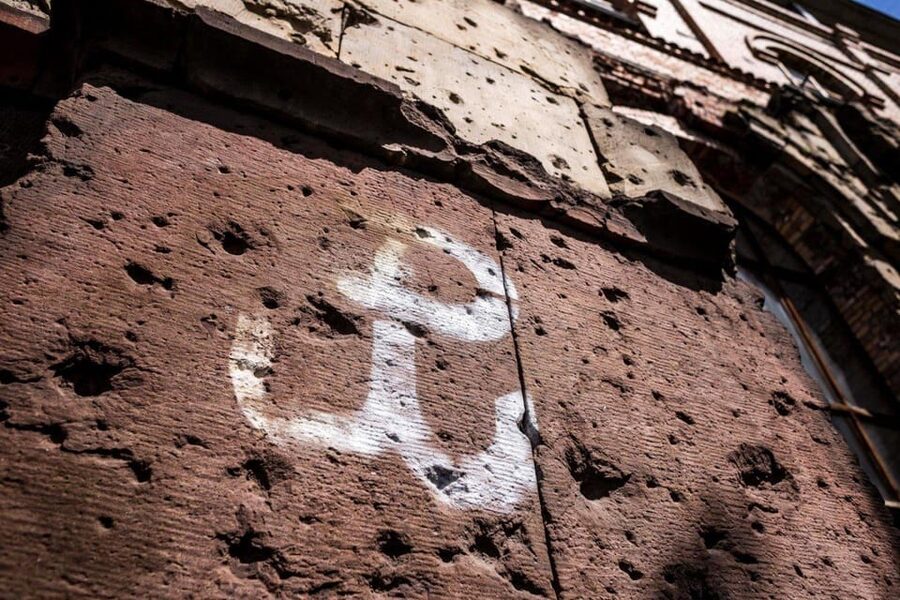
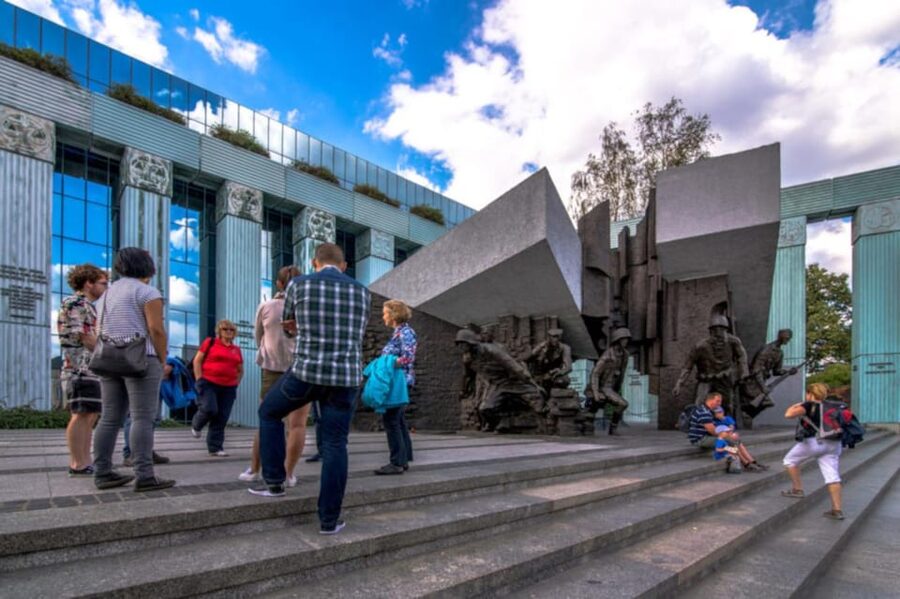
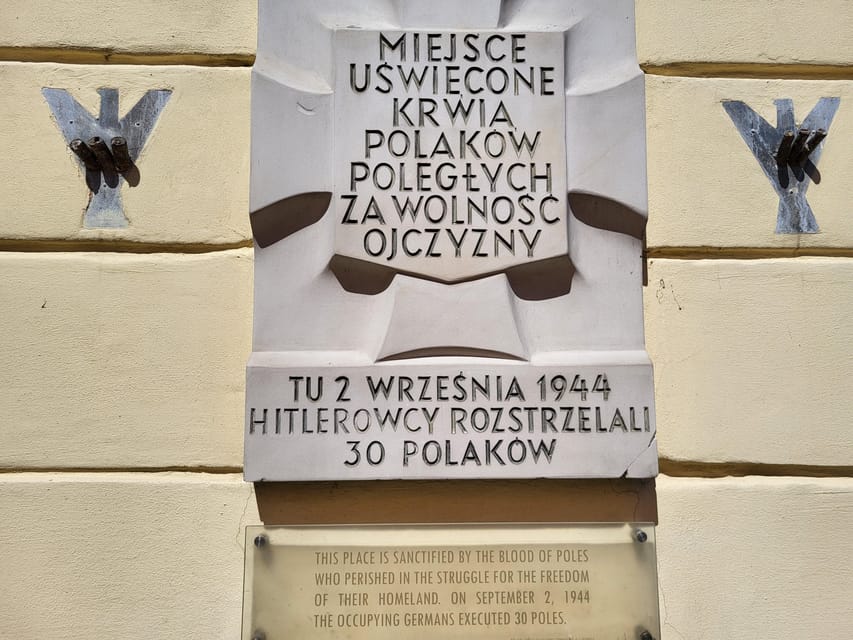
The later part of the walk focuses on execution sites and the strongholds of Polish Resistance tied to the 1944 Warsaw Uprising. This is the section that tends to hit hardest, not just because of the subject, but because the tour is paced to bring you there with context already in your head.
Expect the guide to connect strategy and survival. You are not only hearing about uprisings as battles. You are learning how resistance networks had to operate under surveillance and how civilians were caught in the middle.
Guides are also praised for handling tough questions in plain, respectful language. Names that came up in recent experiences include Iga, Albert, and Andrew, and the common thread is sensitivity and clarity. If you care about the Polish perspective, this portion is likely to satisfy you, since the tour emphasizes Warsaw’s own struggle and its political turbulence during the occupation era.
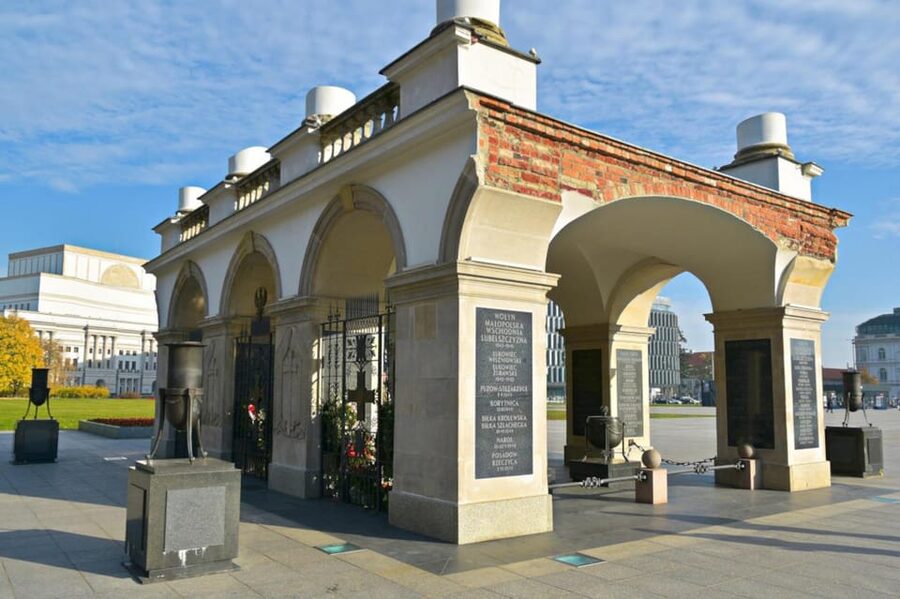
One more detail to keep in mind: some groups have reported an added pause connected to the Tomb of the Unknown Soldier, described as a moving moment. I cannot promise it will happen on every departure, but it is the kind of emotional punctuation that fits the tour’s overall tone.
The pacing reality check: 150 minutes with serious, steady walking
This tour is listed at about 150 minutes, and in practice it feels like a real walking tour, not a “sit down and sip coffee” history lesson. Most reviews describe the timing as flying by, even for families and first-time WWII learners. But at least one review specifically called out that in extreme cold, the pace and duration can become hard.
So here is my practical advice. Dress like you are going to be outside longer than you think. If it is cold, the guide may keep moving to keep the group together and on schedule. You will likely get stops for stories and photos, but the overall structure assumes you can handle several blocks of winter streets.
Also, the pace can be firm enough that seniors or anyone with limited stamina might want to plan for it. If you prefer a slower, less physical outing, consider asking yourself honestly whether you can sustain a steady walk while listening to a heavy narrative. The tour is not trying to be a race, but it is not designed as a leisurely stroll either.
English guidance that does more than recite dates
One of the biggest wins is the human delivery. The guides are local, and that changes the tone. It is not distant academic talk. It includes personal family stories and on-the-ground context that helps you connect the dots quickly.
You can also tell the difference between a guide who memorizes and a guide who understands questions. Multiple reviews mention the ability to discuss difficult questions, keep a good flow, and answer willingly. That matters because WWII history is full of hard angles: shifting front lines, propaganda, occupation policies, resistance politics, and civilian survival.
Guides mentioned in recent tours include Magda, Goska, Piotr, and Eliza, with repeat praise for engagement and story flow. And one neat note: one group mentioned the guide keeping things emotionally serious without stripping out humor completely. That is a delicate balance, and it helps you stay attentive when the topic is brutal.
Cold weather tips that will keep you in the tour, not just watching from afar
Warsaw winters can be intense, and several reviews mention temperatures around -17 and even colder, with windchill making it feel worse. That means your comfort plan is part of the tour quality.
Bring:
- warm layers that you can adjust at stops
- gloves and a hat that cover your ears
- something for your face and neck, like a scarf or balaclava
- hand warmers if you run cold
If you show up underdressed, you can end up cutting the experience short or struggling to focus. And since the tour relies on walking plus layered context, being too cold makes it harder to benefit from the photographs and stories.
Price and value: $20 for 2.5 hours of human context
At $20 per person for 150 minutes, you are paying for live, professional guidance plus a structured route through major WWII sites. That sounds simple, but in practice it is where the value is.
You are not just buying access to public places. You are buying:
- a local guide who can connect sites into a coherent narrative
- war photos and maps used on the spot
- personal family stories that give the history a human shape
- a small-group setting that helps you ask questions
Also, one practical note from the tour description: the local guiding system and costs can take a big share of the price. If you do well by the guide, tipping is appreciated. That is not required everywhere, but it is a nice way to support the person doing the storytelling work.
Who should book this WWII Warsaw walk, and who might want a different option
This tour is a great fit if you:
- want a WWII overview focused on Warsaw’s occupied experience
- care about the Polish perspective and resistance history
- like learning from photos and place-based stories
- prefer a small group over a large bus tour
- can handle steady outdoor walking in city weather
It might be less ideal if you:
- cannot tolerate long outdoor time, even with breaks
- prefer light, casual sightseeing
- expect a topic that stays purely factual and avoids emotional weight
If you are bringing teens or older kids, it can work well too, especially with a guide who can keep the group engaged while still respecting the topic. Several reviews mention families and multi-generational groups finishing strongly.
Should you book this WWII Warsaw walking tour?
If you are choosing just one WWII-focused walking experience in Warsaw, I would lean toward booking this one. The route hits the major emotional and historical anchors, and the guide style aims to explain, not just point. At $20 with English live guidance and a 150-minute format, it is a strong value if you show up ready to listen and walk.
Book it if you want more than museum captions. You will get street-level context, photo-supported scenes, and the kind of local perspective that is hard to recreate on your own.
FAQ
Where do I meet the guide?
Meet a guide holding an Orange Umbrella, standing close to the 20-meter-high column with a statue on top of it.
How long is the tour?
The tour lasts about 150 minutes.
What is the price?
The price is $20 per person.
Is the tour in English?
Yes, it is a live tour guide in English.
Is it wheelchair accessible?
Yes, the tour is listed as wheelchair accessible.
Is there free cancellation?
Yes, you can cancel up to 24 hours in advance for a full refund. There is also a reserve now, pay later option to keep your plans flexible.
More Tour Reviews in Warsaw


Warsaw, Keep Looking
Wartime History in Warsaw
Recently written up around Warsaw

More Warsaw City Tours.
 ★ 4.8Chopin Concert in the Old TownFrom $262,287 reviews
 ★ 4.6Traditional Galar Cruise on The Vistula RiverFrom $201,640 reviews
 ★ 4.7Old Town Highlights Walking Tour in EnglishFrom $261,516 reviews
 ★ 4.8Warsaw Concert: Chopin – Painted by Candlelights with WineFrom $251,442 reviews
 ★ 3.6City Sightseeing Hop-On Hop-Off Bus TourFrom $411,415 reviews
 ★ 4.7POLIN Museum of the History of Polish Jews TicketFrom $121,142 reviews
 ★ 5.0#1 Pub Crawl Warsaw with Optional Premium 1 Hour Open BarFrom $28790 reviews
 ★ 4.6Polish Vodka Museum Tour with TastingFrom $22788 reviews
Also on these Poland lists