
REVIEW · WARSAW CITY TOURS
Warsaw: Guided tour of the Cold War Museum
Cold War history can feel strangely immediate. This guided visit at the Cold War Museum uses real-era artifacts plus VR and multimedia to make the rivalry, politics, and personal stakes feel understandable, not distant. You also get a guided storyline that stays grounded in the Polish perspective and connects it to major late Cold War figures.
Two things I really like are the hands-on, high-tech exhibits (including VR goggles and a hologram of a space station) and the fact that you are not just watching panels, you are interacting with the material. One drawback to plan around: this tour is not suitable for wheelchair users.
In This Review
- Key highlights you should not miss
- Walking from Old Town to a museum with real stakes
- The museum’s Polish storyline, and why it matters
- Guided tour structure: fast enough, not rushed
- Original Cold War artifacts plus modern interaction
- The multimedia quiz: a smart way to remember dates
- Space-flight history, then a hologram that changes the mood
- Three VR games that turn rivalry into experience
- The human side: Reagan, John Paul II, and Kukliński
- Atmosphere and architecture, not just screens
- Price and value: $78 for up to 10, in a 90-120 minute package
- Who this tour suits best
- Practical tips to make your visit smoother
- Should you book the Warsaw Cold War Museum guided tour?
- FAQ
- Where does the guided tour start?
- How long is the guided tour at the Cold War Museum?
- What does the tour cost?
- What is included in the price?
- What languages is the live guide available in?
- Is there a meeting point near Old Town Square?
- What interactive attractions are part of the tour?
- Does the museum cover the entire Cold War period?
- Are tickets available to skip the ticket line?
- Is this activity suitable for wheelchair users?
Key highlights you should not miss
- Polish perspective on the Cold War and the rivalry between the two blocs
- Original Cold War devices, maps, and uniforms in the exhibition
- Multimedia quiz that turns dates and ideas into a game
- Hologram of a space station plus Cold War space-flight history
- Three VR games that recreate key Cold War experiences
- An autonomous guide robot inside the museum
Warsaw rebuilt itself twice over. Here is how else we saw it
- Warsaw: Chopin Concert in the Old Town
★ 4.8 · 2,287 reviews - Warsaw: Traditional Galar Cruise on The Vistula River
★ 4.6 · 1,640 reviews - Warsaw: Old Town Highlights Walking Tour in English
★ 4.7 · 1,516 reviews - Warsaw Concert: Chopin – Painted by Candlelights with Wine
★ 4.8 · 1,442 reviews
Walking from Old Town to a museum with real stakes
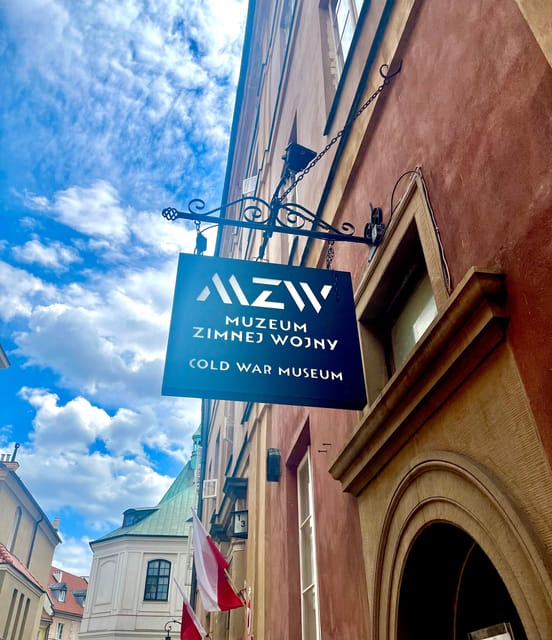
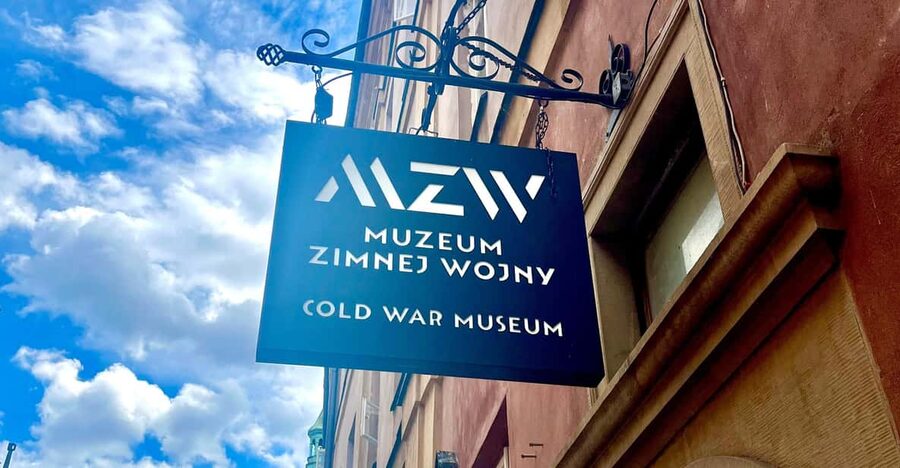
The starting point is practical and easy to find: the tour begins at the Registry Office of the Capital City Warsaw, and your meeting point is about 40 meters from Old Town Square. In other words, you can fit this into a normal Warsaw day without spending half your vacation just reaching the venue.
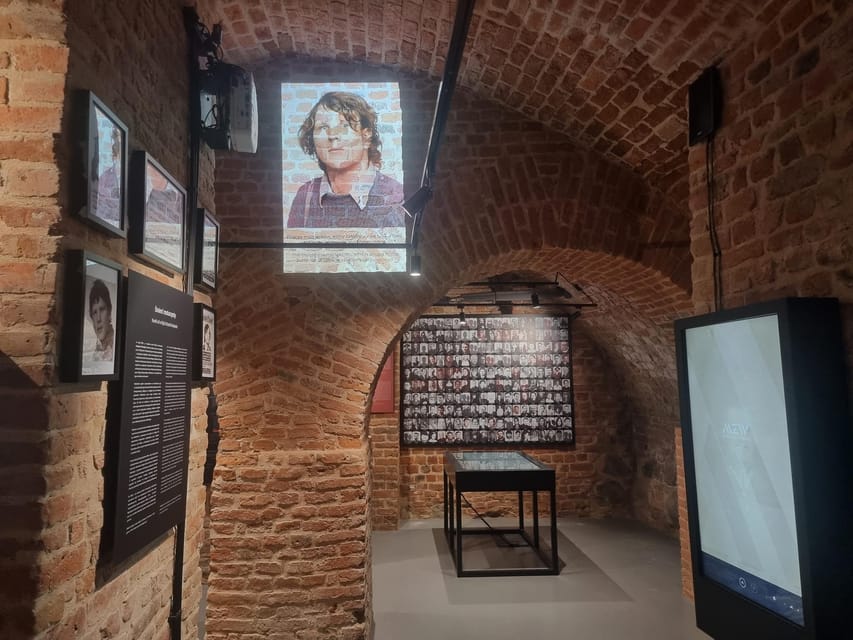
What makes this visit feel different is that the museum is not only about information. The building itself adds weight. The address once housed a communist militia station during the Polish People’s Republic era, and it is tied to the death of Grzegorz Przemyk, a victim beaten to death after martial law. That context matters, because it reminds you the Cold War was not only chess pieces and speeches, it was also control, fear, and consequences.
The museum’s Polish storyline, and why it matters
This museum presents Poland’s contribution to the victory over Soviet communism, and it covers the whole Cold War period. What I appreciate is that it is not a generic East vs West slideshow. The exhibition is designed to show how the rivalry looked from a Polish point of view, and it is described as the only institution to do this from Poland.
You also get a clearer sense of “who” rather than just “what.” A big part of the museum narrative centers on three major late Cold War figures: President Ronald Reagan, Pope John Paul II, and General Ryszard Kukliński. That choice helps you connect big international events to real decision-makers and real pressure points, instead of letting the topic stay abstract.
Expect the exhibition to speak about victims, aggressors, and survivors. You will see how the story is told through messages, commitment, and actions linked to those figures, and the result is that the Cold War feels less like a chapter ending around 1991, and more like something that shaped lives right up to the end.
Guided tour structure: fast enough, not rushed
You get a guided tour in the museum, with a total time window of about 90 minutes to 2 hours. That is a sweet spot for this kind of subject. The Cold War spans decades, but the pacing keeps you from feeling lost in timelines or buried in details.
The tour is offered in Polish and English as live-guide languages, and guided tours can also be available in other languages as part of the offering. In plain terms, you should be able to match the tour language to your group.
I also like that the tour includes access to all exhibition attractions, not just a talk in front of a few display cases. One review noted that the guide was also the museum’s director, Filip, and that he delivered an amazing survey of Poland through the Cold War years after World War II and during partition into the Soviet bloc. Another review mentioned Cyprian, praised for being engaged and very knowledgeable about what you are seeing. Even if your guide is different, the point is that the storytelling is clearly a priority, not an afterthought.
Original Cold War artifacts plus modern interaction
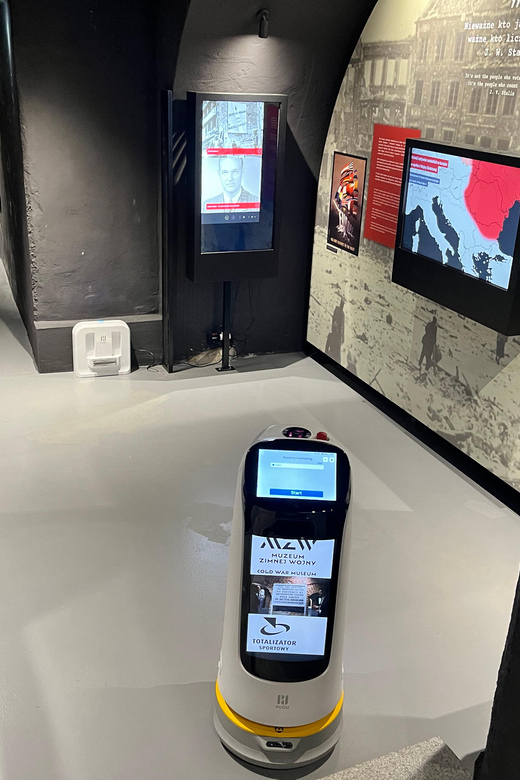
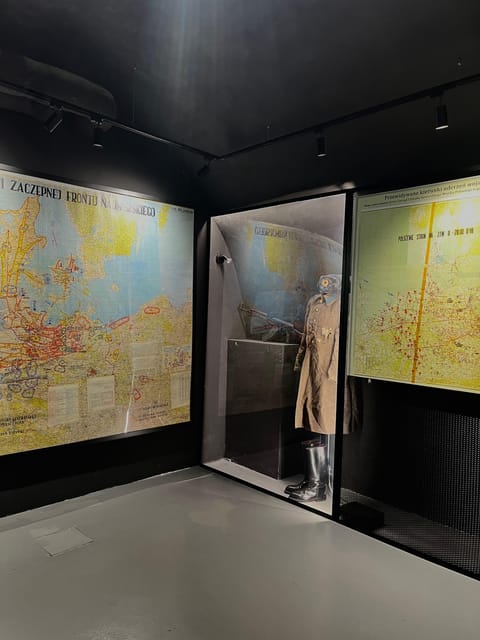
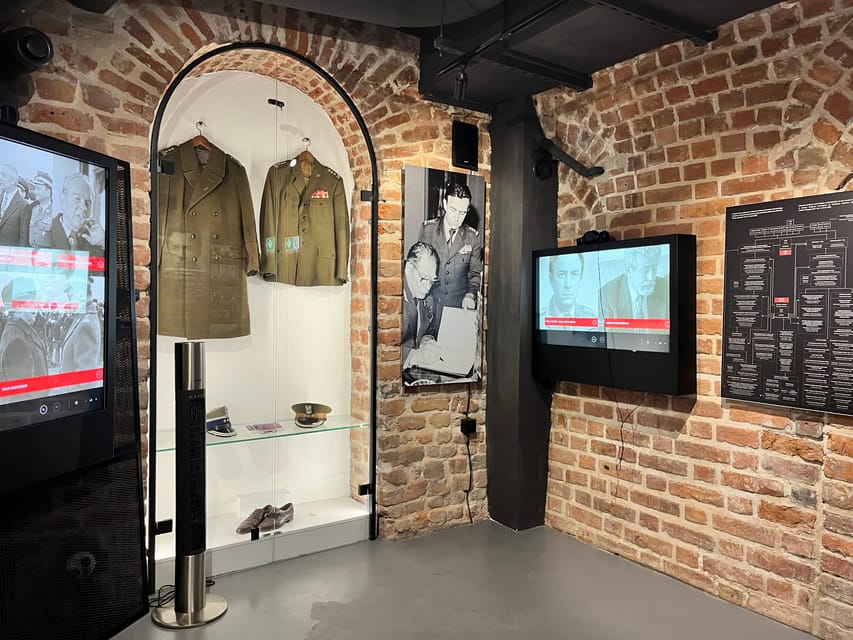
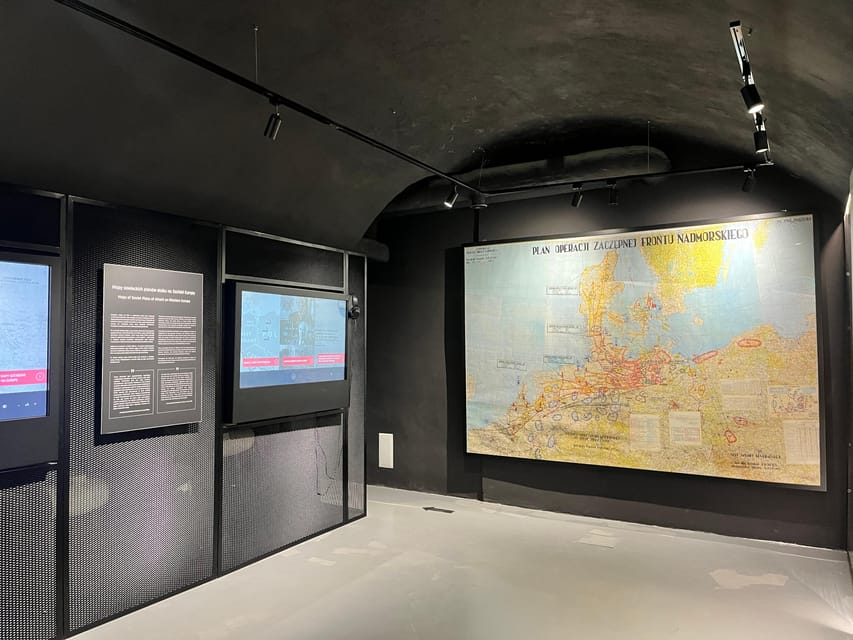
The museum mixes old-school evidence with modern media. You can see original devices, maps, and uniforms used during the Cold War, and those objects give the exhibits a physical anchor. It is one thing to read about an era, it is another to stand close to items tied to it.
Then the museum shifts into high-tech learning. The exhibition uses more than 50 multimedia elements, including touch screens and multimedia tables. There is also a cinema component and VR goggles. If you prefer active learning, this setup works well because you spend time making choices, answering prompts, and moving through scenes, not just standing still.
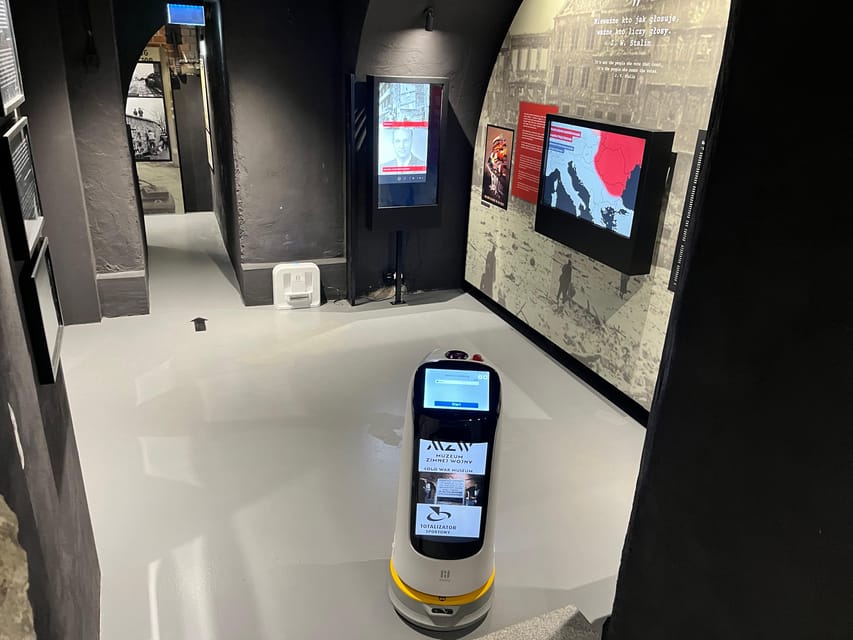
The robot deserves a mention too. The museum is described as the first and only museum in Poland to have an autonomous guide robot. That does not replace the human guide, but it adds a memorable layer, especially if you like the blend of history and present-day interpretation.
Below are the other Warsaw trips we have logged
- 3-Hour Guided Cycling Tour of Warsaw★ 4.9 · 624 reviews
- Warsaw: Old Town Guided Walking Tour★ 4.9 · 599 reviews
- Half-Day Polish Food Walking Tour with Guide and Dinner★ 4.5 · 381 reviews
- From Warsaw: Guided Tour to Auschwitz-Birkenau and Krakow★ 4.4 · 363 reviews
- Small-Group Historical Guided Tour of Warsaw with pick up/drop off. Public Tour.★ 4.5 · 343 reviews
The multimedia quiz: a smart way to remember dates
A highlight of the tour is a multimedia knowledge quiz about the Cold War. This is not “sit and listen” history. It is structured like a game, which helps your brain do the work of remembering connections.
Why this matters: Cold War timelines can blur together quickly, especially when you are traveling and juggling multiple cities. The quiz forces retrieval, the simplest form of learning. After the tour, you are more likely to recall key moments and themes because you practiced them, even briefly.
Also, the museum’s focus is not only on the United States and the Soviet Union. The exhibition content is framed around all countries involved in the struggle against Soviet communism, so the quiz tends to reinforce broader context rather than a two-actor story. That makes it more useful if you want to understand the “why” behind events, not just the “names.”
Space-flight history, then a hologram that changes the mood
One of the coolest segments is the history of space flights during the Cold War. You see how the competition extended beyond Earth, and the museum treats space as part of the rivalry story, not a separate nerdy side quest.
Then comes a hologram of a space station. That single moment can shift the whole experience from politics to perspective. Space imagery has a way of making abstract competition feel cinematic and immediate, and the hologram helps you visualize what propaganda and ambition tried to sell.
You should go in expecting a blend of education and spectacle. The hologram is not just decoration, it is tied to the larger theme of rivalry between blocs and the stakes behind technological achievement.
Three VR games that turn rivalry into experience
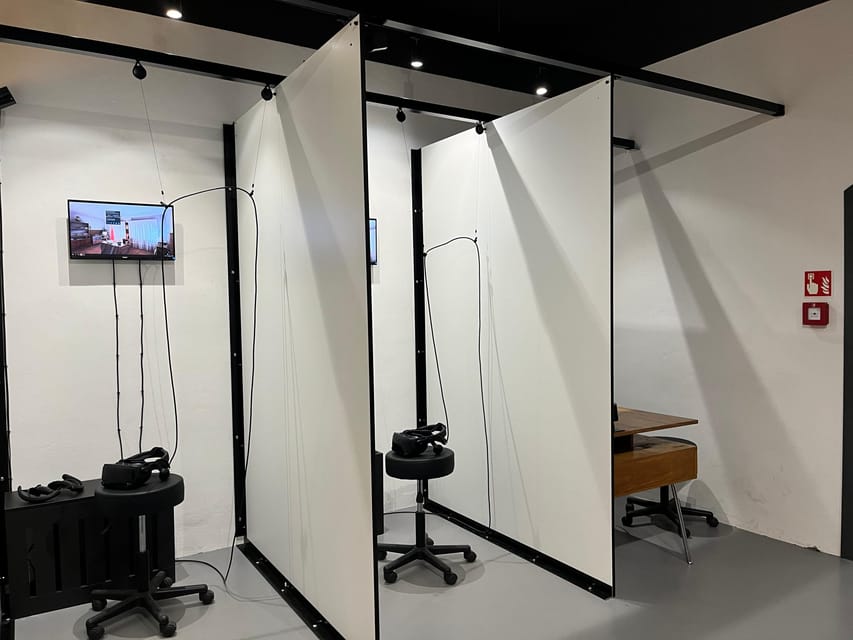
The tour includes playing three VR games using VR goggles. This is the “make it real” part of the visit. Instead of treating the Cold War like a museum diorama, the VR sections let you feel like a participant inside key Cold War scenarios.
A few practical thoughts for getting the most from the VR. Pay attention to instructions from your guide so you understand what each game is testing, because the museum is using VR as another learning tool. Also, if you are sensitive to motion or intense effects, pace yourself. The VR experience is memorable, so you want it to feel good, not exhausting.
Reviews also hint that the interactive vibe lands well with younger visitors, including teens. One family shared that interactive activities surprised them in a good way when they brought kids aged 12 and 16. That is consistent with how this museum is designed, it offers more than static displays.
The human side: Reagan, John Paul II, and Kukliński
The Cold War Museum narrative places a strong spotlight on President Ronald Reagan, Pope John Paul II, and General Ryszard Kukliński. These names are not treated as trivia. They are tied to messages and commitment, and they are used to explain how ideas and actions influenced the course of the era.
What makes this segment valuable is that it gives you anchors. It is easier to follow complex history when you can connect it to a few key people whose roles change over time. The museum framing suggests that the endgame of the Iron Curtain was not only about military balance, but also pressure, moral authority, and intelligence and decision-making.
General Kukliński is specifically highlighted as a crucial figure in bringing about the collapse of the Iron Curtain, and one review said they knew nothing about him before the tour and walked away calling him the single most important figure in the eventual collapse. Even if you already know his name, the museum is set up to show why his role gets attention.
Atmosphere and architecture, not just screens
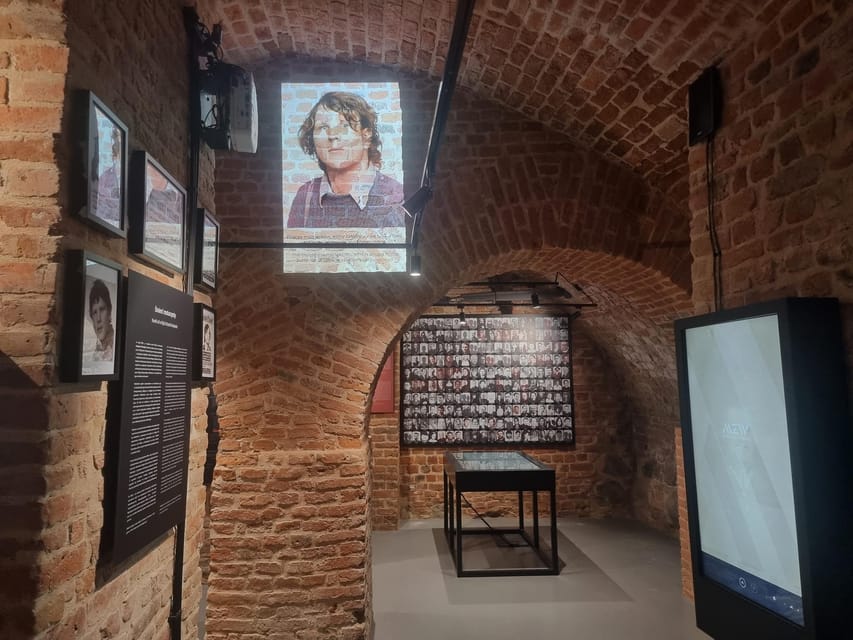
The museum experience is shaped by both architecture and storytelling. The dynamic combination of the building’s history and the exhibition’s narrative is part of what makes it unforgettable. Because the location ties back to communist-era policing and repression, the exhibits do not drift into sterile explanation.
This is also where the “seriousness” of the subject shows. You are not only learning about power struggles, you are also learning about victims, aggressors, and survivors. The museum’s description makes it clear that it aims to present consequences, not just events.
If you like museums that respect the weight of what they show, you will likely appreciate the tone. If you prefer only light entertainment, the Cold War material may feel heavy, since the exhibition is designed around real human harm and political oppression.
Price and value: $78 for up to 10, in a 90-120 minute package
The price is listed at $78 per group up to 10, with a duration of 90 minutes to 2 hours. That pricing structure can be a good value if you are traveling as a small group, like a couple, or a family of three to five. Instead of paying per person, you split one group rate.
You are also paying for guided interpretation plus full access to the exhibition attractions, including the quiz, hologram content, and VR games. Many museums charge separately for interactive elements. Here, the value comes from time efficiency: you get a focused introduction plus interactive learning in one guided session.
So the value question is not just cost. It is whether you want the museum’s story explained while you are inside it and using the same exhibits you came to see. If you want that structure, the group-rate pricing makes sense.
Who this tour suits best
This museum works best for people who want more than passive history viewing. If you like interactivity, you will probably enjoy the touch screens, multimedia tables, quiz, cinema elements, and especially the VR games and hologram.
It also fits families with older kids and teens. One review mentioned that a family’s teens got a learning boost from interactive parts, and that the museum is friendly to children. At the same time, the topic is intense, so it is best for ages that can handle real historical violence and political repression.
If you are a wheelchair user, you will need to consider alternatives, because the tour is not suitable for wheelchair users. If mobility is fine, you should feel comfortable that the museum is designed for a wide audience, with the added note that pets are welcome in the museum.
Practical tips to make your visit smoother
Keep in mind the museum rules: no smoking, no food and drinks, no vaping, and no alcohol or drugs. That is pretty standard for museums, but it matters because you might be planning snacks before or after.
Plan for a total visit time that fits within 90 minutes to 2 hours, and remember that the VR and quiz parts take more time than you might think. If you want better flow through the VR segments, listen carefully when the guide tells you what is next.
Lastly, because the meeting point is close to Old Town Square, build this into your walking route. You will lose less time to transit and you can pair the tour with other nearby sights if your schedule allows.
Should you book the Warsaw Cold War Museum guided tour?
Book it if you want a Polish-leaning Cold War story that mixes real artifacts with high-tech learning. I especially think it is a strong choice if you enjoy interactive exhibits like the multimedia quiz, hologram space content, and the three VR games, because those elements do not feel like extras, they feel central to how the museum teaches.
Skip it or reconsider if wheelchair access is an issue for your group, since this tour is not suitable for wheelchair users. Also, if you know you dislike emotionally heavy historical content, you should think about whether the museum’s focus on victims and repression is your style.
If your group can walk comfortably and you want an organized introduction that keeps you engaged, this is the kind of museum visit that makes history stick.
FAQ
Where does the guided tour start?
The starting location is the Registry Office of the Capital City Warsaw.
How long is the guided tour at the Cold War Museum?
It runs about 90 minutes to 2 hours.
What does the tour cost?
The price is $78 per group for up to 10 people.
What is included in the price?
Admission to the exhibitions is included, along with access to all attractions within the exhibition, and a guided tour.
What languages is the live guide available in?
The live tour guide is available in Polish and English.
Is there a meeting point near Old Town Square?
Yes, the meeting point is about 40 meters from Old Town Square.
What interactive attractions are part of the tour?
You can take part in a multimedia knowledge quiz, see a hologram of a space station, and play three VR games.
Does the museum cover the entire Cold War period?
Yes, the exhibition covers the entire Cold War period.
Are tickets available to skip the ticket line?
Yes, skip the ticket line is included.
Is this activity suitable for wheelchair users?
No, it is not suitable for wheelchair users.
More Tours in Warsaw



More Tour Reviews in Warsaw

Warsaw, Keep Looking
Recently written up around Warsaw


More Warsaw City Tours.
 ★ 4.8Chopin Concert in the Old TownFrom $262,287 reviews
 ★ 4.6Traditional Galar Cruise on The Vistula RiverFrom $201,640 reviews
 ★ 4.7Old Town Highlights Walking Tour in EnglishFrom $261,516 reviews
 ★ 4.8Warsaw Concert: Chopin – Painted by Candlelights with WineFrom $251,442 reviews
 ★ 3.6City Sightseeing Hop-On Hop-Off Bus TourFrom $411,415 reviews
 ★ 4.7POLIN Museum of the History of Polish Jews TicketFrom $121,142 reviews
 ★ 5.0#1 Pub Crawl Warsaw with Optional Premium 1 Hour Open BarFrom $28790 reviews
 ★ 4.6Polish Vodka Museum Tour with TastingFrom $22788 reviews
Also on these Poland lists