
REVIEW · WARSAW CITY TOURS
Warsaw Highlights of Old & New Town Private Guided Tour
Warsaw’s story is everywhere, if you know where to look. This private walking tour strings together Old Town classics and Royal Castle culture with modern Warsaw stops, plus some of the city’s most important WWII memorials. I especially like how your licensed guide weaves practical local recommendations into the walk, and how the route gives you a fast sense of the old versus the new. One possible drawback: the itinerary is long on foot, so if you struggle to stay on your feet for more than about 3 hours, you may want to plan carefully.
I also like that it is designed for a small group experience with English included, and you can often adjust the plan to match what your group cares about. If you are staying in Warsaw Old Town, pickup can make the start easier, but the meeting point is fixed and you will want to locate it early.
In This Review
- Key Highlights Worth Your Time
- First Stop Energy: Palace of Culture to Hala Koszyki
- Nowy Świat’s Stretch to Złote Tarasy
- The WWII Stops You Should Not Skip
- Old Town Core: Cobblestones, Squares, and Reconstruction
- St. Anne’s Bell Tower Views and the Old Town Upper-Level Feeling
- Barbican, Mermaid, and the Small Details That Make It Feel Real
- Beyond Old Town Walls: New Town Square to Krakowskie Przedmiescie
- Monuments of Loss and Resistance: From Pilsudski Square to Heroes of Warsaw
- Churches, Courtyards, and Chopin’s Warsaw
- Opera and Performance Venues: National Philharmonic to Teatr Wielki
- Royal and Presidential Warsaw: Palaces, Courts, and University Walls
- Science Intervals and the Vistula Waterfront Reset
- Museums and Educational Stops: Curie, Warsaw Museum, and Cultural Realism
- Extra Sights That Add Character: Palaces, Squares, and a Few Quick Stops
- Price and Value for a Private Half-Day to Full-Day Walk
- Pacing, Foot Traffic, and How to Get the Most Out of Your Guide
- Should You Book This Old and New Town Private Tour?
- FAQ
- How long is the Warsaw Highlights of Old and New Town Private Guided Tour?
- Is this tour private?
- What language is the tour offered in?
- Is hotel pickup included?
- Where does the tour start and end?
- Are any entry tickets included?
- Can the itinerary be adjusted to what our group wants to see?
- What is the cancellation policy?
Key Highlights Worth Your Time
- Private guide, English-led: only your group, with a licensed guide leading and adapting the pace to you.
- Old Town center plus Royal Castle: cobblestones, churches, squares, and a museum-focused visit.
- WWII memory sites on the route: ghetto remnants and multiple monuments tied to the Warsaw Uprising and persecution.
- Modern Warsaw contrasts: a skyline moment at the Palace of Culture and a big-deal neighborhood at Złote Tarasy.
- Easy “hangouts” between sights: Nowy Świat for coffee stops, and the Vistula waterfront for a calmer ending.
- Food and culture tips included: your guide shares pointers on local restaurants, patisserie, and pubs.
Warsaw rebuilt itself twice over. Here is how else we saw it
- Warsaw: Chopin Concert in the Old Town
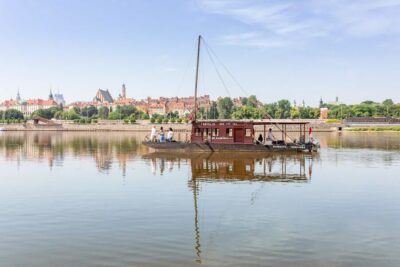
★ 4.8 · 2,287 reviews - Warsaw: Traditional Galar Cruise on The Vistula River
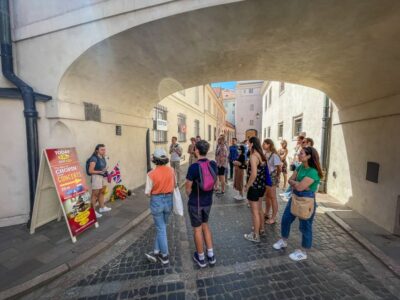
★ 4.6 · 1,640 reviews - Warsaw: Old Town Highlights Walking Tour in English
★ 4.7 · 1,516 reviews - Warsaw Concert: Chopin – Painted by Candlelights with Wine
★ 4.8 · 1,442 reviews
First Stop Energy: Palace of Culture to Hala Koszyki
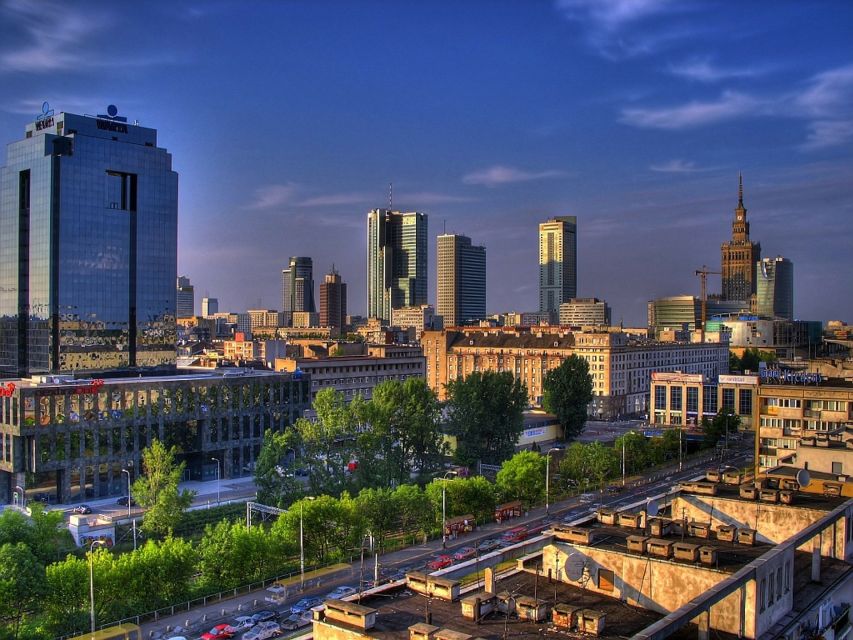
Start your day with a shock of scale. The Palace of Culture and Science towers over Warsaw and is often treated like a city symbol, not just a landmark. Even if the architecture is not your thing, the building helps you understand how Warsaw thinks about visibility and permanence.
Right after that, you’ll head to Hala Koszyki, the food hall feel with chefs and restaurateurs under one roof. This is a smart early break stop because you can grab something light or just browse options without committing to a full sit-down meal. The tour notes it as admission-free, so it works well as a low-stress pause before you start walking again.
Then comes the long, pleasant connector street: Nowy Świat, a well-maintained road that links key sights and keeps you moving through the heart of the city. Many people like this stretch because it is built for wandering, with coffee places along the way. If you have mobility limits, this is still walkable, but it is also a reminder that the day is sight-dense.
Nowy Świat’s Stretch to Złote Tarasy
After Nowy Świat, the route swings into a very different mood with Złote Tarasy. This huge shopping complex is more than a place to shop, because it gives you a clean “modern Warsaw” contrast: big interior spaces, terrace-style architecture, and that mall energy that feels like a time stamp.
Why it matters on a guided walk: your guide can explain how Warsaw’s newer layers sit alongside Old Town reconstruction. That context makes the stops more than checkboxes. Everything here is noted as admission-free, so you are paying for the guide’s interpretation more than for entry tickets.
If your group wants a faster break from walking, Złote Tarasy is practical. If you want more history and less time in shops, ask your guide to keep the pause brief.
The WWII Stops You Should Not Skip
Warsaw’s WWII story is not abstract here. You’ll encounter the Fragment of the Ghetto Wall tucked between buildings, a small, hidden-feeling relic that hits harder because it is not staged like a big museum. Right nearby is the Warsaw Ghetto area itself, described as a district established in late 1940 where more than 450,000 Jews were forced into crowded conditions.
These sections are admission-free on the route, but they are emotionally heavy. A good guide helps you pace the conversation. If your group needs a minute, use it. This is the kind of stop where I think it is worth asking questions instead of rushing ahead.
You may also see the Pomnik Bohaterow Getta, a powerful monument connected to Polish Jews, persecution, and German occupation during WWII. Along the broader route, you’ll also meet other memorial points, including the Warsaw Uprising Monument (architecture that emphasizes effort, strength, and sacrifice) and the Statue of the Little Insurgent, a small figure commemorating children who lost their lives in the Warsaw Rising.
Old Town Core: Cobblestones, Squares, and Reconstruction
Now you shift into the part of Warsaw many people picture: cobblestone lanes and restored buildings. The Old Town area is described as reconstructed after being leveled, with Gothic streets and Baroque palaces and churches brought back to echo the past atmosphere. This is one of those places where the guide really matters. Without context, you can walk through and still miss why certain details feel purposeful.
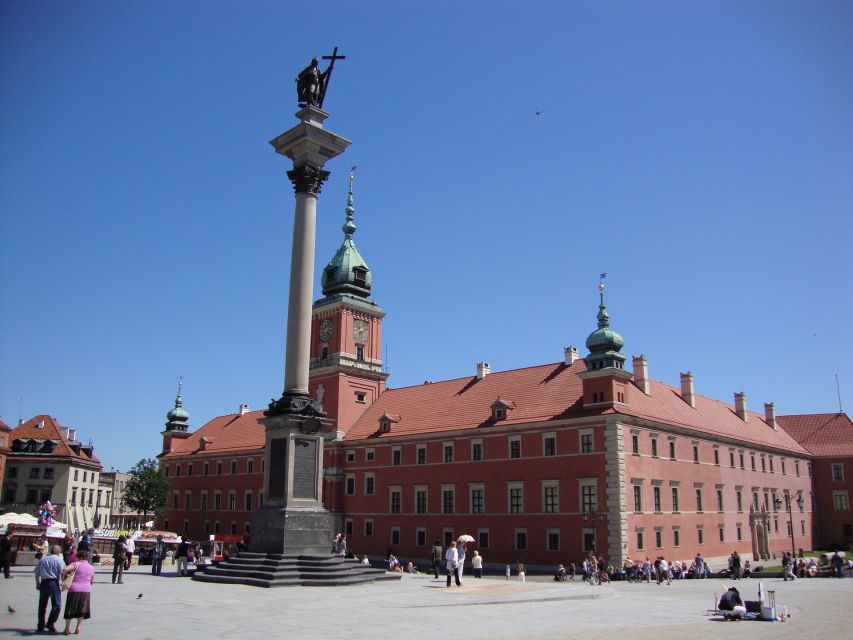
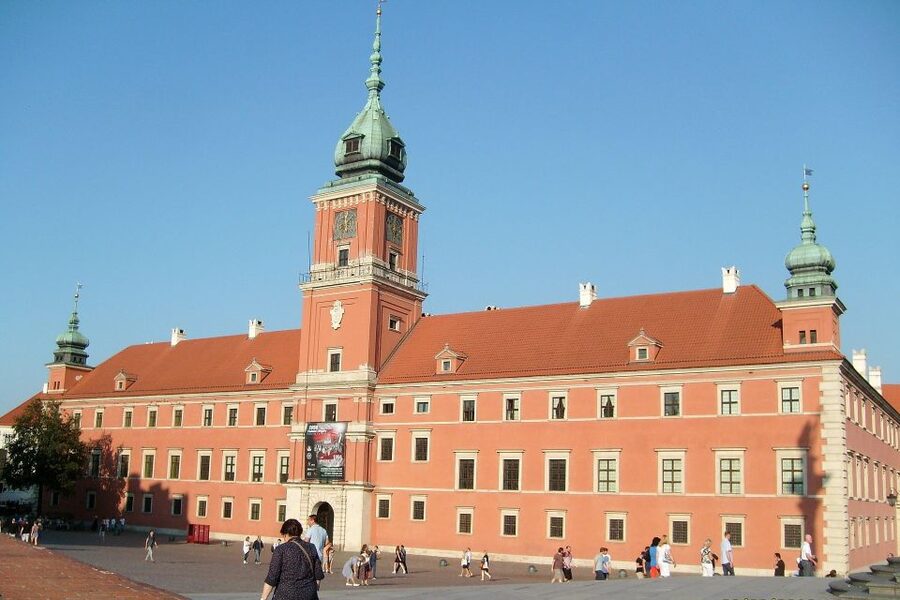
From there, the tour brings you to Rynek Starego Miasta, the Old Town’s lively main square with merchant houses from the 17th and 18th centuries and lots of cafes and shops. Then you’ll move to Castle Square (Plac Zamkowy), topped by the King Zygmunt III Column in the center. It is a great “pause and orient” spot, because you can visually connect where you’ve been and where you are going next.
Next is the centerpiece: Royal Castle in Warsaw – Museum. It served as the central building of the Polish Commonwealth for centuries and was rebuilt after it was dynamited after the Warsaw uprising. Important practical point: the Royal Castle ticket is included specifically in the 6-hours version of the tour. If you book the shorter time, confirm what is included before you assume.
Below are the other Warsaw trips we have logged
- 3-Hour Guided Cycling Tour of Warsaw★ 4.9 · 624 reviews
- Warsaw: Old Town Guided Walking Tour★ 4.9 · 599 reviews
- Half-Day Polish Food Walking Tour with Guide and Dinner★ 4.5 · 381 reviews
- From Warsaw: Guided Tour to Auschwitz-Birkenau and Krakow★ 4.4 · 363 reviews
- Small-Group Historical Guided Tour of Warsaw with pick up/drop off. Public Tour.★ 4.5 · 343 reviews
St. Anne’s Bell Tower Views and the Old Town Upper-Level Feeling
One of the most rewarding experiences on the route is the climb for perspective. You can visit the Observation Terrace on the Bell Tower of St. Anne’s Church, noted as something you can potentially arrange for request. The value here is simple: the view gives you the “Old Town up close” feeling while also showing how the city center stretches out in the distance.
You’ll also spend time at St. Anne’s Church (Kosciol Swietego Krzyza), described as beautifully decorated with a peaceful vibe, and it houses the heart of Chopin. This is a major cultural stop, and it is one where timing can matter. The tour notes that entry may be possible for request, so ask your guide when they expect to stop so you can plan around any access limits.
Nearby in spirit but different in style is Archikatedra Sw. Jana Chrzciciela, a distinguished church originally built in the 13th century and tied to royal coronations and national celebrations. The tour notes entry may be possible for request, which is useful because it keeps the walk flexible based on what the church allows that day.
Barbican, Mermaid, and the Small Details That Make It Feel Real
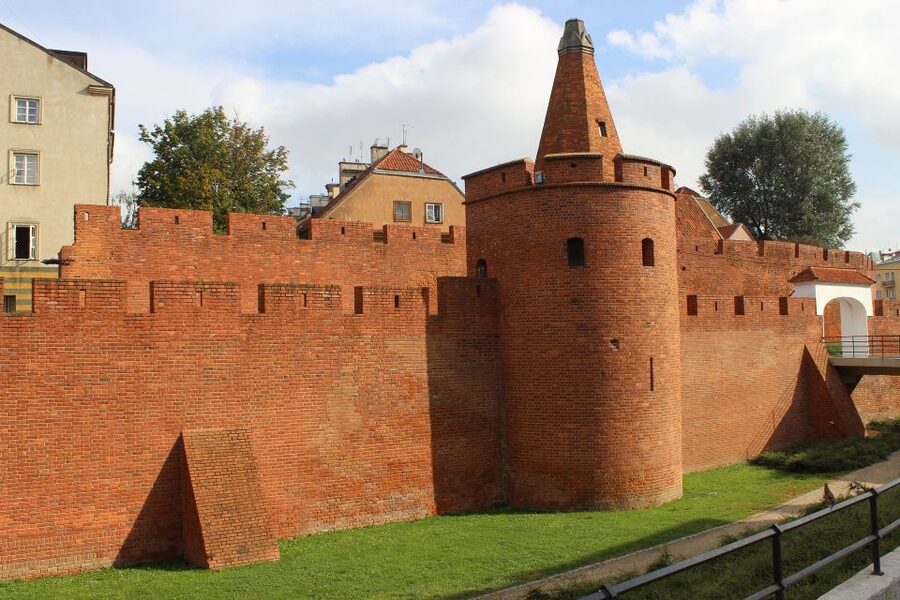
Warsaw’s defensive past shows up at Warsaw Barbican (Barbakan Warszawski), a 16th-century fortress part of the old fortifications guarding the northern entrance near Novomejska Gate. Even if you only get a short look, it gives you a clear sense that Old Town was never just “pretty streets,” it was a system.
Then you get a more playful historical note with the Warsaw Mermaid. It is a sculpture in a square, and the tour notes there is a hidden legend behind it. If your guide tells you the story, it turns a quick photo stop into a memorable cultural moment.
Add the Wishing Bell, a 17th-century bronze bell set in a courtyard, and the walk becomes less museum-like. These little stops are why a guided route helps. A guide can explain what looks like trivia is often part of local tradition.
Beyond Old Town Walls: New Town Square to Krakowskie Przedmiescie
Your tour expands outward with the New Town Square, described as founded by John III Sobieski to celebrate his Viennese victory over the Turks in 1683. It is quieter than Rynek Starego Miasta, and the Renaissance and Baroque church of the sisters of the Holy Sacrament add architectural texture without feeling like overload.
Then comes Krakowskie Przedmiescie, the “Road of Kings,” running about 2.5 miles and lined with historic buildings connected to the city’s power past. This stretch is where the city starts to feel like a long, continuous story instead of separate stops. It is a good place to slow down and let your guide walk you through what buildings used to represent.
Monuments of Loss and Resistance: From Pilsudski Square to Heroes of Warsaw
The emotional spine of the day keeps showing up in new locations. You’ll encounter Plac Marszalka Jozefa Pilsudskiego, a major parade square with the Monument of the Unknown Soldier. Even if you are not into monuments, this is the kind of stop where the scale helps you understand how the city frames sacrifice.
You may also see Monument to the Fallen and Murdered in the East, commemorating 1.5 to 2 million Poles sent by the Soviet Union to labor camps. Another nearby-feeling marker is Monument to the Heroes of Warsaw, often called the Nike of Warsaw, commemorating those who fought against Nazi occupation.
Then there is Pomnik Bohaterow Getta again in the same emotional lane, plus the Statue of the Little Insurgent for the human, personal cost. If your group wants less intensity, choose a few questions for the guide and then take a short mental break, but try not to skip these stops entirely. They are part of understanding modern Warsaw.
Churches, Courtyards, and Chopin’s Warsaw
Warsaw has a strong “music and faith” thread in this route. You’ll start that theme with Holy Cross Church, which holds the heart of Chopin and is described as richly decorated but peaceful. Then there’s Chopin’s Bench, a multimedia bench idea that presents Chopin’s music through technology. The point is not just to stand near a landmark, but to connect the city to its cultural identity.
Also on the church side, you’ll pass Church of Jesuits, an imposing red exterior with ornate interiors noted as higher than you expect. You’ll also see Church of St. Joseph of the Visitationists, originally a wooden chapel and rebuilt after it burned down, with an interior described as plain and austere. You’ll also come by Carmelite Church – Our Lady of the Assumption, a baroque church near the presidential palace with double pillars and grand stone lampions, and the tour notes an interesting story about Napoleon and Paris.
For a quick, distinct cultural contrast, you’ll meet Zacheta Gallery, a contemporary art space with a white building described as beautiful. This stop works even if you do not plan to enter, because the exterior gives you a sense of what Warsaw values today.
Opera and Performance Venues: National Philharmonic to Teatr Wielki
If you like architecture tied to arts, this part pays off. The National Philharmonic is presented as a pride of Poland for musicians and classic music, with a big history behind it. Even if you do not attend a performance, you get a sense of the seriousness of Warsaw’s cultural world.
Later, you’ll also see Teatr Narodowy, with an impressive exterior, charming in both daytime and nighttime lighting. On top of that, you’ll visit Teatr Wielki – Polish National Opera, described as Poland’s leading opera, ballet, and concert venue. It is the kind of building that makes you slow down and look at the details.
If you want the most value from these stops: ask your guide to point out one or two architectural features you might otherwise miss. These stops are often quick, but with the right explanation they feel longer.
Royal and Presidential Warsaw: Palaces, Courts, and University Walls
You’ll pass multiple impressive institutional buildings. Krasinski Palace is noted as impressive externally, and the route suggests the reconstruction was done well. Then the walk includes the Field Cathedral of the Polish Army, with a simplistic beauty and a rebuilt feel, noted as only outside for this tour.
For the seat of power, there’s Palac Prezydencki, a neo-classic building where the Polish president resides, heavily guarded. Even without entry, the surroundings and the palace exterior are a good reality check on how Poland’s modern political center looks.
Right in this theme, you’ll also encounter University of Warsaw and the University of Warsaw Library. The library rooftop garden is described as a quieter place with peaceful architecture and possible access for request. The whole point here is change of pace. You can use it to reset after heavy memorial stops.
Science Intervals and the Vistula Waterfront Reset
This route gives you at least a couple “lighter” intermissions. Copernicus Science Centre is noted as one of Europe’s largest with over 400 exhibits, but for this tour you may see it only from the outside. Still, the building is described as fantastic.
Then comes Multimedia Fountain Park, a visual delight mixing music, light, and fountains, with a possible viewing for request. It is a good place to burn off energy without feeling like you must be “on” for another museum-level moment.
For open air, head to Vistula, Warsaw’s developing waterfront. The tour frames it as more relaxed, with new boulevards and waterside pubs opening as the area grows. This makes a strong end-of-day vibe because you can walk, linger, and decompress.
You can also pair the river with St. Mary’s Church (Kosciol Najswietszej Marii Panny), where the tour notes Gothic architecture and a small park behind it with steps leading down toward the banks of the Vistula. If those steps are accessible that day, it turns the church stop into a mini landscape experience.
Museums and Educational Stops: Curie, Warsaw Museum, and Cultural Realism
Even when you only see buildings, the tour uses them to shape the story. Museum of Warsaw is described as collecting objects from Warsaw, researching them, and making them available to the public, with this tour noting only the building exterior. Muzeum Marii Sklodowskiej-Curie (Marie Curie museum) is also noted as exterior only, with a focus on her life and work and her Nobel Prizes, even if you do not enter.
You’ll also see Monument of Nicolaus Copernicus, described as one of Warsaw’s top landmarks in a nice square. There is also a quick mention of Monument of Nicolaus Copernicus as a major landmark, so it is worth using a few minutes to stand and look.
If science and education themes matter to your group, this sequence makes sense. If not, keep an eye on time and ask your guide to shorten museum-exterior stops to protect your energy for the Old Town core.
Extra Sights That Add Character: Palaces, Squares, and a Few Quick Stops
A tour like this works because it includes the right “in-between” points. You’ll also stop at Grzybowski Square, with the renovated Prozna street nearby and lots of options for dining and drinking. It is a helpful location if your tour ends and you still want food nearby.
You’ll pass Adam Mickiewicz Monument, an impressive set of decorations, steps, and sculptures around the monument. The route also includes Church of St. Joseph of the Visitationists, already noted for its austere interior, and Church of Jesuits for ornate contrast, which helps the day avoid feeling like one style only.
Finally, the tour includes Field Cathedral of the Polish Army exterior, and a mix of memorial and cultural stops that keep your mental picture of Warsaw from becoming a single-theme trip.
Price and Value for a Private Half-Day to Full-Day Walk
The price is $137.33 per person, with a 4 to 6 hour duration. For Warsaw, the value depends on one thing: how much you want a guide to interpret instead of you just walking between sights on your own.
If you care about WWII context and want someone to explain why the city rebuilds what it rebuilds, a private guide is often worth it. If you only want a few iconic photos, you might feel the cost is high, especially because a lot of stops are short and based on walking time.
The best “value move” here is to use the private format. Ask your guide for restaurant, patisserie, and pub recommendations during the tour, then turn those suggestions into your meal plans. That is where you start getting your money back in real-world convenience, not just sightseeing.
Pacing, Foot Traffic, and How to Get the Most Out of Your Guide
This itinerary is packed. Even when admission is free or stops are exterior-focused, you are still walking between multiple landmarks and memorials. I suggest wearing shoes that handle cobblestones and planning to take water breaks without rushing.
The tour program is adapted to your group’s preferences, so you can nudge the route if you know what you want. If your group loves views, prioritize the St. Anne’s bell tower terrace. If your group wants music, lean into Holy Cross Church and Chopin’s Bench. If your group is more historical, spend extra time on ghetto and uprising memorial points, because those stops are hard to replace with a self-guided walk.
One practical caution: the meeting point matters. The start is at Museum of Warsaw, Rynek Starego Miasta 42, and the tour ends at plac Marszałka Józefa Piłsudskiego. If you arrive late or have trouble locating the exact starting spot, the tour can feel stressful at the beginning, even when the guide is great once you meet.
Should You Book This Old and New Town Private Tour?
Book it if you want one guided route that combines three big Warsaw themes: Old Town reconstruction, WWII memory, and classic Polish culture like Chopin and major performance venues. It is also a good fit if you like the idea of a guide giving you practical meal and drink suggestions so the day flows naturally.
Skip or adjust it if you need fewer hours standing and walking. The route is dense, and some stops are described as optional for request, meaning you may need to manage expectations about how much you can add without stretching the day.
If you are choosing between time options, remember that the Royal Castle entry ticket is included in the 6-hours version. That detail matters for value, especially if the Castle is your top priority.
FAQ
How long is the Warsaw Highlights of Old and New Town Private Guided Tour?
It runs about 4 to 6 hours.
Is this tour private?
Yes. It is a private tour, meaning only your group participates.
What language is the tour offered in?
The tour is offered in English.
Is hotel pickup included?
Pickup is offered only for hotels in Warsaw Old Town. If you are staying outside Old Town, you are encouraged to arrange your own transportation.
Where does the tour start and end?
It starts at Museum of Warsaw, Rynek Starego Miasta 42, 00-272 Warszawa and ends at plac Marszałka Józefa Piłsudskiego, Warszawa.
Are any entry tickets included?
Royal Castle in Warsaw museum entry is included in the 6-hours version. Many other stops on the route are listed as admission-free, and some are possible for request.
Can the itinerary be adjusted to what our group wants to see?
Yes. The tour program is adapted to the preferences of the group.
What is the cancellation policy?
You can cancel for a full refund up to 24 hours in advance of the experience start time.
More Tours in Warsaw



More Tour Reviews in Warsaw


Warsaw, Keep Looking
Recently written up around Warsaw


More Warsaw City Tours.
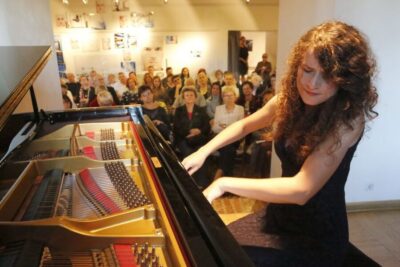 ★ 4.8Chopin Concert in the Old TownFrom $262,287 reviews
 ★ 4.6Traditional Galar Cruise on The Vistula RiverFrom $201,640 reviews
 ★ 4.7Old Town Highlights Walking Tour in EnglishFrom $261,516 reviews
 ★ 4.8Warsaw Concert: Chopin – Painted by Candlelights with WineFrom $251,442 reviews
 ★ 3.6City Sightseeing Hop-On Hop-Off Bus TourFrom $411,415 reviews
 ★ 4.7POLIN Museum of the History of Polish Jews TicketFrom $121,142 reviews
 ★ 5.0#1 Pub Crawl Warsaw with Optional Premium 1 Hour Open BarFrom $28790 reviews
 ★ 4.6Polish Vodka Museum Tour with TastingFrom $22788 reviews