
REVIEW · WARSAW CITY TOURS
Warsaw History and Reality Walking Tour
From the Mermaid to the Royal Route, Warsaw makes sense fast. This 2.5 hour walking tour strings together WWII reality with real architecture, from the Old Town’s reconstructed streets to the Vistula-side library garden. You’ll also get the kind of local storytelling that turns landmarks into people, not postcards.
What I like most is the mix of big sights and small moments. You start with the Pomnik Syreny legend and end at a lively city square, then spend real time around St. Anne’s Church and the Old Town lanes instead of rushing past them.
One thing to consider is that this is an outdoor walk, so the experience depends on good weather. If rain shows up, you may need a different date, and you will still be on your feet most of the time.
In This Review
- Key highlights you will care about
- A Warsaw walk that connects symbols to real places
- Start where the city’s logo meets WWII, Pomnik Syreny
- University of Warsaw Library rooftop garden, a view you can actually use
- The WWII-rebuilt district, where the city explains itself in streets
- St. Anne’s Church and the Royal Castle square area
- Old Town walking time that favors the details
- Krakowskie Przedmieście Royal Route, Presidential Palace and Chopin’s first public moment
- Plac Marszalka Józefa Pilsudskiego and the Saxon Garden reset
- What the small group and English format mean for your day
- How much walking is it, and who will enjoy it most
- Practical details before you go, what to plan for
- Should you book this Warsaw History and Reality Walking Tour?
- FAQ
- How long is the Warsaw History and Reality Walking Tour?
- How much does the tour cost?
- Where does the tour start and end?
- Is the tour offered in English?
- What is included in the price?
- Is coffee or tea included?
- How big is the group?
- Is the rooftop garden part seasonal?
- Do I need a mobile ticket?
- Is the tour dependent on weather?
Key highlights you will care about
- Small group size (max 10), which keeps the pace human and questions easier to answer
- University Library rooftop garden (April to October) plus the viewing terrace ticket included
- WWII context tied to major symbols, not just dates on a poster
- Old Town reconstruction walk that helps you understand what was rebuilt and why
- Krakowskie Przedmiescie Royal Route landmarks, including the Presidential Palace and its sculpted lions
- Plac Marszalka Józefa Pilsudskiego and the Saxon Garden as a calm close to the walk
Warsaw rebuilt itself twice over. Here is how else we saw it
- Warsaw: Chopin Concert in the Old Town
★ 4.8 · 2,287 reviews - Warsaw: Traditional Galar Cruise on The Vistula River
★ 4.6 · 1,640 reviews - Warsaw: Old Town Highlights Walking Tour in English
★ 4.7 · 1,516 reviews - Warsaw Concert: Chopin – Painted by Candlelights with Wine
★ 4.8 · 1,442 reviews
A Warsaw walk that connects symbols to real places
Warsaw can feel like two cities at once: the historic fabric you can still see, and the parts that were rebuilt after WWII. This tour leans into that tension in a useful way. You will walk through the spaces where the city’s identity had to be re-made, then notice how design choices reflect that history.
The format also helps. You get short stops, guided stories at each one, and enough time to look around. Many sights are listed as free to enter, so your money mostly covers the guide time and the included terrace ticket.
At $114.39 per person for about 2 hours 30 minutes, the value is best if you want context. If you only want a self-paced stroll, you could recreate the route on your own. But if you want “why is this here” answers, this is the kind of tour that pays for itself through understanding.
Start where the city’s logo meets WWII, Pomnik Syreny
You begin at the Mermaid’s Statue near Generała George’a Smitha Pattona. This is a smart starting point because the mermaid is not a random decoration, it is Warsaw’s identity badge.
You will learn why the Mermaid appears in the city’s coat of arms and who served as the model for the sculptor. Then the guide connects that symbol to a WWII-related story, which is a theme you see again later with the rebuilt Old Town.
This first stop lasts about 10 minutes, so it is not too much theory upfront. It sets the tone: pay attention to what looks familiar, because the meaning behind it can be anything but simple. Also, the stop is marked as free admission, so you are not waiting in lines right away.
University of Warsaw Library rooftop garden, a view you can actually use
Next comes the University of Warsaw Library area, and the big reason to care is the rooftop garden. It is only open April through October, and the idea is modern library function plus green space that respects the shape of the Vistula embankment.
The tour includes entrance ticket for a viewing terrace, so you are not paying extra for the best perspective. Expect a river and city view from up high. Even if you do not love heights, you will get a helpful bird’s-eye sense of where the neighborhoods sit and how the walk’s landmarks line up.
This stop runs about 40 minutes, which is a gift of time. You can read the guide’s points, then take a moment to look at the skyline and the river bend without feeling rushed.
Possible drawback here: if you visit outside the April to October window, you might not get the full rooftop garden experience. The tour listing specifically calls out the garden’s seasonal opening, so plan your dates accordingly.
The WWII-rebuilt district, where the city explains itself in streets
Between the library and St. Anne’s Church, the itinerary includes a stop focused on the first district in Warsaw rebuilt after WWII. The intent is to support the workers who helped with the Old Town reconstruction, so the story is connected to labor, recovery, and rebuilding decisions.
The details at this point are less about a single named building and more about understanding urban planning after destruction. When you walk these streets with that context, the reconstruction logic becomes visible. You start noticing which areas feel like they were designed for function first, then identity second.
Because the district name is not provided in the tour info you shared, you should treat this as an interpretive stop. You will likely get guided explanation of what makes it “first” and how that role shaped the neighborhood’s character.
Below are the other Warsaw trips we have logged
- Warsaw: Old Town Guided Walking Tour★ 4.9 · 599 reviews
- Half-Day Polish Food Walking Tour with Guide and Dinner★ 4.5 · 381 reviews
- Warsaw: Warsaw Ghetto Private Walking Tour with Hotel Pickup★ 4.9 · 369 reviews
- Old Town Warsaw Walking Tour★ 4.5 · 333 reviews
- Warsaw: Jewish History Guided Walking Tour in English★ 4.7 · 324 reviews
St. Anne’s Church and the Royal Castle square area
St. Anne’s Church (Kosciol Swietej Anny) is one of the emotional anchors of the tour. The listing calls it one of Warsaw’s most beautiful baroque churches, and that is exactly the kind of building where a good guide makes a difference.
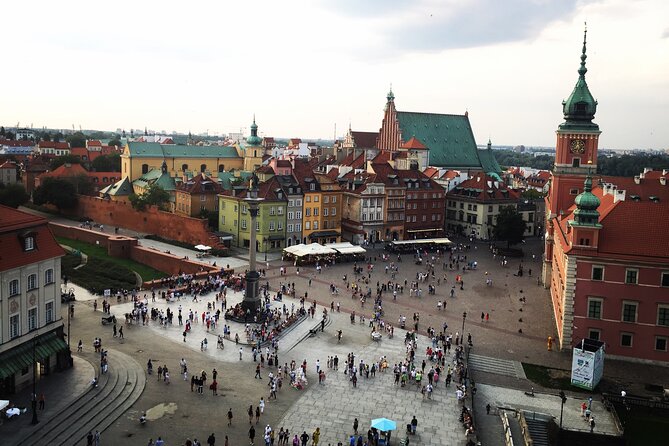
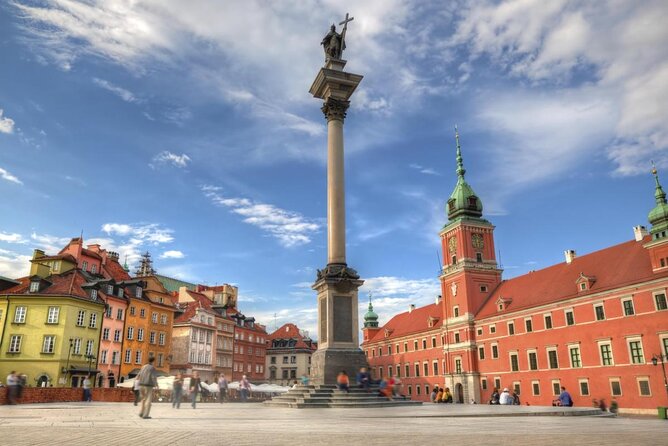
Here you also connect the church area to Royal Castle square and see beautifully reconstructed tenement houses in the Old Town. This cluster matters because it shows how rebuilding tried to restore atmosphere, not just survive.
Your stop is about 15 minutes, so you will want to manage your expectations. You can look closely at architectural details, but you will not have a long museum-style visit. Still, it is the kind of quick guided stop that helps you know what to look for, like facade features and baroque cues that are easy to miss when you are walking fast.
Old Town walking time that favors the details
Then you step into the Old Town proper. The tour frames it as cobblestone Gothic streets and alleyways, plus churches and tiered burgher tenement houses reconstructed to reflect a past atmosphere.
This is one of the best places for people-watching and close-up architecture. You will stroll lanes, admire facade details, and hear about why certain spots feel the way they do today. The itinerary also notes a favorite place of lovers, which signals that the Old Town still carries a lived-in, romantic side, not only a historical one.
The Old Town portion is listed as about 30 minutes. That is enough time to enjoy the feel of the streets without feeling like a stampede. Just remember you are on cobblestones. If you have sensitive feet, bring supportive shoes.
Krakowskie Przedmieście Royal Route, Presidential Palace and Chopin’s first public moment
After the Old Town, you move onto Krakowskie Przedmiescie, described as a 2.5 mile Royal route. This is the long, elegant stretch where Warsaw becomes ceremonial. It’s also a practical walk segment because you can see buildings in a sequence instead of bouncing between tiny pockets.
The tour highlights several specific sights.
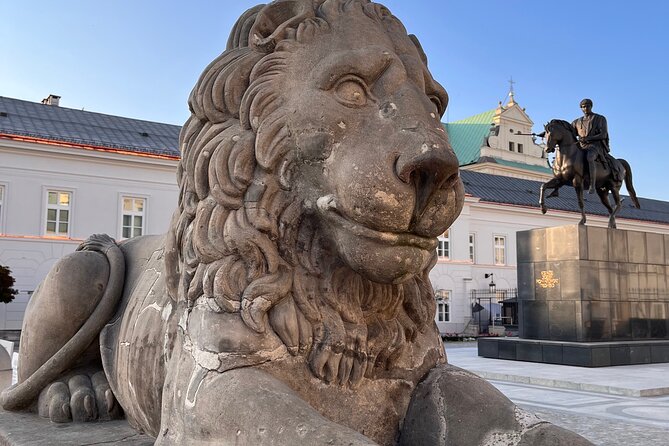
First, you will pass the Presidential Palace, a neo-classic building where the Polish president resides. Behind the mention of the palace itself, you learn about the four lions sculptured by Camilio Laudini. The lions matter because they are one of those details you can spot even if you do not know the building’s story yet.
Then comes the Chopin angle. The info you shared says 8-year-old Frederic Chopin played in this building for the first time publicly. That kind of detail makes a stop feel personal. It is no longer just marble and security barriers, it becomes a moment in a musician’s life.
This section is shorter in the itinerary (about 10 minutes), so treat it as viewpoint and story time. If you love portraits and musical history, you may want to linger on your own after the tour ends.
Plac Marszalka Józefa Pilsudskiego and the Saxon Garden reset
You finish with Plac Marszalka Józefa Pilsudskiego, a parade square. The listing points out the memorial of the Unknow Soldier and says the square is important for Varsovians, with meetings, concerts, and events.
This stop also gives you a visual palette cleanse. Behind the memorial is the Saxon Garden, a calmer setting that helps you close the loop after the dense architecture of the Old Town and Royal Route.
The time here is about 10 minutes, which is enough to understand what the square represents and to take a final look at how the city balances ceremonial space with green downtime.
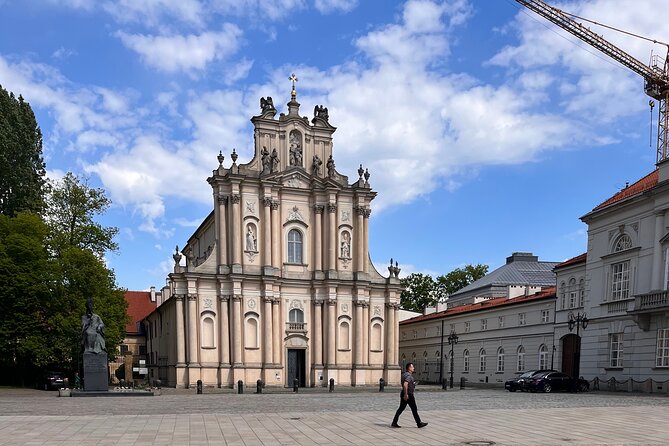
Your tour ends near a Roman Catholic church on Krakowskie Przedmieście 34 (Roman Catholic Church of the Visitants). The end location is useful because you are placed right where you can keep walking or grab food nearby.
What the small group and English format mean for your day
This tour is capped at 10 travelers, which is a big deal for a walking itinerary with multiple stops. With larger groups, you often get dragged along and only hear parts of the story. With a smaller group, you can actually turn your head and listen, then ask a follow-up when something sparks your interest.
It is offered in English, and the ticket is mobile. That matters if you do not want to fuss with printing. The tour also lists a start point near public transportation, so you can plan to arrive easily and not waste time.
One more practical note: you will be doing a continuous walk for most of the experience. This is not a “sit down and ride” tour, so it is best for people who like walking through neighborhoods, not just seeing buildings from a distance.
How much walking is it, and who will enjoy it most
The route is not just Old Town lanes. It also includes the long Krakowskie Przedmiescie stretch, listed as a 2.5 mile Royal route. So you should expect a solid day’s work for your legs, even though it is only 2.5 hours.
This fits best if you are:
- Visiting Warsaw for the first time and want a guided way to interpret rebuilding after WWII
- Interested in architecture, but also in the human stories behind it
- The type of traveler who enjoys context, symbols, and place-based meaning
- Traveling with teens to adults who can handle a few short stops with stories
If you want a deep, slow museum day, you might feel you are moving too quickly. But if you want to build a strong mental map of Warsaw in one afternoon, this format is a good fit.
Practical details before you go, what to plan for
Here is what you can take directly from the tour info you shared.
- Duration: about 2 hours 30 minutes
- Start: Mermaid Statue near Generała George’a Smitha Pattona
- End: Roman Catholic Church of the Visitants on Krakowskie Przedmieście 34
- Included: entrance ticket for a viewing terrace
- Not included: coffee and tea
- Admission note: stops are marked as free admission in the itinerary, with the terrace ticket specifically included
- Group size: maximum 10 travelers
- Language: English
- Ticket: mobile ticket
- Weather requirement: you need good weather
- Service animals: allowed
If you can, schedule this tour earlier in your trip. It gives you context that makes later wandering easier. You’ll recognize buildings, remember stories tied to landmarks, and know which areas to revisit.
Should you book this Warsaw History and Reality Walking Tour?
I think you should book it if you want a guided walk that connects symbolism, architecture, and the WWII rebuilding story in a way that feels usable. The best part is the way stops chain together, from the Mermaid symbol to rooftop views to Old Town reconstructions and then the Royal Route with Presidential Palace and Chopin context.
Skip it or reconsider if you hate walking or you are traveling in a period where weather is unreliable. Since the itinerary requires good weather, you do not want to gamble if you are only in town for a day or two.
If you book, wear comfortable shoes, plan to bring a light layer, and consider grabbing coffee before the tour if you need caffeine on demand. This one is built for walking, looking, and learning in short bursts, and when it works, it makes Warsaw feel far less random.
FAQ
How long is the Warsaw History and Reality Walking Tour?
The tour lasts about 2 hours 30 minutes.
How much does the tour cost?
The price is $114.39 per person.
Where does the tour start and end?
It starts at the Mermaid’s Statue near Generała George’a Smitha Pattona, and ends at the Roman Catholic Church of the Visitants on Krakowskie Przedmieście 34.
Is the tour offered in English?
Yes, it is offered in English.
What is included in the price?
An entrance ticket for a viewing terrace is included.
Is coffee or tea included?
No. Coffee and/or tea is not included.
How big is the group?
The tour has a maximum of 10 travelers.
Is the rooftop garden part seasonal?
Yes. The University of Warsaw Library rooftop garden is listed as open from April to October.
Do I need a mobile ticket?
Yes, the tour uses a mobile ticket.
Is the tour dependent on weather?
Yes. The experience requires good weather, and if it is canceled due to poor weather, you will be offered a different date or a full refund.
More Tours in Warsaw



More Tour Reviews in Warsaw


Warsaw, Keep Looking
Recently written up around Warsaw


More Warsaw City Tours.
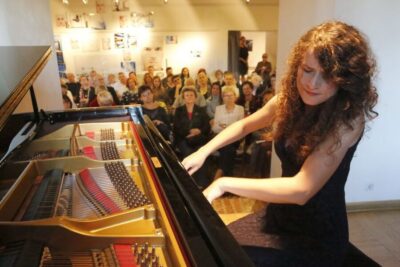 ★ 4.8Chopin Concert in the Old TownFrom $262,287 reviews
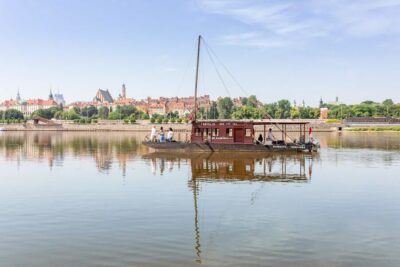 ★ 4.6Traditional Galar Cruise on The Vistula RiverFrom $201,640 reviews
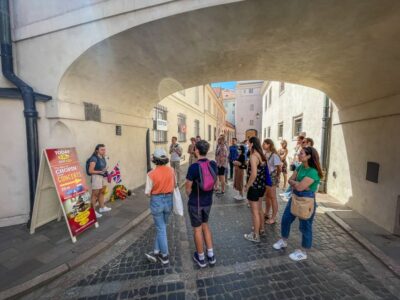 ★ 4.7Old Town Highlights Walking Tour in EnglishFrom $261,516 reviews
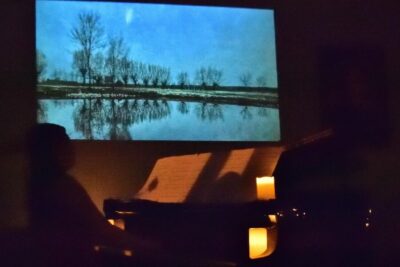 ★ 4.8Warsaw Concert: Chopin – Painted by Candlelights with WineFrom $251,442 reviews
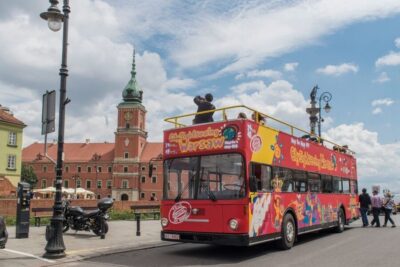 ★ 3.6City Sightseeing Hop-On Hop-Off Bus TourFrom $411,415 reviews
 ★ 4.7POLIN Museum of the History of Polish Jews TicketFrom $121,142 reviews
 ★ 5.0#1 Pub Crawl Warsaw with Optional Premium 1 Hour Open BarFrom $28790 reviews
 ★ 4.6Polish Vodka Museum Tour with TastingFrom $22788 reviews
Also on these Poland lists