
REVIEW · WARSAW CITY TOURS
Warsaw Old Town UNESCO HERITAGE walking tour in English
Warsaw sounds lively in just two hours. This English walking tour threads together the UNESCO World Heritage Area with the stories locals keep telling, guided by Poles born and raised in Warsaw and easy to spot by the orange umbrella with a British flag on top. You get the medieval core, plus the New Town beyond the city walls, all in one solid loop.
Two things I really like: the tour feels well-balanced between straight history and legends, and it gives you practical orientation through major sights like the Royal Castle and the Old Town Market Place. You also get small-group energy, so questions feel welcome, not rushed.
One consideration: the walk is only about 2 hours, so it is more of a focused primer than a full day of deep exploring. If you want extra museum time, plan to add it after the tour.
In This Review
- Key highlights you will feel on this walk
- Finding the guide at Sigismund’s Column (and why it matters)
- What you actually see in UNESCO Warsaw in 2 hours
- Sigismund’s Column and the Royal Castle: power, symbolism, and a quick lesson
- St. John’s Archcathedral: when you get the interior
- Old Town Market Place and the Barbican: stories with street-level context
- Maria Skłodowska-Curie Museum stop: a science link in the Old Town loop
- Ending at Rynek Nowego Miasta: why the New Town finish works
- Price, small groups, and the tradeoff of a tight route
- Who should book this Warsaw Old Town UNESCO tour
- Should you book this tour?
- FAQ
- Where is the tour starting point?
- Where does the tour end?
- How long is the walking tour?
- What languages are offered?
- What key sights are included on the route?
- Is St. John’s Archcathedral interior included?
- Is this tour wheelchair accessible?
- How much does the tour cost?
- Can I cancel for a full refund?
Key highlights you will feel on this walk
- UNESCO Old Town and New Town context in one route, from medieval roots to post-war rebuilding
- Local Varsovian perspective, with guides born and raised in Warsaw
- A legend plus facts approach, not a lecture, not a fluff walk
- Royal Castle, St. John’s Cathedral, Old Town Market Place, and the Barbican all as guided stops
- Cathedral interior when possible, included when there is no service
- Free maps so you can keep exploring right after
Warsaw rebuilt itself twice over. Here is how else we saw it
- Warsaw: Chopin Concert in the Old Town
★ 4.8 · 2,287 reviews - Warsaw: Traditional Galar Cruise on The Vistula River
★ 4.6 · 1,640 reviews - Warsaw: Old Town Highlights Walking Tour in English
★ 4.7 · 1,516 reviews - Warsaw Concert: Chopin – Painted by Candlelights with Wine
★ 4.8 · 1,442 reviews
Finding the guide at Sigismund’s Column (and why it matters)
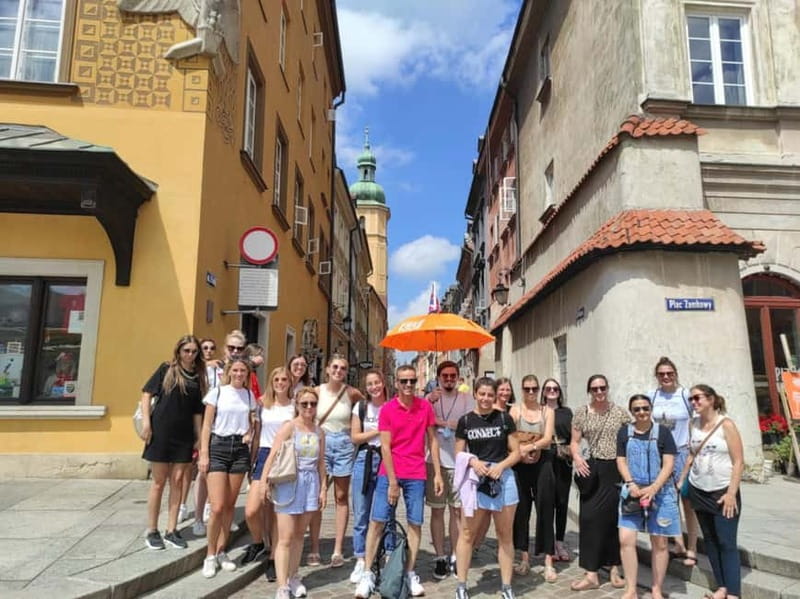
I like tours that start with zero guessing. Here, you meet at Kolumna Zygmunta III Wazy. Look for your guide holding an orange umbrella with a British flag on the top, and you will know you are in the right place fast.
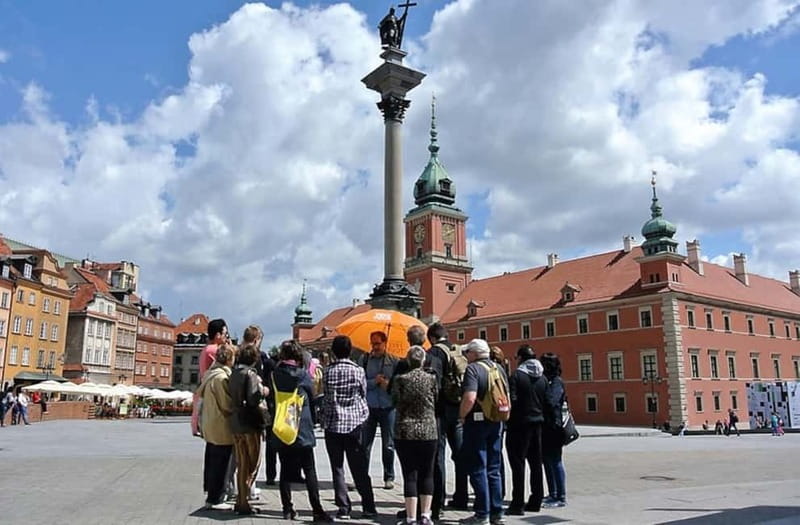
The first stop is Sigismund’s Column, where the guide gives you a short orientation before the walk really starts. That matters because Warsaw’s history can feel complicated at first glance. Getting the big thread early helps everything click later, from medieval town planning to the way World War II destruction shaped what you see today.
This is also a small comfort point: the tour is designed as a 2-hour walking experience, so the pacing is tight. If you arrive a few minutes early, you can settle your questions and be ready when the group moves.
One more practical note: the tour is in English and is marked as wheelchair accessible. Still, you should plan for outdoor walking, crowd levels at famous sights, and the fact that the schedule depends on live conditions like whether services are running.
What you actually see in UNESCO Warsaw in 2 hours
This walk is built around Warsaw’s medieval core inside the UNESCO World Heritage area, plus the New Town beyond the city walls. You start in the older historic heart, then you move into the second oldest district of Warsaw, the New Town, where the layout and surviving symbolism help you understand how the city expanded.
The guide connects daily life in a medieval city with what happened in the 20th century. Expect a clear line through WW2 destruction and post-war reconstruction under the communist regime. That framing is useful. Instead of treating buildings like museum objects, the tour helps you see why certain places were rebuilt, how the story of the Old Town was shaped after the war, and what that means for your photos and your understanding.
The tour covers the major stops you would normally pick out on your own, but with a human layer. You are not just ticking boxes. You are hearing anecdotes and legends alongside historical facts. That is why this kind of walk is great for your first visit: it helps you get your bearings quickly and gives you context before you wander.
Just remember the tradeoff. Because it is a compact 2-hour route, you will not cover every street or side chapel. Think of this as the guided backbone, not the whole itinerary.
Sigismund’s Column and the Royal Castle: power, symbolism, and a quick lesson

You begin with Sigismund’s Column, and the guide spends about 20 minutes here. This is where the tour sets tone. You get the kind of explanation that makes Warsaw’s landmarks feel like part of one story instead of separate monuments.
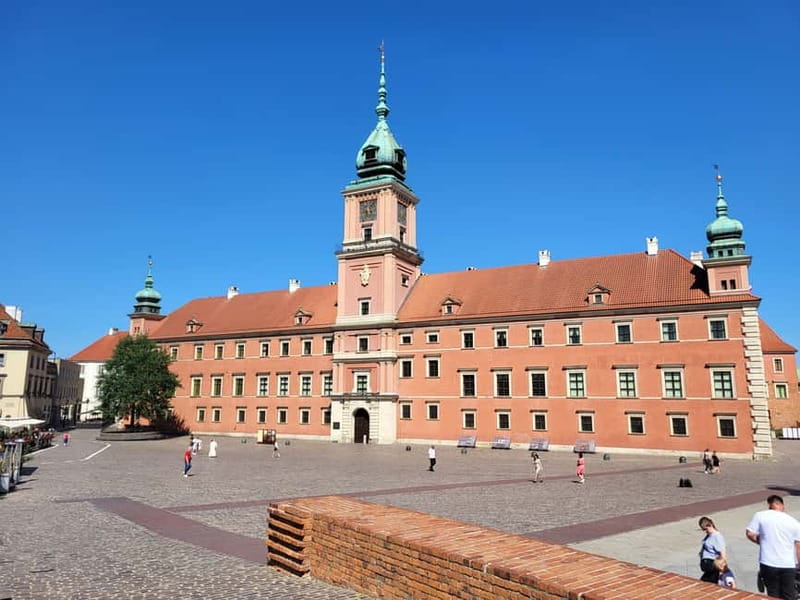
Then you move to the Royal Castle for about 15 minutes. Even if you have visited castles before, this stop works because the guide links the Royal Castle to the identity and political meaning of the city, not just its walls and dates. In practice, that means you will know what to look for when you stand there, rather than only snapping pictures.
A short guided stop like this also has a hidden benefit: it reduces decision fatigue. You do not need to figure out in the moment what is most important. The guide highlights the big pieces, then moves you on.
If there is a drawback, it is simple: 15 minutes goes by quickly. If you prefer to linger, you will likely want to plan a longer return visit. But as an introductory compass, the Royal Castle stop is a smart anchor because it sits at the center of the Old Town identity.
St. John’s Archcathedral: when you get the interior
One of the tour highlights is St. John’s Archcathedral in Warsaw. You get about 15 minutes there. The big practical detail is that the cathedral interior is included whenever there is no service.
That is a big deal for two reasons. First, cathedrals change the most when you are inside, not outside. Second, the tour does not promise access no matter what. It sets expectations that match real life in active churches. So when it is open, you get more than an exterior photo stop.
If there is a service running, you might have to adjust your expectations and focus on what you can view at that time. Either way, the guide’s explanation helps you read the space. You will understand what you are looking at, and you will not feel like you are standing there guessing.
I also appreciate that this is placed mid-walk. You are not starting with a long church moment and then rushing through everything else. The timing keeps energy balanced, and it gives your brain a reset before you move into the Market Place and defensive walls.
Below are the other Warsaw trips we have logged
- Warsaw: Old Town Guided Walking Tour★ 4.9 · 599 reviews
- Half-Day Polish Food Walking Tour with Guide and Dinner★ 4.5 · 381 reviews
- Warsaw: Warsaw Ghetto Private Walking Tour with Hotel Pickup★ 4.9 · 369 reviews
- Old Town Warsaw Walking Tour★ 4.5 · 333 reviews
- Warsaw: Jewish History Guided Walking Tour in English★ 4.7 · 324 reviews
Old Town Market Place and the Barbican: stories with street-level context
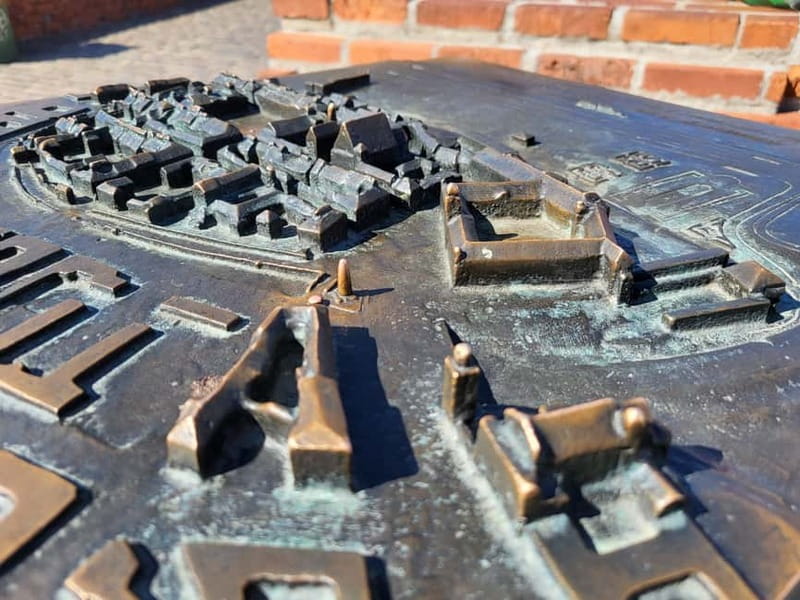
Next up is Old Town Market Place, guided for about 15 minutes. This is one of the most important public areas in the historic heart, and it is a strong stop for learning because markets explain how a city functioned. You get more than dates here. You hear life-style context, plus legends and anecdotes that make the square feel lived-in, even when the building shapes are centuries old.
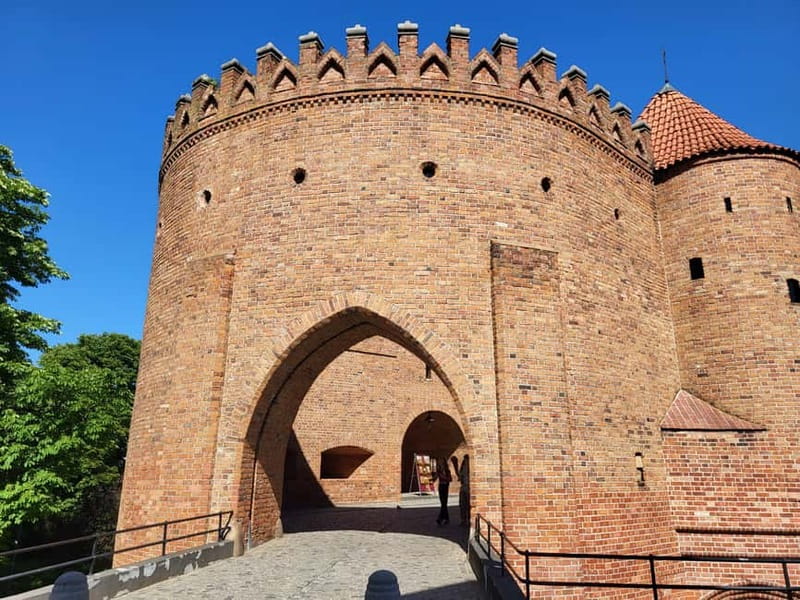
The walk then reaches the Warsaw Barbican for about 15 minutes. Defensive structures can feel abstract when you only study them from afar. On a guided walk, the Barbican makes more sense because the guide connects it to the idea of city walls and protection, and you start seeing the Old Town as a planned defensive unit, not just a pretty district.
This pairing, Market Place and Barbican, is smart. It balances civilian life and survival needs. You get both the everyday side of the medieval city and the security side of how it was built.
One caution: these are popular areas. Plan for noise and crowds around the main sights, and give yourself permission to let the guide lead rather than trying to outpace the group. If you stay close and listen, you will get far more value than if you only aim your camera.
Maria Skłodowska-Curie Museum stop: a science link in the Old Town loop
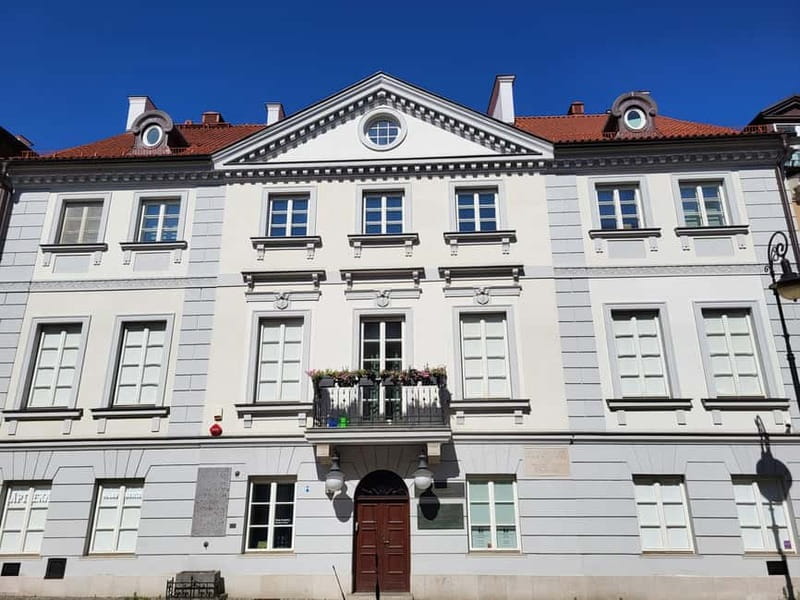
The final guided sight before the finish is the Maria Skłodowska-Curie Museum, with about 15 minutes of guidance. Even though this stop is not strictly medieval, it fits the tour’s overall theme: past and present.
You are learning how Warsaw’s story keeps layering itself. The walk is focused on the UNESCO area, but it does not ignore the modern identity that grew after the war and through the city’s rebuilding. A museum stop like this helps your visit feel anchored in the people and ideas that matter today, not only what happened centuries ago.
Because the guidance window is short, treat this stop as an orientation point. You will get enough direction to decide whether you want to return later for a longer visit. If you do want more, you will know what you came for.
As a traveler tip, if you enjoy museums, look at what you would like to see and keep an eye out for follow-up material. The free maps included with the tour can be helpful for planning your next steps.
Ending at Rynek Nowego Miasta: why the New Town finish works
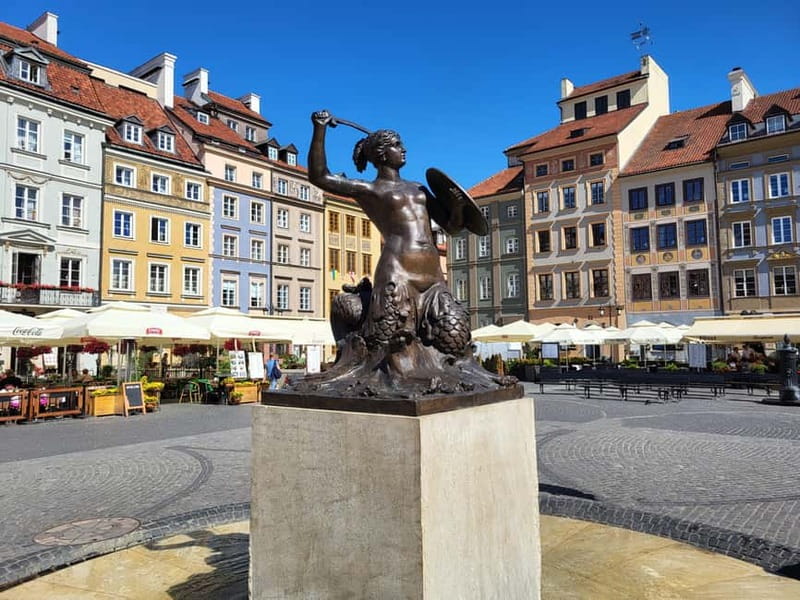
The walk finishes at Rynek Nowego Miasta. The overall route is designed to take you from the Old Town core into the New Town, described as Warsaw’s second oldest district beyond the city walls. That ending is not random.
New Town areas tend to feel different from the medieval core, even when you are still surrounded by historic architecture. When you reach Rynek Nowego Miasta, you are at a point where the tour’s big ideas land. You understand how the city expanded, how city defense boundaries shaped growth, and how rebuilding after the war redefined what the world now sees as Warsaw’s historic center.
One small detail to watch: the end location is listed as Rynek Nowego Miasta, but the activity info also notes it ends back at the meeting point. Before you go, check your exact confirmation details for the correct finishing point for your departure time. That is usually the easiest way to avoid confusion.
Either way, the finish gives you a natural place to keep exploring. If you still have energy, you can use the guided explanations to spot themes in the streets around you, instead of wandering with no frame.
Price, small groups, and the tradeoff of a tight route
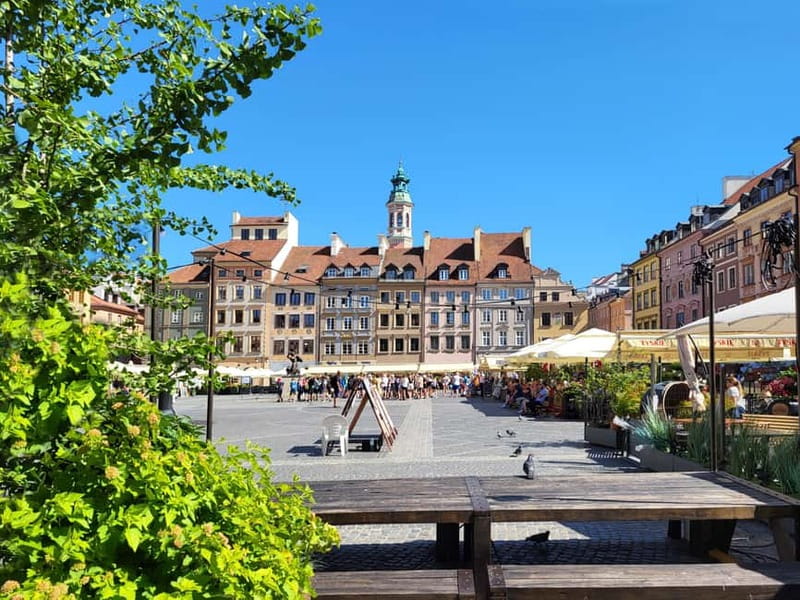
The price is $5 per person, and that is honestly part of the appeal. For this kind of focused route through major UNESCO-linked sights, it is low-cost. The value comes from the guide quality and the structure: historical facts plus legends, and a route that connects the city’s medieval roots to what happened in the 20th century.
The tour also includes small groups and free maps, which boosts practical value. A small group means less time waiting, and it usually makes it easier to ask simple questions like what you should notice next or how to interpret what you see.
At the same time, this is still a 2-hour walk. That is the tradeoff you should plan for. It is ideal for first-time orientation and for travelers who want a guided overview without spending hours in every building.
Some people also describe it as feeling like a walk where you pay a small amount for the service. So if you like to leave a tip based on your satisfaction, you might want to bring a little extra just in case. Since payment style details are not fully spelled out here, the safest move is to confirm with the operator when you book.
Who should book this Warsaw Old Town UNESCO tour
You should book if you want a guided overview that helps you understand the Old Town UNESCO story fast. This walk fits best when you:
- want a first visit to Warsaw with your bearings built in
- like stories alongside facts, not only dates and plaques
- want to see major sights like the Royal Castle, St. John’s, the Old Town Market Place, and the Barbican without planning every stop
- prefer small-group energy and an English guide
You might skip or supplement if you:
- want to spend a long time inside museums or inside churches, beyond short guided windows
- hate structured routes and prefer solo wandering
- feel disappointed by shorter walks that do not take you very far
Should you book this tour?
Yes, if you want a smart, low-cost way to understand why Warsaw’s Old Town matters, and how it links medieval life to the scars and rebuilding of the 20th century. The orange-umbrella meetup, the small-group format, and the inclusion of the cathedral interior when services are not running make this an efficient use of time.
Just go in knowing it is a tight 2-hour route. Treat it like your guided backbone for the area, then use the free maps to keep exploring on your own.
FAQ
Where is the tour starting point?
The tour starts by Sigismund’s Column (Kolumna Zygmunta III Wazy). Meet the guide holding an orange umbrella with a British flag on top.
Where does the tour end?
The tour ends at Rynek Nowego Miasta. The activity details also state it ends back at the meeting point, so check your confirmation for the exact finish area.
How long is the walking tour?
It runs for about 2 hours. Starting times depend on availability.
What languages are offered?
The live tour guide speaks English.
What key sights are included on the route?
The guided stops include Sigismund’s Column, the Royal Castle, St. John’s Archcathedral, the Old Town Market Place, the Warsaw Barbican, and the Maria Skłodowska-Curie Museum.
Is St. John’s Archcathedral interior included?
Yes, the interior is included when there is no service.
Is this tour wheelchair accessible?
Yes, it is listed as wheelchair accessible.
How much does the tour cost?
The price is $5 per person.
Can I cancel for a full refund?
Yes. Free cancellation is available up to 24 hours in advance for a full refund.
More Tours in Warsaw



More Tour Reviews in Warsaw


Warsaw, Keep Looking
Recently written up around Warsaw


More Warsaw City Tours.
 ★ 4.8Chopin Concert in the Old TownFrom $262,287 reviews
 ★ 4.6Traditional Galar Cruise on The Vistula RiverFrom $201,640 reviews
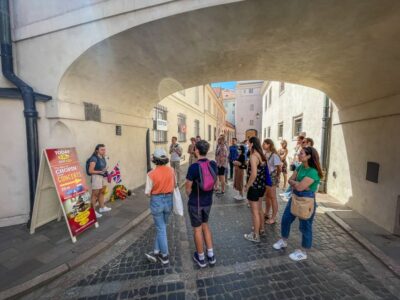 ★ 4.7Old Town Highlights Walking Tour in EnglishFrom $261,516 reviews
 ★ 4.8Warsaw Concert: Chopin – Painted by Candlelights with WineFrom $251,442 reviews
 ★ 3.6City Sightseeing Hop-On Hop-Off Bus TourFrom $411,415 reviews
 ★ 4.7POLIN Museum of the History of Polish Jews TicketFrom $121,142 reviews
 ★ 5.0#1 Pub Crawl Warsaw with Optional Premium 1 Hour Open BarFrom $28790 reviews
 ★ 4.6Polish Vodka Museum Tour with TastingFrom $22788 reviews
Also on these Poland lists