
REVIEW · WORLD WAR II HISTORY TOURS
World War II in Krakow Walking Tour in English
Krakow’s World War II story is written on the streets. This 150-minute walking tour tracks how the German occupation reshaped daily life, while also centering the people who resisted in quiet, risky ways. I love how the tour pairs specific locations with a clear narrative, so you do not just see places, you understand what they meant.
I also like that the guide experience feels hands-on and human. In particular, the guides we have heard about, including Big Tomasz, bring local knowledge and a bit of good humor, even when the subject matter turns heavy. One possible drawback is that you are walking through difficult material, including Nazi prison cells and victim inscriptions, so it helps to be emotionally ready.
In This Review
- Key things that make this WWII walk worth your time
- Walking Krakow in WWII mode, and why it works
- Where you start at Triangle Square by Wawel Hill
- The first occupation traces, and what the guide is training you to notice
- Katyń wooden cross, memory you can read with your feet
- St. Michael’s prison cells, where history becomes visible on walls
- Gestapo headquarters, understanding fear in an urban setting
- Park Krakowski bomb shelters, the city preparing for impact
- The guides: why Big Tomasz’s style is such a big deal
- Value check: is $26 worth 150 minutes of WWII storytelling?
- Who this tour suits, and who should think twice
- Should you book this WWII walking tour in Krakow?
- FAQ
- How long is the World War II in Krakow Walking Tour?
- Is the tour offered in English?
- Where is the meeting point?
- What time should I arrive at the meeting point?
- How much does the tour cost?
- Is hotel pickup or drop-off included?
- Are snacks included?
- Is the tour wheelchair accessible?
- Can I cancel or reserve without paying today?
Key things that make this WWII walk worth your time
- Nazi prison cells and wall inscriptions put the history in human terms, not textbook ones
- Gestapo headquarters is treated as a real part of the city, not a distant landmark
- A storytelling structure that connects occupation changes to ordinary people and resistance
- You see key sites like the Katyń wooden cross, St. Michael’s prison, and Park Krakowski bomb shelters
- Guides like Big Tomasz are praised for being warm, engaging, and insightful
More wartime history routes we have written up in Krakow
- World War II in Krakow Walking Tour in English
★ 5.0 · 6 reviews
Walking Krakow in WWII mode, and why it works
Krakow has charm. I mean real charm, the kind that makes you want to linger in every square. But on this tour, that charm gets interrupted on purpose, by the traces of occupation that still sit on walls and streets.
The idea is simple: you cannot fully grasp what happened without seeing the setting. Walking between sites makes the timeline feel less abstract and more like a chain of choices that affected real lives.
You also get a lot of moral pressure in a good way. The tour asks you to confront hard questions about courage, fear, and betrayal, not just memorize dates. If you like history that tests your thinking, this format is a strong fit.
Where you start at Triangle Square by Wawel Hill
The meeting point is a triangle square, next to Wawel Hill, at the end of Grodzka Street. I like starting near a landmark area because it helps you orient fast, especially if you have already been exploring Krakow.
Aim to arrive about 10 minutes early. It is not just about being punctual, it also gives you a moment to settle in before the guide sets the tone for the story. The tour is in English with a live guide, so starting on time helps you catch the first context that everything else depends on.
The first occupation traces, and what the guide is training you to notice
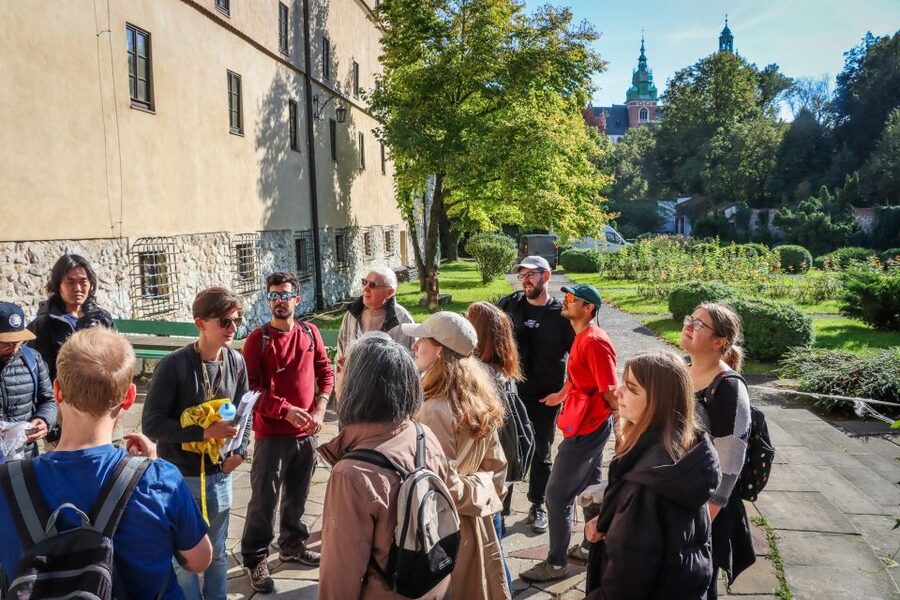
Early on, you will start picking up on how the city’s WWII layers sit in plain sight. The tour focuses on the traces of occupation and how they transformed Krakow, so your job, as you walk, is to notice what looks ordinary at first.
A good walking guide will point out details you would otherwise miss, like the way certain places carry memory in their walls, layout, or function. This tour is built as a narrative, so you are not bouncing between unrelated stops. You feel the story moving forward, with each location adding a new piece.
One thing I appreciate is that the approach balances brutality with something else. You hear about resistance and courage, including stories of people who opposed the regime. That matters because otherwise you only leave with darkness. Here, the narrative pushes you to see human agency, even under terror.
Katyń wooden cross, memory you can read with your feet
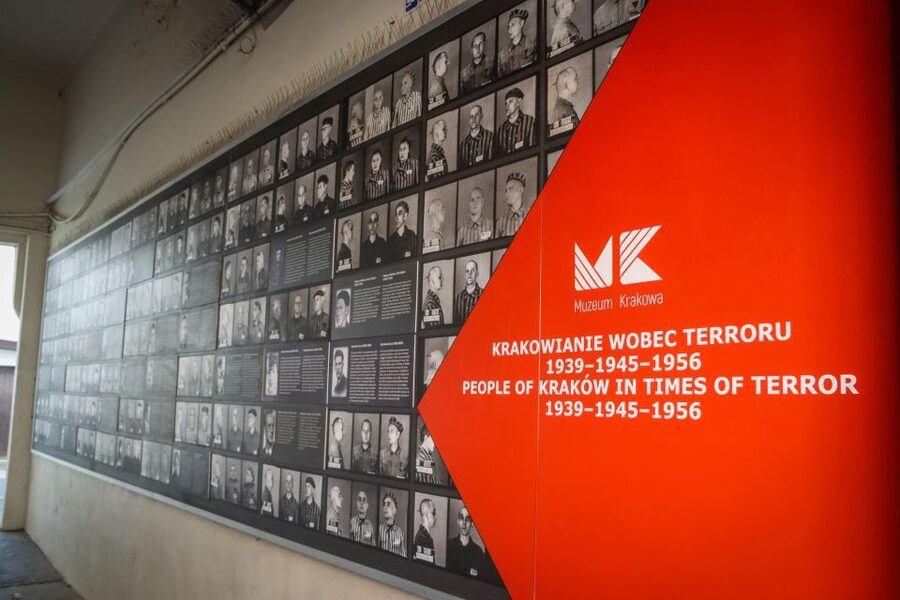
One of the stops is the Katyń wooden cross. It is brief as a physical object, but that is part of the point. Memorials like this can be easy to walk past when you are focused on architecture or photo angles.
On this tour, the cross is treated as part of a broader thread of suffering and remembrance tied to WWII. You do not need to know every detail before you go, because the guide’s job is to connect it to the overall story. If you want a tour that respects your time and gives you context without making you feel lost, this is a good sign.
If you are someone who appreciates how public symbols carry private grief, this stop will likely land with you.
Below are the other Krakow trips we have logged
- Old Town Krakow & Wawel Castle Walking Tour★ 5.0 · 1,508 reviews
- Creepy Krakow: 2-Hour City Walking Tour★ 4.7 · 1,131 reviews
- Krakow: The Old Town Walking Tour★ 4.8 · 794 reviews
- Kraków: Old Town & Wawel Castle Walking Tour in English★ 4.8 · 532 reviews
- Krakow: Evening Walking Tour with Spooky Stories★ 4.7 · 500 reviews
St. Michael’s prison cells, where history becomes visible on walls
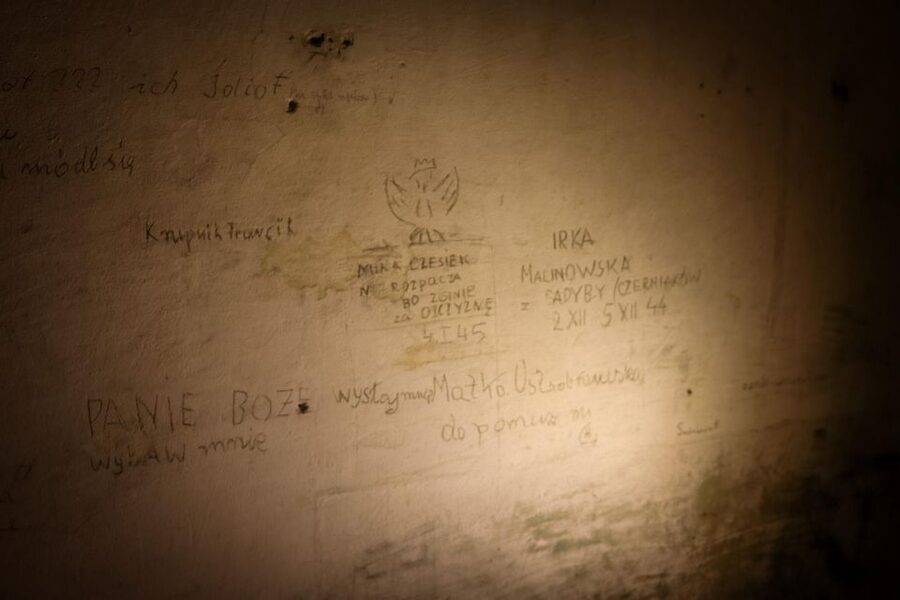
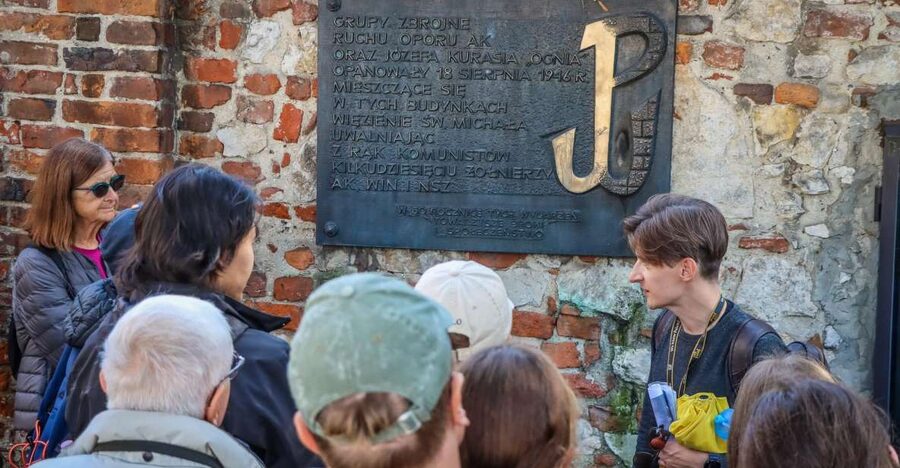
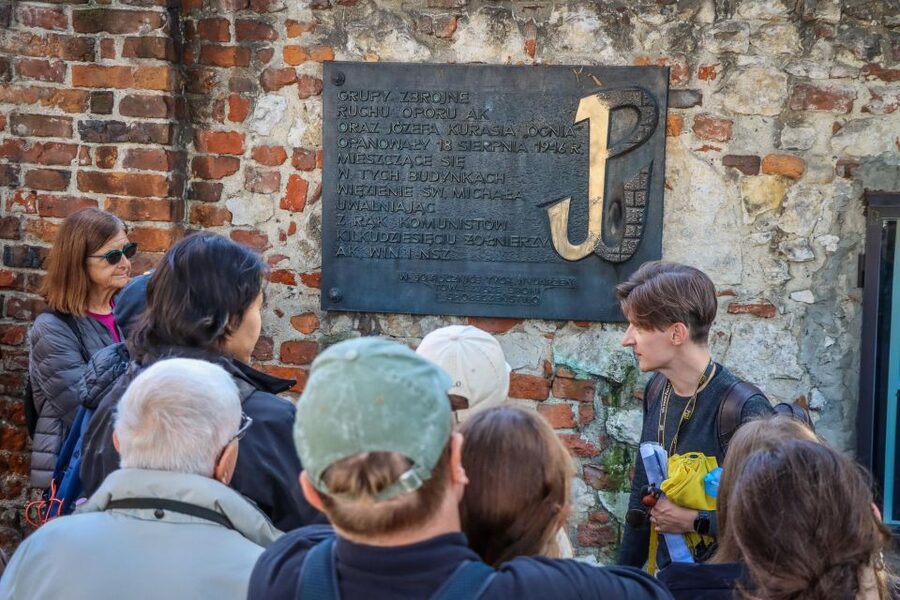
St. Michael’s prison is one of the anchors of the whole experience. You visit the Nazi prison cells and also read inscriptions left on walls by victims. That combination changes the feeling of the tour. It moves from interpretation to evidence.
This is the moment where the tour stops being a city walk and becomes confrontation. The guide frames the deadly tools used to repress victims, but you also see how people tried to leave messages behind. Even if you only understand parts of what you read, the act of reading matters. You feel the weight of the voices that survived in whatever form they could.
Practical tip: go in with patience for silence. This is not a stop where you should expect constant lightness. If you get overwhelmed, it is okay to take a step back and just absorb. You are there to witness, not to rush.
Gestapo headquarters, understanding fear in an urban setting
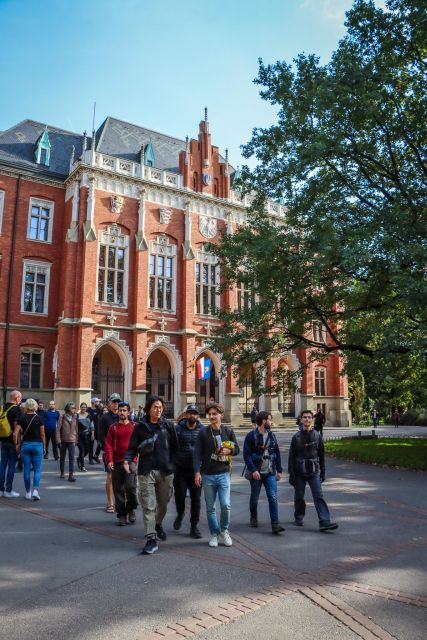
Another major stop is the Gestapo headquarters. Seeing a place that functioned as an instrument of repression reframes the surrounding streets. Suddenly, the same stone and corners can feel like part of a larger system of control.
What I like about the way this tour handles it is that it does not treat the Gestapo location as a museum piece. It is positioned inside the occupation story, linked to how power was exerted and how people responded. The guide also brings in the question of everyday decision-making under threat, which is one of the tour’s core themes.
You walk away thinking differently about how quickly a city can change when a violent regime takes hold. That is a hard lesson, but it is also exactly why this kind of site-based storytelling has value.
Park Krakowski bomb shelters, the city preparing for impact
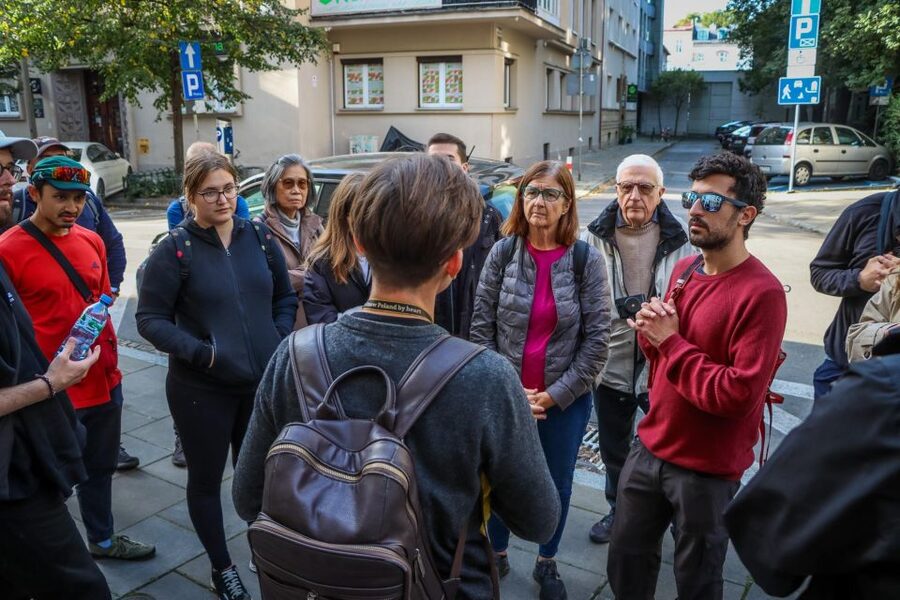
The tour also includes bomb shelters in Park Krakowski. This stop adds another angle to the occupation story: not only persecution through policing and prisons, but also the fear shaped by air raids and the reality of being targeted.
A park setting can make it easy to assume “safe and relaxed.” In this case, the tour pushes you to flip that instinct. You see protective infrastructure and understand that survival planning became part of daily life. It is a different kind of history lesson, less about individual cells and more about how the city adapted under pressure.
If you like a tour that balances multiple aspects of WWII, this is a key part. It broadens the story beyond one institution and shows how danger touched many layers of Krakow.
The guides: why Big Tomasz’s style is such a big deal
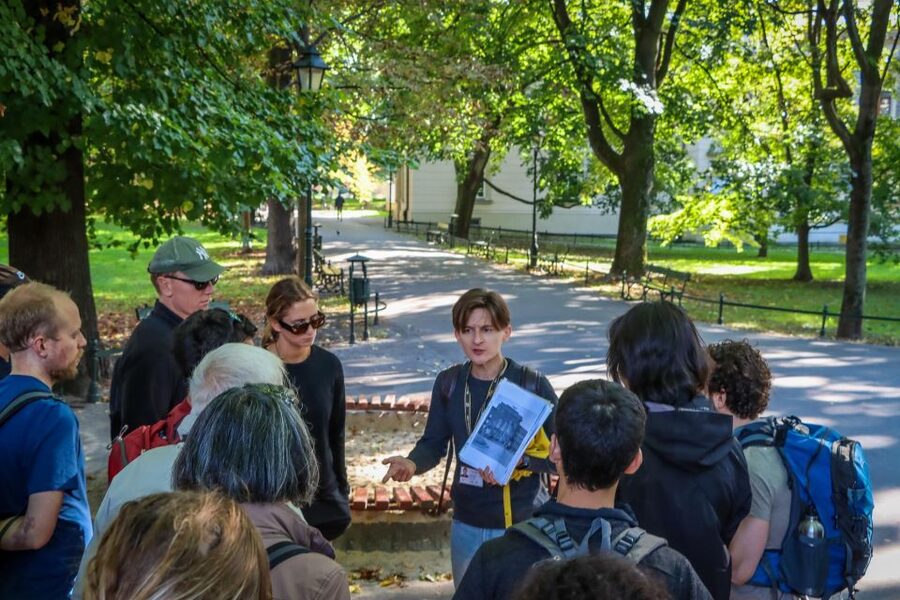
The tour experience stands or falls on the guide. The strongest praise you will hear centers on guides who can explain clearly, speak naturally, and still handle heavy material with care.
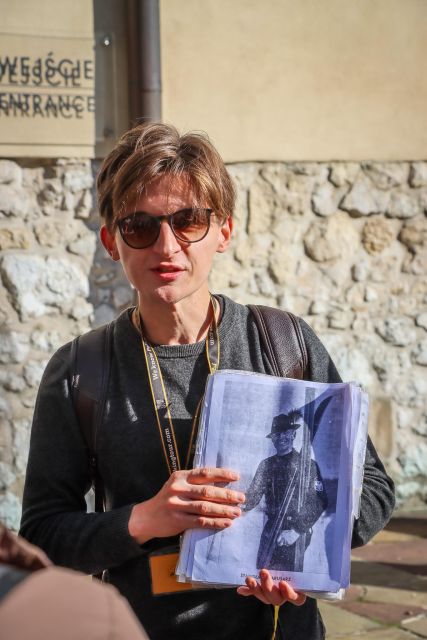
Big Tomasz comes up again and again in the feedback as fantastic, insightful, warm, engaging, and very passionate. People also mention that he had excellent local knowledge and used a bit of humor to keep the tour from feeling like a lecture.
That matters for you because WWII content can become emotionally exhausting if the guide talks in a flat, distant way. With the right guide, you get structure, context, and humanity. You also keep moving, which helps on a 150-minute walking format.
Value check: is $26 worth 150 minutes of WWII storytelling?
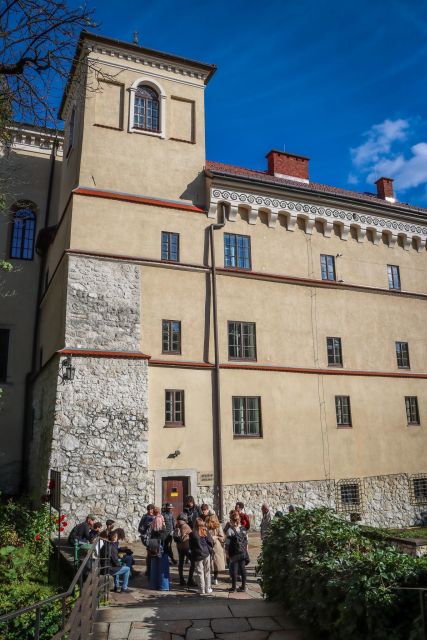
At $26 per person for a 150-minute guided walk, the value is largely about what you get for your time. You are paying for an expert, local tour guide plus a carefully constructed narrative. This matters because a generic walking tour might point out buildings, but it would not necessarily connect locations to the broader human story.
You are also joining a pay-what-you-want style tour. The amount you pay covers the reservation fee and the guide’s payment. If you already like the experience, you can choose how you want to reward the guide at the end, which fits travelers who prefer direct feedback and fairness.
One small practical detail: snacks are not included. If you are prone to getting hungry, bring a water bottle and plan for a break before or after. The tour length is not short, so your comfort affects your attention.
Who this tour suits, and who should think twice
This walk is a strong choice if you want more than surface-level WWII facts. You should enjoy it if you like history tied to real places, and if you want to hear resistance stories alongside the brutal parts of the occupation.
It also fits you if you enjoy guides who speak in an engaging way and know how to use the city itself as a teaching tool. The praise for Big Tomasz points to an experience that is both informative and easy to follow, even in English.
Who should think twice? If you prefer light sightseeing, this is not it. The tour includes Nazi prison cells and victim inscriptions, so it is emotionally heavy. Also, because it is a 150-minute walk, you will want enough time to finish without racing to catch another plan. One missed moment can reduce the impact, since the tour is narrative-driven.
Should you book this WWII walking tour in Krakow?
I think you should book it if you want a focused, English-language walk that connects major WWII sites with the human decisions behind them. The combination of St. Michael’s prison cells, Gestapo headquarters, and the bomb shelters at Park Krakowski, plus memorial stops like the Katyń wooden cross, gives you a spread of perspectives on the occupation.
You also get good odds that you will enjoy the guide experience, especially if you value warmth, clarity, and a bit of humor when the topic allows it. Guides like Big Tomasz have a reputation for being insightful and passionate, which makes the history easier to hold in your head.
Skip it only if the idea of seeing Nazi prison cells and reading victim inscriptions would feel too intense. If that is you, you can still enjoy Krakow. You just might want a different style of tour that focuses more on everyday culture than WWII memory.
FAQ
How long is the World War II in Krakow Walking Tour?
The tour lasts 150 minutes.
Is the tour offered in English?
Yes, the tour is in English with a live tour guide.
Where is the meeting point?
You meet at a triangle square next to Wawel Hill, at the end of Grodzka Street.
What time should I arrive at the meeting point?
Please arrive 10 minutes before the activity starts.
How much does the tour cost?
The price is $26 per person.
Is hotel pickup or drop-off included?
No, hotel pickup and drop-off are not included.
Are snacks included?
No, snacks are not included.
Is the tour wheelchair accessible?
Yes, the tour is wheelchair accessible.
Can I cancel or reserve without paying today?
You can cancel up to 24 hours in advance for a full refund. You can also reserve now and pay later, so you pay nothing today.
More Tours in Krakow
More Tour Reviews in Krakow
Wartime History in Krakow
Recently written up around Krakow

More World War II History Tours.
 ★ 4.3Guided Round-Trip Cruise to WesterplatteFrom $33865 reviews
 ★ 4.7World War 2 in Warsaw walking tour in EnglishFrom $20237 reviews
 ★ 5.0Warsaw for WWII Buffs – private tour with hotel pickupFrom $169166 reviews
 ★ 4.7Tour of the Wolf’s Lair, Hitler’s HQ by CarFrom $201116 reviews
 ★ 5.0Majdanek Concentration Camp & Lublin Full Day Private Tour from WarsawFrom $36170 reviews
 ★ 5.0Wolf’s Lair Private Day Trip from WarsawFrom $38950 reviews
 ★ 4.9Third Reich and World War Two Historical TourFrom $3143 reviews
 ★ 4.7Project Riese and Ksiaz Castle Private TourFrom $17639 reviews
Also on these Poland lists