
REVIEW · JEWISH HERITAGE AND GHETTO TOURS
A unique walking tour of Jewish Warsaw — past and present
Warsaw tells its Jewish story on foot. This 3-hour walking tour threads Muranów and key memorials to the end point at Pomnik Umschlagplatz, tied to the Treblinka transports. It’s built for you to see what still survives in the city, then connect it to what was erased.
I love the way this route mixes surviving places with short, human-scale stops, so it never turns into a lecture marathon. The two moments that really land are seeing the only Warsaw synagogue that survived the war and remains today, and then learning what happened at the departure point that sent hundreds of thousands toward Treblinka.
One drawback to plan for: you’ll walk roughly 4.5 to 5 km, so this is not a good choice if long distances are hard for you. Wear comfy shoes, and be ready for a steady pace.
In This Review
- Key things to look for on this tour
- Meeting at Sienna 53: Pace, group size, and why the guide matters
- Nożyk Synagogue and Hala Mirowska: seeing Jewish Warsaw before the destruction
- Nożyk Synagogue, the wartime survivor
- Hala Mirowska, a market building tied to everyday life
- Muranów, ghetto-wall remnants, and the Ringelblum Archive memorial
- Muranów: where the story turns from life to survival
- Ghetto wall remains: seeing the boundary in stone and street lines
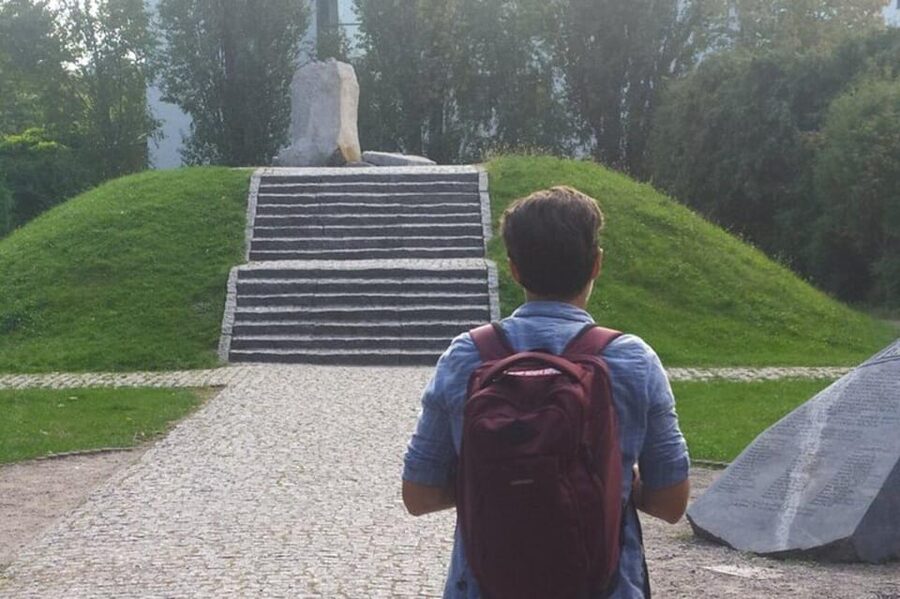
- Upamiętnienie Archiwum Ringelbluma: the proof that documentation mattered
- POLIN museum area and Miła 18: how the walk connects centuries to 1943
- POLIN Museum of the History of Polish Jews, used as context
- Miła 18: focusing the “before and after” in one neighborhood block
- Umschlagplatz: the Treblinka transports and the closing memorial mood
- Price and what you actually get for $32
- Who should book, and who might want a different option
- Should you book this Jewish Warsaw walking tour?
- FAQ
- How long is the walking tour?
- How far do we walk?
- Where do we meet, and how do we find the guide?
- Is the tour in English?
- Are entry fees included for Nożyk Synagogue and POLIN Museum?
- What group size is it?
- Is there free cancellation?
Key things to look for on this tour
- A survivor you can still visit, Nożyk Synagogue
- Ghetto wall traces in the Muranów area, not just museum talk
- The Ringelblum Archive memorial as a concrete link to documented lives
- POLIN context without rushing, with the museum area used as a learning waypoint
- Umschlagplatz as a real place, tied to Treblinka transports
- Monuments for Jewish resistance, framed with what the people faced in 1943
Further Jewish heritage and ghetto routes documented in Warsaw
- Warsaw: POLIN Museum of the History of Polish Jews Ticket
★ 4.7 · 1,142 reviews - Warsaw: Warsaw Ghetto Private Walking Tour with Hotel Pickup
★ 4.9 · 369 reviews - Warsaw: Jewish History Guided Walking Tour in English
★ 4.7 · 324 reviews - Private Tour: Warsaw’s Jewish Heritage by Retro Fiat
★ 5.0 · 208 reviews
Meeting at Sienna 53: Pace, group size, and why the guide matters
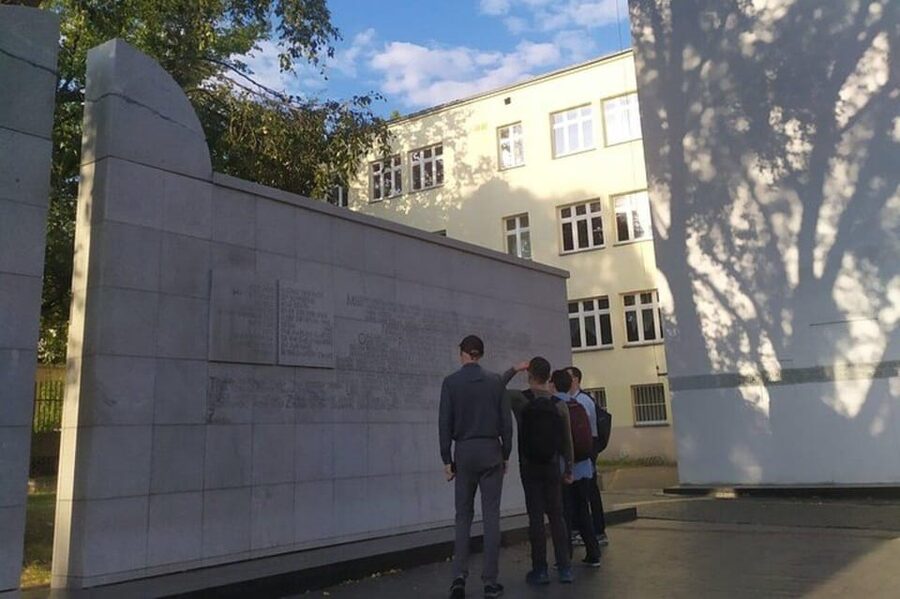
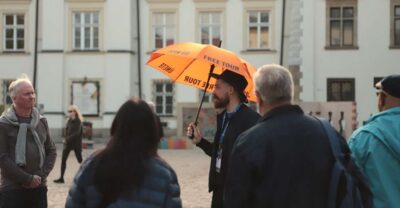
You meet at Sienna 53, in front of Baguette Mi, and you should look for your guide holding a white and green umbrella. The small group size, limited to 10 people, is a big part of the value. It means you can hear clearly, ask questions, and keep the group together on tight streets.
This tour is about 3 hours, and the distance sits around 4.5 to 5 km. That’s not a casual stroll, so I recommend treating it like a proper walking tour. Bring water, plan on layered clothing if the weather flips, and keep your phone charged, because you’ll want to reference what you’re learning as you go.
The other thing that really drives the experience is the guide’s performance style. In the best Jewish history tours, the facts are there, but the telling is what makes them stick. This one is especially strong at pacing and clarity, with a guide like Oliwia who uses humor and lively delivery without losing the seriousness of the subject. If you like learning history while staying engaged, this format fits.
Nożyk Synagogue and Hala Mirowska: seeing Jewish Warsaw before the destruction
Nożyk Synagogue, the wartime survivor
The tour’s first major stop is Nożyk Synagogue, with a guided time of about 15 minutes. This is a rare moment: you’re not looking at a reconstruction or a memory plaque. You’re standing at the only Warsaw synagogue that survived the war and remains until today, and that changes the whole tone of the walk.
When you can see something that actually survived, it becomes a physical anchor for the rest of the story. Your guide connects the site to the scale of Jewish life in Warsaw, when roughly one third of the city identified as Jewish and Warsaw became home to the biggest Jewish population in Europe. Then the narrative sharpens toward what World War II did to that world.
Practical note: entry to the synagogue is not included. So if you want to go inside, you should plan for additional time and an extra ticket cost. Even if you stick to the exterior explanation, the stop is still worth it because it sets the timeline in a way that’s hard to reproduce with photos alone.
Hala Mirowska, a market building tied to everyday life
Next comes Hala Mirowska, where you get around 10 minutes with your guide. The value here is not just the building itself, but the way it helps you picture what city life looked like before the ghetto period. In a walk like this, it matters that you don’t jump straight into tragedy. A place tied to daily activity makes the later memorial stops feel more precise.
If you’re sensitive to heavy topics, this segment is also a good buffer. You’re still learning, but the tour hasn’t peaked into the most emotionally intense ground yet.
Warsaw rebuilt itself twice over. Here is how else we saw it
- Warsaw: Chopin Concert in the Old Town★ 4.8 · 2,287 reviews
- Warsaw: Traditional Galar Cruise on The Vistula River★ 4.6 · 1,640 reviews
- Warsaw: Old Town Highlights Walking Tour in English★ 4.7 · 1,516 reviews
- Warsaw Concert: Chopin – Painted by Candlelights with Wine★ 4.8 · 1,442 reviews
- Warsaw: City Sightseeing Hop-On Hop-Off Bus Tour★ 3.6 · 1,415 reviews
Muranów, ghetto-wall remnants, and the Ringelblum Archive memorial
Muranów: where the story turns from life to survival
Muranów is one of the tour’s longest stretches at about 30 minutes. This is the area that helps you understand how the ghetto experience reshaped an entire neighborhood. You’ll hear why the Jewish community tried to keep life going under impossible conditions, and you’ll also learn how resistance and survival overlapped.
The ghetto story here isn’t presented as a single date and a single event. You’re guided through a broader timeline that starts with settlement and expansion over centuries, then moves into the tragic years that brought that life to a devastating end. That context matters because it helps you see the ghetto not only as a sealed-off space, but as a part of a longer Jewish Warsaw that was forced into catastrophe.
Ghetto wall remains: seeing the boundary in stone and street lines
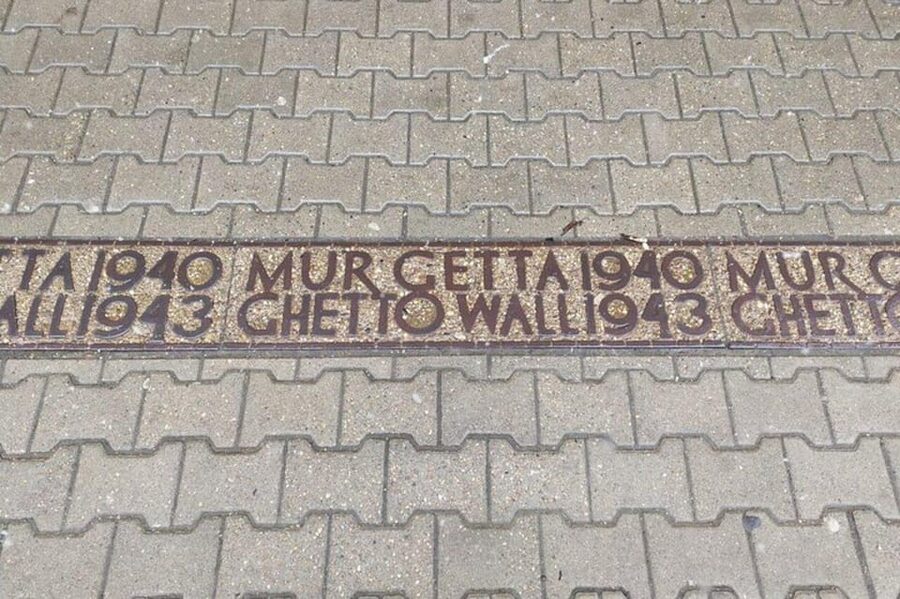
One of the highlights is seeing one of the few remaining parts of the ghetto wall. This is the kind of detail you can’t get from a single plaque. When the wall exists as a remnant, you can stand near it and understand how “inside and outside” became a life-or-death reality.
This is also where your guide’s ability to explain small details becomes crucial. The best guides point out what you might overlook. They teach you how to read the street, the corner, the angle, and why those physical cues help your brain build the map of what happened here.
Upamiętnienie Archiwum Ringelbluma: the proof that documentation mattered
After Muranów, you stop at the Upamiętnienie Archiwum Ringelbluma for about 10 minutes. The Ringelblum Archive memorial is emotionally powerful because it represents a very specific kind of resistance: the effort to record reality even as it was being destroyed.
This stop helps explain something the tour keeps coming back to: memory is not passive. People tried to preserve evidence, voices, and truth. When your guide ties it to first-hand accounts and survivor testimony, the memorial becomes more than a marker. It becomes a reason to trust what you’re being told.
If you prefer learning through stories rather than numbers alone, this part of the route is built for you.
POLIN museum area and Miła 18: how the walk connects centuries to 1943
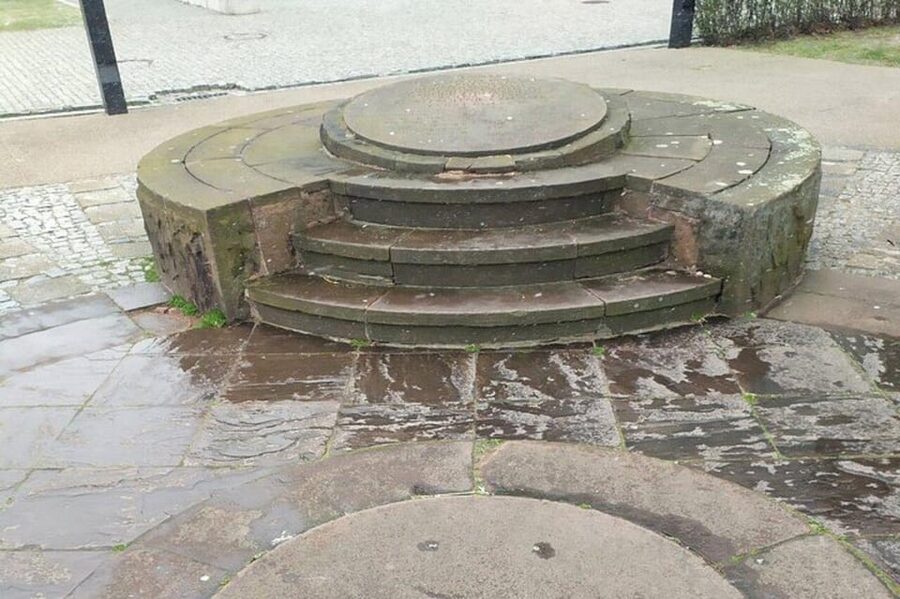
POLIN Museum of the History of Polish Jews, used as context
The next stop is the POLIN Museum of the History of Polish Jews, with about 10 minutes of guided time. Entry to the museum is not included, but the way the tour uses POLIN as a waypoint is smart. It sets up how Jewish life in Poland and Warsaw develops over time, then helps you connect that story to the Nazi period and the ghetto years.
Even if you don’t plan to enter the museum, the guided orientation helps you frame what you see there if you choose to come back later. Think of it as getting your bearings before you go deeper on your own.
Miła 18: focusing the “before and after” in one neighborhood block
Then you reach Miła 18 for another short guided stop of about 10 minutes. This is one of those street-level stops that makes the story feel less abstract. In a short walking tour, your job is to learn how to look at the city. Miła 18 supports that by keeping your attention on the neighborhood scale, not just famous memorial names.
This segment is also where the tour’s themes start to line up sharply: why 1943 mattered, what people hoped for, and why the Jewish Uprising took place even when defeat was likely. Your guide walks you through the logic and desperation behind resistance, including the painful truth that the uprising still meant people fought anyway.
That combination, political reality plus human choice, is one reason the tour feels balanced instead of purely tragic.
Umschlagplatz: the Treblinka transports and the closing memorial mood
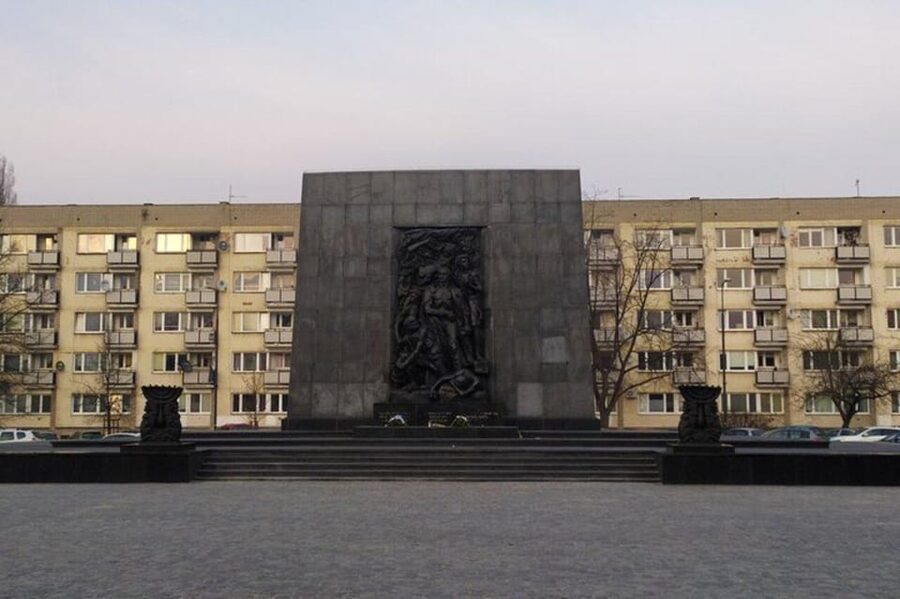
The tour ends at Pomnik Umschlagplatz, after finishing the last key stop. This is the moment the walk builds toward, and it’s also one of the most significant highlights: this is the place tied to the deportations where 300,000 Jews were transported to Treblinka.
Because this is the finish, the guide can bring together the threads: the scale of what was taken, the meaning of survival, and the memory work that continues today. You’ll also see several monuments that remind you of the Jews heroic struggle in the ghetto, so the ending is not only about loss. It’s about resistance and endurance, too.
Emotionally, expect this to be heavy. Practically, you’ll also want a few minutes to stand and absorb what you see. In a 3-hour format, it’s easy to rush the last stop, but it’s also the place where rushing hurts. Take your time, read what you can, and then decide whether you want to keep exploring nearby on your own.
Price and what you actually get for $32
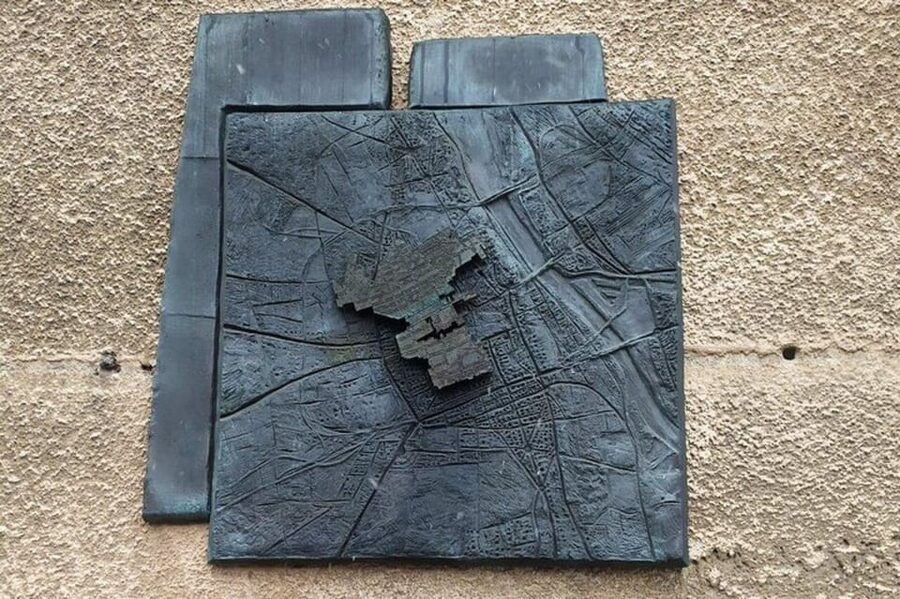
The price is $32 per person for about 3 hours, and the distance is manageable but real. For this kind of guided historical walking experience, that price feels fair because you’re getting much more than directions.
Here’s what makes it good value:
- A live English-speaking guide and a route designed around key surviving and commemorative sites
- A full info pack with an FAQ and useful links, which helps you keep learning after the walk
- Visual aids that support the story as you move through Warsaw
- A small group limit of 10 people, which keeps the experience from feeling crowded or rushed
Two costs to keep in mind:
- Nożyk Synagogue entry fee is not included
- POLIN Museum entry fee is not included
So the $32 is for the guided walking and materials, not for museum tickets. If you’re the type who wants to go inside at least one major site, you should budget extra time and a bit more money.
If you’re trying to fit Jewish Warsaw into a tight schedule, this tour is also efficient. It gives you a guided narrative arc, then points you toward what to study further, which is a win.
Who should book, and who might want a different option
You should book if you want a guided walk that connects past and present in Warsaw, with an emphasis on the few sites you can still stand at and recognize. You’ll likely love it if you like history explained in a way that stays human, with strong storytelling and a guide who can make the details land.
It’s also a good choice if you plan to visit POLIN Museum later. The tour gives you a framework so your museum time feels more purposeful.
You might skip this one if:
- You have trouble walking about 4.5 to 5 km
- You prefer purely light sightseeing, because the topic is intensely serious
- You want a mostly museum-based experience, since the key places are handled as guided stops and orientations rather than full ticketed visits
Should you book this Jewish Warsaw walking tour?
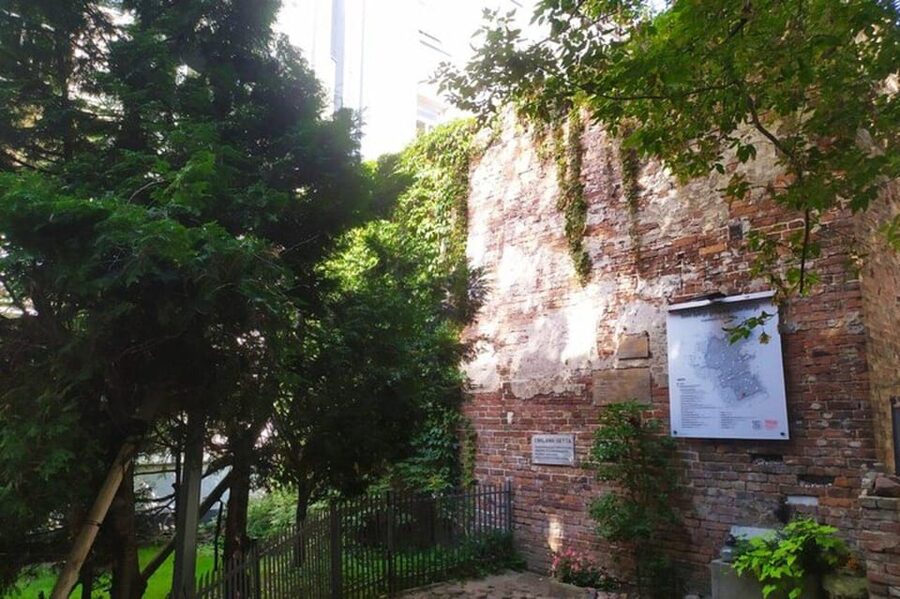
Yes, if you’re ready for a focused 3-hour walk that treats Warsaw’s Jewish story with care and clarity. The route is built around surviving places like Nożyk Synagogue, boundary remnants like the ghetto wall traces, and the crucial departure point at Pomnik Umschlagplatz tied to Treblinka transports. That combination makes it feel grounded, not abstract.
Also, pay attention to the guide quality. This tour scores well because the storytelling sticks, and guides like Oliwia bring humor and strong command without undercutting the facts. If you want to understand Jewish Warsaw with context, details, and a real sense of the city’s geography, this is a smart buy.
FAQ
How long is the walking tour?
It runs for about 3 hours.
How far do we walk?
Expect roughly 4.5 to 5 km total.
Where do we meet, and how do we find the guide?
You meet in front of Baguette Mi at Sienna 53. Look for a guide holding a white and green umbrella.
Is the tour in English?
Yes, the live tour guide speaks English.
Are entry fees included for Nożyk Synagogue and POLIN Museum?
No. Entry fees to Nożyk Synagogue and to the POLIN Museum are not included.
What group size is it?
It is a small group, limited to 10 participants.
Is there free cancellation?
Yes, you can cancel up to 24 hours in advance for a full refund.
More Tour Reviews in Warsaw




Warsaw, Keep Looking
Jewish Heritage and Ghetto Routes in Warsaw

Recently written up around Warsaw


More Jewish Heritage and Ghetto Tours.
 ★ 4.7Schindler’s Factory & Ghetto Guided TourFrom $571,694 reviews
 ★ 4.9Jewish Quarter and Former Ghetto TourFrom $191,441 reviews
 ★ 4.9Bike Tour of Old Town, Jewish Quarter and the GhettoFrom $371,155 reviews
 ★ 4.7POLIN Museum of the History of Polish Jews TicketFrom $121,142 reviews
 ★ 4.8Kazimierz, Schindler’s Factory & Ghetto Guided TourFrom $81460 reviews
 ★ 5.0Full Bike Tour – the Old Town, Jewish Qtr & the Ghetto NEW BIKESFrom $35437 reviews
 ★ 4.9Warsaw Ghetto Private Walking Tour with Hotel PickupFrom $84369 reviews
 ★ 4.9Bike Tour of the Old Town, Kazimierz, and the GhettoFrom $26350 reviews
Also on these Poland lists