
REVIEW · RETRO FIAT AND VINTAGE BUS TOURS
Discover the Dark Side of Warsaw in Praga District by Retro Bus
Praga feels like Warsaw’s secret folder. This 2.5-hour retro-bus tour turns the usual city highlights into a darker, stranger, more human route through WWII and Communism. I like that it’s not just driving by monuments, it includes stops where you can look, taste, and hear why the neighborhood looks the way it does.
Two things I especially love: the E.Wedel hot chocolate stop is a real break in the middle of the day, and the commentary has room for humor as well as hard history. One thing to keep in mind is the pacing, some stops feel short if your bus group is large or late, so come ready to move when the guide calls it.
In This Review
- Key highlights worth circling
- Entering the “dark side” of Warsaw from Palace of Culture
- The moment you cross the Vistula
- Retro-bus comfort, timing, and group realities
- Bring the right expectations for weather and comfort
- Stop stories from central Warsaw: Date Palm and WWII hiding places
- E.Wedel chocolate factory: the warm pause that makes the history land
- What you’re really learning here
- Basilica of the Sacred Heart and the visual side of Praga
- Warsaw East, the longest building, and the city’s scale tricks
- Koneser Warsaw Vodka Factory: industry, power, and neighborhood change
- Practical tip for photos and pacing
- Praga Polnoc: why people call this the dark side
- Różycki’s Bazaar and forged-document history
- Brzeska and Stalowa murals, street art, and WWII-scarred buildings
- The value of seeing it from the street
- The Praga Bermuda Triangle: courtyards and the maze feeling
- New Praga: the founder story and a pre-war residential courtyard
- Film-set street moments for The Pianist
- Warsaw Zoo mention, then a big viewpoint shift back toward the river
- Royal Castle panorama and the Warsaw Nike memorial
- The pacing, language, and group behavior tips that make the day smoother
- Who this Praga district bus tour is best for
- Should you book Dark Side of Warsaw in Praga?
Key highlights worth circling
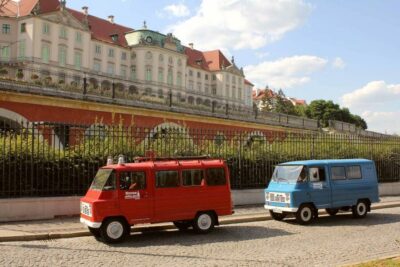
- Retro-style 1980s coach for a fun, memorable ride through Praga
- E.Wedel 19th-century chocolate factory stop with hot chocolate included
- Brzeska and Stalowa mural streets, with stories tied to Poland’s modern politics
- Koneser Warsaw Vodka Factory stop, where you connect booze, industry, and neighborhood change
- The Praga Bermuda Triangle courtyards and pre-war streets, plus film locations for The Pianist
- Small-group energy, guides like Konrad, Marcin, and Paweł are frequently praised for clear English and quick humor
Warsaw rebuilt itself twice over. Here is how else we saw it
- Warsaw: Chopin Concert in the Old Town
★ 4.8 · 2,287 reviews - Warsaw: Traditional Galar Cruise on The Vistula River
★ 4.6 · 1,640 reviews - Warsaw: Old Town Highlights Walking Tour in English
★ 4.7 · 1,516 reviews - Warsaw Concert: Chopin – Painted by Candlelights with Wine
★ 4.8 · 1,442 reviews
Entering the “dark side” of Warsaw from Palace of Culture
The tour starts outside the Palace of Culture and Science, near the Warsaw Tourist Information area at Pałac Kultury i Nauki, pl. Defilad 1. It’s a big, loud landmark, and that matters, because it sets up the contrast right away. Your guide frames the area as more than scenery. You’re stepping into Warsaw with a sense that history is still visible in the streets.
Even the meeting place has a story. The Palace of Culture and Science is described as a gift from Joseph Stalin, and that context helps you understand why different parts of Warsaw can feel like they belong to different eras. The tour runs around 2 hours 30 minutes, and it’s designed to be steady and easy to follow without hotel pickup.
The moment you cross the Vistula
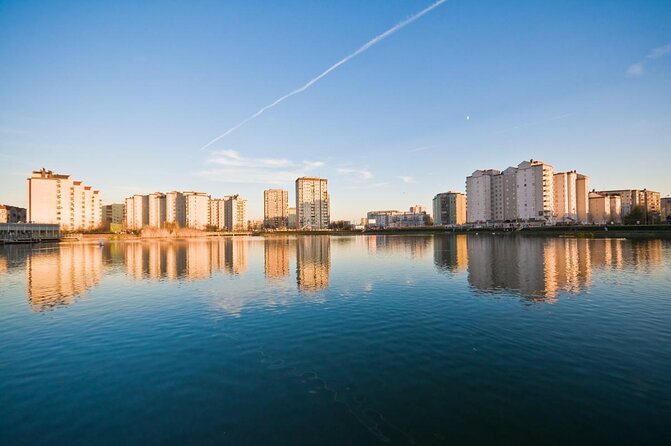
Before you get deep into Praga, there’s a short ride over the Vistula River. You get that quick geographic reset. Warsaw is a river city, so crossing it early helps your brain map what you’ll see next: a neighborhood that developed its own identity, and kept it through trauma, rebuilding, and new waves of culture.
Retro-bus comfort, timing, and group realities
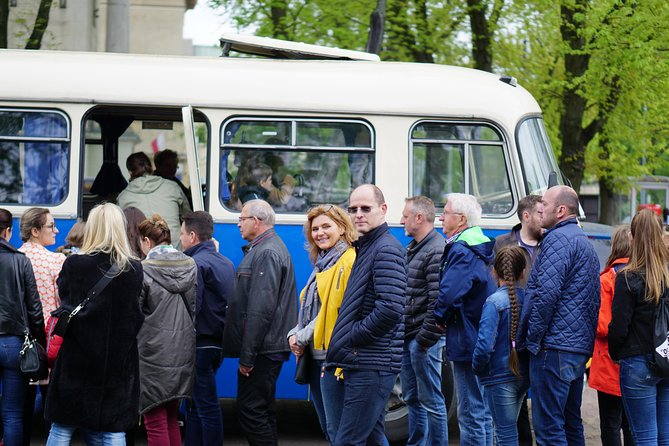
This isn’t a sprint bus tour where you hop in and out every 10 minutes. You’ll do frequent stops, but the overall rhythm is built for conversation on board and short walks at each location. You’re also on a bus that feels like a throwback, which makes the ride more relaxed and photo-friendly than a standard city coach.
Price is listed at $42.34 per person, and the value comes from three practical things. First, transport is included via the retro coach. Second, hot chocolate is included from the factory stop. Third, you’re paying for a guide who strings together why Praga looks the way it does, from WWII scars to today’s street life.
Group size is capped at a maximum of 40 travelers. In real life, that usually means you’re not totally alone, but you are also not swallowed by a giant crowd. Still, one review noted that a very large group can cause rushing, so if you hate time pressure, show up early and be ready to return to the bus quickly.
Bring the right expectations for weather and comfort
The tour operates in all weather, so dress for rain and wind as well as for walking. One rider flagged that the bus may not have air conditioning, which matters on warm days. If you run hot, plan for that. If you hate stepping into crowds briefly, this is manageable, but you will be in a moving group.
Old cars, old buses, same city. Our other rides
- Private Tour: Warsaw City Sightseeing by Retro Fiat★ 5.0 · 562 reviews
- Discover the Dark Side of Warsaw in Praga District by Retro Bus★ 5.0 · 327 reviews
- Warsaw: 2.5-Hour Dark Side – Praga District by a Retro Bus★ 4.5 · 248 reviews
- Private Tour: Warsaw’s Jewish Heritage by Retro Fiat★ 5.0 · 208 reviews
- Warsaw City Sightseeing in a Retro Bus★ 5.0 · 196 reviews
Stop stories from central Warsaw: Date Palm and WWII hiding places
Not every moment on this tour is in Praga. Before Praga fully takes over, you get quick hits of Warsaw’s wider WWII and post-war story.
You’ll hear about a date palm tree in the city center. It sounds random until the guide explains it, and that’s the point: the city’s details often carry political or historical meaning, even when they look like ordinary street life.
Then you’re told what was hidden in the basement of the National Museum during WWII. Again, this is not a museum visit. It’s a story stop built for context. The advantage is you understand the bigger picture before you hit Praga’s physical remains of conflict and survival.
You’ll also pass a football stadium built for UEFA Euro Championship 2012, and you’ll catch a few of those “how Warsaw changed” clues along the way. The tour uses these stops to show how the city kept evolving while old scars stayed visible underneath.
E.Wedel chocolate factory: the warm pause that makes the history land
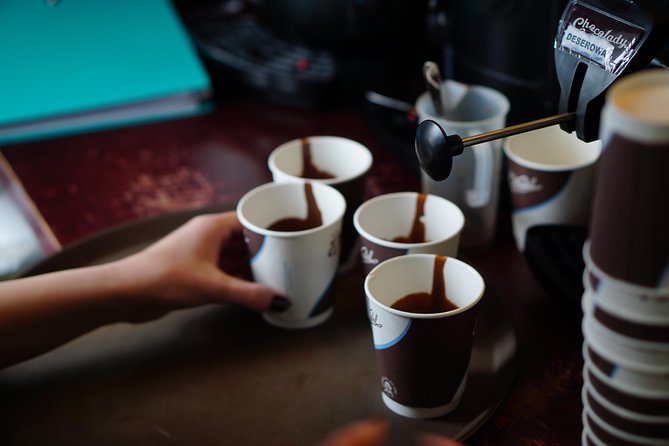
One of the best parts is the E.Wedel stop, where you get a cup of hot chocolate and factory history. This is one of those rare tour elements that feels genuinely useful, not just a prop.
The vibe here is simple: you get warmth, you sit for a bit, and you reset your senses before heading into heavier topics. If you care about taste as a travel memory, this will stick. Several people praised the hot chocolate as a standout, and honestly it’s a smart contrast. You go from WWII and politics, then you get something comforting and real.
What you’re really learning here
This isn’t just about chocolate. It’s a lesson in how industry and branding grew in Warsaw, and how Praga’s identity connects to commerce and factories. Later you’ll see another industrial site through a different lens with the vodka complex, so E.Wedel acts like your first chapter of “why these neighborhoods became what they became.”
Basilica of the Sacred Heart and the visual side of Praga
After the chocolate, the bus moves you through more Warsaw landmarks, including the Basilica of the Sacred Heart of Jesus. You get time to see one of the most beautiful churches in Poland, and this stop gives your eyes a break from the hard-edge city history.
Even if you’re not a church person, it helps to have one moment of visual calm inside a tour focused on conflict and rebuilding. Plus, architecture in Poland often tells you more than you expect. It’s not just pretty, it’s cultural memory written in stone.
Warsaw East, the longest building, and the city’s scale tricks
As you continue, your guide points out details that are easy to miss when you’re just passing by. For example, the tour includes commentary on whether Warsaw East railway station is considered the most beautiful station in Warsaw, plus the story behind the longest building in Warsaw.
Why include these? Because scale changes how a city feels. When you notice station design, long corridors, and how neighborhoods connect, Praga starts making more sense. It’s the difference between seeing a place and understanding its layout.
Koneser Warsaw Vodka Factory: industry, power, and neighborhood change
The Koneser Warsaw Vodka Factory stop is timed so you can walk around and hear how vodka factored into the district. This is a key piece of Praga’s identity. Alcohol production meant jobs, money, and trade routes, and it shaped daily life for decades.
This stop also ties into a bigger theme the guide emphasizes: even after major political shifts, industrial buildings and their surrounding streets keep shaping what comes next. You can see it in how old complexes become cultural spaces and community hubs.
Practical tip for photos and pacing
Factory complexes can have lines of sight issues. If you want photos, try to move a little early in the group. Don’t wait for the perfect angle because your time window is built for moving back to the bus. You’ll get great street views, but you’ll also want your feet ready.
Praga Polnoc: why people call this the dark side
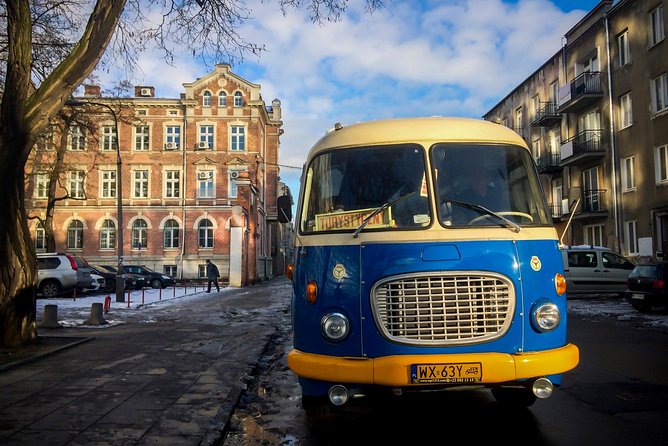
Praga’s nickname gets attention at Praga Polnoc, which is framed as the dark side of Warsaw. The guide explains why the neighborhood carries that reputation, and it’s not just for drama. You’re shown places connected to the wartime and political reality that shaped this area.
This is also where you start seeing why the district feels different from central Warsaw. The tour includes the kind of street detail you might miss on your own: courtyards, pre-war architecture, and the texture of buildings that were not erased in the same way as others.
Różycki’s Bazaar and forged-document history
Your guide includes the former black market of Różycki’s Bazaar, where customers could buy forged documents. It’s a heavy topic, delivered as story context rather than a graphic history lecture.
Still, it’s one of the tour moments where you feel the importance of listening. Praga isn’t just “street art and cafés.” It’s also a place where people survived by working around systems, and where the consequences of occupation were lived at ground level.
If you like your tours honest and not sanitized, this stop will respect your intelligence. You get context, and you understand the neighborhood through the lens of what people needed back then.
Brzeska and Stalowa murals, street art, and WWII-scarred buildings
The streets of Brzeska and Stalowa are part of the tour’s mural experience. You’ll see colorful art tied to Poland’s history and political climate. Street art here isn’t just decoration. It’s part of the public conversation that grew after decades of strict control.
Some buildings on these streets were spared by WWII bombings, which adds another layer. You’re not only watching art evolve, you’re watching the physical city explain why the art can exist alongside older survival.
The value of seeing it from the street
A lot of Warsaw tourism feels like it happens at the edge of a neighborhood. This one is about moving inside it. That makes the street art and architecture feel like living details, not postcard backdrops.
The Praga Bermuda Triangle: courtyards and the maze feeling
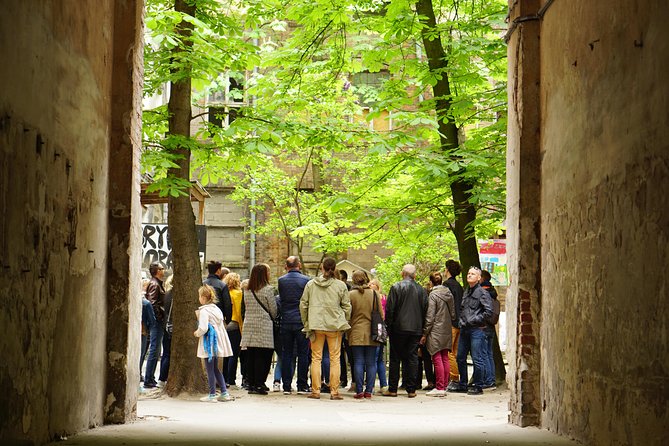
You’ll hear about an area nicknamed the Praga Bermuda Triangle, linked to scenic courtyards and pre-war architecture. This part works best if you enjoy wandering slowly, even if you’re in a timed tour.
Courtyards do something magical in cities like Warsaw. They reduce noise. They show how buildings were designed for community space. And they help you understand why Praga feels enclosed in places, like it has pockets of older life hidden behind the main streets.
New Praga: the founder story and a pre-war residential courtyard
A stop called New Praga brings in the founder story and includes an inner courtyard of a prewar residential house. This is one of those moments where you get a break from big street viewing and can see what everyday life might have looked like before later changes.
Courtyards are also where architecture becomes practical. You’ll notice how windows face inward, how space is managed, and how residents used the layout. If you like reading a city visually, this stop is worth paying attention to.
Film-set street moments for The Pianist
The tour includes a picturesque street that became a movie set for The Pianist by Roman Polański. Even if you’ve only seen the film once, it helps to connect screen images to real streets.
This is where your imagination gets new fuel. Instead of thinking of the film as a single storyline, you start recognizing the physical shapes of the city behind it. It makes the history feel closer.
Warsaw Zoo mention, then a big viewpoint shift back toward the river
You also get a quick note about the movie The Zookeeper’s Wife and how it connects to Warsaw Zoo. Then the tour crosses back over the Vistula and moves toward panoramic viewpoints.
This change of rhythm matters. After concentrated street-level history, it’s refreshing to look outward again. Your eyes need space, and your brain needs a map.
Royal Castle panorama and the Warsaw Nike memorial
You’ll admire a panorama of the Royal Castle. It’s a visual payoff that gives you a sense of the city’s scale and beauty from a different angle than typical central sightseeing.
The tour also includes the Warsaw Nike memorial, described as commemorating those who died in Warsaw during WWII. This stop works best if you keep your mind on why it matters. It’s not a quick photo moment. It’s the tour’s reminder that even when Praga becomes trendy, the losses never fully vanish.
Finally, you pass the main street in Warsaw that was enlarged after WWII. That’s a good capstone. It brings you back to the idea that rebuilding is not just about architecture. It’s about movement, access, and how a city chooses to function after trauma.
The pacing, language, and group behavior tips that make the day smoother
This tour is offered in English, with live commentary on board. One practical advantage is that guides often manage language clarity so you can actually follow the story without strain.
A few tips based on what’s been experienced:
- If you’re sensitive to noise, sit where you can hear the guide clearly and not the whole bus at once.
- If the bus group feels chaotic, don’t panic. A good guide will keep the tour moving and protect the experience for the people who came for history.
- If you hate rushing, be at the bus quickly after each stop and keep your bag ready.
One rider specifically mentioned the guide ensured the Polish speaker was not too loud, so English commentary stayed clear. That’s the kind of small behind-the-scenes skill that makes a big difference on a bus.
Also, one review noted a moment when the bus battery got cold and guests had to help push. That’s not something you can plan for, but it does tell you the tour is real life, not a glossy product. Keep your sense of humor handy.
Who this Praga district bus tour is best for
This tour fits best if you want Warsaw with texture. I think it’s ideal for you if:
- you like alternative routes that go beyond the usual Old Town photos
- you enjoy history told through streets, factories, and everyday places
- you want a mix of dark WWII themes and lighter cultural stops like chocolate
- you value clear English narration and guides who bring stories to life
It may feel less ideal if you expect big museum-level stops or long time at each location. This is a story-and-stops format. You’ll move, you’ll see, and you’ll hear, but you won’t get hours in one place.
Should you book Dark Side of Warsaw in Praga?
Book it if you want a smarter, more human Warsaw day. For the price, you’re getting transport, a guided narrative, and an included hot chocolate factory stop, plus a route designed to explain Praga’s reputation through real locations.
Skip it if you only want classic highlights or you dislike guided group pacing. Also consider bringing a layer for colder or windier weather since it runs in all conditions.
If your goal is to understand how Praga became Praga, this retro-bus tour is a strong bet. You’ll come away with the feeling that Warsaw is not one story. It’s many stories packed into one city, side by side.
More Tour Reviews in Warsaw
Vintage Rides Around Warsaw


Warsaw, Keep Looking
Recently written up around Warsaw

More Retro Fiat and Vintage Bus Tours.
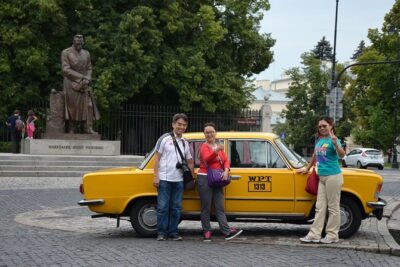 ★ 5.0Private Tour: Warsaw City Sightseeing by Retro FiatFrom $108562 reviews
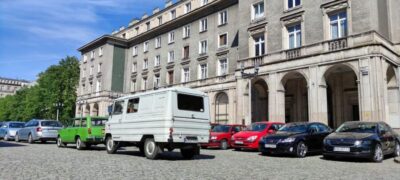 ★ 4.9Nowa Huta Guided Tour in Vintage CarFrom $75277 reviews
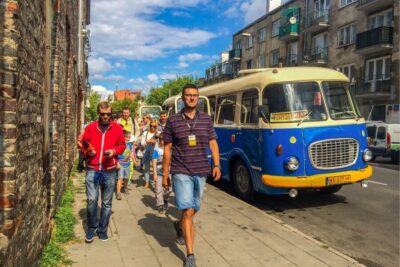 ★ 4.52.5-Hour Dark Side – Praga District by a Retro BusFrom $41248 reviews
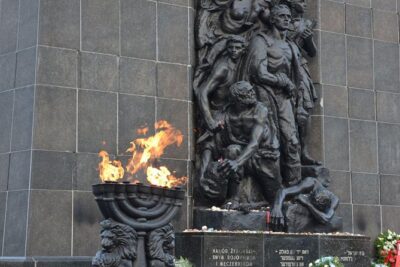 ★ 5.0Private Tour: Warsaw’s Jewish Heritage by Retro FiatFrom $108208 reviews
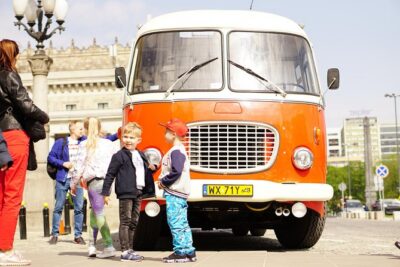 ★ 5.0Warsaw City Sightseeing in a Retro BusFrom $42196 reviews
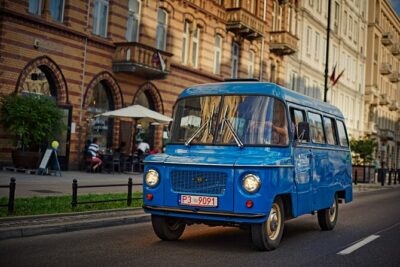 ★ 5.0Private Historical Tour of Warsaw by a Retro Fiat with PickupFrom $108190 reviews
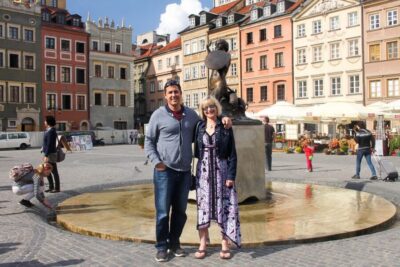 ★ 4.9Warsaw Must-Sees: 4-Hour Private Tour by Retro FiatFrom $105123 reviews
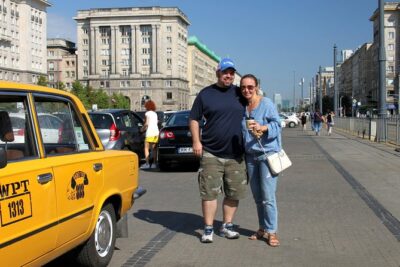 ★ 5.0Private Tour: Warsaw’s Communist History by Retro FiatFrom $108115 reviews
Also on these Poland lists