
REVIEW · RETRO FIAT AND VINTAGE BUS TOURS
Warsaw: 2.5-Hour Dark Side – Praga District by a Retro Bus
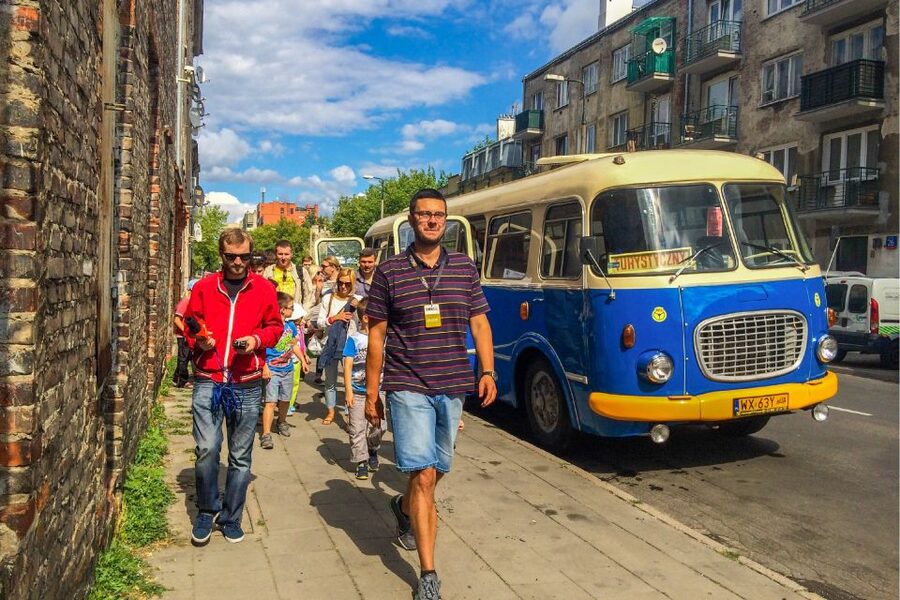
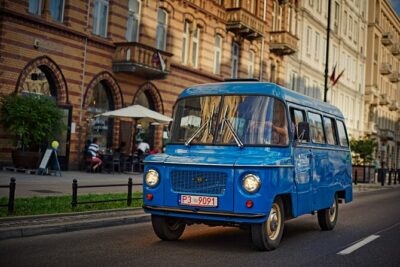
Praga feels like another Warsaw. This 2.5-hour dark-side ride uses a retro Jelcz cucumber bus and a live guide to show you Praga streets, courtyards, and street art that most first-time visits miss. I like how the commentary turns names like Zabkowska, Brzeska, and Stalowa into places with context, not just photos.
One thing to plan for: there is a small amount of walking, and the tour is not suitable for wheelchair users.
In This Review
- Key highlights
- Finding the bus at Palace of Culture and Science
- The dark-side angle, and why Praga matters
- Chocolate factory stop and Warsaw’s famous hot chocolate break
- Basilica of the Sacred Heart of Jesus, and what to notice
- Koneser vodka factory: from production past to today’s complex
- Praga street art and the streets you actually want to remember
- Praga Bermuda Triangle, courtyards, shrines, and film echoes
- A marketplace stop and the reality check
- Retro bus comfort, group size, and how to get the best seat
- Timing, price, and real value at around $41
- Who this tour is best for
- Should you book the Dark Side of Praga tour?
- FAQ
- Where is the meeting point for the Praga tour?
- When does the tour run?
- How long is the tour?
- What transportation will you use on the tour?
- Is the tour available in English?
- Is there walking and is it wheelchair accessible?
- What is included, and is there free cancellation?
Key highlights
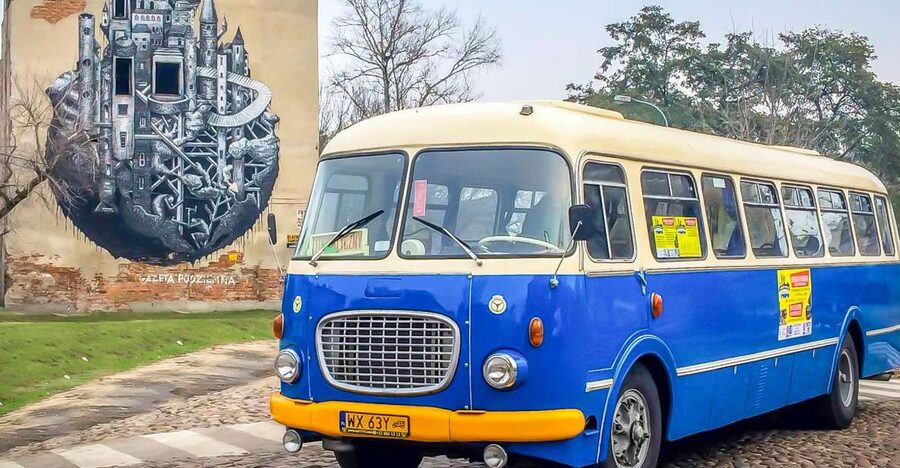
- Retro Jelcz cucumber bus ride in a historical 1980s-style coach, with a smaller mini retro bus if the group is up to 8
- Live on-board storytelling from English-speaking guides such as Max and Konrad, with humor and clear explanations
- E Wedel hot chocolate stop after crossing the Vistula, plus the story behind the sweets-maker
- Praga street art and pre-war streets along Zabkowska, Brzeska, and Stalowa
- Koneser former vodka factory visit and what the complex is used for today
- Praga Bermuda Triangle architecture, courtyards, shrines, and why the area earned its name
Warsaw rebuilt itself twice over. Here is how else we saw it
- Warsaw: Chopin Concert in the Old Town
★ 4.8 · 2,287 reviews - Warsaw: Traditional Galar Cruise on The Vistula River
★ 4.6 · 1,640 reviews - Warsaw: Old Town Highlights Walking Tour in English
★ 4.7 · 1,516 reviews - Warsaw Concert: Chopin – Painted by Candlelights with Wine
★ 4.8 · 1,442 reviews
Finding the bus at Palace of Culture and Science
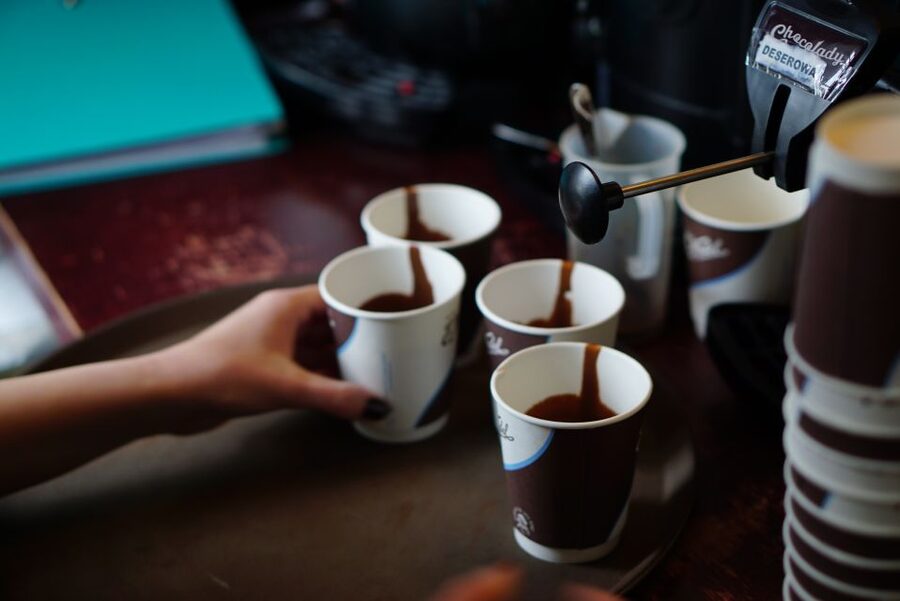
Your tour starts at the Palace of Culture and Science, at the tourist information point. The good news is the landmark is easy to recognize from far away. The practical tip is to give yourself a few extra minutes, because GPS can be a bit off and the exact place to board can be easier once you spot the bus in the car park.
Plan to meet your group, then settle in for 150 minutes of guided riding with stops. If you care about hearing every word, grab a seat closer to the front. A few people have found that when you sit too far back, the sound can be harder to catch, especially when the bus is busy.
The dark-side angle, and why Praga matters
The pitch here is simple: skip the postcard Warsaw and go to Praga, the district often labeled as rough around the edges. The guide sets the tone early, explaining how Warsaw’s history shaped neighborhoods differently, and why Praga became the part of town people talked about with caution.
What I like about this format is the way it balances story with sightseeing. You get the atmosphere and the uncomfortable past, without turning the tour into fear-mongering. The live guide ties together what you see outside with the history behind it, so street scenes make sense as you move through them.
You’ll also cross the Vistula River during the ride. That crossing is more than a scenic break. It gives the guide a natural checkpoint to connect Warsaw’s geography to how Praga developed on the other side.
Chocolate factory stop and Warsaw’s famous hot chocolate break
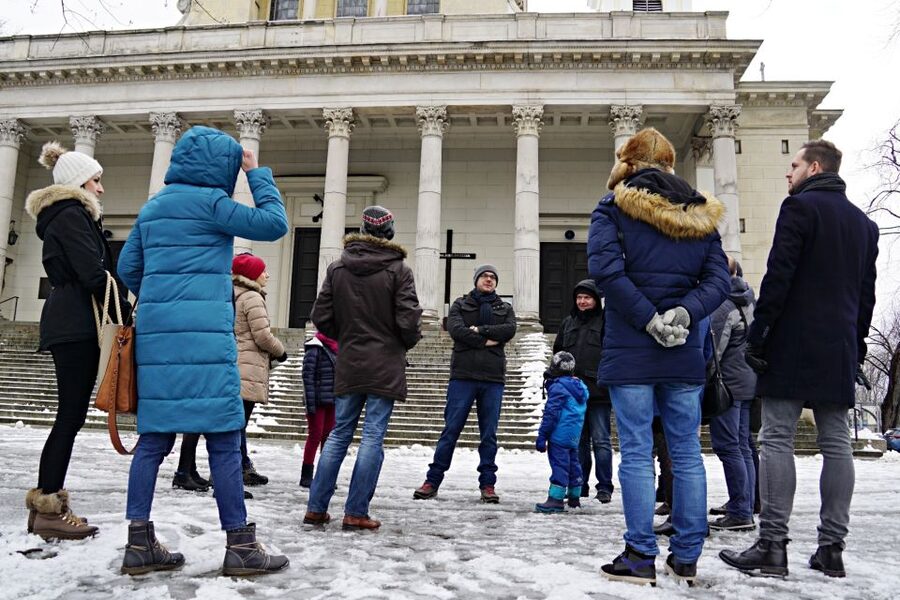
After you cross the river, the first stop is a chocolate factory lounge for hot chocolate. This is a smart pause. You’re fresh, it’s early enough to enjoy a warm drink, and the guide can continue the narrative while you reset.
The tour shares the company story behind sweets made in Warsaw since the mid-1800s. Then you get the payoff, a cup of hot chocolate at the stop that’s associated with E Wedel. Even if you’re not a big chocolate person, this break works because it’s not just a snack stop, it’s part of the culture of the city.
A practical note: seating and timing can vary depending on how the group flows. If you like taking photos, step aside quickly and then come back, so you don’t hold up the next movement of the group.
Basilica of the Sacred Heart of Jesus, and what to notice
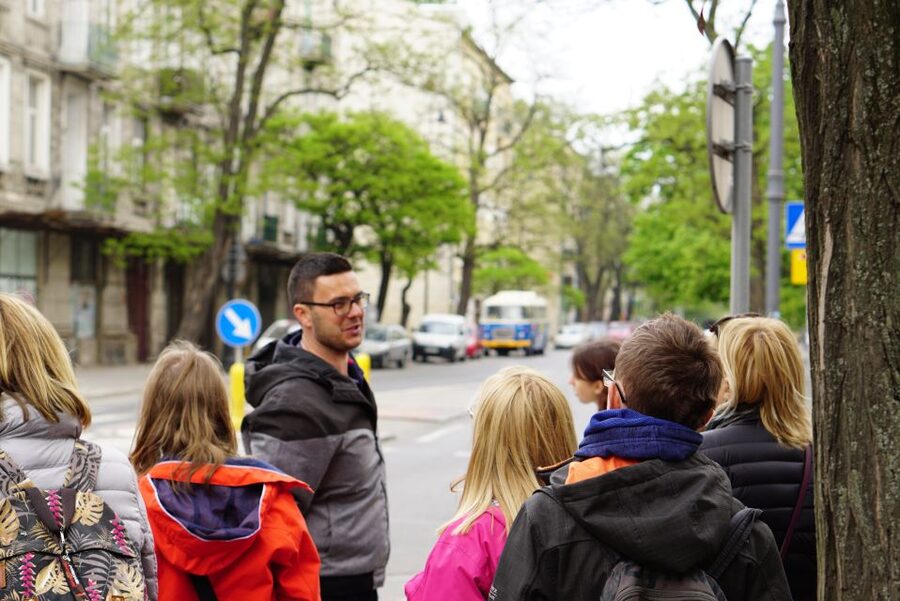
Next up is the Basilica of the Sacred Heart of Jesus, one of the most striking church buildings in Warsaw. The architecture here draws inspiration from the Roman basilica of St. Paul, and that connection matters for how you look at the structure.
When you arrive, don’t just scan for the obvious beauty. Pay attention to how the building’s form and rhythm create that big, ceremonial feeling. A guided walk-by makes a difference, because the guide frames what you’re looking at instead of leaving you to guess.
This stop is also a useful contrast to Praga street scenes. The district may be known for its grittier reputation, but it also has real monuments, religious life, and a layer of old Warsaw that survives in unexpected ways.
Old cars, old buses, same city. Our other rides
- Private Tour: Warsaw City Sightseeing by Retro Fiat★ 5.0 · 562 reviews
- Discover the Dark Side of Warsaw in Praga District by Retro Bus★ 5.0 · 327 reviews
- Warsaw: 2.5-Hour Dark Side – Praga District by a Retro Bus★ 4.5 · 248 reviews
- Private Tour: Warsaw’s Jewish Heritage by Retro Fiat★ 5.0 · 208 reviews
- Warsaw City Sightseeing in a Retro Bus★ 5.0 · 196 reviews
Koneser vodka factory: from production past to today’s complex
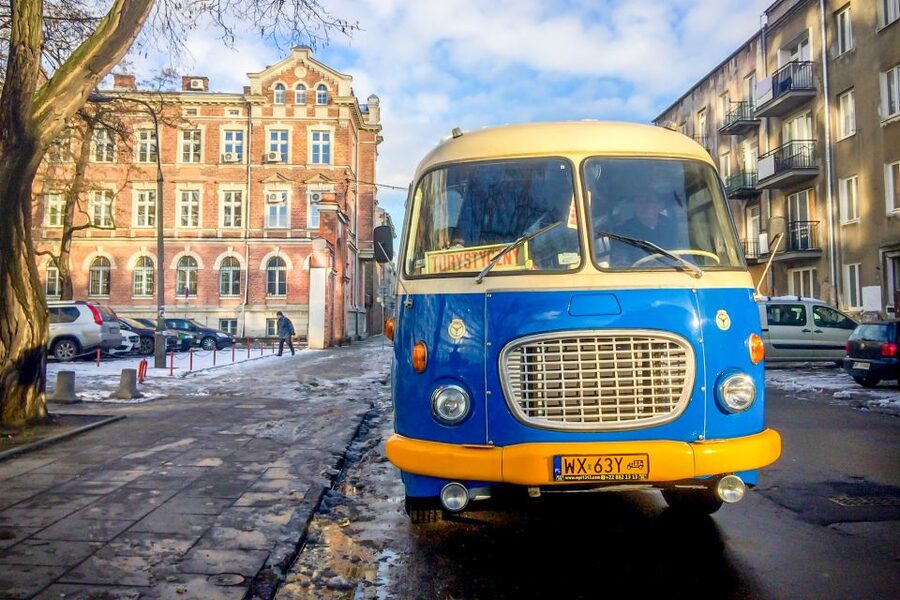
Then you’ll head to Koneser, a former vodka factory complex. The tour explains what was produced there and what the area is used for now, which helps you understand why industrial buildings keep getting reused instead of erased.
This kind of stop is valuable because it connects multiple eras in one place. You see the physical bones of the old industry, but the guide helps you read what has changed. In other words, you’re not only learning history, you’re seeing how the city treats its past.
What to do at this stop is simple: watch how the complex sits within the neighborhood. Even without a long walk through every corner, the surroundings tell you how Praga developed around factories, housing, and daily life.
Praga street art and the streets you actually want to remember
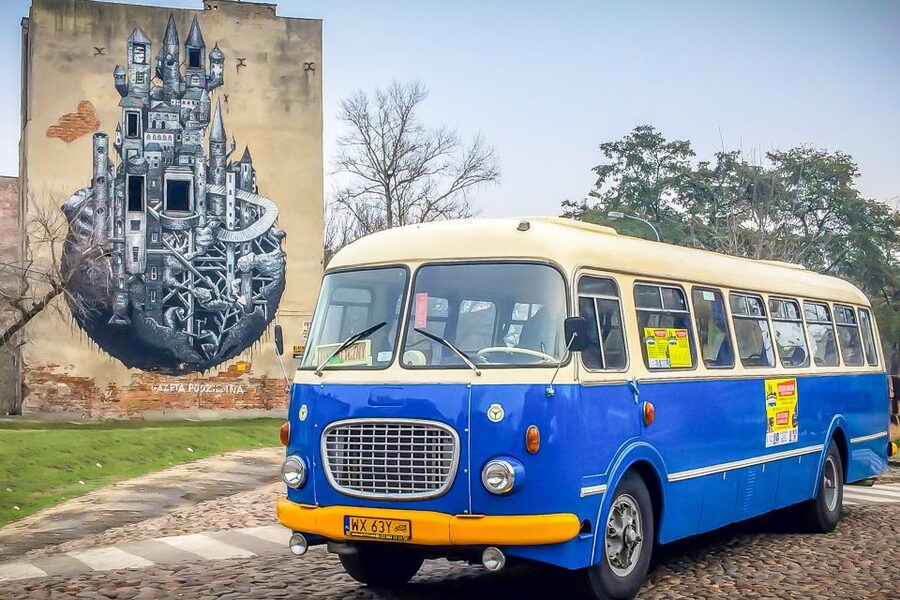
One of the top reasons to book this tour is the chance to see Warsaw street art in a district many people overlook. The highlights specifically point to impressive examples of street art, and the route includes picturesque streets like Zabkowska, Brzeska, and Stalowa.
You’ll notice the difference between this and a quick photo stop. The guide helps you understand what the art is doing in the neighborhood, and how Praga’s identity shows up visually. It’s not just about murals, it’s about how a place expresses itself.
If you’re the type who likes to take photos with context, this part is for you. Use your time to get a few wider shots of street perspective, then follow up with close-ups of details. The guide’s commentary makes it easier to know what’s worth capturing.
Praga Bermuda Triangle, courtyards, shrines, and film echoes
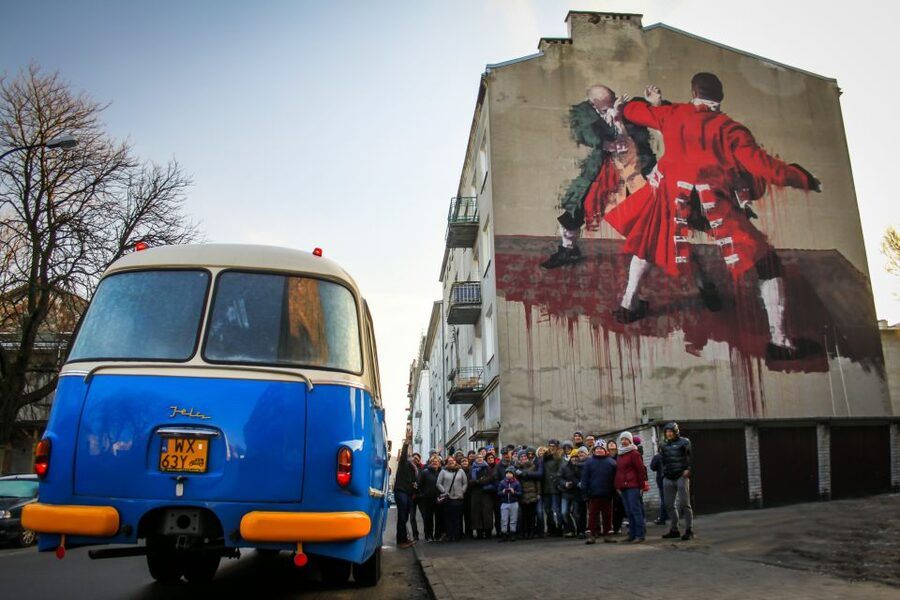
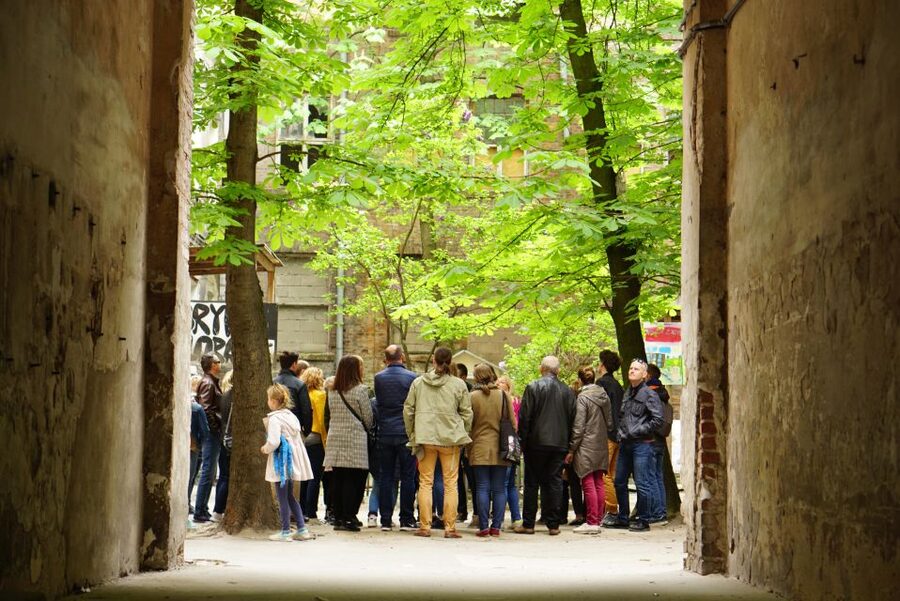
The tour spends time in the area often called the Praga Bermuda Triangle. You’ll hear the origin of the name, which is one of those city lore details that makes you feel like you’re in on the joke. Then you see authentic pre-war architecture, including scenic courtyards and colorful shrines tucked inside.
This is where the tour earns its nickname. Praga can feel like it skips ahead into the present and then back into the past, sometimes within the span of one block. Courtyards are a key clue. If you’ve never looked at Eastern European apartment courtyards up close, this is the reminder that cities are made of more than what’s on the main road.
The guide also connects the area to filmmaking. Roman Polanski is mentioned because The Pianist was filmed here, along with other projects. Even if you’ve only seen parts of that story, knowing Praga’s role gives you a stronger sense of why outsiders keep getting drawn in.
A marketplace stop and the reality check
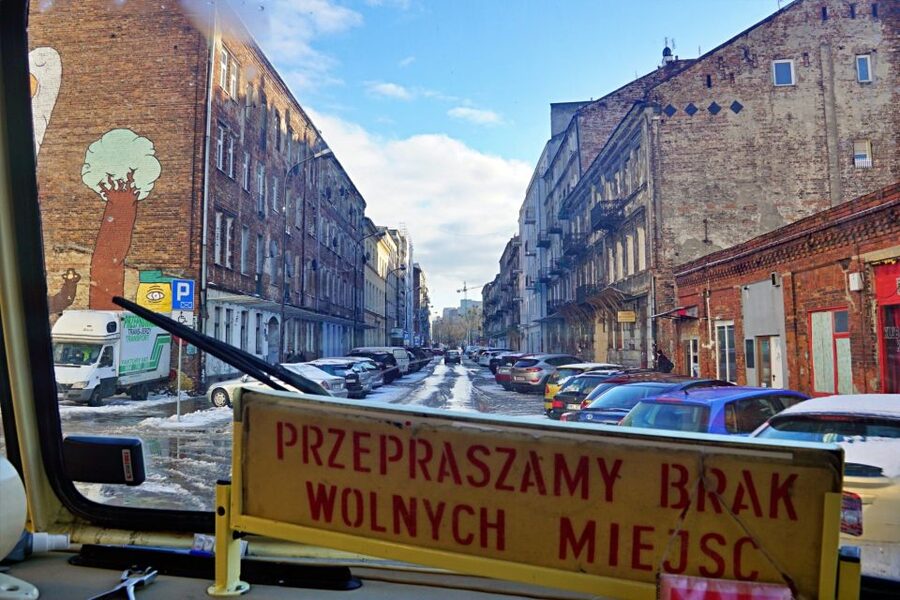
The tour description includes a stop at a marketplace where you could buy almost everything, from jeans and diplomas to Kalashnikov rifles, and you’ll find out whether it’s still open. That’s a stark contrast from the architecture and basilica you saw earlier in the day.
This part is useful because it reminds you that Praga is not only a setting for history. It’s also a living district where street-level commerce shaped what people saw every day. The guide will frame what you’re looking at so it lands in context, not as pure shock value.
If you’re sensitive to intense subject matter or just want a calmer day, this is the only piece of the itinerary that might feel more intense than you expected. It’s not described as graphic, but the contrast is real.
Retro bus comfort, group size, and how to get the best seat
Transport is a major selling point here. You ride in a 1980s coach, and depending on the group size you may be on a historical Jelcz cucumber bus. For groups up to 8 people, a smaller Nysa mini retro bus is used, which tends to feel more intimate and makes questions easier for the guide.
That small-group angle matters more than you think. With fewer people, you hear every stop announcement and you can follow the stories without missing details. People have noted that the bus itself can be more comfortable than expected, which helps if you’re not used to older vehicles.
Still, older buses have older audio limits. If you want to be able to hear clearly, don’t take a seat right at the back unless you know sound carries well for that departure. Arrive a bit early, get your seat, and then settle in.
Timing, price, and real value at around $41
At $41 per person, this tour sits in a mid-range price zone for a guided experience in Warsaw. The value comes from three things you would otherwise pay for separately: live guided commentary, transport by a retro bus, and the hot chocolate included at the stop.
You also get something harder to price, access to the kind of neighborhood you might not choose on your own when you’re short on time. Praga is not the “grab a ticket, do a museum, move on” part of the city. The guide helps you move through it with meaning, so you come away with a clearer picture of Warsaw as a whole.
Duration matters too. At 150 minutes, you get enough time to visit several distinct spots, cross the river, and still finish without feeling like the day got stolen from you. A half-day chunk like this is a good match if you’ve already planned the main attractions and want one strong contrasting experience.
Who this tour is best for
This is a great fit if you want Warsaw but not only the headline sights. You’ll enjoy it if you like street art, architecture details, and stories that explain why a district has a reputation in the first place.
I’d also recommend it if you’re the type who likes learning through place names. When Zabkowska, Brzeska, and Stalowa start meaning something, the tour stops feeling like a list and starts feeling like a guided walk through identity.
The tour is not a good match for wheelchair users, and it involves a small amount of walking, so wear comfortable shoes even though the main activity is bus riding.
Should you book the Dark Side of Praga tour?
If your Warsaw days are already packed with museums and grand landmarks, this tour is a smart way to add contrast. The retro bus ride plus a live guide makes Praga feel understandable, not intimidating. The hot chocolate stop gives you a built-in break, and the mix of basilica, Koneser, street art, and the Bermuda Triangle area gives you variety in a short window.
I’d skip it only if you strongly dislike any mention of darker urban history or if walking and older-vehicle logistics could be an issue for you. Otherwise, this is one of those tours that turns a neighborhood you might overlook into a story you’ll remember.
FAQ
Where is the meeting point for the Praga tour?
You meet at the Palace of Culture and Science, at the tourist information point.
When does the tour run?
The tour runs every Saturday at 11:00 AM.
How long is the tour?
The duration is 150 minutes.
What transportation will you use on the tour?
You’ll ride in a historical retro bus. For up to 8 people, a Nysa mini retro bus is used, and for more than 8 people, the tour uses the Jelcz cucumber retro bus.
Is the tour available in English?
Yes, the live guide provides commentary in English.
Is there walking and is it wheelchair accessible?
There is a small amount of walking involved. The tour is not suitable for wheelchair users.
What is included, and is there free cancellation?
The tour includes a professional guide, live on-board commentary, transport by a 1980s coach, a 2.5-hour bus tour, and a cup of hot chocolate. There is free cancellation up to 24 hours in advance for a full refund.
More Tour Reviews in Warsaw

Vintage Rides Around Warsaw


Warsaw, Keep Looking
Recently written up around Warsaw

More Retro Fiat and Vintage Bus Tours.
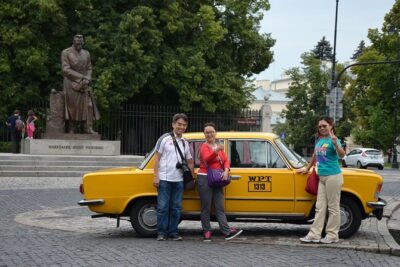 ★ 5.0Private Tour: Warsaw City Sightseeing by Retro FiatFrom $108562 reviews
 ★ 5.0Discover the Dark Side of Warsaw in Praga District by Retro BusFrom $42327 reviews
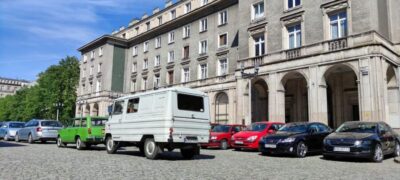 ★ 4.9Nowa Huta Guided Tour in Vintage CarFrom $75277 reviews
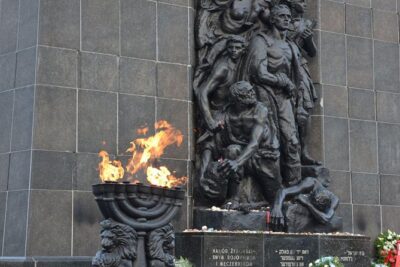 ★ 5.0Private Tour: Warsaw’s Jewish Heritage by Retro FiatFrom $108208 reviews
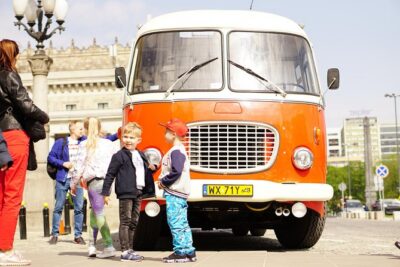 ★ 5.0Warsaw City Sightseeing in a Retro BusFrom $42196 reviews
 ★ 5.0Private Historical Tour of Warsaw by a Retro Fiat with PickupFrom $108190 reviews
 ★ 4.9Warsaw Must-Sees: 4-Hour Private Tour by Retro FiatFrom $105123 reviews
 ★ 5.0Private Tour: Warsaw’s Communist History by Retro FiatFrom $108115 reviews
Also on these Poland lists