
REVIEW · AUSCHWITZ-BIRKENAU MEMORIAL TOURS
Guided Private Tour to Auschwitz Birkenau & Krakow from Wroclaw
Sixteen hours, one truth, and no easy way out. This guided private day trip from Wrocław strings together train rides, Kraków time, and a local-led visit to Auschwitz II Birkenau in English. I like that the day is organized with clear handoffs so you can keep your focus, and I like that it includes Kraków afterward, not only the memorial sites.
The big catch is the length: expect about 16 hours with lots of walking, plus a 5:30 a.m. start. If long travel days drain you fast, this will feel like a serious test.
In This Review
- Key moments that make this tour click
- Wrocław to Kraków at 5:30 a.m., and why that matters
- Kraków handoff: the meeting point, the map, and Rafael’s helpful vibe
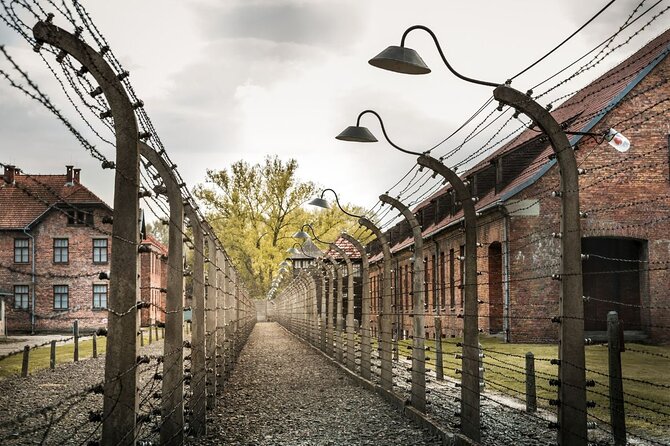
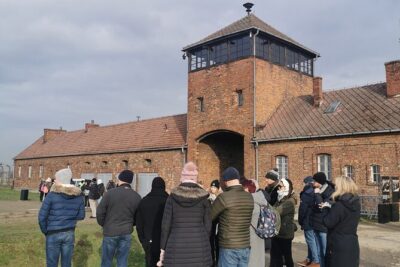
- Auschwitz I: political prisoners, barracks, and watchtower viewpoints
- Auschwitz II Birkenau: why the second section feels different
- What that guided walking format does for your understanding
- Kraków after the camps: Old Market Square time to reset
- The 16-hour timing plan, and how to survive it
- Price and value: what $190.54 really buys you
- Who this Auschwitz and Kraków day trip is best for
- Should you book from Wrocław?
- FAQ
- FAQ
- What time does the tour start?
- How long is the tour?
- Where do I meet in Wrocław?
- Is the tour offered in English?
- How many people are in the group?
- What does the Auschwitz visit include?
- Do you get free time in Kraków?
- Are admissions included?
- Can I change or get a refund if I cancel?
Key moments that make this tour click
- Up to 15 travelers keeps the group small enough for smoother transfers and a calmer pace at the sites.
- Wrocław to Kraków by train (about 3 hours each way) helps you avoid constant repositioning and stress.
- Kraków meeting made simple with a map and instructions to a meeting point roughly a 7-minute walk from the station.
- Local-led Auschwitz walk that covers both Auschwitz I and Auschwitz II Birkenau, plus key remains like barracks, watchtowers, and crematoriums.
- Kraków free time after the camps gives you a chance to step back and actually see Poland’s old heart.
Other Auschwitz-Birkenau visits we have reviewed, with entry and transport noted
- Auschwitz-Birkenau Tour from Wrocław
★ 5.0 · 129 reviews - Auschwitz-Birkenau Day Tour from Wroclaw
★ 5.0 · 40 reviews - Auschwitz-Birkenau Tour from Wroclaw
★ 4.8 · 31 reviews - Guided Private Tour to Auschwitz Birkenau & Krakow from Wroclaw
★ 5.0 · 4 reviews
Wrocław to Kraków at 5:30 a.m., and why that matters
You start early, 5:30 a.m., at Wrocław Main Train Station (Wrocław Główny), at Marszałka Józefa Piłsudskiego 105. That start time is not for drama. It’s the difference between seeing Auschwitz at a reasonable hour and spending the whole day in transit.
The plan has you take a train to Kraków that runs about 3 hours. This is a practical way to do the journey: you are not sitting in a van for every mile, and you can settle in for the day without constantly checking directions. I also like that this structure makes the day feel organized right from the first step.
One more plus, mentioned by people who’ve done it: it is easy to find the station and line up with your driver later in Kraków. That matters on a day like this, because any extra confusion adds stress when you already have a lot of emotions to process.
Kraków handoff: the meeting point, the map, and Rafael’s helpful vibe
Once you arrive in Kraków, the timing gets tight in a good way. There is a short transition period, then you move to the next part of the day with a meeting point that is just about a 7-minute walk from the train station. You get a detailed map and clear instructions, so you are not left guessing.
In the real world, these short, critical handoffs are where group tours often stumble. Here, you have two things going for you: you are staying anchored near the train station, and you have guidance to get to the van or driver without wandering around. One person noted how Rafael helped make the transfers comfortable and friendly, which fits the kind of support you want on a long day.
This part is also where mindset matters. Auschwitz is the main event, but your calm starts before you arrive there. Use the Kraków handoff as a reset moment. Keep your shoes ready, water accessible, and your plan simple: follow the instructions, stay with the group, and let the rest of the day unfold.
Auschwitz I: political prisoners, barracks, and watchtower viewpoints
After Kraków, you drive about 1 hour and 30 minutes to reach Auschwitz II Birkenau’s area. Then your day shifts from travel mode to walking mode, guided by a local expert.
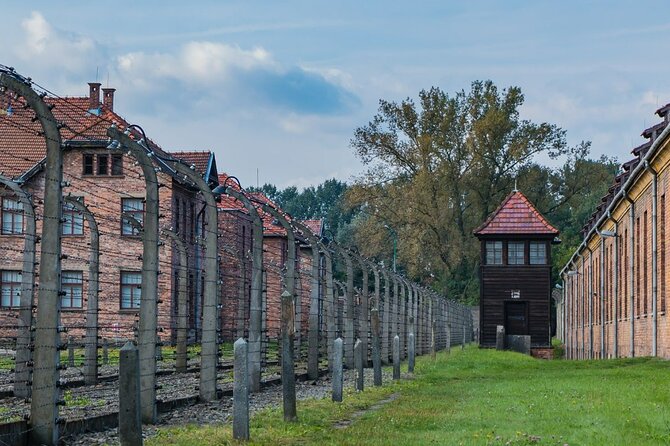
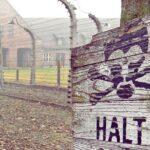
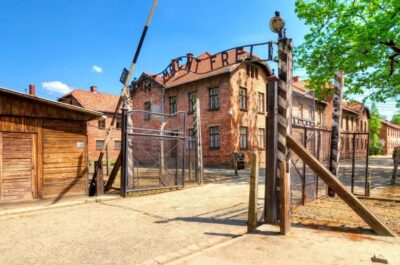
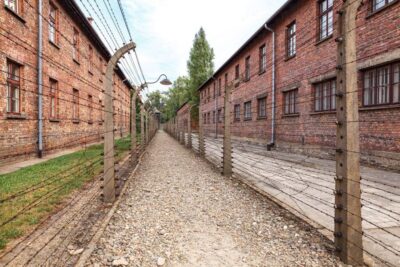
You spend about 2 hours in the Auschwitz I section. Auschwitz I is the part that primarily relates to political prisoners. The tour focuses on the remains of the camp, including barracks and watchtowers, which helps you understand how the camp was built for control and surveillance.
For me, what makes this segment important is the structure: the guide does not just point out buildings. You are meant to connect what you see with what the site represents. When you are walking through an preserved camp space, it is easy to get stuck in a blur of details. A guided route helps you avoid that by giving the sequence meaning.
A note on expectations: this is walking through difficult history. The pace is steady, but it is still physically demanding. You will likely spend time standing still for explanations, then moving again along pathways. If you have moderate fitness and you pace yourself, it works fine. If you are prone to fatigue or knee pain, bring what you need and plan to move slowly.
Auschwitz II Birkenau: why the second section feels different
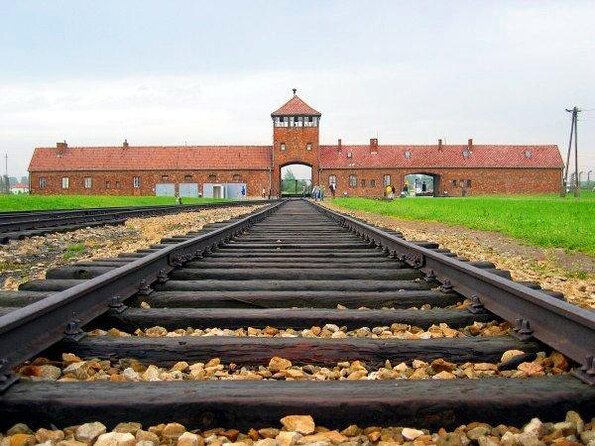
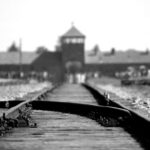
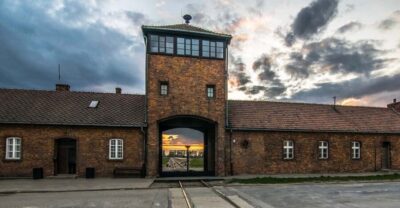
Then comes the heavier shift. You spend about 1 hour in the Auschwitz II Birkenau section, which the tour frames as the camp area that held many Jews and Roma people. Birkenau is where scale hits differently, and where the remains you see help explain the camp system.
Your walking tour includes key remains such as crematoriums, along with other elements of the site. This part is intense, not just emotionally but also visually. The setting can feel vast, and your brain will try to make sense of everything at once.
This is exactly where a local-led tour helps. The guide is there to keep you from getting lost in what feels overwhelming. You get a narrative arc that ties the physical remains to the human purpose behind the system. It will not feel like a casual sightseeing stop, and you should not treat it that way. Think of it like a guided lesson in history you can walk through.
One more detail I appreciate from the day’s design: you are not rushed through both sections as a quick photo stop. The schedule allocates time to Auschwitz I and then later to Birkenau, which gives you space to process what you saw first before moving to the second.
More of Wroclaw, dwarves and islands included
- Old Town Wrocław Walking Tour★ 5.0 · 249 reviews
- Wroclaw: City Tour Sightseeing By Golf Cart Shared Or Privat★ 4.8 · 189 reviews
- Auschwitz-Birkenau Tour from Wrocław★ 5.0 · 129 reviews
- Wroclaw Pub Crawl with Free Drinks★ 4.4 · 127 reviews
- From Wrocław: Full-Day Auschwitz-Birkenau Guided Tour★ 4.8 · 117 reviews
What that guided walking format does for your understanding
This tour does not try to be clever. It is built around two guided blocks at Auschwitz, with walking time planned in. That matters because Auschwitz is not the kind of place where you can fully absorb things in a self-paced wander.
Here’s what I think you gain from the format:
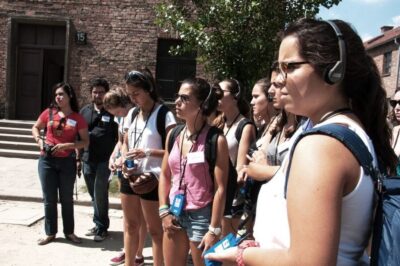
- You get a local expert explaining what you are looking at, not just where it is.
- You see key remains such as barracks, watchtowers, and crematoriums with context.
- You get a split between Auschwitz I and Auschwitz II Birkenau, so the differences are not flattened.
It’s also worth noting the group size. With a maximum of 15 travelers, you are less likely to feel like part of a rushing herd. That can help your head stay clear enough to take in the story.
Still, let’s be honest: the day will feel long. Even if the tour is well-run, the content is heavy. A longer schedule gives the guide room to pace the experience, but it also means you will be tired by the time the camp tour ends.
Kraków after the camps: Old Market Square time to reset
After the Auschwitz visit, you drive back to Kraków. Then you get free time in the historic center, about 3 hours. This is a real gift in an Auschwitz day trip, because it gives you a chance to step into a different world.
The standout named highlight is the Old Market, also known as the Main Market Square, described as the largest medieval market square in Europe and a UNESCO World Heritage Site. You can use this time in whichever way helps you most.
Some people want quiet: a slow walk, a place to sit, and a chance to let their thoughts catch up. Others want something lively and street-level: shops, cafés, and people-watching. Either way, this free time is your buffer against the emotional crash that can happen when you go straight from a memorial site to more travel without any breathing room.
From the way this day is arranged, you are not doing Kraków as a quick stop along the way. You get a meaningful chunk of time after the guided tour, which makes it easier to remember Poland as more than just the destination for one hard visit.
The 16-hour timing plan, and how to survive it
The total duration is about 16 hours 20 minutes. The day is long on purpose, because it combines three major components: travel, Auschwitz, and Kraków.
Here’s the rhythm, in plain terms:
- Morning train from Wrocław to Kraków (about 3 hours)
- Transfer steps in Kraków, then drive toward the Auschwitz area (about 1 hour 30 minutes)
- Guided walking tour at Auschwitz I (about 2 hours), then Auschwitz II Birkenau (about 1 hour), then drive back
- Afternoon free time in Kraków (about 3 hours)
- Evening return train to Wrocław (about 3 hours)
This schedule works best if you plan for fatigue. You will likely feel tired before the Kraków portion ends, and you may be tempted to rush. Try not to. The whole point of adding Kraków is to give you an experience that is not only about remembering the past, but also about living in the present.
Practical tip that matters more than usual: wear shoes you can handle for long walking days, and bring layers. Even if you think you are dressed fine, your body will remind you after hours of moving and standing.
Price and value: what $190.54 really buys you
The price is $190.54 per person. On paper, that is not cheap for a day trip. But value here is not only about tickets. It is about how the day is assembled.
You are paying for:
- A full-day, English-guided experience
- Train travel between Wrocław and Kraków (about 3 hours each way)
- Transfers and the drive to the Auschwitz area
- A local expert walking tour through both Auschwitz I and Auschwitz II Birkenau
- Admission ticket included for the Auschwitz part
Meanwhile, Kraków time and the other city segments are listed as admission ticket free, meaning you are not paying extra just to walk around and see the main squares.
So is it worth it? I think it is reasonable if you want fewer decisions and a clear sequence. Auschwitz is not a place where I personally want to solve logistics on my own that early in the day. The structure helps you show up, follow the route, and spend your energy on the experience itself.
If you are traveling solo and want a guided plan with less hassle, the price can feel fair. If you are very budget-focused, you could theoretically do it cheaper, but you would likely give up some of the guided time and the smooth handoffs that make this day feel manageable.
Who this Auschwitz and Kraków day trip is best for
This experience lists moderate physical fitness as a requirement, which I agree is important. You will be doing walking during a memorial tour, plus long stretches of travel across the day. Plan for your body as much as your mind.
It fits best if you:
- Want an English-guided visit with a local expert at Auschwitz
- Prefer a small group size, up to 15
- Like the idea of pairing a memorial visit with time in Kraków afterward
- Value clear instructions, especially for meeting points and transfers
It might be less ideal if you:
- Get worn out by long days and early wake-ups
- Need lots of breaks for mobility or pain reasons
- Want a lighter emotional or physical pace
Should you book from Wrocław?
I would book this if you want a well-run, guided Auschwitz visit plus a real Kraków stop, without the stress of stitching together multiple parts yourself. The most praised elements make sense: the day feels organized, the transfers are easy to follow, and the Auschwitz guidance is structured across Auschwitz I and Auschwitz II Birkenau so you do not just skim the place.
If you are emotionally cautious, remember this is a serious memorial visit. Go in knowing it will be sobering. If you are physically cautious, plan for walking and long hours. But if you can handle a long, meaningful day, this is one of the more sensible ways to do it from Wrocław.
FAQ
FAQ
What time does the tour start?
The tour starts at 5:30 a.m. from Wrocław Main Train Station (Wrocław Główny).
How long is the tour?
The duration is approximately 16 hours 20 minutes.
Where do I meet in Wrocław?
You meet at Dworzec Kolejowy Wrocław Główny PKP Marszałka Józefa Piłsudskiego 105, 50-046 Wrocław, Poland.
Is the tour offered in English?
Yes, it is offered in English.
How many people are in the group?
The tour has a maximum of 15 travelers.
What does the Auschwitz visit include?
You join a guided walking tour at the Auschwitz Birkenau Memorial, covering Auschwitz I and Auschwitz II Birkenau. You will see remains including barracks, watchtowers, and crematoriums.
Do you get free time in Kraków?
Yes. After the Auschwitz visit, you have free time in Kraków for about 3 hours.
Are admissions included?
Admission is included for the Auschwitz Birkenau visit. The other city portions are listed as admission ticket free.
Can I change or get a refund if I cancel?
No. This experience is non-refundable and cannot be changed for any reason.
More Tour Reviews in Wroclaw

More of Wroclaw
Auschwitz-Birkenau: Other Reviewed Visits
Recently written up around Wroclaw
More Auschwitz-Birkenau Memorial Tours.
 ★ 4.5Auschwitz-Birkenau Guided Tour & Hotel PickupFrom $2133,358 reviews
★ 4.5Auschwitz-Birkenau Guided Tour & Hotel PickupFrom $2129,340 reviews
 ★ 4.5Auschwitz Guided Tour with Optional Hotel PickupFrom $6915,280 reviews
 ★ 4.5Auschwitz-Birkenau Guided Tour with Pickup & LunchFrom $219,800 reviews
 ★ 4.5Auschwitz-Birkenau Guided Tour Pickup/Lunch OptionsFrom $2009,057 reviews
 ★ 4.7Auschwitz-Birkenau and Salt Mine Guided TourFrom $549,020 reviews
 ★ 5.0Krakow to Auschwitz Birkenau Guided Tour with Transfer and TicketFrom $368,197 reviews
 ★ 4.0Auschwitz Birkenau Tour with TransferFrom $216,134 reviews
Also on these Poland lists