
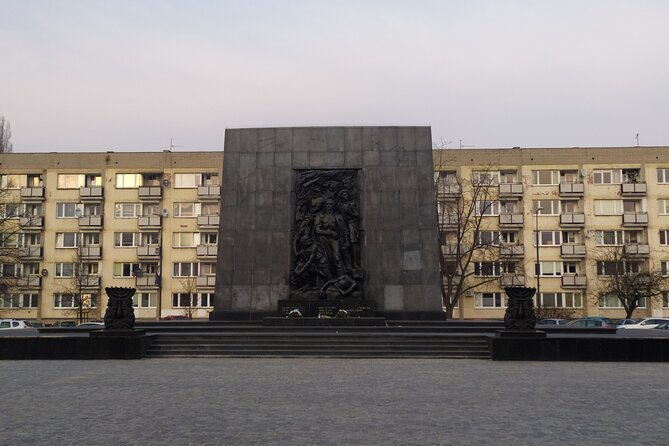
REVIEW · JEWISH HERITAGE AND GHETTO TOURS
Historical Walking Tour of Jewish Warsaw
Three hours, six Jewish Warsaw stops.
This walk hits the places that still puncture the map with history, from Nozyk Synagogue to Umschlagplatz. I like how the guide, often with names like Aga or Olivia, uses maps and photos to help you connect the street layout to what happened here. It is a small-group tour, and the pace feels built for understanding, not rushing.
What I really liked is the human scale: you stop often, take in what remains, and you get a pre-tour info pack with useful links and visual aids. The main drawback to plan for is the walking. You should wear sturdy shoes, because you will cover a lot of ground on cobblestones, and it is not recommended if you have trouble with long distances. Also, Nozyk Synagogue has a 20 PLN entrance fee that is not included in the tour price.
In This Review
- Key highlights to look forward to
- Price and logistics: what $28.87 buys you
- First stop at Sienna 53: meeting at Baguette Mi
- Nozyk Synagogue: the one surviving synagogue you can still visit
- Fragment of the ghetto wall: seeing the trace of a vanished neighborhood
- The Warsaw Ghetto circuit: memorials, streets, and Miła 18
- Jewish Ghetto memorial and the memorial landscape
- Courthouse on Solidarności Street
- Muranów residential district
- Ringelblum’s archive discovery location
- Church of St. Augustine
- Heroes of the Jewish Ghetto memorial and the uprising sites
- A pace that makes room for hard emotion
- Laweczka Jana Karskiego: monuments and the meaning of moral courage
- Umschlagplatz: where 300,000 Jews were transported to Treblinka
- How the guide style makes this tour work
- Who should book this Jewish Warsaw walking tour
- Should you book this tour?
- FAQ
- How long is the Jewish Warsaw walking tour?
- Where does the tour start and end?
- What is the price per person?
- Is the tour offered in English?
- Is there an entrance fee at Nozyk Synagogue?
- What sites will we see during the walk?
- Does the tour have a small group size?
- Is a mobile ticket used?
- Is the meeting point near public transportation?
- Can I cancel and get a full refund?
Key highlights to look forward to
- Nozyk Synagogue as a survivor site: the only Warsaw synagogue that survived the war and still stands today
- Real fragments, not just talk: a surviving remnant of the ghetto wall is part of the route
- Umschlagplatz with a specific statistic: the place where 300,000 Jews were transported to Treblinka
- Mila 18 and Anielewicz’s Bunker: you connect memorials to names tied to the uprising
- Ringelblum’s archive is built into the route: you learn why documentation matters
- Small group format: up to 10 travelers, with a guide who keeps a workable pace
Further Jewish heritage and ghetto routes documented in Warsaw
- Warsaw: POLIN Museum of the History of Polish Jews Ticket
★ 4.7 · 1,142 reviews - Warsaw: Warsaw Ghetto Private Walking Tour with Hotel Pickup
★ 4.9 · 369 reviews - Warsaw: Jewish History Guided Walking Tour in English
★ 4.7 · 324 reviews - Private Tour: Warsaw’s Jewish Heritage by Retro Fiat
★ 5.0 · 208 reviews
Price and logistics: what $28.87 buys you
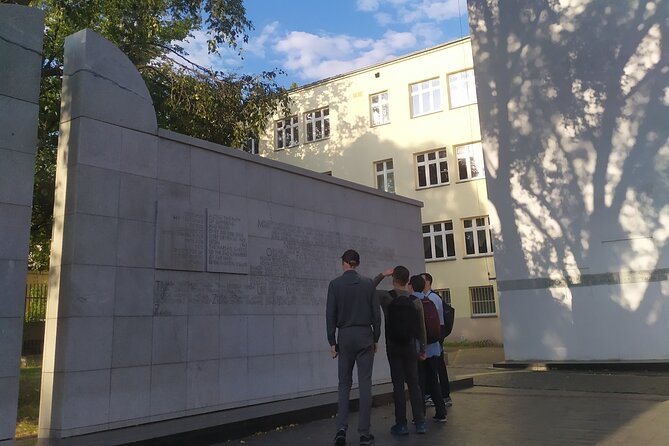
At $28.87 per person for about 3 hours, this tour is priced like a “value education” experience, not a museum-ticket day. You are paying for interpretation, not just access. The included info pack (FAQ, useful links, and recommendations) and the guide’s visual aids make a big difference, especially in Warsaw, where so much was erased and replaced.
One cost to budget for: Nozyk Synagogue entry is 20 PLN, and that fee is not included. If you prefer a single paid entry that covers the whole day, you might feel that add-on, but it is still a reasonable trade for visiting a survivor synagogue on foot.
The tour is offered in English, and you get a mobile ticket. It runs with a maximum of 10 travelers, which helps because the route is emotionally heavy. A small group keeps the experience from feeling like a conveyor belt.
First stop at Sienna 53: meeting at Baguette Mi
The tour begins at Sienna 53 (corner with Jana Pawla II Avenue). You meet by Baguette Mi – Banh mi bistro, and the guide gives you a short introduction before you start moving.
This opening matters more than it sounds. Jewish Warsaw has many layers, and without context you can walk past memorials without realizing what you are looking at. The guide’s early orientation helps you get your bearings fast, so later stops land harder, because you understand what the buildings and streets were doing before the war.
Tip: because the day can move quickly, arrive a bit early. A few minutes of wandering in the wrong spot can turn into stress, and you do not want stress on a day like this.
Nozyk Synagogue: the one surviving synagogue you can still visit
The tour’s next major waypoint is Nozyk Synagogue. This is not a generic synagogue stop. It is singled out as the only Warsaw synagogue that survived the war and remains until today.
You will spend about 10 minutes here. That duration is short, but it is not trying to replace a full synagogue visit. Instead, it acts like an anchor point in your mind. When a guide points out what survived, you start understanding the difference between remembrance and reconstruction, between what can be preserved and what had to be rebuilt in other forms.
One practical point: the 20 PLN entrance fee is not included. If you want to avoid delays, have your cash or card ready for this stop so you can focus on the experience, not the transaction.
If you have mobility limits, this is the moment to decide how you are feeling. The tour keeps going, and later stretches involve more walking on uneven surfaces.
Fragment of the ghetto wall: seeing the trace of a vanished neighborhood
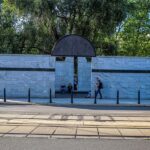
Next you visit a fragment of the ghetto wall, one of the few remaining parts. The stop is around 15 minutes, and the value here is straightforward: you are looking at material evidence.
Even if you read about the Warsaw Ghetto, it is hard to “feel” it until you see a boundary you can actually stand near. The guide’s role is to connect the wall fragment to the lived reality around it. Think of it as turning a sentence from a history book into something your body understands.
A drawback is also baked into this site: there is not much “left” physically. Warsaw was heavily destroyed. So part of the challenge, and part of the point, is learning how to interpret sparse remains and still build a complete mental picture.
Warsaw rebuilt itself twice over. Here is how else we saw it
- Warsaw: Chopin Concert in the Old Town★ 4.8 · 2,287 reviews
- Warsaw: Traditional Galar Cruise on The Vistula River★ 4.6 · 1,640 reviews
- Warsaw: Old Town Highlights Walking Tour in English★ 4.7 · 1,516 reviews
- Warsaw Concert: Chopin – Painted by Candlelights with Wine★ 4.8 · 1,442 reviews
- Warsaw: City Sightseeing Hop-On Hop-Off Bus Tour★ 3.6 · 1,415 reviews
The Warsaw Ghetto circuit: memorials, streets, and Miła 18
This is the heart of the tour, and it takes the longest portion of your time, about 2 hours and 5 minutes. You move through a carefully chosen loop that pairs memorials with the street-level landmarks that shaped ghetto life.
Here is what you will see and why it matters:
Jewish Ghetto memorial and the memorial landscape
You visit the Jewish Ghetto memorial and other commemorative spots along the route. These stops help you understand that remembrance in Warsaw is not only about one site. It is spread out across a neighborhood layout, so walking becomes a kind of timeline you can follow.
Courthouse on Solidarności Street
You also pass the courthouse on Solidarności Street. This turns the story from “when did violence happen” into “how did the machinery of occupation operate.” Court buildings and official spaces signal that cruelty was not only spontaneous terror, it was bureaucratic control.
Muranów residential district
In the Muranów area, you are effectively reading the after-image of the ghetto in the city’s living structure. Even when the wartime buildings are gone, the streets and districts still shape how you imagine what used to be here.
Ringelblum’s archive discovery location
One of the most meaningful points on this circuit is the location tied to the discovery of Ringelblum’s archive. The takeaway you want is simple but powerful: documentation mattered, and people risked everything to preserve evidence. This is one reason the story is not only told through later reconstruction, but through what was recorded during the period itself.
Church of St. Augustine
You also see the Church of St. Augustine. This kind of stop can feel surprising in a ghetto-focused tour, but that is the point. The occupation rearranged daily life across religious and cultural spaces, and Warsaw is a city where different institutions sit close enough to show how the wartime reality cut across everything.
Heroes of the Jewish Ghetto memorial and the uprising sites
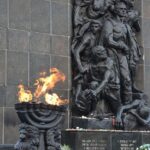
You reach the Heroes of the Jewish Ghetto memorial and then Miła 18, connected with Anielewicz’s Bunker. These are the stops that most clearly connect names to events. They also reinforce the scale of resistance. The tour’s framing nudges you to consider that the ghetto story is not only about confinement and tragedy, it is also about agency and choices made under impossible conditions.
A pace that makes room for hard emotion
Several people note that the guide kept a steady pace while also building in moments to pause. You may find seating or shade stops during the walk, which helps if the day feels heavy. If you go into this expecting a sprint, you will miss the benefit of the pauses.
Laweczka Jana Karskiego: monuments and the meaning of moral courage
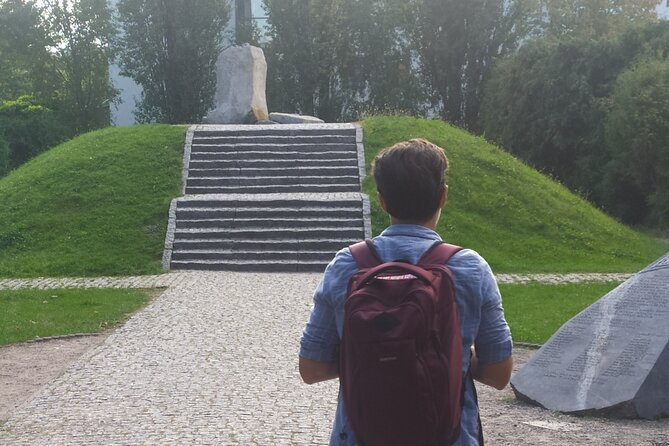
After the main ghetto circuit, you move to Laweczka Jana Karskiego. This stop is around 15 minutes and focuses on monuments that remind you of the Jews’ heroic struggle during the Warsaw Jewish Ghetto period.
This is a good section to mentally regroup. By now you have seen survivor remains, boundary fragments, and major uprising markers. Karskiego-related memorials give a different lens, one that connects testimony, witness, and the responsibility to carry information out into the world.
If you like your history with names and causes, you will appreciate how the guide ties the monuments to the human decisions behind them, not only the events.
Umschlagplatz: where 300,000 Jews were transported to Treblinka
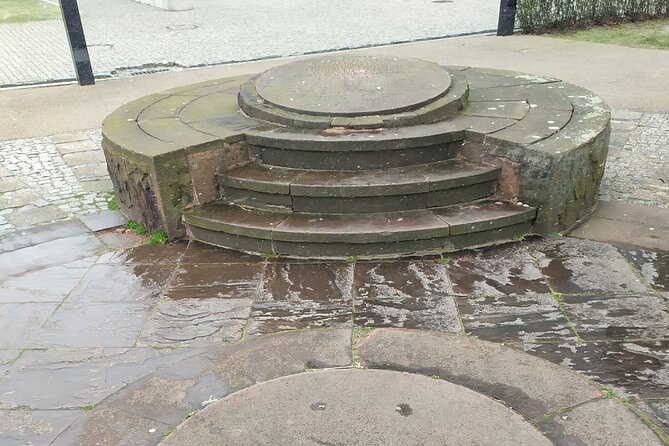
Your final stop is Umschlagplatz, the key staging ground where 300,000 Jews were transported to Treblinka. You spend about 10 minutes here, and the tour ends in front of the Umschlagplatz Monument at Stawki 10.
This is the moment that tends to hit hardest for most people. The reason is not just that the numbers are enormous. It is that the stop is specific, grounded in place, and tied to what happened next. You walk away with a clearer chain of events, not just a general statement like “many were sent away.”
Practical tip: you might want to stand for an extra minute beyond the planned time if you need that. The tour ends here, so this is your last chance to absorb the meaning without rushing to the next thing.
How the guide style makes this tour work
Across the route, the tour succeeds because the guide builds context in layers.
You get:
- Visual aids like maps and photos that clarify what you are seeing
- A full info pack with pre-tour FAQ and useful links so you do not arrive blank
- A steady pace that still allows for questions and short pauses
The small group size (up to 10) also changes the feel. You are more likely to get a question answered without time pressure. That matters a lot when you are learning how to look at memorials respectfully and accurately.
Also, the guide’s tone matters. People consistently describe a mix of factual clarity and human care, which is exactly what you want on a tour where the subject is tragedy.
Who should book this Jewish Warsaw walking tour
Book it if:
- You want a 3-hour walking overview of Warsaw’s Jewish ghetto sites, focused on what remains in the city today
- You like structure, clear explanations, and visual aids that help you interpret memorials
- You want a small group tour with strong historical storytelling in English
Consider other options if:
- You have limited mobility or do not handle long walks well. This is not a sit-down day.
- You prefer museum-first learning. This tour shows what you can see outside, and it cannot replace time inside major exhibitions.
- For example, Warsaw has the POLIN Museum, which many people pair with on-foot site visits. If you want both, plan how much time you can handle on your feet.
Should you book this tour?
Yes, if you want a guided, street-level understanding of Jewish Warsaw that stays focused on key surviving sites and memorials. The value comes from the interpretation: the route turns fragments, street names, and monument markers into a coherent story you can actually hold in your head.
Before you go, plan your day so you are not exhausted. Wear sturdy shoes for cobblestones, bring an umbrella if weather looks iffy, and give yourself a little mental space for the emotions this route carries. If you do that, you will leave with sharper context and a clearer sense of where the ghetto story lives in today’s Warsaw.
FAQ
How long is the Jewish Warsaw walking tour?
It is about 3 hours.
Where does the tour start and end?
It starts at Sienna 53, 00-820 Warszawa, Poland, and it ends in front of the Umschlagplatz Monument at Stawki 10, 00-178 Warszawa, Poland.
What is the price per person?
The price is $28.87 per person.
Is the tour offered in English?
Yes, it is offered in English.
Is there an entrance fee at Nozyk Synagogue?
Yes. Entry to Nozyk Synagogue costs 20 PLN and is not included.
What sites will we see during the walk?
You will see Nozyk Synagogue, a fragment of the ghetto wall, sites connected with Warsaw Ghetto memory including Miła 18 (Anielewicz’s Bunker), Laweczka Jana Karskiego, and Umschlagplatz, where 300,000 Jews were transported to Treblinka.
Does the tour have a small group size?
Yes. The maximum group size is 10 travelers.
Is a mobile ticket used?
Yes, it includes a mobile ticket.
Is the meeting point near public transportation?
Yes, it is near public transportation.
Can I cancel and get a full refund?
Yes, you can cancel for free up to 24 hours in advance for a full refund.
More Tour Reviews in Warsaw




Warsaw, Keep Looking
Jewish Heritage and Ghetto Routes in Warsaw


Recently written up around Warsaw


More Jewish Heritage and Ghetto Tours.
 ★ 4.7Schindler’s Factory & Ghetto Guided TourFrom $571,694 reviews
 ★ 4.9Jewish Quarter and Former Ghetto TourFrom $191,441 reviews
 ★ 4.9Bike Tour of Old Town, Jewish Quarter and the GhettoFrom $371,155 reviews
 ★ 4.7POLIN Museum of the History of Polish Jews TicketFrom $121,142 reviews
 ★ 4.8Kazimierz, Schindler’s Factory & Ghetto Guided TourFrom $81460 reviews
 ★ 5.0Full Bike Tour – the Old Town, Jewish Qtr & the Ghetto NEW BIKESFrom $35437 reviews
 ★ 4.9Warsaw Ghetto Private Walking Tour with Hotel PickupFrom $84369 reviews
 ★ 4.9Bike Tour of the Old Town, Kazimierz, and the GhettoFrom $26350 reviews
Also on these Poland lists