
REVIEW · JEWISH HERITAGE AND GHETTO TOURS
Jewish heritage in Warsaw
Warsaw remembers in street corners. In just five hours, I love how this route connects the dots from the destroyed Warsaw Ghetto to places that still stand today, like Nozyk Synagogue. You also get No transport planning, with hotel pickup and drop-off, plus a guide who keeps the story moving through the sites tied to the community.
One thing to plan for: some key stops require extra spending on the spot. The Jewish Cemetery is not included, and the Nozyk Synagogue and Jewish Historical Institute also list entrance fees as not included, so your total cost will be a bit higher than the base price. Also, the cemetery is closed on Saturdays.
In This Review
- Key highlights to know before you go
- Jewish heritage in Warsaw, in a 5-hour story that makes sense
- Price and logistics: what you get for $270 per group
- Stop 1: Warsaw Ghetto, memorial points, and the sense of loss
- Stop 2: Jewish Cemetery, reading matzevots and understanding Warsaw’s contributions
- Stop 3: Umschlagplatz, the deportation platform and its list of names
- Stop 4: Nozyk Synagogue, a functioning survivor from World War II
- Stop 5: Praga Polnoc, where some Jewish life survived in plain sight
- Stop 6: Jewish Historical Institute, the Judaistic Library and WWII traces
- How to get the most from this tour (and ask better questions)
- Who this tour is best for
- Should you book this Jewish heritage tour of Warsaw?
- FAQ
- How long is the Warsaw Jewish heritage tour?
- What is the group size for this private tour?
- Is hotel pickup and drop-off included?
- Do I get a mobile ticket?
- Are entrance fees included for museums and sites?
- Which stops are included in the itinerary?
- Is the Jewish Cemetery open on Saturdays?
- Is cancellation free?
Key highlights to know before you go
- Hotel pickup and drop-off so you do not waste time figuring out transit
- A tight five-hour circuit that hits the major WWII and Jewish heritage landmarks
- Nozyk Synagogue, the only Warsaw synagogue that survived World War II and still operates
- Umschlagplatz memorial on the former deportation rail station site
- Praga Polnoc’s preserved Jewish buildings, including the dorm tied to Menachem Begin
- Jewish Historical Institute with WWII traces and ghetto archive materials on display
Further Jewish heritage and ghetto routes documented in Warsaw
- Warsaw: POLIN Museum of the History of Polish Jews Ticket
★ 4.7 · 1,142 reviews - Warsaw: Warsaw Ghetto Private Walking Tour with Hotel Pickup
★ 4.9 · 369 reviews - Warsaw: Jewish History Guided Walking Tour in English
★ 4.7 · 324 reviews - Private Tour: Warsaw’s Jewish Heritage by Retro Fiat
★ 5.0 · 208 reviews
Jewish heritage in Warsaw, in a 5-hour story that makes sense
If you only have a short time in Warsaw, you can easily end up with a scattered plan, one memorial here and a synagogue visit there, with no clear thread tying it together. This tour is built to give you that thread fast. You start with the Warsaw Ghetto area, then move through the deportation site at Umschlagplatz, hit Nozyk Synagogue, and finish with parts of Praga Polnoc and the Jewish Historical Institute.
What I like is that you are not just looking at plaques. You are seeing places where everyday life, persecution, and survival overlapped in the same city. And because you have a guide, you get practical context for what you are seeing, including details tied to the movie The Pianist, which made these locations more familiar to many visitors.
This is a private tour for your group, so you can ask questions without feeling like you are competing with other people’s schedules. The pace is fairly steady for a half day, and the itinerary is designed around a moderate level of physical fitness.
Price and logistics: what you get for $270 per group
The price is $270.00 per group, up to 4 people. For a private tour, that matters. If you fill all four spots, you can think of it as about $67 per person before any entrance fees. If you are traveling as a duo or solo, it is still a fair trade for the convenience, because the tour includes a driver/guide and round-trip hotel pickup and drop-off.
The tour duration is about five hours. That is long enough to do the main WWII and heritage stops without feeling rushed, but short enough that it works on a normal sightseeing day. The itinerary also includes mobile ticketing, which is useful when you do not want to hunt for paperwork.
One practical note: the tour lists fuel surcharge and a driver/guide as included, but it also makes it clear that lunch and museum or site entrance fees are not included. So I suggest you budget a little extra for the places where tickets are required, especially if you plan to visit the cemetery.
Stop 1: Warsaw Ghetto, memorial points, and the sense of loss
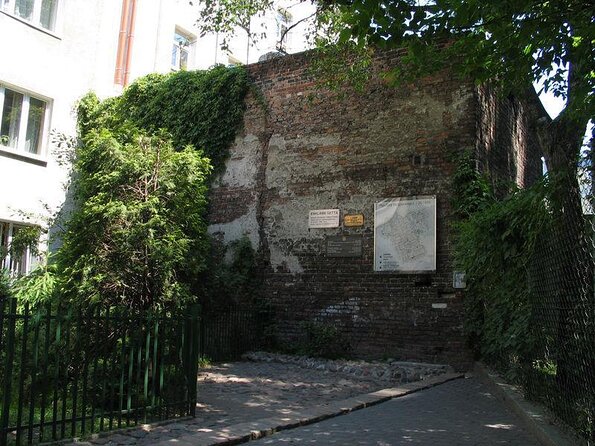
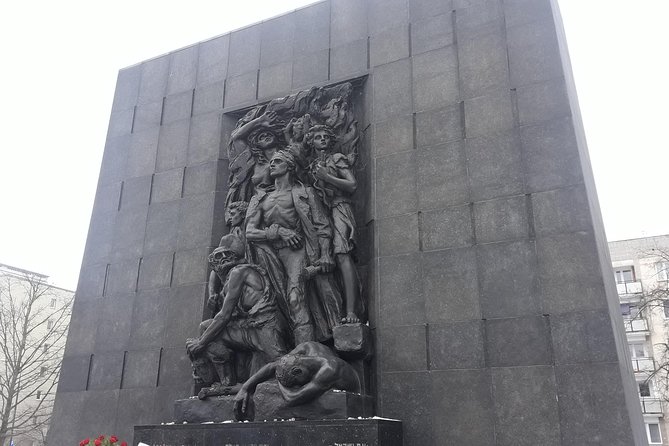
Your first stop is the Warsaw Ghetto area, now marked with a series of memorials rather than the original neighborhood fabric. The tour explains that the ghetto was totally destroyed after the collapse of the Uprising. That is heavy to hear, but seeing the memorial points in sequence helps you understand how the city remembers.
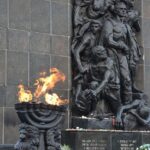
In this part of the route, you focus on places associated with resistance and deportation. You will see the Rappaport monument dedicated to Heroes of the ghetto, along with Mila 18. You also pass by Umschlagplatz and the Shmul Zygelbojm memorial, which ties the story of Warsaw’s Jews to the broader tragedy of deportation and extermination.
A unique bonus here is the reference to filming locations from The Pianist. Even if you have not memorized the movie, your guide can point out how certain settings helped bring Warsaw’s WWII story to film. You get an extra layer of recognition, without turning the memorial into a movie set.
A downside of any WWII walking stop is that it can feel emotionally dense. Do not try to power through it like a checklist. If you need a quiet moment, take it. This is exactly the kind of tour where a few seconds of breathing space actually improves the experience.
Stop 2: Jewish Cemetery, reading matzevots and understanding Warsaw’s contributions
Next comes the Jewish Cemetery (Cmentarz Zydowski), where preserved matzevots help you see individual lives inside a larger story. You will spend about 45 minutes here, and the tour is built to help you read meaning into what you are seeing.
One of the best things about this stop is the way it links the cemetery to Warsaw’s broader Jewish contribution, including references to input to Polish literature, science, and art. That turns the cemetery from a purely tragic place into a place that also signals identity and achievement.
You also see mass graves from WWII and symbolic stones dedicated to those who perished in the extermination camp in Treblinka. The combination is important: it does not let the story stay abstract. You can feel how the loss was both personal and industrial.
Practical consideration: the cemetery is closed on Saturdays. If your visit falls on a Saturday, this can change what is possible. Plan ahead so you do not show up expecting to walk the cemetery grounds.
Entrance fees are not included for this stop, so it is smart to have a small cash or card budget ready.
Warsaw rebuilt itself twice over. Here is how else we saw it
- Warsaw: Chopin Concert in the Old Town★ 4.8 · 2,287 reviews
- Warsaw: Traditional Galar Cruise on The Vistula River★ 4.6 · 1,640 reviews
- Warsaw: Old Town Highlights Walking Tour in English★ 4.7 · 1,516 reviews
- Warsaw Concert: Chopin – Painted by Candlelights with Wine★ 4.8 · 1,442 reviews
- Warsaw: City Sightseeing Hop-On Hop-Off Bus Tour★ 3.6 · 1,415 reviews
Stop 3: Umschlagplatz, the deportation platform and its list of names
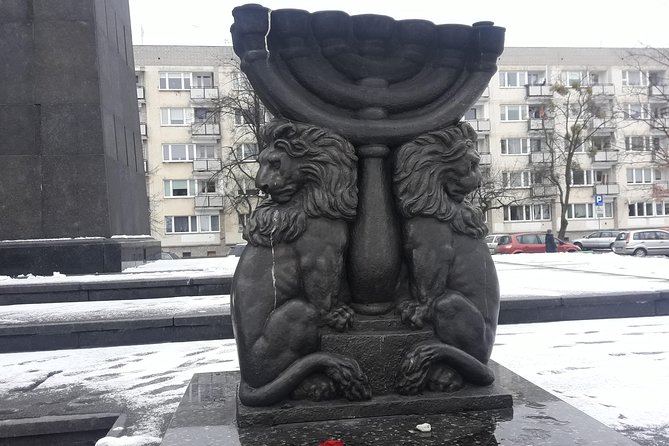
After the cemetery, the tour moves to Umschlagplatz. This site is located where a former railway station stood, and it is tied directly to deportations from the Warsaw ghetto in summer 1942. The scale is explained clearly: about 300,000 Jews from Warsaw ghetto were deported from this area to death camps, including Treblinka.
This stop is short, about 15 minutes, but it hits hard. On the memorial walls, you can find a symbolic inscription featuring 300 first names in alphabetical order of those who started their last journey. That list makes the event feel less like a statistic and more like a beginning to a story you can try to imagine.
If you only visit one deportation-related memorial in Warsaw, this is a strong choice because it keeps the timeline tight. It also sets you up for understanding why later places in the tour matter, including how synagogues and institutions relate to both destruction and survival.
Entrance here is free, which is a nice bonus when you are budgeting for a half-day tour. It also keeps the focus on the site itself, not the ticket counter.
Stop 4: Nozyk Synagogue, a functioning survivor from World War II
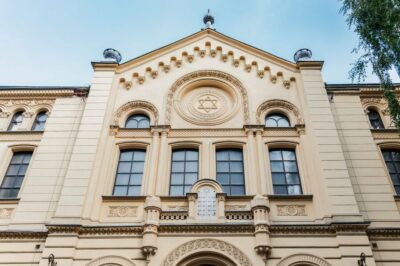
Nozyk Synagogue is the kind of stop you cannot fake. It is not only a historic building, it is still functioning. The tour points out that it is the only synagogue in Warsaw that survived World War II.
The building was built at the beginning of the 20th century, and your visit includes context about how it endured when so much else did not. The guide also explains how you should interpret what it means to have a synagogue still operating in a city that went through targeted destruction.
Timing matters here. On Saturdays, it opens only for prayers, and the tour notes there is no admission fee charged during those prayer hours. For other days, entrance fees are listed as not included.
This is one of my favorite stops because it shows continuity. The story does not just move toward the worst moments. It also shows how Jewish life in Warsaw tried to keep going, even when the city around it had been broken.
If you enjoy architecture or religious history, this stop gives you enough detail to feel oriented. If you prefer straightforward storytelling, it still works because the guide makes the building part of the larger narrative.
Stop 5: Praga Polnoc, where some Jewish life survived in plain sight
After the major WWII markers, the tour shifts to Praga Polnoc. This area was not destroyed as thoroughly as downtown Warsaw, so you get a different kind of visual lesson. Instead of only memorials and absence, you can see traces of Jewish buildings and community spaces that stayed in place.
You will spend about 30 minutes here, and the tour focuses on specific surviving landmarks. One highlight is the student dormitory where Menachem Begin lived as a student. Even if you only know his name from later history, it is still a useful detail because it shows how people and biographies connect to place.
You also see a shelter for poor people and orphans, now a puppet theater. Seeing the building’s later use is not a distraction. It helps you picture how communities adapt when survival becomes the priority.
Another preserved piece is the former mykveh, which survived even though it is now a high school. That kind of transformation is both practical and symbolic, because it shows how built spaces can be repurposed while still carrying their original meaning under the surface.
Many of these stops have free admission. So you get a lot of story value without extra ticket costs. The main drawback is that this section can feel more architectural and less memorial, so bring your curiosity and let the guide connect buildings back to people and daily life.
Stop 6: Jewish Historical Institute, the Judaistic Library and WWII traces
The final stop is the Jewish Historical Institute, with a focus on the former Judaistic Library. This is where the tour shifts from streets and monuments into documents and visible evidence of destruction.
You will spend about 45 minutes here. The guide explains that because of the proximity to the Great Synagogue, which was blown up, you can see traces of fire on the floor. That detail is powerful because it turns the building into a physical archive. It is not just what the exhibits say, it is what the structure shows.
Inside, you also see a map of prewar Poland with former shtetles, which helps you understand the geography behind Jewish life beyond Warsaw alone. There is also an exhibition of ghetto archives that miraculously survived, giving you materials connected to what happened during the ghetto period.
Entrance fees are not included at this stop, so plan for that. Still, this is an efficient way to end your tour because it gives you something practical to take home mentally: a way to place Warsaw in the wider network of Jewish communities.
By the time you leave, your earlier stops make more sense. You start to see how the story is not only about suffering, it is also about records, memory, and how people tried to preserve evidence when everything else was being erased.
How to get the most from this tour (and ask better questions)
A five-hour heritage tour works best when you treat it like guided orientation, not like museum sprinting. Here are a few ways to make your time pay off.
First, bring questions that help you notice details. For example, ask what survived and why, or how the city’s memorial choices affect how people understand the past today. When you ask those kinds of questions, the guide’s explanation tends to land deeper than general background facts.
Second, be ready for a mix of emotional intensity and normal urban scenery. The ghetto and Umschlagplatz stops are heavy. Praga Polnoc is more everyday in feel. Nozyk Synagogue brings continuity. Jewish Historical Institute brings documentation. Let that rhythm work for you.
Third, plan your schedule so you are not rushing straight into another high-stakes commitment. This tour can leave you reflective, and you will likely want a bit of quiet time afterward to digest it.
Finally, if you are visiting on a Saturday, remember that the cemetery is closed, and the synagogue has prayer-only opening hours with different admission rules. That can affect your day, so confirm the timing that fits your travel dates.
Who this tour is best for
This is ideal for you if:
- you want multiple Jewish heritage stops in one efficient route
- you care about WWII sites but also want continuity through a synagogue and an institute
- you would rather spend your time learning than arguing with a navigation app
It is also a good fit if you have already heard of places like Umschlagplatz or Nozyk Synagogue and you want the fuller map of how everything connects. The guide format helps a lot, especially if you dislike piecing together information across multiple guides and websites.
If you hate crowds, the private group setting is a clear advantage. If you have limited mobility, note that the tour is described for moderate physical fitness. You should also allow extra time for careful walking around memorials and cemetery areas.
Should you book this Jewish heritage tour of Warsaw?
If you want a fast, well-organized way to see Warsaw’s Jewish WWII landmarks without spending hours researching and planning, I think this is a smart booking. The inclusion of hotel pickup and drop-off removes one of the biggest travel headaches, and the route hits a mix of memorials, a surviving synagogue, preserved buildings in Praga Polnoc, and an institute where history is kept in documents and physical traces.
The main reason not to book is financial nitpicking. The base price is solid for a private group, but not all entrances are included, so you will likely spend more once you arrive, especially for the cemetery and indoor stops. If that extra budget feels uncomfortable, you might compare costs with a self-guided plan.
If your priority is clarity and key-site coverage, book it. You will leave with a far more connected understanding of Jewish Warsaw, not just a pile of names and dates.
FAQ
How long is the Warsaw Jewish heritage tour?
The tour lasts about 5 hours.
What is the group size for this private tour?
It is a private tour for your group, up to 4 people.
Is hotel pickup and drop-off included?
Yes. The tour includes hotel pickup and drop-off.
Do I get a mobile ticket?
Yes, the tour includes a mobile ticket.
Are entrance fees included for museums and sites?
No. Entrance fees are not included. The Jewish Cemetery, Nozyk Synagogue, and the Jewish Historical Institute are listed as not included.
Which stops are included in the itinerary?
You visit the Warsaw Ghetto memorial area, the Jewish Cemetery, Umschlagplatz, Nozyk Synagogue, Praga Polnoc (with preserved Jewish buildings), and the Jewish Historical Institute.
Is the Jewish Cemetery open on Saturdays?
No. The Jewish Cemetery is closed on Saturdays.
Is cancellation free?
Yes. You can cancel for a full refund up to 24 hours in advance of the experience start time.
More Tour Reviews in Warsaw



Warsaw, Keep Looking
Jewish Heritage and Ghetto Routes in Warsaw

Recently written up around Warsaw


More Jewish Heritage and Ghetto Tours.
 ★ 4.7Schindler’s Factory & Ghetto Guided TourFrom $571,694 reviews
 ★ 4.9Jewish Quarter and Former Ghetto TourFrom $191,441 reviews
 ★ 4.9Bike Tour of Old Town, Jewish Quarter and the GhettoFrom $371,155 reviews
 ★ 4.7POLIN Museum of the History of Polish Jews TicketFrom $121,142 reviews
 ★ 4.8Kazimierz, Schindler’s Factory & Ghetto Guided TourFrom $81460 reviews
 ★ 5.0Full Bike Tour – the Old Town, Jewish Qtr & the Ghetto NEW BIKESFrom $35437 reviews
 ★ 4.9Warsaw Ghetto Private Walking Tour with Hotel PickupFrom $84369 reviews
 ★ 4.9Bike Tour of the Old Town, Kazimierz, and the GhettoFrom $26350 reviews
Also on these Poland lists