
REVIEW · WARSAW CITY TOURS
Jewish Legacy in Warsaw. Private Tour with the best local specialist.
One neighborhood, then the whole story. This private Jewish Legacy in Warsaw route walks you through major World War II sites at a human pace, with an English local specialist guiding the meaning behind each location. I like that the itinerary hits both major institutions and on-the-ground remnants, so you understand the arc, not just the highlights. I also like the built-in pickup around Warsaw, which keeps the day from turning into a transit puzzle.
Expect a serious, story-driven day with short stops and a few longer ones, including POLIN Museum. The only real drawback is that the content is heavy, and some parts are outdoors, so plan for comfort and a slower mental pace, especially if you need quiet breaks.
In This Review
- Key highlights
- Jewish Warsaw in one tight private route
- Price and what up to 3 people really get
- Morning logistics: pickup, timing, and a guide who stays with you
- Stop 1: Nozyk Synagogue and the survival story in one building
- POLIN Museum: a structured inside look you can actually process
- Fragment of Ghetto Wall and why one piece matters
- Umschlagplatz: the cargo railroad terminal with a clear purpose
- Memorial at Mila 18: the largest bunker and the uprising’s hiding place
- Willy Brandt and the monuments of memory that frame your walking route
- Chlodna Street and the ghetto footbridge: the lived-in, dangerous in-between
- Praga Polnoc: film streets, and an optional villa stop if it fits you
- Who this tour suits best
- Should you book Jewish Legacy in Warsaw? My take
- FAQ
- What time does the tour start?
- Is pickup included?
- What is the maximum group size?
- Is the tour in English?
- Which stops are included in the itinerary?
- Is there a mobile ticket?
- Is free cancellation available?
- Are service animals allowed and is it suitable for most travelers?
Key highlights
- Nozyk Synagogue: the oldest existing synagogue in Warsaw, spared by the Nazis partly because of its location and role in the late ghetto period
- POLIN Museum: a focused, inside-the-building look at Jewish life in Poland, with time to see the interior design
- Umschlagplatz: the ghetto cargo railroad terminal where deportations were staged for Treblinka
- Mila 18 memorial: the largest bunker in the Warsaw ghetto, tied to Mordechaj Anielewicz and the uprising leadership hiding underground
- Willy Brandt monument pass-by: the apology and reconciliation moment, where Brandt knelt in remembrance of the ghetto heroes
- Praga Polnoc film streets: Roman Polański related locations from The Pianist, plus an optional villa visit linked to The Zoo Keeper’s Wife interest
Warsaw rebuilt itself twice over. Here is how else we saw it
- Warsaw: Chopin Concert in the Old Town
★ 4.8 · 2,287 reviews - Warsaw: Traditional Galar Cruise on The Vistula River
★ 4.6 · 1,640 reviews - Warsaw: Old Town Highlights Walking Tour in English
★ 4.7 · 1,516 reviews - Warsaw Concert: Chopin – Painted by Candlelights with Wine
★ 4.8 · 1,442 reviews
Jewish Warsaw in one tight private route
This is the kind of tour that helps you get your bearings fast, because it strings together places you might otherwise treat as separate facts. You start in the area of a surviving synagogue, then move into the ghetto story through museum rooms and exact street corners.
I like that it balances two things you need for good understanding: physical remnants and guided context. You get to see where things happened, then you get help making sense of what you’re looking at.
Price and what up to 3 people really get
The price is listed as $361.23 per group, up to 3 people. That can sound steep if you compare it to group tours, but private tours are often cheaper than they look once you factor in pickup, a dedicated guide, and the fact that the itinerary is designed as a single coherent story.
If you’re traveling as a pair or small family, this becomes easier to justify. You also avoid the frustration of waiting for others at crowded or emotional stops.
The other value angle is control of tempo. The stops are built into a clear sequence, with durations like 20 minutes for key exterior sites and 50 minutes for the big memory anchors. You benefit from that structure without feeling rushed.
Morning logistics: pickup, timing, and a guide who stays with you
Your day starts at 9:00 am, with pickup offered from all around Warsaw. That matters because Warsaw can chew up time when you keep changing trams, buses, and walking distances.
You’ll also use a mobile ticket. Service animals are allowed, and the tour notes that most travelers can participate. It’s private, so only your group goes on the itinerary.
One practical tip: treat the morning as important. In one booking report, the guide did not show at the agreed pickup time, and support handled a refund quickly. It’s rare, but it’s a reminder to double-check your pickup details and have the contact info ready if something feels off.
Stop 1: Nozyk Synagogue and the survival story in one building
The tour starts at Nozyk Synagogue at Twarda 6. You’re there for about 20 minutes, and it’s not a quick photo stop. This synagogue is described as the oldest existing synagogue in Warsaw, and the Nazis did not destroy it, partly because of its location and usefulness in the late stages of the ghetto period.
What you should take away here is simple: buildings can carry meaning long after the people are gone. When you’re standing in front of something that survived, it changes how you read everything else that comes later.
A consideration: since this is an active historical site, your guide may encourage respectful pacing. Keep your expectations about a calm, reflective visit, not a casual sightseeing walk.
Below are the other Warsaw trips we have logged
- Private Tour: Warsaw City Sightseeing by Retro Fiat★ 5.0 · 562 reviews
- Warsaw: Warsaw Ghetto Private Walking Tour with Hotel Pickup★ 4.9 · 369 reviews
- Private Tour: Warsaw’s Jewish Heritage by Retro Fiat★ 5.0 · 208 reviews
- Private Historical Tour of Warsaw by a Retro Fiat with Pickup★ 5.0 · 190 reviews
- Warsaw for WWII Buffs – private tour with hotel pickup★ 5.0 · 166 reviews
POLIN Museum: a structured inside look you can actually process
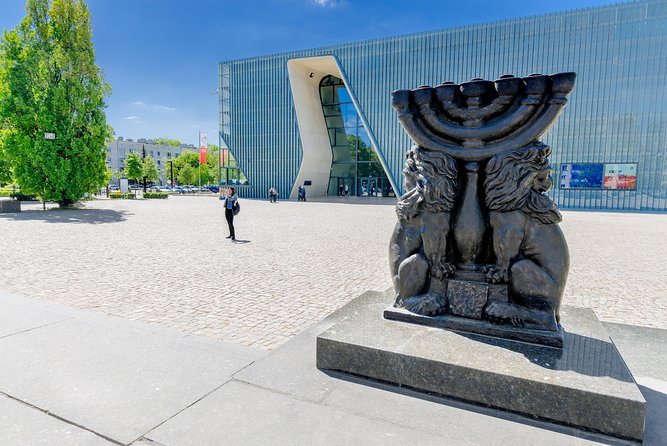
Next comes POLIN Muzeum Historii Zydow Polskich for about 50 minutes. The emphasis here is on perspective, with the tour description calling it an important place for Jewish legacy in Poland and one of the first to present the subject in a wide and proper way. You also get time for a quick look inside at the interior design.
This is a useful anchor in the day because it does what street corners alone can’t do. Museums help you build a mental timeline and understand the range of Jewish life beyond the war years.
A drawback to note: 50 minutes can fly if you try to read everything. Go in with a strategy. Pick a few sections your guide points out, and let the guide’s framing do the heavy lifting.
Fragment of Ghetto Wall and why one piece matters
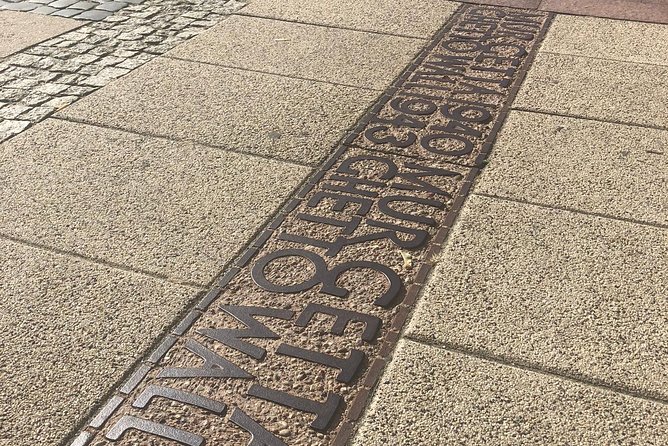
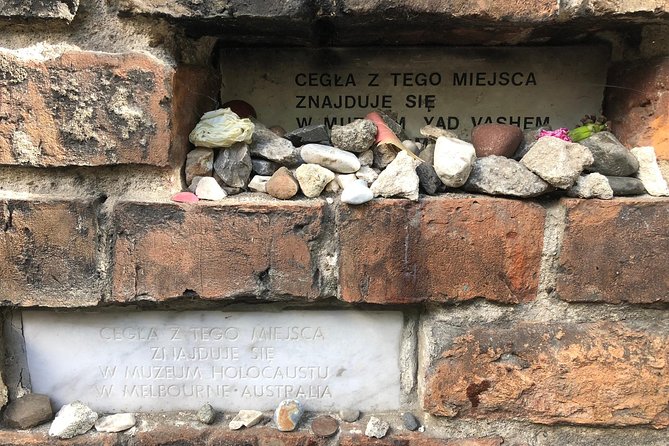
After the museum, you head to a Fragment of Ghetto Wall at ul. Zlota 60 for about 20 minutes. This spot is described as the only remaining fragment of the largest Jewish ghetto that was ever existing.
You’re also told that it was officially recognized by Chaim Herzog in 1992, and that thousands of guests visit every year. That recognition detail is important. It signals that the site is not just a relic, it’s part of how Poland remembers the ghetto today.
Practical thought: exterior wall fragments can feel small in real life. The guide’s job is to make the scale click, so listen closely when they explain what used to be around it.
Umschlagplatz: the cargo railroad terminal with a clear purpose
Umschlagplatz, at the corner of Stawki and Dzika, is another 20-minute stop. It’s described as the cargo railroad terminal in the ghetto, the place from where Jews were taken to Treblinka death camp.
This stop is emotionally direct. You’re not learning abstract terms. You’re placing the deportation system on an actual map.
If you’re the type who needs a breather after heavy stops, plan one here. Even if you only take a few minutes to step back and regroup, it can help you absorb the next site instead of powering through.
Memorial at Mila 18: the largest bunker and the uprising’s hiding place
Then it’s to Memorial at Mila 18 for about 20 minutes. The description calls it the largest bunker in the Jewish ghetto in Warsaw. You’re also told it was the hiding place where Mordechaj Anielewicz, leader of the uprising, and nearly 30 other members of the Jewish fighting organization hid from the Nazis.
This is the part of the tour that changes the emotional tone from survival to resistance. Even if you already know the broad story, standing at a place tied to leadership and hiding conditions gives the memory more texture.
A consideration: underground or bunker-like settings can feel intense. If you need a slower pace, ask your guide to pause and let you take it in.
Willy Brandt and the monuments of memory that frame your walking route
Next is a pass-by of the Pomnik Willy’ego Brandta at Willy Brandt Square near the POLIN Museum. This is where the guide ties together apology and reconciliation. You’re told Brandt knelt in front of a monument of the heroes of the ghetto as a symbol of apology and reconciliation with Jews.
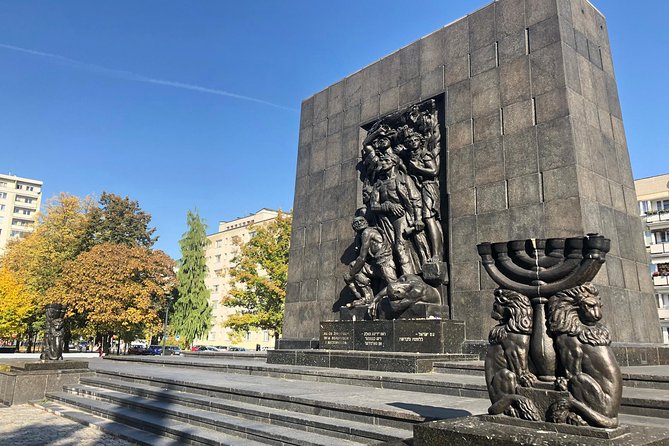
After that, you visit the Monument to the Heroes of Warsaw for about 50 minutes. It’s described as devoted to memory of the Jews who went through the nightmare of the ghetto.
What makes this section valuable is the way monuments shape your route. After you’ve seen the physical locations of the ghetto system, the memorial sites help you understand how meaning is carried forward in public space.
If monuments are not your thing, keep the time anyway. They’re not just decoration. They help you connect what you saw to how the city wants you to remember it.
Chlodna Street and the ghetto footbridge: the lived-in, dangerous in-between
Then you reach Chlodna Street for about 10 minutes. The guide explains it includes a footbridge linking the small ghetto section with the larger ghetto part. You’re also told this was the liveliest section and also the most dangerous.
That is a detail worth sitting with. “Lively” is not a vacation word here. It points to crowded movement, daily interaction, and the constant risk people lived with.
A short stop can feel too brief for such a charged idea. Trust the guide’s pacing here. The whole itinerary is designed to step forward in meaning, not linger too long in one emotional loop.
Praga Polnoc: film streets, and an optional villa stop if it fits you
The day ends in Praga Polnoc with about 40 minutes, near ul. Zabkowska. The tour focuses on streets used for Roman Polański’s The Pianist movie shots. It also includes a villa visit linked to the book The Zoo Keeper’s Wife, but it’s optional and depends on your interest.
This ending is a clever contrast. You’ve spent the day on ghetto locations and memorial meaning. Praga Polnoc gives you a way to see how later generations turned certain streets into storytelling settings.
If you like film history and can handle the emotional contrast, the optional villa can be a nice closure. If you want the day to stay strictly with Holocaust memory sites, you can skip it without losing the core tour arc.
Who this tour suits best
This tour fits best if you want a private, English-guided day focused on key locations rather than a long list of “nice to see” stops. It’s ideal for small groups, especially if you value pickup and hate the idea of plotting routes across a big city while reading dense material.
It also works well if you learn best through context tied to specific places. The itinerary keeps dragging you back to concrete questions like where people were gathered, where they were taken, and where resistance leadership hid.
If you have limited stamina, the “mostly outdoors” reality matters. The stops vary from about 10 to 50 minutes, so you should still be able to pace yourself, but comfortable shoes will help.
Should you book Jewish Legacy in Warsaw? My take
If your goal is to understand Jewish legacy in Warsaw through the places that matter most, I think this is a strong choice. The route is built around the biggest anchors you need, including POLIN Museum, Umschlagplatz, and Mila 18, plus memory sites that frame the story.
I’d book it if you:
- want a guided narrative that connects multiple sites into one clear storyline
- are traveling with up to two other people and want pickup to simplify the day
- prefer a private format so you can set your own emotional pace
I’d hesitate if:
- you’re very sensitive to heavy historical content and need a lighter itinerary
- you hate any chance of a no-show risk, even if support can resolve it with a refund in at least one reported case
FAQ
What time does the tour start?
The start time is 9:00 am.
Is pickup included?
Yes. Pickup is offered, and the tour states the provider picks up guests from all around Warsaw.
What is the maximum group size?
The tour is priced per group for up to 3 people.
Is the tour in English?
Yes, it is offered in English.
Which stops are included in the itinerary?
The itinerary includes Nozyk Synagogue, POLIN Museum, a fragment of Ghetto Wall, Umschlagplatz, the Mila 18 memorial, the area of Willy Brandt Square as a pass-by, the Monument to the Heroes of Warsaw, Chlodna Street, and Praga Polnoc, with an optional villa visit depending on interest.
Is there a mobile ticket?
Yes, a mobile ticket is included.
Is free cancellation available?
Yes. Free cancellation is available up to 24 hours in advance for a full refund.
Are service animals allowed and is it suitable for most travelers?
Service animals are allowed, and the tour notes that most travelers can participate.
More Tours in Warsaw

More Tour Reviews in Warsaw

Warsaw, Keep Looking
Recently written up around Warsaw


More Warsaw City Tours.
 ★ 4.8Chopin Concert in the Old TownFrom $262,287 reviews
 ★ 4.6Traditional Galar Cruise on The Vistula RiverFrom $201,640 reviews
 ★ 4.7Old Town Highlights Walking Tour in EnglishFrom $261,516 reviews
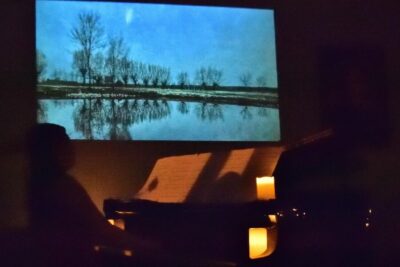 ★ 4.8Warsaw Concert: Chopin – Painted by Candlelights with WineFrom $251,442 reviews
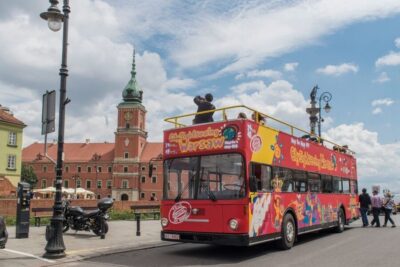 ★ 3.6City Sightseeing Hop-On Hop-Off Bus TourFrom $411,415 reviews
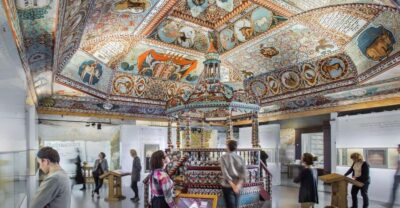 ★ 4.7POLIN Museum of the History of Polish Jews TicketFrom $121,142 reviews
 ★ 5.0#1 Pub Crawl Warsaw with Optional Premium 1 Hour Open BarFrom $28790 reviews
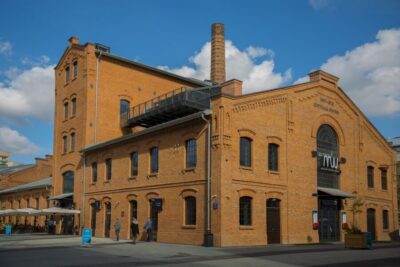 ★ 4.6Polish Vodka Museum Tour with TastingFrom $22788 reviews