
REVIEW · JEWISH HERITAGE AND GHETTO TOURS
Jewish Warsaw Walking Tour
Warsaw tells a quieter story here. This Jewish Warsaw Walking Tour follows the paths of the old ghetto with stops tied to what still exists today, plus story-driven explanations that make the space feel real. I like that you get strong context at each point, and I especially like the way guides bring the material to life with humor and room for questions.
Two things really stand out for me: you see the rare physical leftovers, including the Nozyk Synagogue, and you end right at POLIN so the walking tour naturally sets you up for deeper exploring. One consideration: it is a lot of outdoor time for about 2.5 hours, so a cold, windy day can feel like a bigger deal than you expect.
If you want a focused, fact-forward walk that respects the subject and keeps moving, this is a smart way to spend a morning in Warsaw.
In This Review
- Key highlights in 60 seconds
- Entering Jewish Warsaw, site by site
- Price and value, including how you should think about tipping
- Logistics that make or break a walking tour
- Stop by stop: what each location contributes
- Grzybowski Square, one of the few surviving areas
- Nozyk Synagogue, the rare surviving pre-war landmark
- Waliców, imagining the ghetto border
- Chłodna Street footbridge monument, connecting parts of the ghetto
- POLIN Museum, where the street story becomes full history
- Monument to the Heroes of Warsaw, ending on memory and meaning
- Why the lack of ruins makes the guide’s job harder
- Group size, pace, and how long 2.5 hours really feels
- What to bring so you enjoy it more
- Should you book the Jewish Warsaw Walking Tour?
- FAQ
- What time does the tour start, and where do I meet?
- Where does the tour end?
- How long does the tour last?
- Is the tour offered in English?
- Are admission tickets included for the stops?
- Does the tour run in bad weather?
- How does the pay-as-you-wish tipping work?
- What is the cancellation window for a full refund?
Key highlights in 60 seconds
- Small-ish group size (up to 40) for a more personal Q and A feel
- Free admission at each listed stop, including Nozyk Synagogue and major memorial points
- Nozyk Synagogue included, the only surviving pre-war Warsaw synagogue
- POLIN Museum finish, placed so you can continue on your own right after
- Surviving ghetto-surround areas, not just a lecture in one spot
Further Jewish heritage and ghetto routes documented in Warsaw
- Warsaw: POLIN Museum of the History of Polish Jews Ticket
★ 4.7 · 1,142 reviews - Warsaw: Warsaw Ghetto Private Walking Tour with Hotel Pickup
★ 4.9 · 369 reviews - Warsaw: Jewish History Guided Walking Tour in English
★ 4.7 · 324 reviews - Private Tour: Warsaw’s Jewish Heritage by Retro Fiat
★ 5.0 · 208 reviews
Entering Jewish Warsaw, site by site
This walk is built around the fact that the Jewish district in Warsaw was largely destroyed. That matters, because a lot of what you learn has to be reconstructed from documents, maps, and the few remaining fragments on the ground. Your guide turns those gaps into something coherent, so you are not just looking at plaques.
The route is designed so you keep moving between the key zones where the ghetto life happened, bordered, and changed under Nazi rule. You start near Grzybowski Square and work your way toward the POLIN Museum area, ending at a place that helps you connect the street-level story to the bigger historical arc.
You also get a simple, practical format. It is about 2 hours 30 minutes, in English, with a professional guide and a local guide, plus pickup and drop-off from designated meeting points. That makes it easier to focus on the meaning of each stop, instead of managing the logistics yourself.
Price and value, including how you should think about tipping
At $26.59 per person for roughly 2.5 hours, this is priced like a budget-friendly walking tour, especially because several stops include admission tickets free. You are paying for a guided route that covers multiple meaningful landmarks, and you are also paying for interpretation, which is where the real value lives on a subject like this.
One thing to know up front: this is set up as a pay-as-you-wish style tour. The amount you pay covers reservation and the guide’s payment. If you feel the guide did great work, you are expected to add an extra reward.
That matters for how you plan. If you think of the ticket as the base fee and you want to show appreciation on top, you will feel more at ease during the walk. If you are tight on cash, still go in with eyes open, because the guide may ask for tips from the first moment you meet.
Logistics that make or break a walking tour
The tour starts at All Saints Church Warsaw, Pl. Grzybowski 3/5, and it begins at 10:00 am. It ends at the POLIN Museum of the History of Polish Jews, Mordechaja Anielewicza 6.
You get pickup and drop-off from designated meeting points, but hotel pickup and drop-off are not included, and transportation to and from attractions is not included. So you will want to plan to get yourself to the start point and back from the finish with public transportation or on foot.
It also runs in all weather, so dress for real Warsaw conditions. The reviews mention cold and windy days, and that matches the reality of a long outdoor walk with breaks that may not be the kind you want if you are uncomfortable. Moderate physical fitness is required, because you are on your feet for most of the time.
Stop by stop: what each location contributes
This is not a sightseeing loop where every stop has the same type of payoff. Each one plays a different role, either as a rare surviving remnant or as a marker that helps you picture what used to be there.
Warsaw rebuilt itself twice over. Here is how else we saw it
- Warsaw: Chopin Concert in the Old Town★ 4.8 · 2,287 reviews
- Warsaw: Traditional Galar Cruise on The Vistula River★ 4.6 · 1,640 reviews
- Warsaw: Old Town Highlights Walking Tour in English★ 4.7 · 1,516 reviews
- Warsaw Concert: Chopin – Painted by Candlelights with Wine★ 4.8 · 1,442 reviews
- Warsaw: City Sightseeing Hop-On Hop-Off Bus Tour★ 3.6 · 1,415 reviews
Grzybowski Square, one of the few surviving areas
The walk begins at Grzybowski Square, an area that survived destruction linked to the Warsaw ghetto. That is your first mental shift. You are not starting in a clean museum setting, you are starting where the city itself still carries scars.
The stop is about 20 minutes, and admission is free. The goal here is orientation, so you can understand why the next sites matter and how the ghetto’s edges shaped movement.
Nozyk Synagogue, the rare surviving pre-war landmark
Next you visit Nozyk Synagogue, described as the only surviving pre-war Warsaw synagogue. This is a big one, because pre-war architecture is often what people think of when they imagine a place before catastrophe. Here, the building becomes an anchor, something you can actually stand in front of while the guide connects it to Jewish life before the war.
It is about 30 minutes with free admission. A potential drawback is that some people wish they could spend more time inside a synagogue setting. If you want a deeper indoor visit, keep expectations focused on a street-and-place history walk, not a long sit-down site visit.
Waliców, imagining the ghetto border
Then you reach Waliców, once part of the ghetto border. This stop is about 30 minutes, again with free admission. Border locations are powerful because they force you to picture control as something physical, not abstract. The guide helps you see how daily life becomes constrained when a line is drawn and enforced.
This is also where the story begins to feel less like background and more like a map of human decisions under pressure. Even if nothing dramatic stands where you expect, the guide’s job is to reconstruct the meaning of the streets.
Chłodna Street footbridge monument, connecting parts of the ghetto
At Chłodna Street, you’ll see a monument commemorating the footbridge that once connected parts of the Warsaw ghetto. This is a shorter stop at about 20 minutes.
A footbridge sounds small, but it becomes a way to talk about how people tried to keep life moving, even when movement was brutal and restricted. The monument acts like a symbol of connection and separation at the same time.
POLIN Museum, where the street story becomes full history
The tour then comes to POLIN Museum of the History of Polish Jews, plus the 1948 Monument to the Ghetto Heroes. This stop is about 20 minutes with free admission.
This is a smart placement in the route. By the time you arrive, you understand enough street-level context to appreciate what a museum can do. The museum stop also helps you transition from the walk’s physical points to a broader story of Polish Jewish history and the aftermath after the ghetto era.
Monument to the Heroes of Warsaw, ending on memory and meaning
Finally, you end at the Monument to the Heroes of Warsaw, also connected to the story of the ghetto heroes. It is about 30 minutes, still with free admission.
Ending here gives you a chance to absorb the fact that this route is not only about what happened, it is also about how Warsaw chooses to remember and honor people. It is a fitting finish near the POLIN area, where you can choose to continue at your own pace afterward.
Why the lack of ruins makes the guide’s job harder
On a ghetto route, you can’t expect to see much left standing. That is the tough truth built into the idea of this walk. So the guide’s interpretation becomes essential, because there are fewer physical cues than you get in places like old-town squares or castles.
This is why the best guides work like translators between place and history. In the walk, you are effectively learning to read the city. You watch, you listen, you connect street geometry to historical events.
The reviews point out how guides used humor to keep the experience human, not just heavy. That mix can help you keep focus on the facts without feeling numb. It also helps the Q and A flow, since the guide is open to questions and answers rather than rushing to the next corner.
Guides you might encounter include people like Olivia, Jacek, Andrew, and Tomas. Names like these come up in different guide stories, and they share a similar style: strong command of the material, willingness to answer questions, and pacing that keeps you from falling behind.
Group size, pace, and how long 2.5 hours really feels
The tour caps at 40 travelers. That is big enough to keep it practical, but small enough that you are not just swallowed by a crowd. It also makes it easier for the guide to solicit questions, and for you to hear answers without playing sound-catcher.
The pace is steady. It is not a short, casual stroll, and it is not a car-based highlights tour. You should expect to stand and walk between most stops for the full 2.5 hours.
The reviews mention that it can feel long, especially on cold days, and that there can be limited chances to sit until later in the walk. If you have mobility issues or you dislike standing for long stretches, this is where you should be realistic before booking. Moderate physical fitness is the stated requirement, so pack that into your decision.
What to bring so you enjoy it more
Because it runs in all weather, pack for walking, not for comfort-luxury. Wear layers you can adjust quickly. Bring a hat or hood for wind. And if it is wet, decent shoes matter more than you think.
Since the tour includes multiple outdoor stops and lasts about 2.5 hours, snacks and water can help you keep energy stable. The provided details do not mention any food stops, so plan to carry what you need.
If you are sensitive to cold, bring hand warmers. It is one of those Warsaw practicalities that turns the experience from bearable to enjoyable.
Should you book the Jewish Warsaw Walking Tour?
I think you should book if you want a guided walk that uses the few surviving landmarks to tell a clear story, and you prefer a route that moves you through the city in a structured way. It is also a good fit if you like asking questions, because guides tend to actively respond and keep the dialogue going.
Skip it or consider a different option if you are looking for lots of time inside religious spaces. Some people want more synagogue access than a walking format can usually provide. Also, if standing and cold weather are tough for you, you may feel the 2.5 hour outdoor time more than you expect.
If you do book, aim for this as the start of your Warsaw Jewish history day. You finish at POLIN, which makes it easy to decide on the spot whether to stay longer, read exhibits, or simply take a breath after a heavy but important morning.
FAQ
What time does the tour start, and where do I meet?
The tour starts at 10:00 am. You meet at All Saints Church Warsaw, Pl. Grzybowski 3/5, 00-115 Warszawa.
Where does the tour end?
The tour ends at the POLIN Museum of the History of Polish Jews, at Mordechaja Anielewicza 6, 00-157 Warszawa.
How long does the tour last?
It runs for about 2 hours 30 minutes.
Is the tour offered in English?
Yes, the tour is offered in English.
Are admission tickets included for the stops?
Admission is listed as free at each of the stops on the route, including Grzybowski Square, Nozyk Synagogue, and the memorial sites, as well as POLIN Museum.
Does the tour run in bad weather?
Yes. It operates in all weather conditions, so you should dress appropriately for cold or rain.
How does the pay-as-you-wish tipping work?
The booking amount covers the reservation fee and the guide’s payment. If you want to reward the guide, you can add an additional tip as part of the pay-as-you-wish style.
What is the cancellation window for a full refund?
You can cancel for a full refund if you cancel at least 24 hours before the experience start time.
More Tour Reviews in Warsaw



Warsaw, Keep Looking
Jewish Heritage and Ghetto Routes in Warsaw

Recently written up around Warsaw


More Jewish Heritage and Ghetto Tours.
 ★ 4.7Schindler’s Factory & Ghetto Guided TourFrom $571,694 reviews
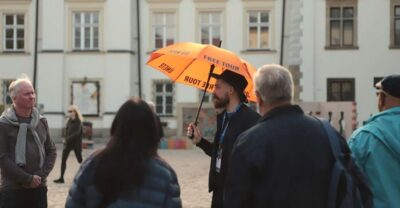 ★ 4.9Jewish Quarter and Former Ghetto TourFrom $191,441 reviews
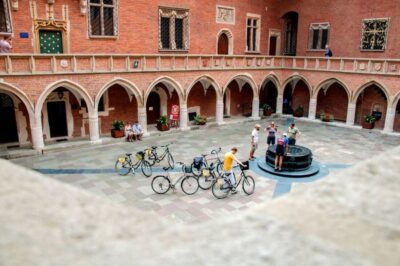 ★ 4.9Bike Tour of Old Town, Jewish Quarter and the GhettoFrom $371,155 reviews
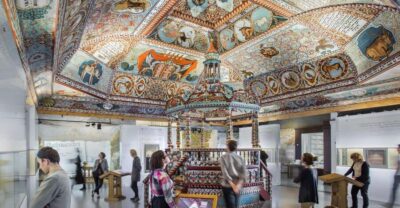 ★ 4.7POLIN Museum of the History of Polish Jews TicketFrom $121,142 reviews
 ★ 4.8Kazimierz, Schindler’s Factory & Ghetto Guided TourFrom $81460 reviews
 ★ 5.0Full Bike Tour – the Old Town, Jewish Qtr & the Ghetto NEW BIKESFrom $35437 reviews
 ★ 4.9Warsaw Ghetto Private Walking Tour with Hotel PickupFrom $84369 reviews
 ★ 4.9Bike Tour of the Old Town, Kazimierz, and the GhettoFrom $26350 reviews
Also on these Poland lists