
REVIEW · JEWISH HERITAGE AND GHETTO TOURS
Jewish Warsaw
Warsaw’s Jewish story can feel close and raw. This 3-hour walk pairs street-level sights with clear context, from pre-war neighborhoods to today’s POLIN museum. I especially love the way the route moves fast, so you get a sense of real geography, not a checklist.
I also like that you’re shown living culture and not only tragedy, with stops like Nożyk Synagogue and the reminders around the cemetery traditions. The main thing to watch is that a few entries are not included, so you should plan on paying more at select stops.
In This Review
- Key highlights you’ll feel immediately
- A 3-hour walk through Jewish Warsaw, stop by stop
- Grzybowski Square, your starting picture of pre-war Warsaw
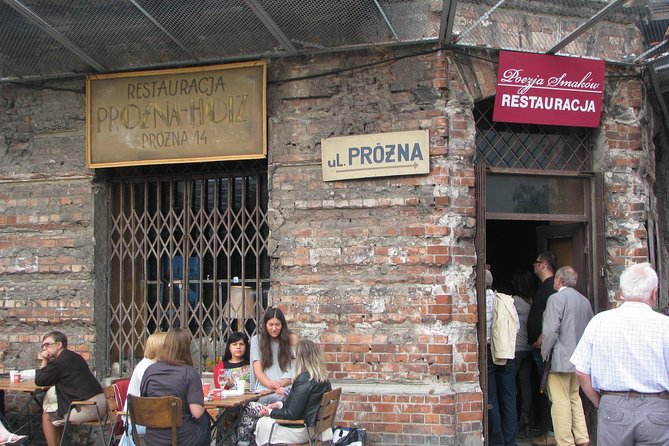
- Prozna Street, preserved Jewish commercial life in plain sight
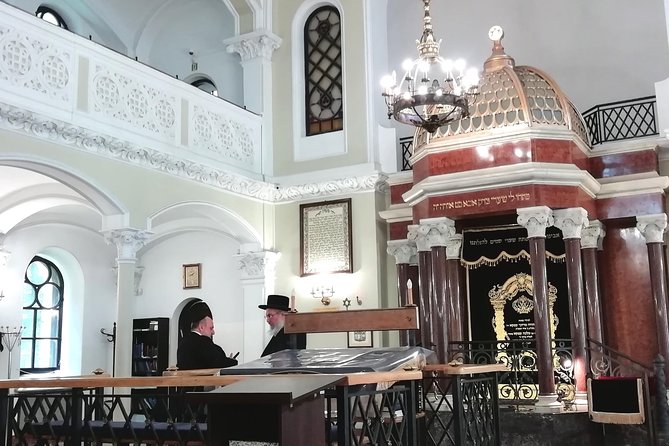
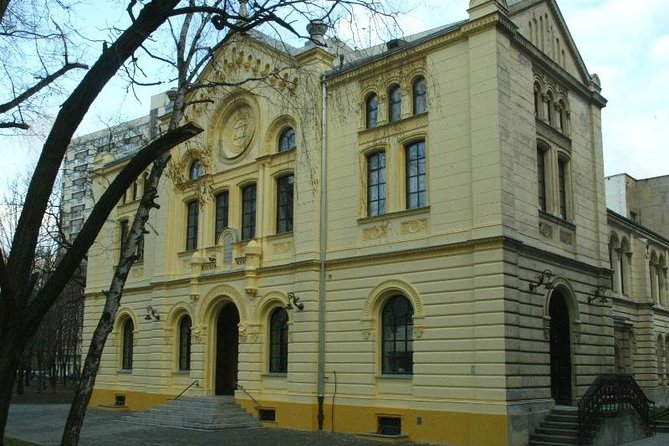
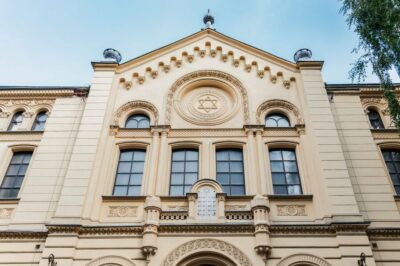
- Nożyk Synagogue, the surviving synagogue still in operation
- Singer’s Warsaw: Krochmalna and Chłodna backyards
- Keret House, the narrowest house, then the Jewish Cemetery’s many lessons
- Pomnik Bohaterów Getta, Willy Brandt’s famous knee
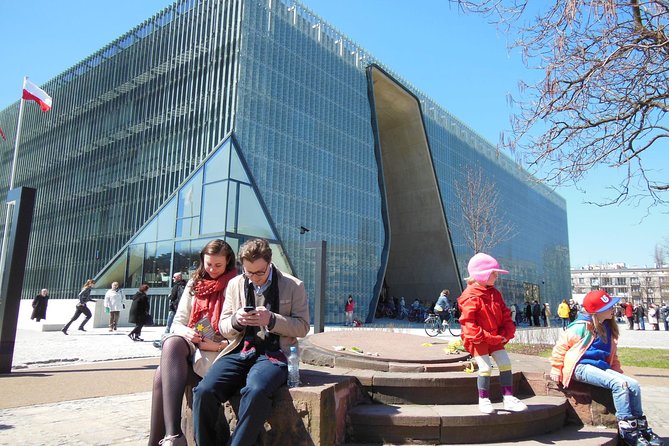
- POLIN Museum at the finish, how to use your audio time well
- Price, timing, and who this tour fits best
- Should you book Jewish Warsaw?
- FAQ
- How long is the Jewish Warsaw tour?
- Where does the tour start and where does it end?
- Is hotel pickup available?
- What languages is the tour offered in?
- Is there a mobile ticket?
- Are meals included?
- What entrance fees should I expect to pay separately?
- Does the tour depend on weather?
- Is the tour private and only for my group?
- Can I cancel for a full refund?
Key highlights you’ll feel immediately
- Grzybowski Square sets the stage for the scale of Jewish Warsaw before WWII
- Nożyk Synagogue is the only synagogue surviving the Second World War and still operating
- Singer’s Warsaw locations connect literature to streets you can actually stand on
- Keret House shows how architecture became a story, even in tight urban spaces
- Jewish Cemetery covers burials, traditions, Esperanto, Janusz Korczak, and Jewish theater
- POLIN Museum architecture is explained so your audio visit makes more sense
Further Jewish heritage and ghetto routes documented in Warsaw
- Warsaw: POLIN Museum of the History of Polish Jews Ticket
★ 4.7 · 1,142 reviews - Warsaw: Warsaw Ghetto Private Walking Tour with Hotel Pickup
★ 4.9 · 369 reviews - Warsaw: Jewish History Guided Walking Tour in English
★ 4.7 · 324 reviews - Private Tour: Warsaw’s Jewish Heritage by Retro Fiat
★ 5.0 · 208 reviews
A 3-hour walk through Jewish Warsaw, stop by stop
This tour is built for momentum. You cover a sequence of meaningful sites without turning it into a full day of museum hopping, so it works well if you only have half a day in Warsaw but still want real substance.
You start near Grzybowski Square in central Warsaw and end at the POLIN Museum of the History of Polish Jews. Along the way, you ride in an air-conditioned vehicle, which matters in summer heat and chilly months when the weather swings.
One practical tip: wear comfortable shoes. Even with short durations per stop, you’re outside most of the time, moving between streets, and the route is meant to feel like a walk through neighborhoods rather than a bus tour.
Grzybowski Square, your starting picture of pre-war Warsaw
You begin at Pl. Grzybowski 2, in the center of what people describe as pre-war Jewish Warsaw. It’s a good opening because the square helps you form a mental map before you zoom in on smaller streets and buildings.
Here, the guide sets context about Warsaw’s Jewish community, which was the largest in Europe until World War II. I like this approach because it prevents the experience from feeling like disconnected monuments. You start with scale, then you get specifics.
What to expect: a first orientation, a short introduction, and an invitation to notice details in the streets around you. The time is brief, so don’t expect a lecture, but you should leave with a clearer baseline.
Possible drawback: since the time at this stop is around 15 minutes, if you’re someone who loves slow, deep explanations, you might want to pair the tour with extra reading later or spend extra time in POLIN after.
Prozna Street, preserved Jewish commercial life in plain sight
Next you move to Ulica Prozna, a Jewish commercial street that has been preserved in its original character. This is where the tour shifts from big numbers to daily life, including the kinds of families and names that lived and worked here.
Commercial streets tell you how a community functioned. Shops, homes nearby, and the density of daily interactions are clues to how people lived, not just how they suffered. It also helps you understand why the later memorial and cemetery stops hit so hard.
What to expect: you’ll stop for about 10 minutes while the guide points out what made the street important, and you’ll hear about notable people and world-famous families connected to Warsaw.
Small consideration: this stop is short. If you want photos, do it fast but thoughtfully. Look up too, not only straight ahead, because street character often lives in doorways, building lines, and the rhythm of the facades.
Nożyk Synagogue, the surviving synagogue still in operation
Then comes Nożyk Synagogue, the single surviving synagogue from the Second World War that is still in operation. That fact alone changes how you experience it. This is not only a historical object. It’s a place you can connect to because it still functions.
You get around 15 minutes here, and entrance is not included. The time is enough to understand the significance and to appreciate the atmosphere, but it’s not meant to replace a full synagogue visit on your own schedule.
Why this stop matters: many wartime stories get told through ruins. This one gets told through survival and continuity, and that balance is important.
What to know before you go: plan for the entrance fee at Nożyk Synagogue. If you want to linger, you may need to budget extra time after the tour, since the group keeps moving.
Warsaw rebuilt itself twice over. Here is how else we saw it
- Warsaw: Chopin Concert in the Old Town★ 4.8 · 2,287 reviews
- Warsaw: Traditional Galar Cruise on The Vistula River★ 4.6 · 1,640 reviews
- Warsaw: Old Town Highlights Walking Tour in English★ 4.7 · 1,516 reviews
- Warsaw Concert: Chopin – Painted by Candlelights with Wine★ 4.8 · 1,442 reviews
- Warsaw: City Sightseeing Hop-On Hop-Off Bus Tour★ 3.6 · 1,415 reviews
Singer’s Warsaw: Krochmalna and Chłodna backyards
After Nożyk Synagogue, the tour walks you into literature-based Warsaw. You’ll pass through Krochmalna, the kind of place Isaac Bashevis Singer described in his prose, before moving toward Chłodna Street and the backyards.
This pairing is clever. Krochmalna gives you the literary connection, and then Chłodna shows you what the neighborhoods can still look like. It’s a way to train your eyes, so the city becomes a story you can read.
At Krochmalna, you’ll have about 5 minutes. It’s quick, but it works as a bridge. Then Chłodna Street brings around 10 minutes, focusing on houses that are still in their original condition and exploring Warsaw backyards.
What to expect in the streets: you’ll be asked to notice how buildings sit, how yards work behind facades, and how narrow or layered everyday space can be. Jewish Warsaw wasn’t only synagogues and cemeteries. It was also courtyards, kitchens, stairwells, and the practical life around them.
Drawback to consider: backyard areas can depend on what you’re able to see from the street. If you’re hoping for inside access, you might be disappointed, since the tour is designed for exterior observation and short explanations.
Keret House, the narrowest house, then the Jewish Cemetery’s many lessons
Keret House is a striking counterpoint to the more solemn stops. You spend about 10 minutes here, learning about the narrowest house in the world and hearing its history.
This isn’t random “architecture for fun.” It’s a reminder that Warsaw kept building and reshaping itself, even after losing so much. Seeing an extreme, tight urban structure nearby helps you understand how space was always part of the story.
Then the tour takes a darker turn at the Jewish Cemetery, where you’ll spend about 40 minutes. Entrance is not included. This is the longest stop by far, which tells you the guide expects you to slow down.
In the cemetery, you’ll learn about Jewish burials and traditions and hear about connections that stretch beyond Warsaw stonework. The tour also touches on the Esperanto language, Janusz Korczak’s orphanage, and Jewish theater.
Why I think this stop hits hardest: cemeteries force you to confront continuity and memory. The guide isn’t only pointing to famous graves. You’re also learning the rules and meaning behind burials, and the additional cultural threads keep the story from becoming one-note.
Practical tip: dress a bit warmer than you think. Cemeteries can be windy, and you’ll be there long enough for weather to matter.
Pomnik Bohaterów Getta, Willy Brandt’s famous knee
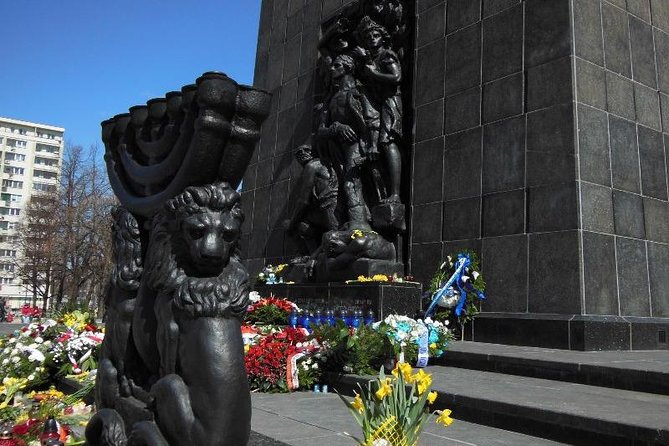
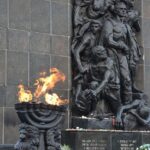
After the cemetery, you pause at Pomnik Bohaterow Getta. This stop is about 15 minutes and includes the notable reference to Willy Brandt, who performed his famous knee gesture at the monument.
This is a strong moment because it connects Warsaw’s suffering and survival to international memory. Even if you know the story of Brandt’s gesture, it’s worth seeing it in the context of what the monument is meant to represent.
What to expect: a short guided stop, likely focused on meaning, placement, and symbolism. You won’t have time to linger for long, but you’ll understand what you’re looking at.
Consideration: if you’re sensitive to heavy themes, give yourself a breather afterward. The tour moves onward soon.
POLIN Museum at the finish, how to use your audio time well
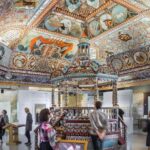
The last stop is at the POLIN Museum of the History of Polish Jews. You spend about 15 minutes on the museum’s exterior and building symbolism and architecture with the guide.
Then the tour ends, and you can visit the museum on your own using audio guides. This two-step approach is smart. When you understand the building’s ideas first, you get more out of your later time inside.
What you’ll get from that brief guided moment: the museum’s message is partly carried through design choices, so the exterior explanation acts like a decoder ring. After that, your audio time can feel more focused rather than wandering.
How I’d plan it: if you have energy, go straight in after the tour while the tour story is still fresh. If you’re tired, at least start with the sections your audio guide suggests first, so you get a coherent path through the museum.
Price, timing, and who this tour fits best
The price is $89.35 per person for about 3 hours. That’s not a bargain price, but it also isn’t museum-day money. You’re paying for guided interpretation at multiple sites plus transportation in an air-conditioned vehicle, and you end with a strong entry point into POLIN.
It’s also booked pretty far ahead on average, about 76 days in advance. That usually means the tour is popular, and it’s smart to reserve early if your dates are fixed.
A few cost items to factor in: Nożyk Synagogue and the Jewish Cemetery have entrances not included, and there’s also a Jewish Warsaw entrance fee listed at €5.00 per person. If you like to avoid surprises, take a moment before you go to check how you’ll cover those fees on the day.
This tour is offered in English and uses a mobile ticket. Pickup is available, and the tour is private, meaning only your group participates. If you prefer a guide who can pace the stops for your group rather than a large crowd schedule, that privacy matters.
Who it’s best for:
- You want Jewish Warsaw locations without doing a heavy full-day plan
- You like street-level context plus one major museum finish
- You’re comfortable walking outdoors for short stretches between stops
Who might find it less ideal:
- You want only fully ticket-included sights, since some entrances are extra
- You dislike moving quickly between multiple locations in a single morning or afternoon
Should you book Jewish Warsaw?
Yes, if you want a sharp, guided route through Warsaw that connects neighborhoods, surviving sites, and memory into one coherent arc. The strongest reason to book is the balance: you see operational heritage at Nożyk Synagogue, you connect places to culture through literature and the cemetery topics, and you finish with POLIN where your audio time will land better.
If you’re trying to keep costs low, just budget for the extra entrances and the Jewish Warsaw fee. Once you plan for that, this is a solid way to spend a few hours getting your bearings and then using the museum to go deeper.
FAQ
How long is the Jewish Warsaw tour?
It runs for about 3 hours.
Where does the tour start and where does it end?
It starts at Grzybowski Square (Pl. Grzybowski 2) and ends at the POLIN Museum of the History of Polish Jews (Mordechaja Anielewicza 6).
Is hotel pickup available?
Yes. The guide can pick you up at your hotel reception with a PolinTours sign, or wait in the car in front of your hotel. If your hotel is far outside the city center, the meeting point is arranged by email.
What languages is the tour offered in?
The tour is offered in English.
Is there a mobile ticket?
Yes, the tour includes a mobile ticket.
Are meals included?
No. Lunch is not included.
What entrance fees should I expect to pay separately?
Nożyk Synagogue entrance is not included, and the Jewish Cemetery entrance is not included. There is also a Jewish Warsaw entrance fee of €5.00 per person listed as an additional cost.
Does the tour depend on weather?
Yes. The experience requires good weather, and if it’s canceled due to poor weather, you’ll be offered a different date or a full refund.
Is the tour private and only for my group?
Yes. It is a private tour/activity, so only your group participates.
Can I cancel for a full refund?
Yes. You can cancel up to 24 hours in advance for a full refund. If you cancel less than 24 hours before the start time, the amount paid will not be refunded.
More Tour Reviews in Warsaw

Warsaw, Keep Looking
Jewish Heritage and Ghetto Routes in Warsaw

Recently written up around Warsaw


More Jewish Heritage and Ghetto Tours.
 ★ 4.7Schindler’s Factory & Ghetto Guided TourFrom $571,694 reviews
 ★ 4.9Jewish Quarter and Former Ghetto TourFrom $191,441 reviews
 ★ 4.9Bike Tour of Old Town, Jewish Quarter and the GhettoFrom $371,155 reviews
 ★ 4.7POLIN Museum of the History of Polish Jews TicketFrom $121,142 reviews
 ★ 4.8Kazimierz, Schindler’s Factory & Ghetto Guided TourFrom $81460 reviews
 ★ 5.0Full Bike Tour – the Old Town, Jewish Qtr & the Ghetto NEW BIKESFrom $35437 reviews
 ★ 4.9Warsaw Ghetto Private Walking Tour with Hotel PickupFrom $84369 reviews
 ★ 4.9Bike Tour of the Old Town, Kazimierz, and the GhettoFrom $26350 reviews
Also on these Poland lists