
REVIEW · JEWISH HERITAGE AND GHETTO TOURS
Past Meets Present in Warsaw’s Jewish Ghetto
A walk through Warsaw’s darkest streets.
This tour links Jewish memory to real places you can still stand in, from the archives at Zydowski Instytut Historyczny to the stark memorials around Polin Museum, Mila 18, and Umschlagplatz. I love how the pace stays human, and how Mona brings both context and emotion without turning it into a lecture. One thing to keep in mind: the subject matter is heavy, and the route is not ideal if you have mobility limits.
What I liked most was the way the guide handles nuance. Mona is gentle, warm, and very good at answering your questions about Jewish history, then shifting into clear, brutally honest facts when the story demands it. I also like that every stop is practical to visit, with time for you to orient yourself and actually look at what’s there, not just rush past.
The only drawback is physical. This is a walking tour (about 2 hours 30 minutes) and it is not recommended if you have walking problems, plus the group stays small, up to 10 people, which is great, but you should still expect a steady stroll.
In This Review
- Key things to know before you go
- Walking where memory lives: why this route matters
- Start at Slowackiplac Bankowy, then let your bearings settle
- Zydowski Instytut Historyczny: the archive that gives you context first
- Długa and Nalewki: where street life signals what was being lost
- Ogrod Krasinskich: the quiet pocket that the ghetto could not fully claim
- Warsaw Ghetto Square at Polin Museum: the Ghetto Heroes and the daffodils
- Mordechaja Anielewicza at Mila 18: leaders, choices, and consequences
- Umschlagplatz: the departure point to Treblinka and the weight of numbers
- Pomnik Willy’ego Brandta: connecting Warsaw’s loss to the wider war victims
- Price and value: what you’re really paying for
- Who this tour is best for, and who should choose something else
- Should you book this guided Jewish ghetto walk?
- FAQ
- How long is the tour?
- Where does the tour start and end?
- What language is the tour offered in?
- What is included in the price?
- Are entrance tickets required for the stops?
- What is the group size limit?
- Is coffee or tea included?
- Is this tour suitable for travelers with mobility issues?
- Are service animals allowed?
- What is the cancellation policy?
Key things to know before you go
- Mona’s approach pairs clear historical context with a respectful emotional tone
- No added entrance hassle at stops, since admission at each listed place is free
- Umschlagplatz and Treblinka get the attention they deserve, with the deportation story made understandable
- Polin Museum area memorials include the Ghetto Heroes tribute and daffodil tradition
- A break in the route at Ogrod Krasinskich helps your mind catch up before the darkest sites
Further Jewish heritage and ghetto routes documented in Warsaw
- Warsaw: POLIN Museum of the History of Polish Jews Ticket
★ 4.7 · 1,142 reviews - Warsaw: Warsaw Ghetto Private Walking Tour with Hotel Pickup
★ 4.9 · 369 reviews - Warsaw: Jewish History Guided Walking Tour in English
★ 4.7 · 324 reviews - Private Tour: Warsaw’s Jewish Heritage by Retro Fiat
★ 5.0 · 208 reviews
Walking where memory lives: why this route matters
Warsaw can feel like a city of layers. New buildings sit a few steps from old foundations of community life, and the Jewish quarter story is not one chapter. It’s many chapters, compressed into streets, courtyards, and monuments you can reach in a single afternoon.
This is why I like this experience. You’re not just reading plaques. You’re moving through a sequence that mirrors the way history hits people in real life: start with community and daily life, step into the pressure and confinement of the ghetto, then reach the Uprising and the deportations, and end with remembrance that links Warsaw’s tragedy to the wider World War II loss.
You’ll spend about 2 hours 30 minutes walking, with short, focused stops. That matters, because the topic is intense. Longer tours can blur together. Here, the timing keeps each moment distinct so you can take it in.
Start at Slowackiplac Bankowy, then let your bearings settle
The tour starts at the Monument of Slowackiplac Bankowy. That opening is useful. It sets you up in the Warsaw street grid so the rest of the walk feels like a real stroll through the city, not a complicated hop between far-away landmarks.
You’ll walk with a certified guide, and the tour is offered in English. Confirmation comes within 48 hours of booking (depending on availability), and you’ll receive a mobile ticket. If you like planning that stays simple, that’s a plus.
Group size is limited to a maximum of 10 travelers. I’m a fan of small groups for memorial walks. You get more room to ask questions, and your guide can slow down when something needs a pause.
Zydowski Instytut Historyczny: the archive that gives you context first
Stop one is Zydowski Instytut Historyczny (Jewish Historical Institute). During the war, the building was one of the centers of Jewish social life in the Warsaw ghetto. Today, the focus shifts to documentation and archives, so you leave this stop with something better than feelings alone: you get structure.
This matters because so many ghetto sites can feel like separate moments unless you understand the social fabric that existed before catastrophe. The institute’s role as a home for Jewish documentary helps connect names, institutions, and lived experiences rather than treating the ghetto as a single, uniform story.
Admission at this stop is free for the tour, so you’re not paying extra on top of the price. It also means you can spend your attention where it counts, listening closely and looking around.
Długa and Nalewki: where street life signals what was being lost
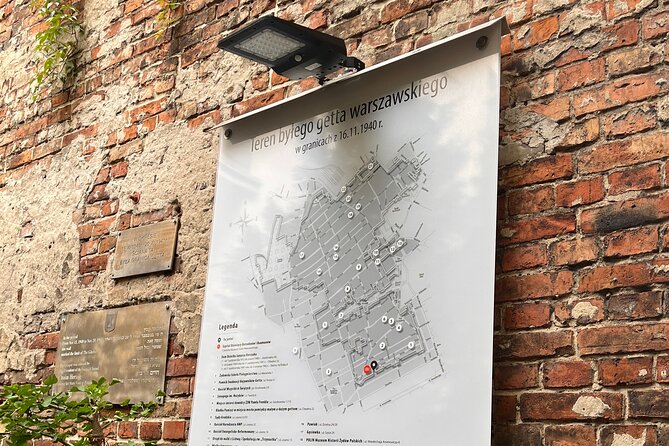
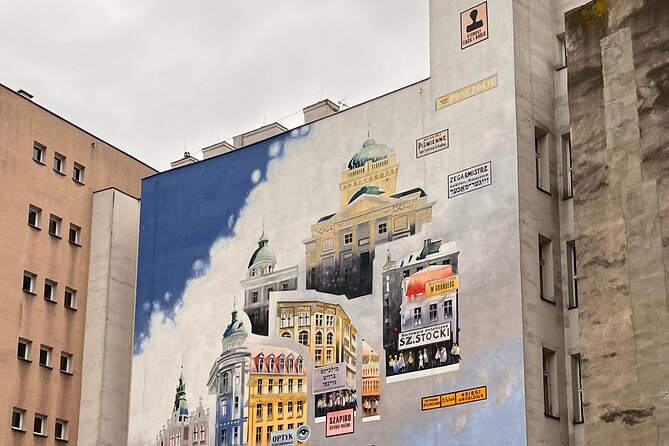
Next you head to Długa and Nalewki Street, near the crossing with Długa. This is where the story turns toward day-to-day life. This area was described as the most lively and vibrant street in the northern Jewish quarter, with shops, manufactories, and stalls.
I like this stop because it pushes back against the idea that the ghetto was only waiting for disaster. You see evidence of commerce, services, and ordinary movement. Even when the broader situation is grim, people still had rhythms, needs, and transactions.
At the same time, it sets up an uncomfortable contrast. When the route later moves to deportation points and mass death memorials, you’ll have something specific to compare against. That contrast is emotional, but it’s also educational.
Warsaw rebuilt itself twice over. Here is how else we saw it
- Warsaw: Chopin Concert in the Old Town★ 4.8 · 2,287 reviews
- Warsaw: Traditional Galar Cruise on The Vistula River★ 4.6 · 1,640 reviews
- Warsaw: Old Town Highlights Walking Tour in English★ 4.7 · 1,516 reviews
- Warsaw Concert: Chopin – Painted by Candlelights with Wine★ 4.8 · 1,442 reviews
- Warsaw: City Sightseeing Hop-On Hop-Off Bus Tour★ 3.6 · 1,415 reviews
Ogrod Krasinskich: the quiet pocket that the ghetto could not fully claim
Ogrod Krasinskich is a calm park and a place of rest for Warsaw residents. During World War II, it was excluded from the ghetto. That detail is a small sentence, but it holds a lot: borders and access were part of control, and even a green space could be politically separated.
This stop is valuable because it gives your brain a reset. After the intensity of history, you get a breather where you can look, slow down, and regroup. It also helps you understand how cities work during crisis, where even the possibility of walking into a different zone could feel huge.
Admission is free here as well, and the time window is short. You’re not meant to take a long park detour. Think of it as a breathing space before the heavy memorials.
Warsaw Ghetto Square at Polin Museum: the Ghetto Heroes and the daffodils
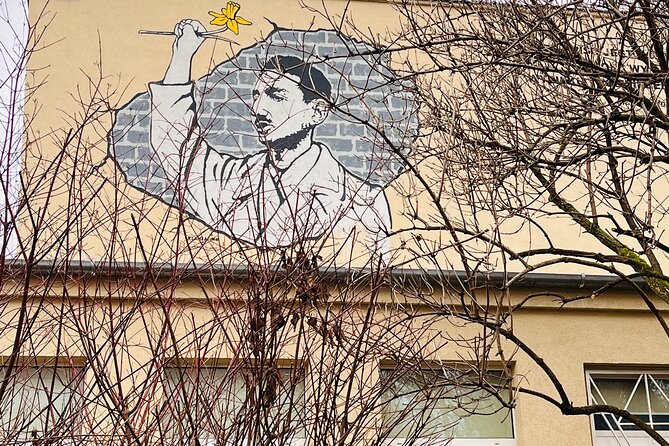
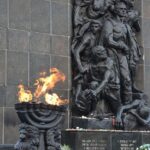
Then you reach Warsaw Ghetto Square at Polin Museum, and the focus becomes commemoration. You’ll stand at the Monument to the Ghetto Heroes, one of the most important places in Warsaw for remembering the Jews who were persecuted and murdered. There’s also a tradition tied to the anniversary of the Ghetto Uprising: locals place daffodils.
I like how this stop is framed. It’s not just a monument to suffering, it’s also a monument to resistance and agency. The daffodils matter because they show commemoration is ongoing, not stuck in the past. People return. They remember in a tangible way.
If you’re the type of visitor who wants to understand why certain cities feel different, this is a turning point. Warsaw doesn’t treat memory like a museum exhibit behind glass. It treats it like something people keep doing, year after year.
Mordechaja Anielewicza at Mila 18: leaders, choices, and consequences
Next is Mordechaja Anielewicza, at the Anielewicz Mound at Mila 18. This mound commemorates the deaths of the leaders of the Warsaw Ghetto Uprising, including Anielewicz himself.
This is one of the most important emotional stops on the walk. The uprising is not easy to look at historically or ethically, because it involves courage and also impossible odds. A good guide helps you hold those truths without turning the story into pure tragedy.
Mona does this by balancing what you need to know with what you feel. In the past, I’ve seen tours that go either fully academic or fully sentimental. This one tries to do something harder: be both respectful and honest. You’ll get enough background to understand why leadership mattered, and then you’ll stand in a place that forces you to think about the cost.
Admission is listed as free for this stop, so again, you’re not paying extra to absorb something that is already intense.
Umschlagplatz: the departure point to Treblinka and the weight of numbers
Stop six is Umschlagplatz, marked as the departure point where Jews were transported to Treblinka Extermination Camp. The number given is staggering: around 300,000 Jewish people died there.
This section of the tour is not the time for multitasking. If you want your brain to make sense of the story, you need to slow your pace, listen closely, and let the guide explain what this place meant in the process of extermination.
I also appreciate that the tour keeps the emotional tone clear. It doesn’t try to soften the facts. It aims for understanding, and understanding includes the brutality of what happened.
Tip for you: keep your photo taking light here. Look first, then take a photo if you want a memory trigger. The memorial’s power depends on attention, not volume.
Pomnik Willy’ego Brandta: connecting Warsaw’s loss to the wider war victims
The final stop is the Pomnik Willy’ego Brandta, a memorial to Brandt’s tribute to the murdered Jews of Warsaw and all victims of World War II.
I like the ending because it pulls the story toward remembrance beyond one neighborhood. It also gives you a moment to breathe after the heavy deportation site. It’s still solemn, but it shifts into commemoration and acknowledgment.
From here, the tour ends at Willy Brandt Square, near the area tied to Mordechaja Anielewicza. You’ll get recommendations for where to go for coffee in the neighborhood after the walk. Since coffee and tea are not included, it’s nice to have that nudge.
Price and value: what you’re really paying for
At $112.43 per person for about 2 hours 30 minutes, the price isn’t trying to be cheap, and it isn’t trying to be luxury. The value comes from three things you can feel on the ground.
First, you’re paying for a certified guide who can connect the dots between places. In a story this complex, a guide is not optional if you want meaning, not just sightseeing.
Second, the tour is small, up to 10 people. That increases the odds you’ll get real answers to questions, including the kinds of background details that make the memorials click.
Third, the stops are free to enter. Since admission at the listed places is free for the tour, more of your money goes into interpretation, not ticket fees. That usually makes a big difference for travelers who want good value without surprise costs.
If you’re choosing between a self-guided walk and this guided route, consider how much you want a clear narrative spine. If you want that spine, this is priced like a guide-heavy experience, which is exactly what the ghetto story needs.
Who this tour is best for, and who should choose something else
This walk fits best if you:
- want an organized route through major Jewish ghetto landmarks
- prefer small groups and direct Q and A with a guide named Mona
- can handle serious, emotionally heavy topics with a respectful mindset
- want practical pacing for a 2.5-hour visit
It may not be ideal if you:
- have mobility limitations or trouble with sustained walking, since it’s not recommended for travelers with walking problems
- want a lighter, casual history overview, because the themes include deportation and extermination
If you’re visiting Warsaw for the first time and want the ghetto story treated with care and clarity, this is a strong way to anchor your trip.
Should you book this guided Jewish ghetto walk?
Yes, if you want more than a checklist of stops. Book it if you’re looking for a route that builds meaning in the right order, and for a guide like Mona who can be gentle and hopeful while still staying honest about what happened.
Skip or consider an alternative if you need a very easy pace, because the format is a walking tour and the subject matter asks for attention. Also, if you’re sensitive to emotionally intense memorials, know that this experience goes there, including Umschlagplatz and the Treblinka deportation story.
For most travelers, the sweet spot is clear: small-group guidance, free stops, and a narrative that helps you understand what you’re seeing, not just where it is.
FAQ
How long is the tour?
It runs for about 2 hours 30 minutes.
Where does the tour start and end?
It starts at the Monument of Slowackiplac Bankowy, 00-142 Warszawa, Poland. It ends at Skwer Willy’ego Brandta Mordechaja Anielewicza, 01-999 Warszawa, Poland.
What language is the tour offered in?
The tour is offered in English.
What is included in the price?
A certified guide is included.
Are entrance tickets required for the stops?
No extra admission tickets are listed for the stops, as each listed stop is marked as ticket free.
What is the group size limit?
The tour has a maximum of 10 travelers.
Is coffee or tea included?
No, coffee and/or tea are not included.
Is this tour suitable for travelers with mobility issues?
It is not recommended for travelers with mobility or walking problems.
Are service animals allowed?
Yes, service animals are allowed.
What is the cancellation policy?
You can cancel for a full refund up to 24 hours in advance of the experience start time. If you cancel less than 24 hours before, the amount paid is not refunded.
More Tour Reviews in Warsaw




Warsaw, Keep Looking
Jewish Heritage and Ghetto Routes in Warsaw

Recently written up around Warsaw


More Jewish Heritage and Ghetto Tours.
 ★ 4.7Schindler’s Factory & Ghetto Guided TourFrom $571,694 reviews
 ★ 4.9Jewish Quarter and Former Ghetto TourFrom $191,441 reviews
 ★ 4.9Bike Tour of Old Town, Jewish Quarter and the GhettoFrom $371,155 reviews
 ★ 4.7POLIN Museum of the History of Polish Jews TicketFrom $121,142 reviews
 ★ 4.8Kazimierz, Schindler’s Factory & Ghetto Guided TourFrom $81460 reviews
 ★ 5.0Full Bike Tour – the Old Town, Jewish Qtr & the Ghetto NEW BIKESFrom $35437 reviews
 ★ 4.9Warsaw Ghetto Private Walking Tour with Hotel PickupFrom $84369 reviews
 ★ 4.9Bike Tour of the Old Town, Kazimierz, and the GhettoFrom $26350 reviews
Also on these Poland lists