
REVIEW · JEWISH HERITAGE AND GHETTO TOURS
Private tour: Jewish heritage in Warsaw
History can be heavy, but this walk is clear. You’ll follow Warsaw’s Jewish story in the Muranów district, where today’s streets sit on ghetto ruins. I especially like the mix of major sites, like where the Warsaw Ghetto Uprising began, and the quieter details, like hidden fragments of the ghetto wall in a backyard. You get private guiding with lots of chances to ask questions, and the stop at Kino Muranów includes street art that helps connect names and dates to real places.
The best part is how the guide ties together wartime events with what changed afterward in Poland. One possible drawback: you’re looking at a short, intense route tied to tragedy, and you’ll also need to plan for the one paid stop, Nozyk Synagogue, since admission is not included.
In This Review
- Key things you’ll notice on this Jewish heritage tour
- Entering Muranów, where Warsaw’s present sits on ghetto ground
- Kino Muranów and the street art that points to real lives
- Pomnik Bohaterów Getta, and understanding what happened in 1942 and 1943
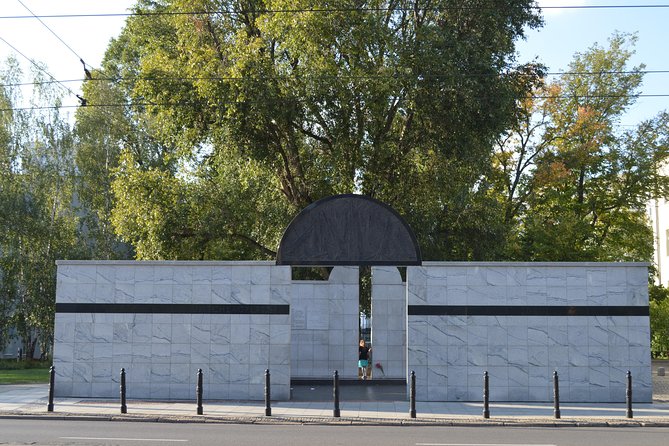
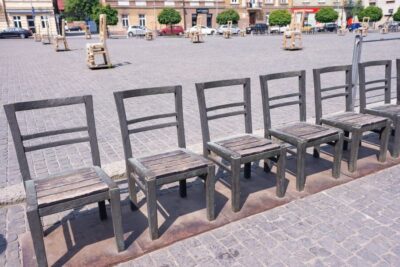
- Umschlagplatz, from deportation hub to a memorial you can stand in
- Fragment of the ghetto wall in a backyard, small size, huge impact
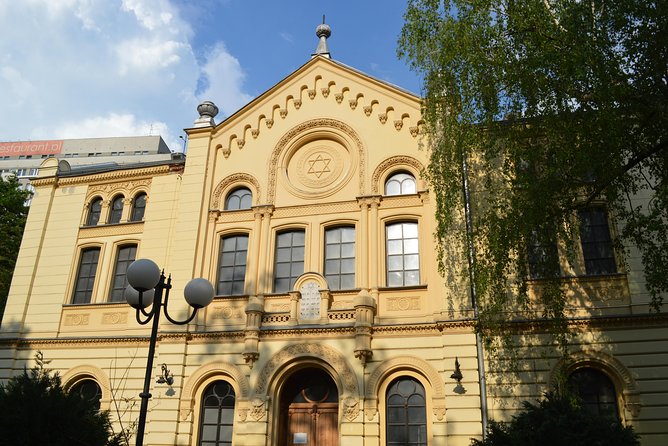
- Nozyk Synagogue, the WWII survivor and living heritage
- Street art as remembrance: why it works better in a guided route
- Price and value: what $161.95 buys for a private group up to 10
- Timing, walking flow, and how to get the most from 2.5 hours
- Who should book this Jewish heritage tour in Warsaw?
- Should you book it, or pick something else?
Key things you’ll notice on this Jewish heritage tour
- Muranów street-level history: you’re learning where the ghetto’s life and destruction shaped the neighborhood
- The uprising start point: the monument marks the place where events kicked off in 1942 and continued in 1943
- Umschlagplatz with a memorial: you’ll connect deportation logistics to the memorial that exists there now
- Ghetto wall fragments in a backyard: small pieces, big emotional weight, and a great example of “look closer”
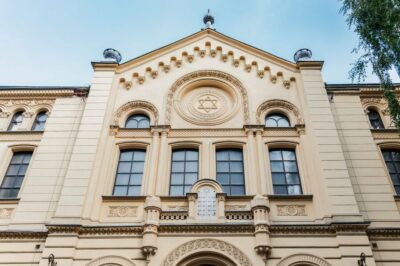
- Nozyk Synagogue visit: the only synagogue in Warsaw that survived World War II
- Private Q&A style: your guide’s answers can go beyond the basics, including Poland in later eras
Further Jewish heritage and ghetto routes documented in Warsaw
- Warsaw: POLIN Museum of the History of Polish Jews Ticket
★ 4.7 · 1,142 reviews - Warsaw: Warsaw Ghetto Private Walking Tour with Hotel Pickup
★ 4.9 · 369 reviews - Warsaw: Jewish History Guided Walking Tour in English
★ 4.7 · 324 reviews - Private Tour: Warsaw’s Jewish Heritage by Retro Fiat
★ 5.0 · 208 reviews
Entering Muranów, where Warsaw’s present sits on ghetto ground
This tour is built for people who want more than a quick postcard route. You spend about 2 hours 30 minutes walking through key points in Muranów, a district shaped by the ruins of the Warsaw ghetto. The pace works well because the timing is broken into short stops, then you regroup and move to the next place with context already in your head.
You’ll meet at Kino Muranów (Gen. W. Andersa 5) and end at Plac Grzybowski. That end location is handy because it keeps you connected to central Warsaw without forcing you to backtrack the whole way. Also, the tour is private for your group, up to 10 people, so it doesn’t feel like you’re being rushed through someone else’s schedule.
What makes Muranów especially powerful is that you’re not only seeing monuments. You’re also seeing how memory is stitched into everyday Warsaw: street art, preserved traces, and memorial spaces that sit in the flow of a modern city. In my mind, that combination is what turns dates from a textbook into a place-based story you can actually follow.
Kino Muranów and the street art that points to real lives
Your first stop is Kino Muranów, and it sets the tone fast. You’ll spend about 40 minutes here, starting with the basic idea that Muranów was built on the ruins of the Warsaw ghetto. That matters because it explains why you’re about to notice commemorations everywhere you look, even if you didn’t come expecting them.
This is also where the tour leans into street-level storytelling. You’ll see street art commemorating people who used to live here, most of them Polish Jews. The art isn’t just decoration. It gives you faces, names, or themes that make it easier to understand that the ghetto was not only about deportations. It was also about neighbors, daily life, and community.
A practical note: since this section is longer than the others, it’s a good place to ask early questions. If you want to know why certain locations are remembered, or how ghetto geography worked, this is the moment when the guide can build the framework for the rest of the walk.
Pomnik Bohaterów Getta, and understanding what happened in 1942 and 1943
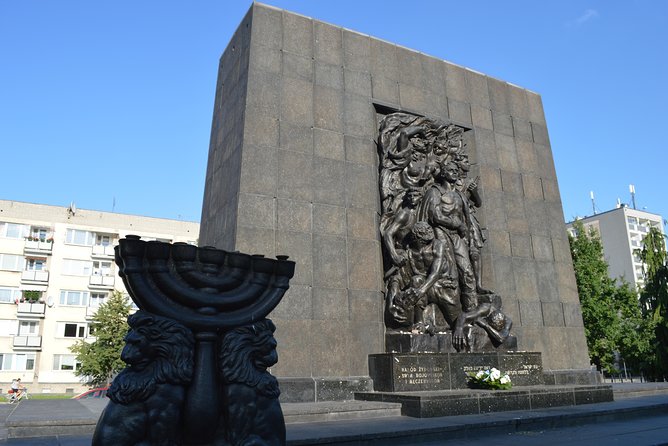
Next comes the Monument to the Ghetto Heroes (Pomnik Bohaterów Getta), where you’ll spend around 20 minutes. This stop is tightly focused on one key fact: this is the place tied to the beginning of the Warsaw Ghetto Uprising.
The guide’s explanations center on the events of 1942 and the follow-on in 1943, including the deportations to the Treblinka death camp and the armed resistance of Jewish insurgents against the Nazis. Even if you already know the broad timeline, I like how this stop helps you understand the “why here” part. Monuments can feel symbolic and distant, but when you connect them to the specific sequence of events, they become far more concrete.
This is also where the emotional weight can feel strongest. If you’re sensitive to these topics, you might want to pace your questions. It’s okay to listen first, then ask later when you’re ready. The private format helps here, because you can set your own comfort level without feeling like you’re slowing down a big group.
Umschlagplatz, from deportation hub to a memorial you can stand in
Umschlagplatz is next, with about 20 minutes allocated. This stop is crucial because it highlights the mechanism of the Holocaust in a place-specific way: Umschlagplatz is where thousands of people were deported to Treblinka in 1942, and where a memorial exists today.
What I find valuable is that the tour doesn’t treat the site like a static photograph. It explains the role of Umschlagplatz in the deportation system, then brings you to the present-day memorial so you can feel the contrast between what happened there and what it means now. Standing in a memorial space changes the way you remember numbers. Suddenly they’re not only statistics. They’re part of a location where people were processed and moved.
If you’re the type who likes to understand how history worked on the ground, this is the stop. You’ll come away with clearer mental geography, not just a list of tragic events. It’s also one of those places where you’ll probably want a quiet moment after the guide finishes speaking, just to let it land.
Warsaw rebuilt itself twice over. Here is how else we saw it
- Warsaw: Chopin Concert in the Old Town★ 4.8 · 2,287 reviews
- Warsaw: Traditional Galar Cruise on The Vistula River★ 4.6 · 1,640 reviews
- Warsaw: Old Town Highlights Walking Tour in English★ 4.7 · 1,516 reviews
- Warsaw Concert: Chopin – Painted by Candlelights with Wine★ 4.8 · 1,442 reviews
- Warsaw: City Sightseeing Hop-On Hop-Off Bus Tour★ 3.6 · 1,415 reviews
Fragment of the ghetto wall in a backyard, small size, huge impact
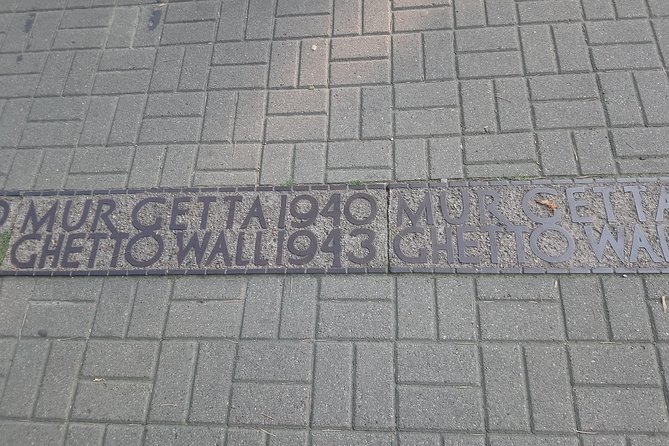
For something shorter, the tour keeps one of the most haunting stops for about 15 minutes: two fragments of the ghetto wall hidden in a backyard. This is the kind of place that can be easy to miss on your own, which is exactly why it belongs in a guided route.
The value here is scale. You’re not looking at a huge monument. You’re looking at remnants, pieces that survived long enough to be seen, even after decades of change. A tour like this makes you slow down and notice what’s usually overlooked. And it gives you context for why these fragments matter, not only as physical evidence, but as a way to understand how the ghetto boundary was enforced.
One downside to this kind of stop is also its strength: because the wall fragments are in a quieter setting, it may feel like the tour pauses emotionally. If you want more discussion time, ask your guide if you can spend a few extra minutes here. With a private group, that flexibility is usually easier than in large group formats.
Nozyk Synagogue, the WWII survivor and living heritage
The final major site is Nozyk Synagogue, with about 15 minutes. This synagogue is described as the only one in Warsaw that survived World War II, which is a big reason to prioritize it even if you’re short on time in the city.
Admission here is not included, so you’ll likely need to pay a separate ticket. That’s worth planning for, especially if you prefer to keep all costs predictable. Still, it can be a powerful ending because it reframes the story. After the ghetto uprising sites and deportation memorials, the visit to a synagogue that endured helps show continuity and survival.
Even in a short time window, you can usually get something meaningful out of a synagogue visit if you focus on atmosphere and symbols, not only architecture. If you’re interested in Jewish heritage beyond the wartime narrative, this stop gives you a clear entry point.
Street art as remembrance: why it works better in a guided route
One pattern I liked in this tour design is the emphasis on street art. At Kino Muranów, you see commemorations in an urban language that many people can relate to faster than stone monuments. But street art can also be confusing if you don’t know what you’re looking at. A guide fixes that by giving you the story behind the imagery, so it doesn’t feel like random murals.
The tour’s street art angle also makes sense because it’s not only about the past. It shows how Warsaw talks about its Jewish community now, in the same neighborhoods where people walk to work, meet friends, and grab coffee. That’s exactly the bridge you want when you’re trying to understand a city, not just a memorial list.
Also, the route is designed so you’re not stuck with only one emotion. You’re guided through a sequence: community roots in Muranów, the uprising and deportations, memorial present-day spaces, physical remnants of the ghetto wall, then the synagogue’s survival. You’ll get a story arc, not disconnected stops.
Price and value: what $161.95 buys for a private group up to 10
The price is $161.95 per group, up to 10 people, for about 2 hours 30 minutes. On the surface, that can sound like a lot if you think per-person. But as a private tour, it can work out well if you’re traveling as a small group, especially two to four people who can split the cost.
Here’s what you’re paying for in practical terms:
- A private guide experience, which means more room for questions and pacing
- A structured route through several free outdoor or free-entry memorial-type stops
- A visit to a key indoor historic site, Nozyk Synagogue, where admission is separate
- A mobile ticket, which keeps things simple day-of
Most of the stops list free admission, including Kino Muranów, the monument, Umschlagplatz, and the ghetto wall fragments. So you’re mainly budgeting for the synagogue ticket and your time. That makes the overall value easier to justify if you plan your visit thoughtfully.
One more value point: the private format tends to make the guide’s style matter. In the feedback, guides like Anna are described as easy going and able to answer lots of questions, with flexibility like pausing for a cool drink when it’s warm. That kind of human pacing turns a history walk into something you actually enjoy, not just endure.
Timing, walking flow, and how to get the most from 2.5 hours
The itinerary is tight, but it’s built with short segments. You start with the longer orientation at Kino Muranów, then move through 20-minute and 15-minute stops that keep attention sharp. If you’re the kind of person who likes to read plaques slowly, this route can feel fast, but the private setting helps you steer the pace at each stop.
Plan your expectations around the emotional content. This is not a relaxed sightseeing loop. You’ll be discussing the uprising timeline in 1942 and 1943, Treblinka deportations, and the sites where those events connect to Warsaw’s present. I recommend bringing a “listen first, ask second” mindset. You’ll get more out of the guide’s explanations that way.
Also, since Nozyk Synagogue admission is not included, it’s smart to have some extra time buffer in your day. Even if the tour slot is short, synagogue entry can depend on schedules and visitor flow.
Who should book this Jewish heritage tour in Warsaw?
This tour fits best if you want:
- A focused walk through Warsaw’s Jewish heritage sites rather than a broad overview of the whole city
- Clear connections between places and events, including the uprising start point and Umschlagplatz
- A private guide who can answer questions and explain more than the headline facts
- Street art plus memorial sites, so the message doesn’t live only in museums
It’s also a strong option if you’ve been to big museums already and want something place-based and human in the streets. You’ll see how memory shows up in small physical remnants and public art, not just in exhibits.
If you’re traveling with a group, up to 10 people works well because you still keep the private feel. And since service animals are allowed and the tour is near public transportation, it’s generally easy to fit into a day plan.
Should you book it, or pick something else?
I’d book this tour if you care about learning Warsaw’s Jewish history with enough structure to stay oriented, and enough flexibility to ask questions. The combination of major historical anchors and quieter traces like wall fragments makes it more meaningful than a checklist-only approach.
Skip it only if you want a lighter, purely scenic walking tour. This one is intentionally serious. You’ll leave knowing where the uprising began, where deportations were organized, and how Warsaw remembers those events now, including through Nozyk Synagogue’s survival and the street art that marks the neighborhood’s past.
If that sounds like your kind of Warsaw, this private Jewish heritage walk is a smart use of a couple of hours, not a rushed stop.
More Tour Reviews in Warsaw




Warsaw, Keep Looking
Jewish Heritage and Ghetto Routes in Warsaw

Recently written up around Warsaw


More Jewish Heritage and Ghetto Tours.
 ★ 4.7Schindler’s Factory & Ghetto Guided TourFrom $571,694 reviews
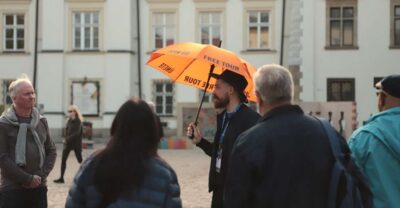 ★ 4.9Jewish Quarter and Former Ghetto TourFrom $191,441 reviews
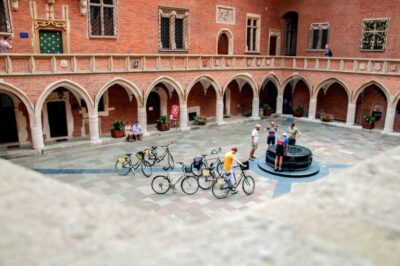 ★ 4.9Bike Tour of Old Town, Jewish Quarter and the GhettoFrom $371,155 reviews
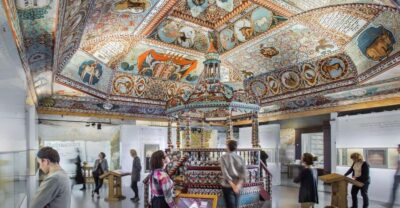 ★ 4.7POLIN Museum of the History of Polish Jews TicketFrom $121,142 reviews
 ★ 4.8Kazimierz, Schindler’s Factory & Ghetto Guided TourFrom $81460 reviews
 ★ 5.0Full Bike Tour – the Old Town, Jewish Qtr & the Ghetto NEW BIKESFrom $35437 reviews
 ★ 4.9Warsaw Ghetto Private Walking Tour with Hotel PickupFrom $84369 reviews
 ★ 4.9Bike Tour of the Old Town, Kazimierz, and the GhettoFrom $26350 reviews
Also on these Poland lists