
REVIEW · JEWISH HERITAGE AND GHETTO TOURS
Tour of the Warsaw Ghetto
Warsaw’s ghetto story is hard to grasp, until you walk it. This 3-hour, small-group-style tour strings together key places from surviving streets and wall fragments to Umschlagplatz and POLIN Museum, with a guide who brings the timeline to life.
I like two things most: first, the pace is built for understanding, with about 2.5 hours on foot plus a short bus or tram segment, so you are not exhausted before the meaningful parts. Second, the guides often use photos, maps, and local storytelling to help you visualize what you are seeing, including personal links to accounts connected to Władysław Szpilman.
One consideration: this is emotionally heavy history and the walking adds up, so it is not an easy way to spend an afternoon. Also, Nozyk Synagogue has a separate admission fee if it is included on your day.
In This Review
- Quick takeaways before you go
- A 3-hour route that mixes walking and transit without dragging
- Meeting in central Warsaw and ending at POLIN Museum
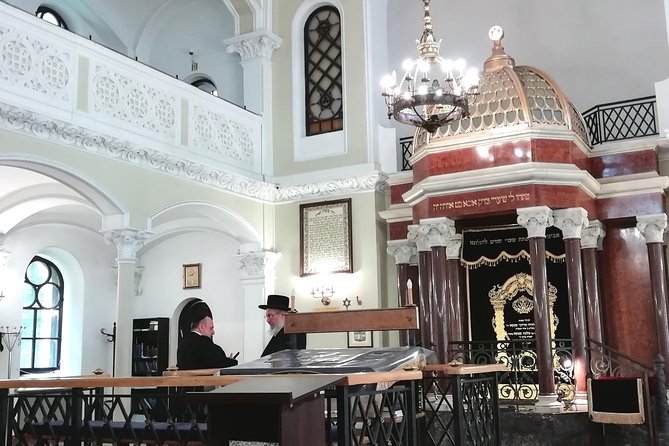
- Stop 1: Nozyk Synagogue, the one that still works
- Stop 2: Próżna, last surviving streets inside the ghetto map
- Stop 3: Waliców and the ghetto wall fragments
- Stop 4: Chłodna Street, the bridge that became a symbol
- Stop 5: Umschlagplatz, where the final solution was enacted
- Stop 6: POLIN Museum stop, focusing on the uprising and memorial symbolism
- Stop 7 and Stop 8: Willy Brandt’s knees and the Mila 18 bunker site
- Stop 9: Pawiak Prison Museum, ending with the justice-and-terror thread
- Price and value: $102.78 for a focused, guided day
- How the guide makes the difference (and why photos and maps help)
- Who should book this Warsaw Ghetto tour
- Book it or skip it? My practical recommendation
- FAQ
- How long is the Warsaw Ghetto tour?
- What is included in the price?
- Is admission to Nozyk Synagogue included?
- Do we get to visit the main exhibition at POLIN Museum?
- Does the tour run on Fridays, Saturdays, and Jewish holidays?
- How much walking is involved?
- Where does the tour start and end?
- Is this tour suitable for children?
- Is there free cancellation?
Quick takeaways before you go
- Surviving sites, not just monuments: you will pass parts of the ghetto landscape that still exist in some form.
- A clear route with hotel pickup: you meet with PolinTours and the order adapts to where you are staying.
- Chłodna Street and the bridge story: you focus on the symbolic connection between the small and big ghetto.
- Umschlagplatz and what it meant: you learn how the “final solution” plan was put into practice.
- POLIN Museum stop, without the full exhibition: you get an intro, then you can choose whether to do the main exhibits later.
- Not for children: the topic is intense and the tour is described as not suitable for kids.
Further Jewish heritage and ghetto routes documented in Warsaw
- Warsaw: POLIN Museum of the History of Polish Jews Ticket
★ 4.7 · 1,142 reviews - Warsaw: Warsaw Ghetto Private Walking Tour with Hotel Pickup
★ 4.9 · 369 reviews - Warsaw: Jewish History Guided Walking Tour in English
★ 4.7 · 324 reviews - Private Tour: Warsaw’s Jewish Heritage by Retro Fiat
★ 5.0 · 208 reviews
A 3-hour route that mixes walking and transit without dragging
This experience is timed to land you in the major places of Warsaw’s former Jewish ghetto area in one go. Expect roughly 3 hours total, with about 2.5 hours on foot and around 30 minutes on public transport. That mix matters. Pure walking can be great, but you also want your legs to arrive with enough energy to actually absorb what you are hearing.
You also get a more focused feel than a “big bus” format. Since it is a private tour/activity for your group, you should have time to ask questions rather than just listen and move along.
The topic is not light, and you will notice that in how the route is paced: stops are generally 10 to 20 minutes, which gives your brain a chance to reset between the heavier locations.
Meeting in central Warsaw and ending at POLIN Museum
The tour starts at Próżna 11, 00-107 Warszawa, and it ends at Mordechaja Anielewicza 6, right by POLIN Museum. The end point is on purpose. The tour finishes where you can expand the story on your own, if you want.
Pickup is designed for normal travel life, not traveler hassle. If your hotel is in the city center, the guide picks you up from the hotel reception. If you are staying in an apartment, you wait outside. The guide carries a sign for PolinTours, which helps you find the group quickly.
One more practical point: the order of stops is adapted to your hotel location. That means you are less likely to start with a long transit before anything meaningful happens.
Finally, be aware of timing rules for religious days. On Friday afternoons (from 1 p.m.), Saturdays, and Jewish holidays, the tour runs without visiting the synagogue. So if Nozyk Synagogue is a top priority for you, pick a day when it can be included.
Stop 1: Nozyk Synagogue, the one that still works
The tour begins with Nozyk Synagogue, described as the only synagogue that survived World War II and is still in operation. That single detail changes how you experience the site. It is not only a historical marker, it is a living place.
You spend about 15 minutes here. Admission is not included, and the fee is listed as €5.00 per person. On days when synagogue visits are not possible, you will skip this stop entirely rather than visiting it for a reduced experience.
What I like about starting here is the grounding effect. You see a place of Jewish religious life that outlasted the destruction, and then you move into the ghetto landscape with that contrast in mind.
If you want to be efficient, plan on bringing cash or a payment method for the synagogue fee. And wear comfortable shoes, since the day continues with walking right after.
Stop 2: Próżna, last surviving streets inside the ghetto map
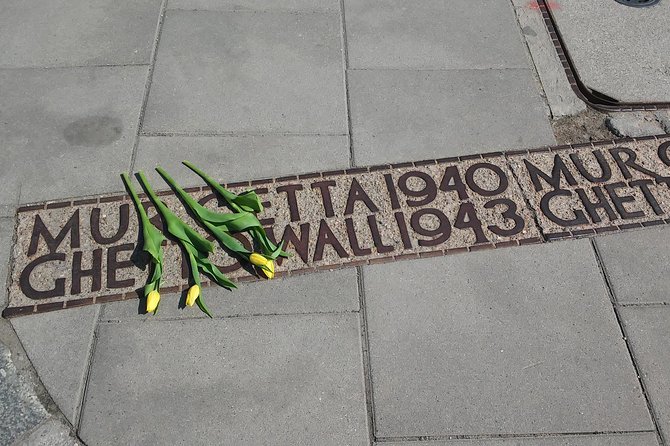
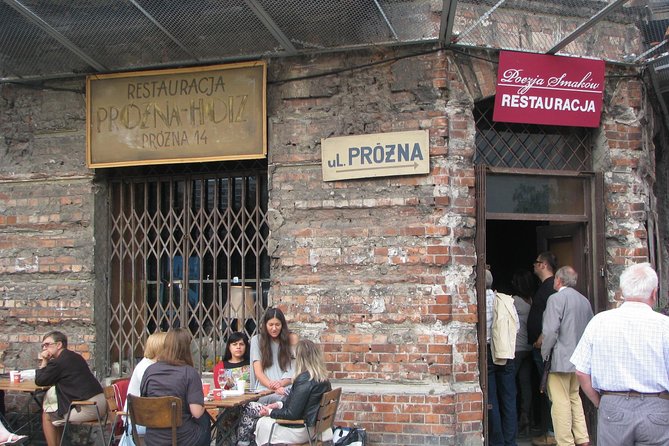
Next up is Próżna, where the tour explores the last surviving streets and neighborhoods within the ghetto. This is one of those stops where the value is in the specificity: you are not just hearing theory about where people lived. You are seeing the street-level framework that still exists.
The stop is about 20 minutes, and admission is free. That extra time helps the guide explain how the ghetto’s geography shaped everyday life.
This is also a stop where you should slow down a little mentally. Look at how street widths and building positions influence movement and crowding. Even without any dramatic signage, you start to understand why life was so constrained.
Warsaw rebuilt itself twice over. Here is how else we saw it
- Warsaw: Chopin Concert in the Old Town★ 4.8 · 2,287 reviews
- Warsaw: Traditional Galar Cruise on The Vistula River★ 4.6 · 1,640 reviews
- Warsaw: Old Town Highlights Walking Tour in English★ 4.7 · 1,516 reviews
- Warsaw Concert: Chopin – Painted by Candlelights with Wine★ 4.8 · 1,442 reviews
- Warsaw: City Sightseeing Hop-On Hop-Off Bus Tour★ 3.6 · 1,415 reviews
Stop 3: Waliców and the ghetto wall fragments
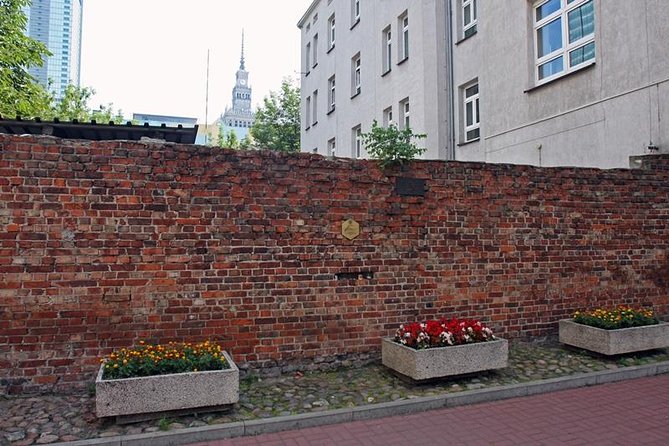
At Waliców, you see fragments of the ghetto wall. The tour also frames this area as an immersive history lesson, covering the ghetto’s origins, daily life in the ghetto, and the uprising in 1943.
This is a 15-minute stop, free of admission fees. Wall fragments are powerful because they create physical boundaries. You can literally point to where separation was enforced.
Based on what I have seen from guides on this topic, expect the storytelling to link these locations to what happened before and during the Nazi occupation. The wall fragments become a timeline anchor, not just a photo opportunity.
Stop 4: Chłodna Street, the bridge that became a symbol
Then you head to Chłodna Street, including the point where the connecting bridge between the small and big ghetto stood. This bridge is a symbol of how the ghetto functioned, and the tour uses authentic stories connected to Władysław Szpilman, including his connection to Roman Polański’s The Pianist.
You have about 20 minutes here, and the stops are free. The bridge location is meaningful because it represents movement between two parts of the ghetto system.
A practical tip: when the guide mentions specific names and connections to literature or film, try to keep one thought in mind. The goal is not to “match a scene.” The goal is to understand how ordinary space became life-or-death space.
Stop 5: Umschlagplatz, where the final solution was enacted
At Umschlagplatz, you visit real places tied to the Nazi plan known as the final solution. The tour focuses on the symbolic meaning of the site and how the plan was carried out there.
This is a 15-minute stop, free of admission. The emotional weight here is obvious, and the short timing helps you avoid numbness. Instead of rushing you through everything, the tour keeps it focused.
If you are sensitive to heavy content, give yourself a little breathing room at the start of this segment. Read the space with your eyes first, then let the guide’s explanation land.
Stop 6: POLIN Museum stop, focusing on the uprising and memorial symbolism
The tour then moves into POLIN Muzeum Historii Żydow Polskich for a short 15-minute introduction. Importantly, this tour does not include the main exhibition.
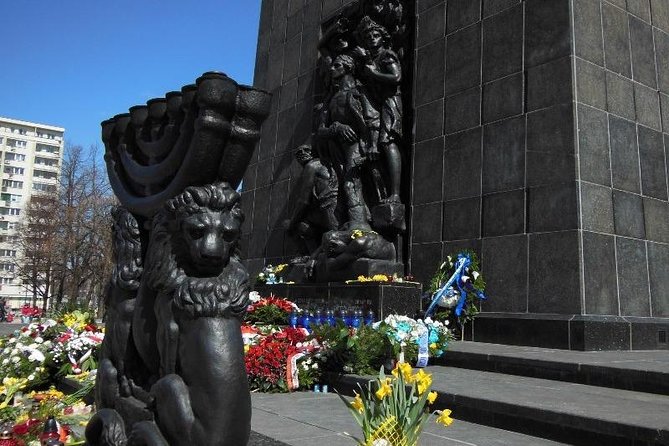
During this part, you learn about the heroic uprising in the Warsaw Ghetto and what life was like. The tour also covers why Jews took up arms and who helped, and it introduces the symbolism of the Ghettohelden Memorial, the same area where Willy Brandt is known for his famous Kniefall, and the relationship of that moment to POLIN Museum.
Here is a key practical detail: if you want the full museum experience, you should plan separate time. The guidance says to allow about 2.5 hours to visit the main exhibition, and it notes audio guides are available in German. It also provides opening hours:
- Mo., Do., Fr. 10:00 am to 6:00 pm
- Tue. closed
- Wed., Sa., So. 10:00 am to 8:00 pm
So think of this tour as a “set up your visit” moment. You will leave with enough context to make the main exhibition feel less overwhelming.
Stop 7 and Stop 8: Willy Brandt’s knees and the Mila 18 bunker site
After the POLIN Museum intro, the route slows into two compact, very meaningful stops.
First is Pomnik Willy’ego Brandta, the spot connected to Willy Brandt’s famous knees moment. It is about 10 minutes, free of admission.
Then you move to Memorial at Miła 18, the former location of a bunker on Miła Street 18, and you learn the story behind it. That stop is also 10 minutes, free of admission.
These two stops are a reminder that history is not only about what happened during the occupation. They also reflect later remembrance and how public memory keeps a community from being erased.
If you are the kind of traveler who likes to take photos, keep it respectful here. Short stops like this can be more about listening than shooting.
Stop 9: Pawiak Prison Museum, ending with the justice-and-terror thread
The final site is Pawiak Prison Museum, with a 10-minute stop to learn more about the prison. The prison is a logical ending for the day because it connects the ghetto story to the broader machinery of repression in Warsaw during the Nazi occupation.
It is free and closes out the main route. Your tour ends near POLIN Museum, which makes it easy to continue your day with the main exhibition if you have the time.
Price and value: $102.78 for a focused, guided day
At $102.78 per person, this is not the cheapest thing you can book in Warsaw. But it is also not a “spray and pray” walking tour. You are paying for a structured route through locations that are easy to miss on your own and for a guide who ties it together into a coherent story.
What you get included:
- Hotel pickup in central areas (or pickup coordination for apartments)
- A licensed city tour
- Mobile ticket
- English language service
- The tour is organized as private for your group
- Group discounts may apply
What you may need to pay separately:
- Nozyk Synagogue admission, listed as €5.00 per person when the synagogue visit is included
- The tour does not include the main POLIN Museum exhibition, so if you want that, you should plan your own paid visit time (the tour recommends the main exhibition with audio guides in German and suggests 2.5 hours)
One more timing value point: synagogue access rules can change the stops on your day. On Friday afternoons (from 1 p.m.), Saturdays, and Jewish holidays, you will skip the synagogue visit, which can indirectly affect your total out-of-pocket cost.
Also, schedule awareness helps. This tour is often booked about 64 days in advance on average. If your dates are fixed, booking earlier is a good move.
How the guide makes the difference (and why photos and maps help)
The best aspect of this experience is how it is explained, not just where it goes. Guides are praised for being excellent storytellers, for answering questions patiently, and for handling a brutal topic with clarity and respect.
A pattern you should expect is the use of photos and maps to show what places looked like before destruction and how they changed afterward. That matters. At street level, it can be hard to imagine the scale of the ghetto system without some help, and historical visuals speed up your understanding.
Some guides have been singled out by name in the feedback, like Marzena and Olivia. Regardless of which guide you get, the consistent message is that you should come prepared to ask questions and that your guide will keep the tone sensitive.
If you are the type who likes to verify details, take a note or two during the tour. You can then look up the museum’s main exhibits later with better questions in mind.
Who should book this Warsaw Ghetto tour
You will likely enjoy it if:
- You want a structured walking and transport route through the most important ghetto-related locations.
- You care about context, not only dates.
- You prefer an English guide and a private-group feel with room to ask questions.
- You like when a tour uses maps and photos to connect the street to the timeline.
You might skip it or choose another format if:
- You need a kid-friendly experience. This one is described as not suitable for children.
- You get worn out easily by walking. You are on foot for about 2.5 hours.
- You want something lighter in tone. This is built around Nazi occupation sites and the final solution, including places like Umschlagplatz and Pawiak Prison Museum.
Book it or skip it? My practical recommendation
I think you should book this tour if it is your one shot to understand Warsaw’s ghetto story in a single morning or afternoon. The itinerary connects surviving pieces of the landscape, symbolic sites like the bridge location, and major memorial or interpretive stops like POLIN Museum.
If you do book it, do two smart things. Wear comfortable shoes for the long walking portion, and plan extra time for POLIN Museum afterward if you want the full main exhibition. This tour is like the guided introduction, not the entire museum experience.
If you do not like heavy history on your schedule, consider postponing. But if you are ready to learn carefully and respectfully, this is a strong, efficient way to make sense of a place that is otherwise hard to read on your own.
FAQ
How long is the Warsaw Ghetto tour?
It runs for about 3 hours.
What is included in the price?
Pickup from your hotel in the city center, a licensed city tour, a mobile ticket, and the tour is offered in English.
Is admission to Nozyk Synagogue included?
No. Nozyk Synagogue costs €5.00 per person and is not included in the tour price.
Do we get to visit the main exhibition at POLIN Museum?
No. This tour does not include the main exhibition. It is recommended to visit the main exhibition separately, and you should allow about 2.5 hours.
Does the tour run on Fridays, Saturdays, and Jewish holidays?
On Friday afternoons (from 1 p.m.), Saturdays, and Jewish holidays, the tour is conducted without visiting the synagogue.
How much walking is involved?
You will be about 2.5 hours on foot, plus about 30 minutes on the bus or tram or underground.
Where does the tour start and end?
It starts at Próżna 11, 00-107 Warszawa and ends at Mordechaja Anielewicza 6, 00-157 Warszawa, at POLIN Museum.
Is this tour suitable for children?
No. It is not suitable for children.
Is there free cancellation?
Yes. You can cancel for a full refund up to 24 hours in advance of the experience start time.
More Tour Reviews in Warsaw




Warsaw, Keep Looking
Jewish Heritage and Ghetto Routes in Warsaw

Recently written up around Warsaw


More Jewish Heritage and Ghetto Tours.
 ★ 4.7Schindler’s Factory & Ghetto Guided TourFrom $571,694 reviews
 ★ 4.9Jewish Quarter and Former Ghetto TourFrom $191,441 reviews
 ★ 4.9Bike Tour of Old Town, Jewish Quarter and the GhettoFrom $371,155 reviews
 ★ 4.7POLIN Museum of the History of Polish Jews TicketFrom $121,142 reviews
 ★ 4.8Kazimierz, Schindler’s Factory & Ghetto Guided TourFrom $81460 reviews
 ★ 5.0Full Bike Tour – the Old Town, Jewish Qtr & the Ghetto NEW BIKESFrom $35437 reviews
 ★ 4.9Warsaw Ghetto Private Walking Tour with Hotel PickupFrom $84369 reviews
 ★ 4.9Bike Tour of the Old Town, Kazimierz, and the GhettoFrom $26350 reviews
Also on these Poland lists