
REVIEW · JEWISH HERITAGE AND GHETTO TOURS
Warsaw: 2-Hour Tour of Daily Life in the Ghetto Warsaw
Two hours, and Warsaw tells the truth.
This Warsaw Ghetto daily life tour focuses on what stayed behind in the city, from the last preserved street and ghetto wall remains to the historic ground around Umschlagplatz, where the story of survival and loss is tied to real corners you can stand on.
I really liked how clearly the guide turns big facts into human scale. Guides like Marzena set a calm, welcoming tone, and the explanations feel detailed, with room for your questions, helped along by head sets used for groups up to 20 people. One consideration: the tour usually ends at the Jewish Museum, so you will want to plan extra time (at least 2.5 hours if you want the core exhibition).
In This Review
- Key highlights worth your attention
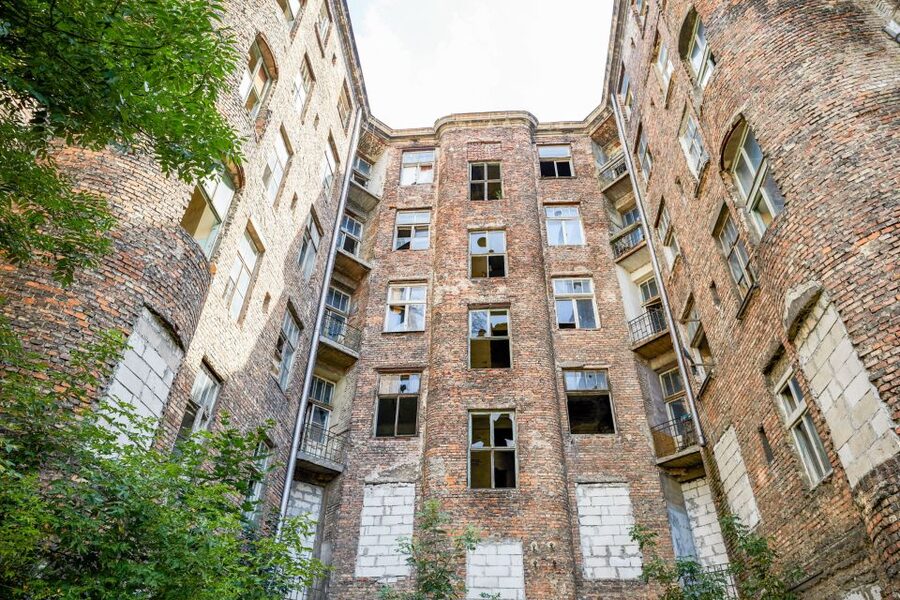
- Walking the Warsaw Ghetto’s last preserved street and wall remains
- Mila 18 and the footbridge site on Chłodna Street
- Umschlagplatz: what the ground says about how people were sent away
- The one synagogue that survived and the meaning of daily life
- Oneg Shabbat and the Underground Archive you can still feel today
- Monuments, the Museum of the History of Polish Jews, and why the end matters
- Price, time, and whether $76 makes sense for what you get
- Getting the most from this tour day: what to plan and what to skip
- Should you book the Warsaw Ghetto daily life tour?
- FAQ
- How long is the Warsaw Ghetto Daily Life tour?
- Where does the tour start?
- What languages is the live guide available in?
- Is it mostly walking?
- What does the tour include?
- Are entrance fees included?
- What happens at the end of the tour?
- Is the tour suitable for children?
Key highlights worth your attention
- Last preserved street and ghetto wall remnants: walk the few traces that still show how the ghetto was laid out
- Mila 18 and the bunker site: stop at 18 Miła Street, a focal point of uprising-era history
- Footbridge over Chłodna Street: see the former location where movement across the area mattered
- Umschlagplatz: understand this site’s role in how people were sent away
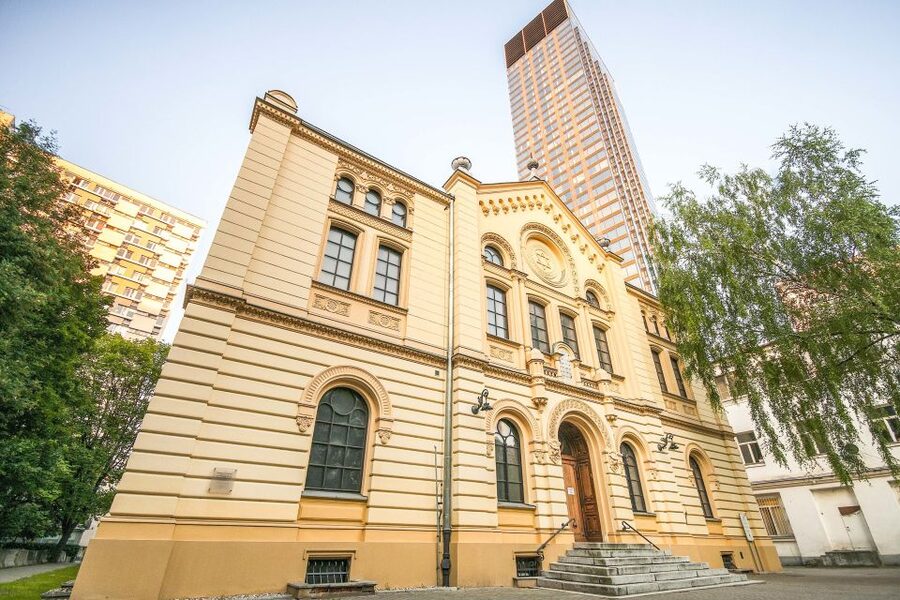
- One surviving synagogue: visit the synagogue that managed to survive while much else did not
- Underground Archive and Oneg Shabbat: learn how documentation helped preserve testimony through the war
Further Jewish heritage and ghetto routes documented in Warsaw
- Warsaw: POLIN Museum of the History of Polish Jews Ticket
★ 4.7 · 1,142 reviews - Warsaw: Warsaw Ghetto Private Walking Tour with Hotel Pickup
★ 4.9 · 369 reviews - Warsaw: Jewish History Guided Walking Tour in English
★ 4.7 · 324 reviews - Private Tour: Warsaw’s Jewish Heritage by Retro Fiat
★ 5.0 · 208 reviews
Walking the Warsaw Ghetto’s last preserved street and wall remains
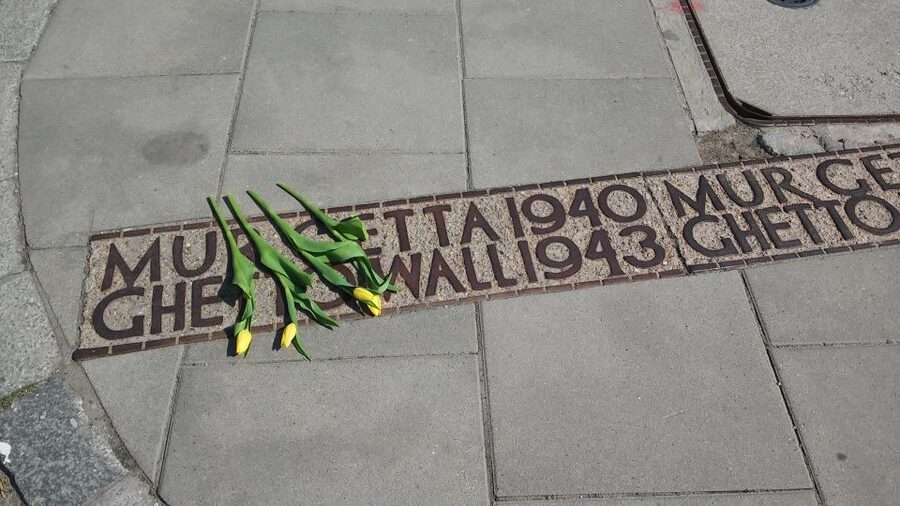
This tour starts with the basic idea that the Warsaw Ghetto was not an abstract event. In 1940, the Nazis created the ghetto in the center of Warsaw, and they forced around 460,000 Jews from Warsaw and nearby areas into an area of just four square kilometers. That scale is hard to picture until you are on the ground where the city once held those cramped streets.
I like that the walk begins by showing you what’s left: the last preserved street of the ghetto and the remains of the ghetto walls. You end up thinking less in numbers and more in space. Four square kilometers sounds like a statistic. On a street where parts of the boundary are still visible, it starts to feel like a real constraint.
The guide also brings in the daily-life angle, not just the dates. That matters because the ghetto was a place where people had to find ways to solve problems day after day, even as the conditions were unbearable. You will hear how routine became survival work, and how that made the later collapse even more tragic.
Mila 18 and the footbridge site on Chłodna Street
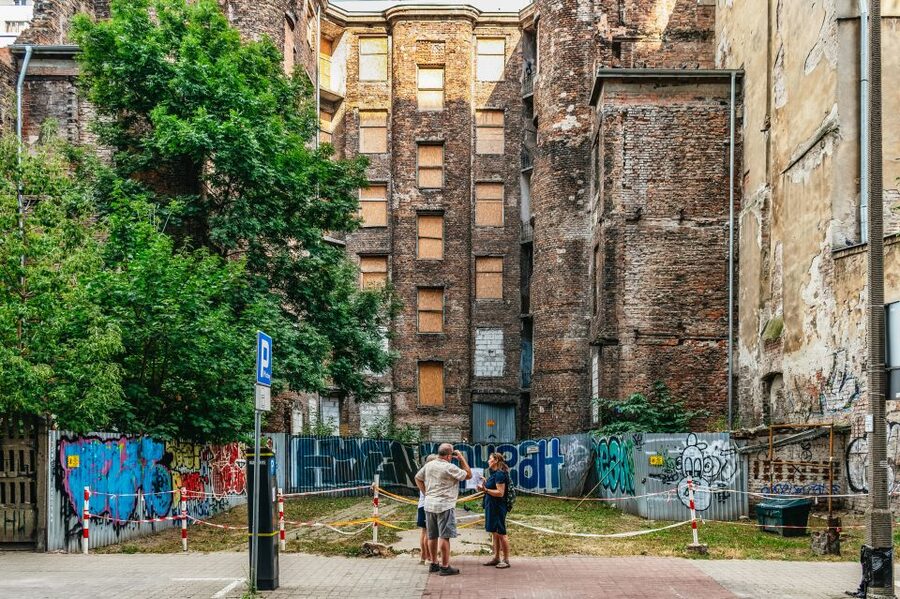
A standout part of the tour is the stop connected with 18 Miła Street, known through the story of the Warsaw Ghetto uprising as Mila 18. This is not just a landmark stop. It’s a place tied to the bunker where people resisted and where the uprising’s reality comes through in a very physical way.
Another memorable segment is the former location of the footbridge over Chłodna Street. Even if nothing is left that looks like a footbridge today, the guide’s explanation helps you understand why a connection across Chłodna mattered. The ghetto was surrounded and controlled, so where people could move, meet, or get through obstacles became a daily question, not a theoretical one.
There is also a helpful reality check here for movie watchers. The tour includes stops tied to real places connected with the main hero from The Pianist by Roman Polanski. If you have seen the film, you will recognize the feeling of the streets and the pacing of events, and you will be able to place scenes to the actual Warsaw geography.
One practical note: this is a walking and transit mix. That makes these stops land well, but it also means you should be ready for city pacing over two hours, not a slow museum shuffle.
Umschlagplatz: what the ground says about how people were sent away
Then the tour turns to Umschlagplatz, one of the most important and emotionally heavy places on the route. The tour context here is clear: more than 300,000 people from the ghetto were sent away to the Treblinka extermination camp. Standing around Umschlagplatz, the goal is not to reduce this to a quick stop, but to understand how the process worked in real life and how this place fit into the broader machinery of persecution.
What I appreciate is that the tour does not treat Umschlagplatz as a generic memorial stop. It is presented as a site with a function, tied to the ghetto’s destruction and the way the Nazis tried to liquidate it. You hear about the 1943 uprising and the brutal revenge that followed, and the narrative helps you connect the turning points instead of experiencing the story as a series of disconnected plaques.
If you like tours that respect your attention, this is one reason the “daily life” framing works. You learn about life under impossible conditions, then you see where that life was forced toward its end. It’s harder than a typical sightseeing loop, but it is also more honest.
The one synagogue that survived and the meaning of daily life
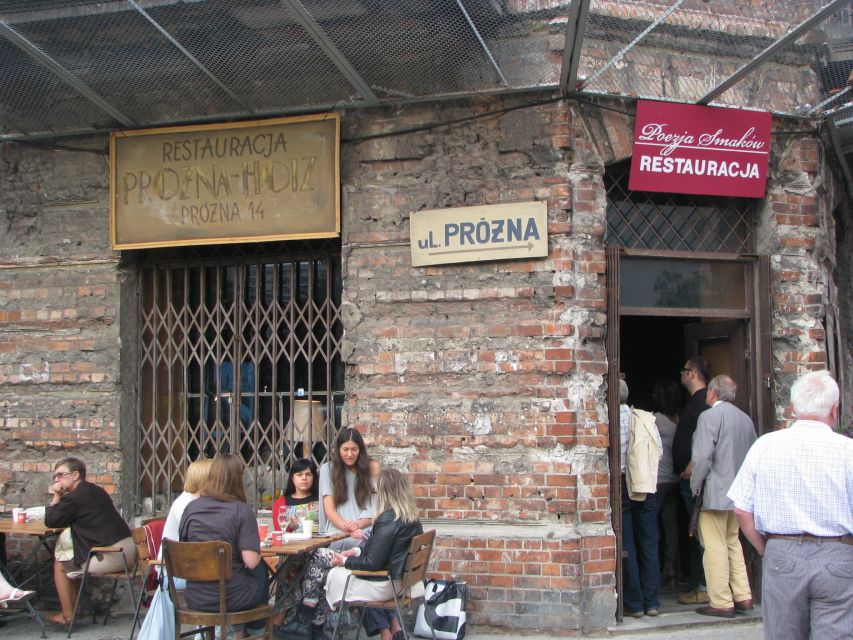
This tour includes a stop connected to the only synagogue that survived. That detail is powerful because it gives you a way to talk about continuity, faith, and identity inside a space built to strip those things away. It’s a reminder that ghetto life included religion and culture, not only hunger, disease, and exhaustion.
This is also where the daily-life approach becomes more than a theme. If all you did was learn about transport and extermination, you would miss the full human scope of what was being targeted. By focusing on everyday practice and community life, the tour helps you understand what was lost, not just what happened.
I also like that the guide tends to explain how people tried to solve daily problems while surrounded by danger. The tour’s framing includes the role of destruction, indifference, blackmail, and resistance. Those are not random topics. They map how power worked in the ghetto and how ordinary choices became life-or-death.
Warsaw rebuilt itself twice over. Here is how else we saw it
- Warsaw: Chopin Concert in the Old Town★ 4.8 · 2,287 reviews
- Warsaw: Traditional Galar Cruise on The Vistula River★ 4.6 · 1,640 reviews
- Warsaw: Old Town Highlights Walking Tour in English★ 4.7 · 1,516 reviews
- Warsaw Concert: Chopin – Painted by Candlelights with Wine★ 4.8 · 1,442 reviews
- Warsaw: City Sightseeing Hop-On Hop-Off Bus Tour★ 3.6 · 1,415 reviews
Oneg Shabbat and the Underground Archive you can still feel today
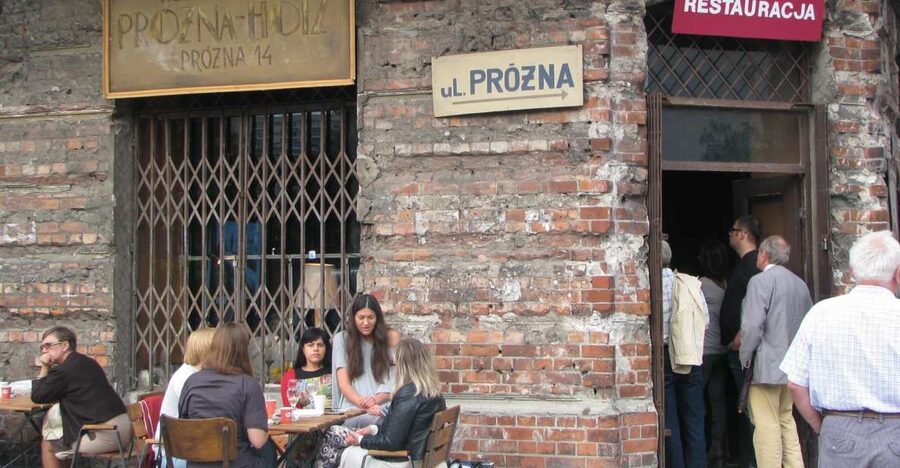
A big reason this tour earns such strong ratings is the way it handles documentation and memory. You will learn about the Underground Archive of the Warsaw Ghetto, carried out through a secret organization known as Oneg Shabbat. This group documented life in the ghetto at the time, then the archive survived the war in metal cases and milk cans.
That combination, the urgency of recording while everything was collapsing, and the strange physical survival of the materials, makes the story stick. It is one thing to hear that history was written later. It is another to learn how people tried to preserve evidence in whatever containers they could manage.
The tour also points out that the archive entered the UNESCO Memory of the World register. Even if you are not usually a UNESCO person, this gives the story weight. It connects Warsaw Ghetto testimony to a global effort to protect documents that could otherwise vanish.
If you care about how history is preserved, this segment feels like the tour’s backbone. It explains why you are standing where you are today, reading the city’s clues, instead of losing everything to time.
Monuments, the Museum of the History of Polish Jews, and why the end matters
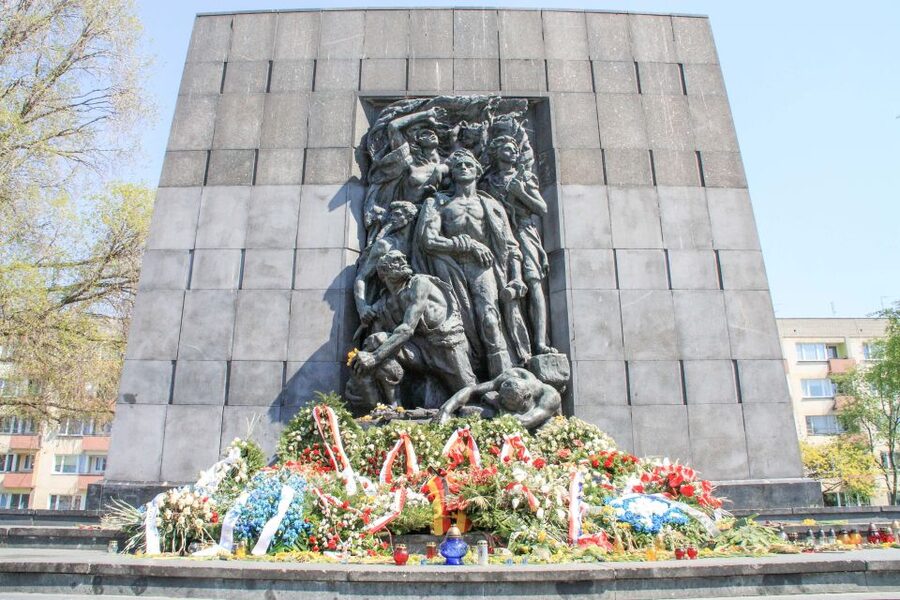
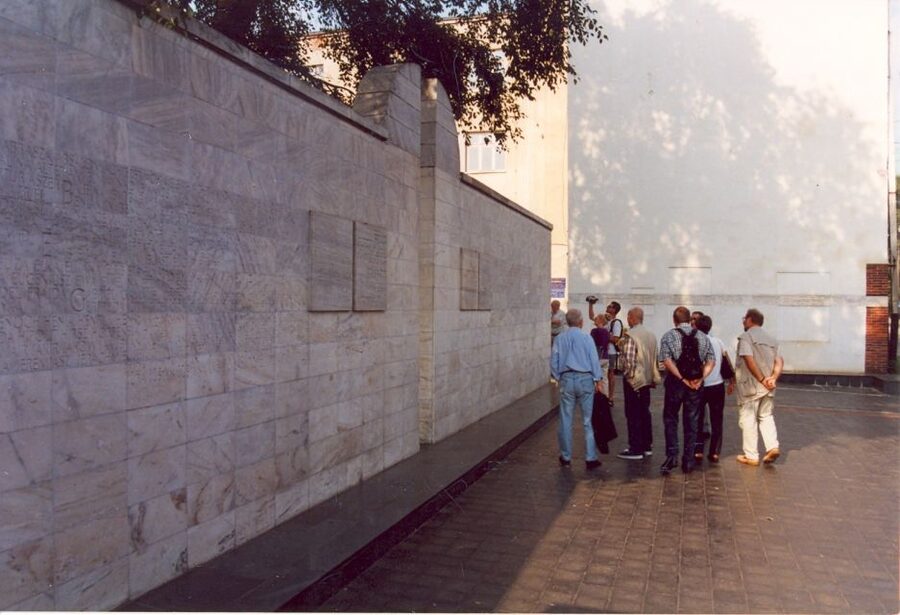
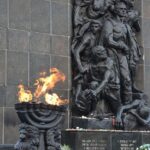
Near the end, the tour brings in symbolism through the Monument to the Ghetto Heroes and then connects the experience to museums, including the Museum of the History of Polish Jews. Since the ghetto itself no longer exists in its original form, this “now” layer is important. You are not just learning the past. You are learning how Poland and the world keep the memory alive through education and preservation.
The tour usually ends at the Jewish Museum. Plan for that. The core exhibition takes time, and you will get the most out of it if you set aside at least 2.5 hours for the main show. The museum opening hours provided for planning are:
- Monday, Wednesday, Thursday, Friday, Sunday: 10:00 am to 6:00 pm (last entrance 4:00 pm)
- Tuesday: closed
- Saturday: 10:00 am to 8:00 pm (last entrance 6:00 pm)
You can also use audio guides in English and other languages while you explore on your own. I like this setup because the tour gives you the street-level story, then the museum lets you slow down without a schedule pressuring you.
Price, time, and whether $76 makes sense for what you get
Let’s talk value, because $76 per person for two hours can feel steep until you look at what’s included. You are paying for a licensed live guide, and you also get head sets for groups up to 20 people, which is a practical perk in a city where sound can get lost fast.
You’re also getting a fairly concentrated route with multiple historically specific stops. The tour covers the last preserved street and wall remains, the surviving synagogue, Mila 18 at 18 Miła Street, the former footbridge site over Chłodna Street, and Umschlagplatz. It also covers how daily life worked, why the uprising broke out, and how Oneg Shabbat recorded the world the Nazis tried to erase.
What’s not included is entrance fees, plus lunch and public transport tickets. So your total day cost can rise a bit if you choose museum add-ons that require payment. Still, for many people, this is one of the best ways to use a short visit time in Warsaw to get the context right.
Also, the tour is not for kids under 12. It is intense, both emotionally and historically, and that age suitability makes sense.
Getting the most from this tour day: what to plan and what to skip
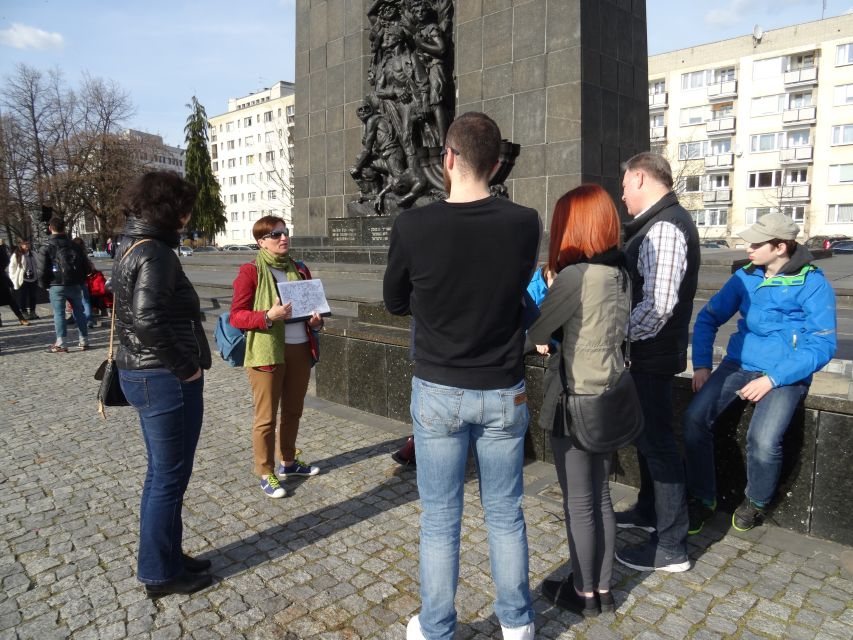
This tour is conducted by foot in combination with public transport. That means you should treat it like a city walk with short transit bits, not a purely static sightseeing loop. If you get motion sick or hate moving between stops, you might find the format tiring, even though the duration is only two hours.
You should also be ready for site visits. The guide notes that entrances to sites and a guided visit of the Jewish Museum are offered during the tour, but entrance fees are not included. So it helps to bring a plan for budgeting and to decide in advance whether you want to go beyond the guided portion once you arrive.
Finally, read the basics on what’s not allowed: no pets, no oversize luggage, no smoking, and no alcohol or drugs. Those are typical for tours, but it’s worth knowing so your day stays smooth.
Should you book the Warsaw Ghetto daily life tour?
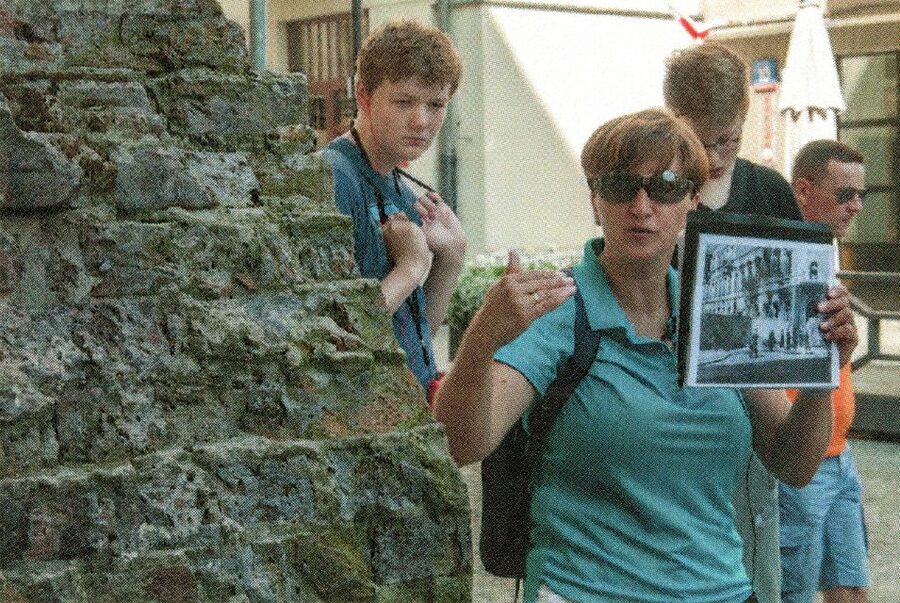
Book it if you want a route that focuses on everyday life in the Ghetto, not just tragedy as a headline. You will learn how daily life worked under impossible rules, why the uprising happened, and how people tried to preserve evidence through Oneg Shabbat and the Underground Archive. The story lands better when you can connect it to places, like Mila 18, the footbridge site, and Umschlagplatz.
Skip it or reconsider if you need a kid-friendly activity under age 12, or if you do not want to add time at the Jewish Museum afterward. Because the tour usually ends there, your day needs room for at least part of the museum experience, ideally around 2.5 hours.
If you are hungry for a short, well-guided, place-based history stop in Warsaw, this one is a strong choice.
FAQ
How long is the Warsaw Ghetto Daily Life tour?
It lasts 2 hours.
Where does the tour start?
The guide will meet you at the meeting point with a PolinTours sign.
What languages is the live guide available in?
The tour is offered with a live guide in English and German.
Is it mostly walking?
Yes, the tour is conducted by foot in combination with public transport.
What does the tour include?
It includes a licensed tour guide and head sets for groups up to 20 people.
Are entrance fees included?
No. Entrance fees are not included.
What happens at the end of the tour?
It usually ends at the Jewish Museum, and the recommendation is to allow at least 2.5 hours to explore the core exhibition with audio guides.
Is the tour suitable for children?
No, it is not suitable for children under 12.
More Tour Reviews in Warsaw




Warsaw, Keep Looking
Jewish Heritage and Ghetto Routes in Warsaw

Recently written up around Warsaw


More Jewish Heritage and Ghetto Tours.
 ★ 4.7Schindler’s Factory & Ghetto Guided TourFrom $571,694 reviews
 ★ 4.9Jewish Quarter and Former Ghetto TourFrom $191,441 reviews
 ★ 4.9Bike Tour of Old Town, Jewish Quarter and the GhettoFrom $371,155 reviews
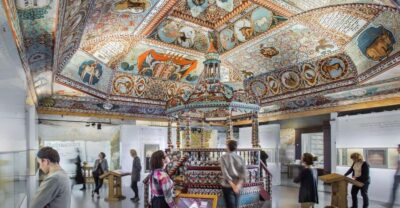 ★ 4.7POLIN Museum of the History of Polish Jews TicketFrom $121,142 reviews
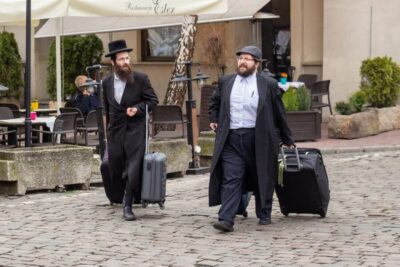 ★ 4.8Kazimierz, Schindler’s Factory & Ghetto Guided TourFrom $81460 reviews
 ★ 5.0Full Bike Tour – the Old Town, Jewish Qtr & the Ghetto NEW BIKESFrom $35437 reviews
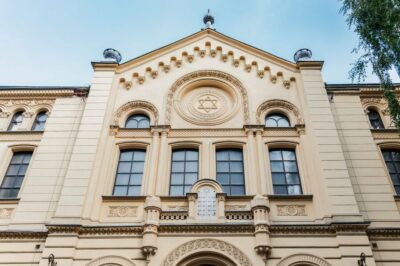 ★ 4.9Warsaw Ghetto Private Walking Tour with Hotel PickupFrom $84369 reviews
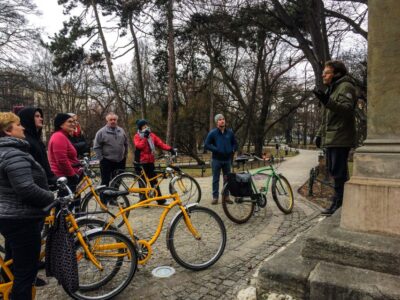 ★ 4.9Bike Tour of the Old Town, Kazimierz, and the GhettoFrom $26350 reviews
Also on these Poland lists