
REVIEW · JEWISH HERITAGE AND GHETTO TOURS
Warsaw: Jewish Heritage 4-Hour Private Tour
Jewish Warsaw leaves marks on your mind. This Warsaw Jewish Heritage tour turns famous landmarks into human stories, following the Trail of Jewish Monuments through the places that shaped everyday life before WWII and then the tragedy that followed. I especially liked how the route slows down at the memorial sites, and how it pairs history with real details like the Umschlagplatz monument’s names. A possible drawback: this is a heavy theme, so if you want lighter sightseeing, you might find the tone draining.
I also like that it’s truly private, with hotel lobby pickup and transportation, so you are not squeezed into a fast-moving crowd. Based on how guides have been described (for example, Wojciech and Ziggy), expect thoughtful explanations, room to ask questions, and a pace that keeps up with the emotion of the stops.
In This Review
- Key Moments That Make This Tour Worth Your Time
- The Real Value of a 4-Hour Jewish Heritage Tour in Warsaw
- From Hotel Pickup to Próżna Street, a City That Still Remembers
- The Ghetto Heroes Monument and the Fight for Survival in 1943
- Umschlagplatz: When You Stop to Pray and Read the Names
- Walking Along the Memory Route, Seeing Commemoration as Story
- Okopowa Street and the Jewish Cemetery, One of Europe’s Largest Kirkuts
- Janusz Korczak’s Symbolic Grave, a Protector of Children
- Footbridge of Remembrance Over Chłodna Street, the Small-to-Large Divide
- Ghetto Wall Fragments and Iron Boundary Markers
- Nozyk Synagogue, a Survivor You Can Actually See
- Timing Tips: Making the Most of 4 Hours (Without Feeling Crushed)
- Price, Value, and Who This Tour Fits Best
- Should You Book Warsaw Jewish Heritage for Your Trip?
- FAQ
- How long is the Warsaw Jewish Heritage private tour?
- What is the price per person?
- Is this tour private?
- What’s included in the price?
- Are entry or admission fees included?
- Do you get hotel pickup?
- What languages is the live guide available in?
- What major stops are included in the 4-hour route?
- Can I continue to POLIN Museum after the tour?
- Is free cancellation available?
- Is there a reserve now, pay later option?
Key Moments That Make This Tour Worth Your Time
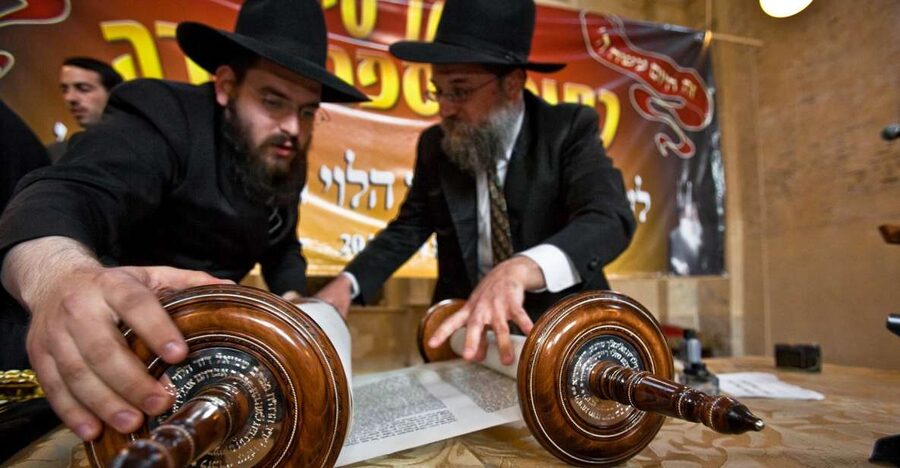
- Trail of Jewish Monuments route that connects everyday life, architecture, and history
- Umschlagplatz stop with the monument shape and more than 400 victim names engraved
- Jewish Cemetery on Okopowa Street, including graves linked to Ludwik Zamenhof and Ischok Leib Perec
- Janusz Korczak’s symbolic grave and the story of his murder at Treblinka
- Footbridge of Remembrance over Chłodna Street, marking the connection between parts of the ghetto
- Nozyk Synagogue stop, a major survivor of the Holocaust period
Further Jewish heritage and ghetto routes documented in Warsaw
- Warsaw: POLIN Museum of the History of Polish Jews Ticket
★ 4.7 · 1,142 reviews - Warsaw: Warsaw Ghetto Private Walking Tour with Hotel Pickup
★ 4.9 · 369 reviews - Warsaw: Jewish History Guided Walking Tour in English
★ 4.7 · 324 reviews - Private Tour: Warsaw’s Jewish Heritage by Retro Fiat
★ 5.0 · 208 reviews
The Real Value of a 4-Hour Jewish Heritage Tour in Warsaw
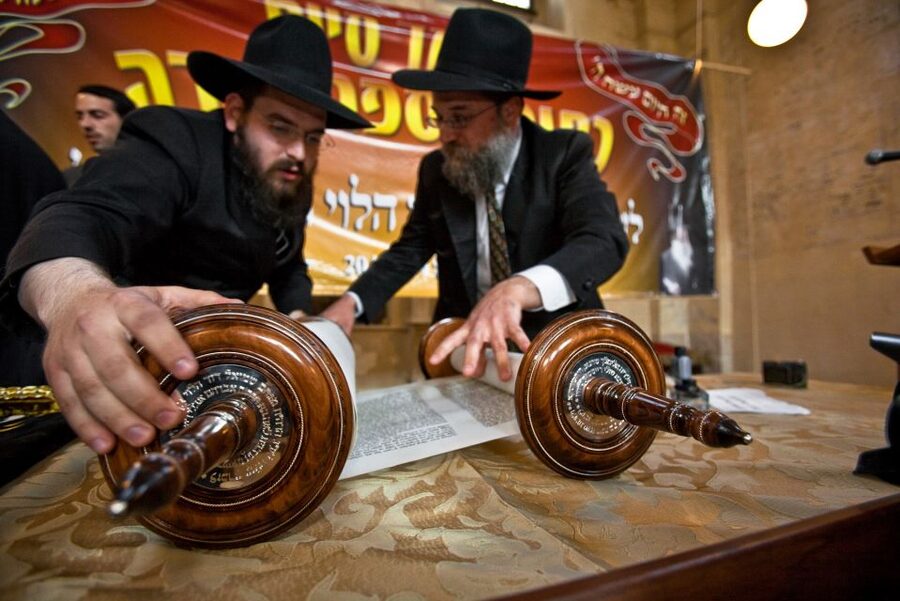
Warsaw’s Jewish story is not one chapter. It is layers. This tour helps you sort those layers without turning it into a blur of names and dates.
You start with the idea that before WWII, Warsaw was one of Europe’s largest centers of Jewish culture. You see that influence in places tied to religion, community life, and city planning, then you move into the ghetto area and the Holocaust sites that still dominate the landscape today. The guide ties the stops together so the history feels connected, not like separate roadside facts.
At $42 per person for a 4-hour private tour, the value comes from two things. First, you are not just looking at plaques, you are guided through meaning. Second, transportation and hotel pickup are included, which matters in a city where the distance between sites can add up.
From Hotel Pickup to Próżna Street, a City That Still Remembers
The tour begins with pickup from your hotel lobby, with the guide waiting for you and your name. That small detail helps a lot. You do not lose time figuring out transit or meeting spots, and you can stay focused on the story right away.
One of the best early signals that this is not a checklist tour is the inclusion of Próżna Street, where the atmosphere of Jewish Warsaw has been preserved. Even without a museum ticket, you can sense that the neighborhood still carries echoes of the prewar community. It gives you a foundation before the heavy memorial stops.
Practical note: because this is a short 4 hours, the guide will keep the route tight. You will move from place to place, with enough context to understand why each stop matters.
The Ghetto Heroes Monument and the Fight for Survival in 1943
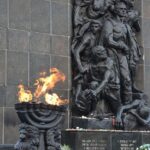
Once you enter the ghetto-history area, the tour puts the human struggle front and center. You visit the Monument to the Ghetto Heroes, which commemorates those who fought and died in the Warsaw ghetto. Nearby, you also follow the Memorial Route of the Martyrdom and Struggle of Jews.
This part is important because it reframes the ghetto from only a place of suffering into a place of resistance. The tour includes the story of the 1943 uprising, when a few hundred brave Jews stood up to Nazi forces like artillery and air attacks, even knowing the odds were brutal.
What I like about this approach: it prevents the “war equals tragedy equals end of story” effect. You leave with a fuller emotional map, not just a darker set of stops.
Umschlagplatz: When You Stop to Pray and Read the Names
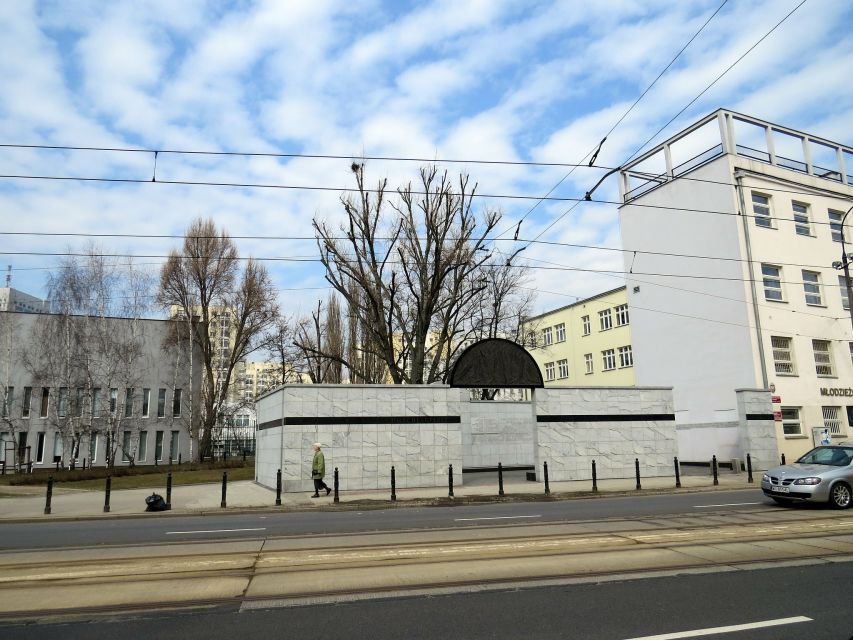
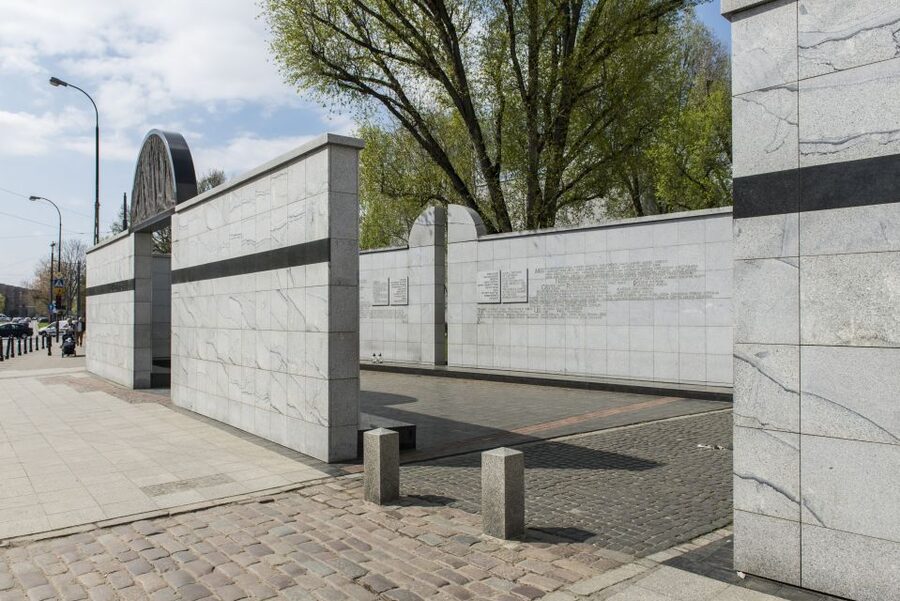
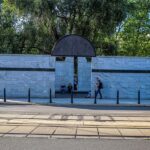
The Umschlagplatz stop is the emotional center of the route. The experience includes a pause at the monument there, connected to those sent to extermination camps.
The monument’s design details make it memorable. It resembles the walls of the ghetto and a railway wagon, which instantly turns abstract history into a physical scene. The tour also highlights that more than four hundred names of victims are engraved on the walls.
It is not a quick glance kind of stop. The guide encourages tribute and reflection, including the idea of praying for those who never returned. If you are sensitive to memorial spaces, plan for a quiet minute or two here. This is the point where the tour stops being “interesting” and becomes unforgettable.
Warsaw rebuilt itself twice over. Here is how else we saw it
- Warsaw: Chopin Concert in the Old Town★ 4.8 · 2,287 reviews
- Warsaw: Traditional Galar Cruise on The Vistula River★ 4.6 · 1,640 reviews
- Warsaw: Old Town Highlights Walking Tour in English★ 4.7 · 1,516 reviews
- Warsaw Concert: Chopin – Painted by Candlelights with Wine★ 4.8 · 1,442 reviews
- Warsaw: City Sightseeing Hop-On Hop-Off Bus Tour★ 3.6 · 1,415 reviews
Walking Along the Memory Route, Seeing Commemoration as Story
After Umschlagplatz, the itinerary continues with walking to the Ghetto Heroes Monument along the memorial route. Along the way, you pay attention to commemorative stones depicting important figures of the Warsaw ghetto.
This matters because memorial routes can turn into a blur if you do not understand what you are seeing. With a guide, each stone becomes a clue. You connect people to places and understand why the route was designed like a narrative.
Because it is a private tour, you can ask questions without feeling rushed. And if you need a short pause to process what you just saw, this kind of format makes it easier.
Okopowa Street and the Jewish Cemetery, One of Europe’s Largest Kirkuts
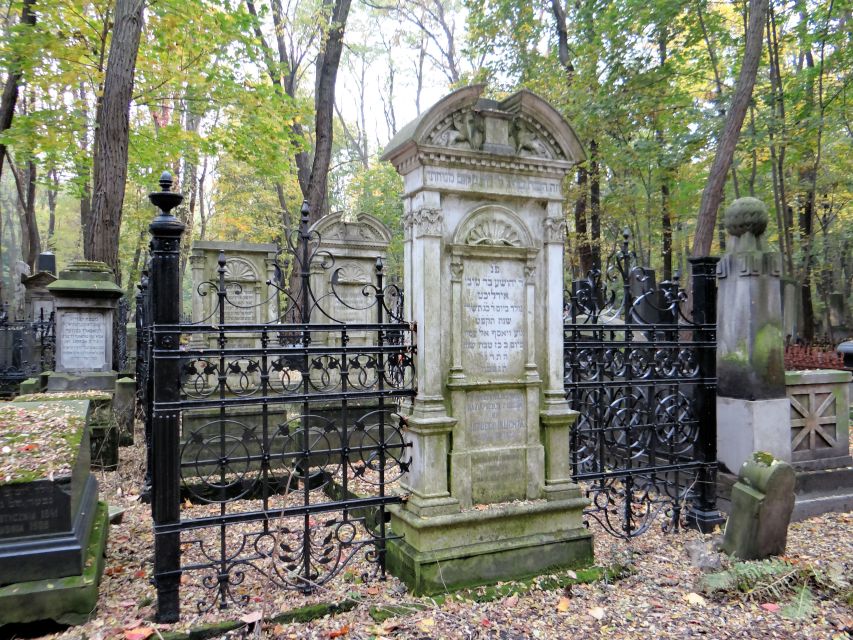
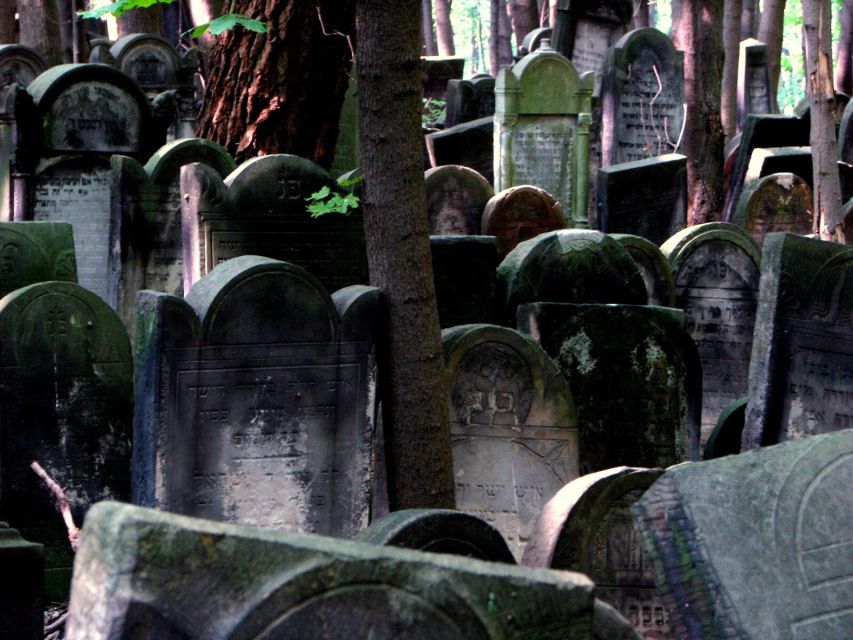
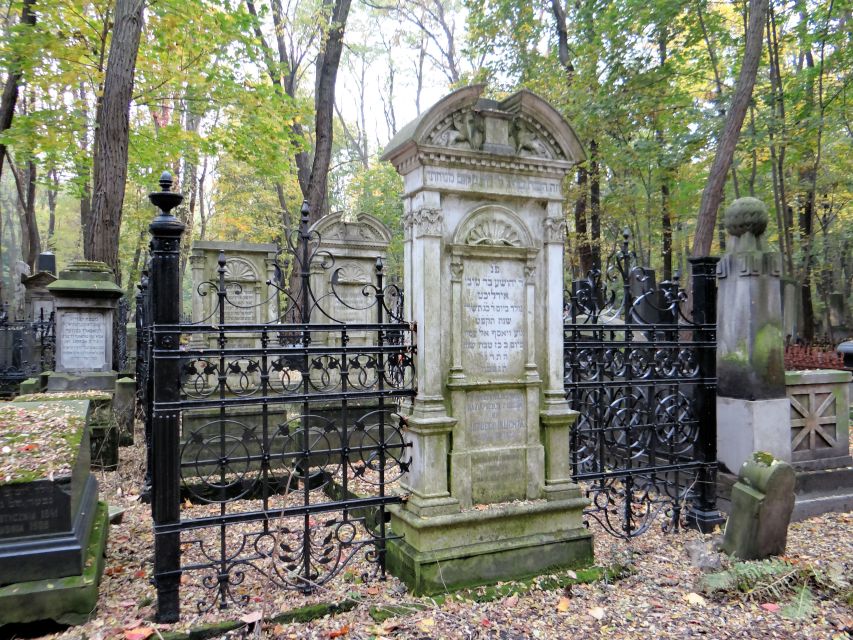
The tour’s next major shift is to Okopowa Street and the Jewish Cemetery. You get to see a huge Kirkut, described as one of the largest in Europe. Cemeteries can be hit-or-miss on tours, but here the cemetery stop feels essential.
It is not only about size. The guide points out notable burials, including the founder of the Esperanto language, Ludwik Zamenhof, and writer Ischok Leib Perec. That pairing does something smart: it shows you that Jewish Warsaw was not only tied to tragedy. It also produced thinkers, writers, and cultural influence that reached beyond Poland.
Another thing you should know going in: cemetery time is calmer time. You are likely to walk more slowly than at the ghetto memorials, and you will spend more time absorbing rather than moving.
If you have photos in mind, keep them respectful. Memorial sites are not about capturing a backdrop. They are about honoring people.
Janusz Korczak’s Symbolic Grave, a Protector of Children
In the cemetery area, the tour stops at the symbolic grave of Janusz Korczak. The guide connects him with the protector of children, and the story is part of why this stop hits so hard: Korczak was murdered in Treblinka along with children in his care in a gas chamber.
This is not a distant historical note. It is presented as a moral story about responsibility and care when care was punished.
I like that the tour frames Korczak in a way that feels personal. You do not just learn what happened. You understand why his name still matters.
If you are unsure whether you can handle this emotional intensity, consider taking a slower pace once you reach this section. A private guide can usually work with your needs better than a group format.
Footbridge of Remembrance Over Chłodna Street, the Small-to-Large Divide
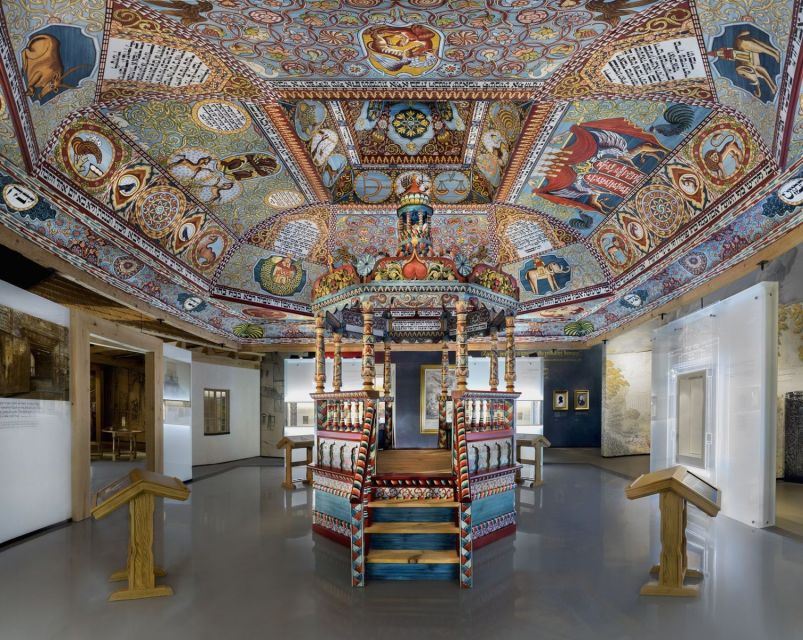
Next comes the Footbridge of Remembrance, over Chłodna Street. The tour explains that it connects the small and large ghetto areas.
What makes this stop more than a location marker is what happens here now. The tour notes a multimedia art installation reminding visitors of the tragic events of the period. That blend of place and modern interpretation helps you understand the ghetto’s geography. You can see how communities were split, restricted, and forced into unnatural boundaries.
It also gives you a break from purely memorial stonework. You get something that feels like a bridge, not just a wall. The symbolism is strong, and the installation context keeps it from feeling like a tourist gimmick.
Ghetto Wall Fragments and Iron Boundary Markers
The itinerary also includes fragments of the Jewish ghetto wall and iron slabs set into the pavement, marking the boundaries of the former ghetto.
This is one of those “how did I not notice this before” moments. When you see the boundary markers in the ground, you stop thinking of the ghetto as an idea. You see it as a line drawn through real street life.
For me, this is where the tour becomes very practical. It trains your eye. Once you have seen the boundary slabs and wall fragments, you start reading the city differently afterward.
Nozyk Synagogue, a Survivor You Can Actually See
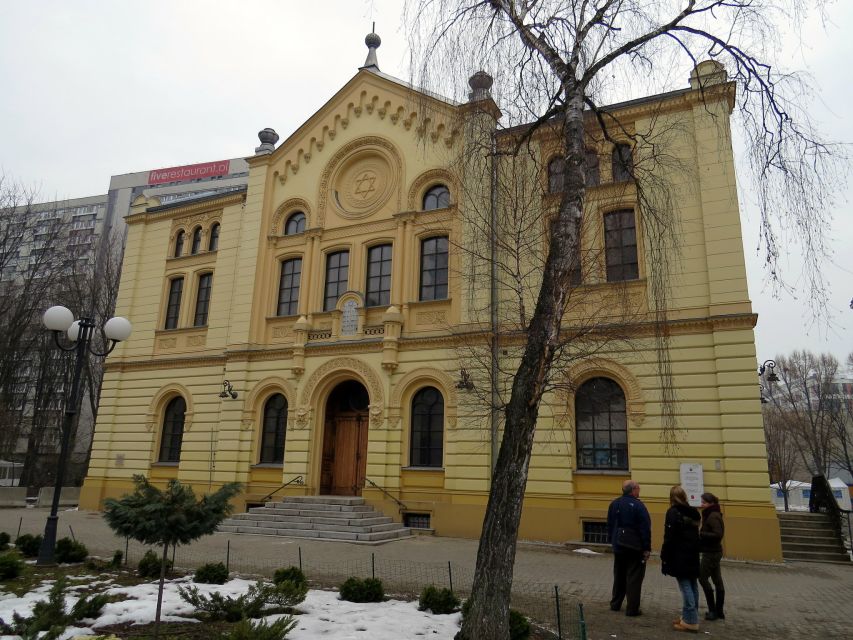
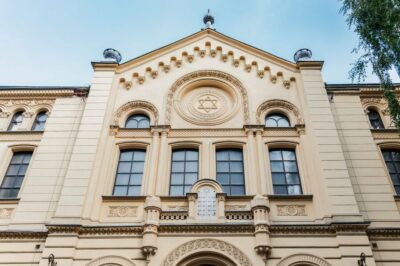
The tour ends with a stop at Nozyk synagogue, described as built in the Neo-Romanesque style. The guide also notes that it survived the Holocaust period.
This part is a useful counterweight to the memorial stops. You see a place of worship and community that endured, at least in part, and you understand how the city still holds physical proof of continuity.
If you like architecture, this stop is especially satisfying because it gives you a different lens on history. Not only what was destroyed, but what survived and what that means in a city that has been rebuilt and reinterpreted.
Timing Tips: Making the Most of 4 Hours (Without Feeling Crushed)
Four hours goes quickly, even with a private format. You will typically cover several stops tied to major WWII and prewar Jewish Warsaw themes, including Próżna Street, the ghetto heroes and route, Umschlagplatz, the cemetery, and Nozyk synagogue.
Here are simple ways to make the time feel calmer:
- Wear comfortable shoes, because you will be walking between sites.
- Bring a light layer if it is cool outside. You spend time standing at memorials.
- If any stop hits you harder than expected, tell the guide. A good private guide can adjust the pacing.
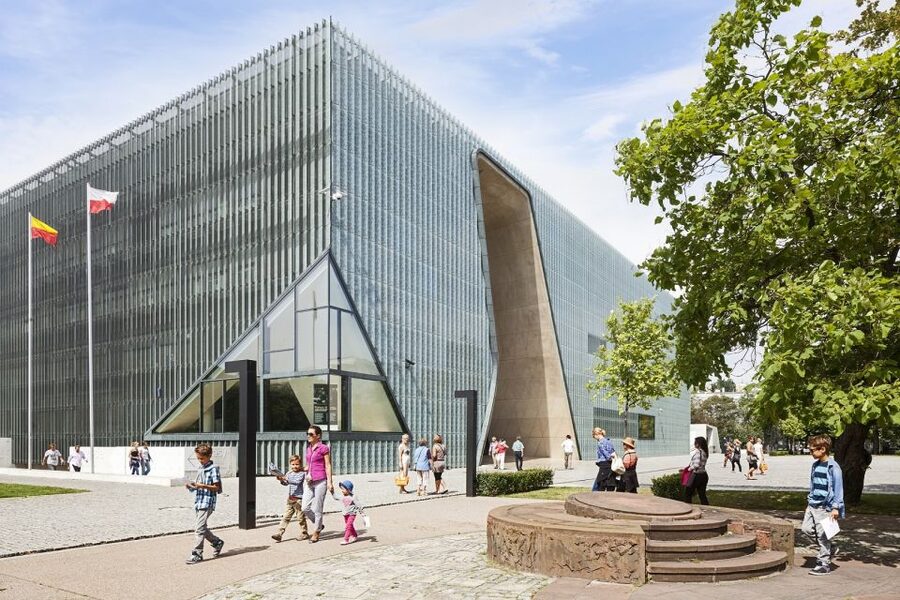
If you have more time, you can also connect the tour with the POLIN Museum of the History of Polish Jews. The tour description frames it as something to explore on your own after this, with your guide helping explain what else you can discover.
I like that approach. You get the street-level context first, then the museum can feel more focused instead of overwhelming.
Price, Value, and Who This Tour Fits Best
At $42 per person, this tour is priced as a midrange private experience. The value is strongest if you care about meaning and context. If you simply want photos and quick facts, you could build a self-guided route for less. But you would miss the guided connections that make the stops click.
You get:
- A local guide for 4 hours
- Transportation
- Hotel lobby pickup
- A private group setting
Entry or admission fees are not included. That means if a stop requires ticketed entry on the day you go, you should budget separately.
This tour is a great match for:
- People who want a structured route through Jewish Warsaw and the Holocaust memorial sites
- Anyone who appreciates a guide who can connect culture, religion, and WWII history
- Travelers who prefer a private pace over a larger group schedule
It might not be the best match for:
- People looking for a light, casual city stroll
- Travelers who want only upbeat cultural stops, with minimal emotional weight
Should You Book Warsaw Jewish Heritage for Your Trip?
If your goal is to understand Warsaw beyond famous monuments, I would book this. The route hits the key places that help you grasp the scale of prewar Jewish life, the creation and reality of the ghetto, and the memorial landscape shaped by deportation and loss.
I also think this tour works well as a foundation. After four hours, you will know where you are standing and why it matters, which makes any later museum time, like POLIN, more meaningful.
Just go in prepared for emotion. This is not a tour that treats the Holocaust like background noise. It treats it as history with names, boundaries, and consequences.
FAQ
How long is the Warsaw Jewish Heritage private tour?
The tour lasts 4 hours.
What is the price per person?
The price is $42 per person.
Is this tour private?
Yes, it is a private group tour.
What’s included in the price?
The price includes a local guide for 4 hours and transportation.
Are entry or admission fees included?
No, entry or admission fees are not included.
Do you get hotel pickup?
Yes. The guide waits for you at the hotel lobby with your name.
What languages is the live guide available in?
The live tour guide is available in Spanish, English, German, Russian, Polish, French, Italian, Portuguese.
What major stops are included in the 4-hour route?
You visit the ghetto area and key memorials, including the Monument to the Ghetto Heroes and the Umschlagplatz monument, then the Jewish Cemetery on Okopowa Street, a symbolic grave of Janusz Korczak, the Footbridge of Remembrance over Chłodna Street, fragments of the ghetto wall with iron boundary markers, and Nozyk synagogue. The tour also includes Próżna Street.
Can I continue to POLIN Museum after the tour?
The tour suggests you can explore POLIN Museum on your own after the tour if you have more time, with guidance from your tour leader on what you can discover.
Is free cancellation available?
Yes. You can cancel up to 24 hours in advance for a full refund.
Is there a reserve now, pay later option?
Yes. You can reserve now and pay later.
More Tour Reviews in Warsaw



Warsaw, Keep Looking
Jewish Heritage and Ghetto Routes in Warsaw

Recently written up around Warsaw


More Jewish Heritage and Ghetto Tours.
 ★ 4.7Schindler’s Factory & Ghetto Guided TourFrom $571,694 reviews
 ★ 4.9Jewish Quarter and Former Ghetto TourFrom $191,441 reviews
 ★ 4.9Bike Tour of Old Town, Jewish Quarter and the GhettoFrom $371,155 reviews
 ★ 4.7POLIN Museum of the History of Polish Jews TicketFrom $121,142 reviews
 ★ 4.8Kazimierz, Schindler’s Factory & Ghetto Guided TourFrom $81460 reviews
 ★ 5.0Full Bike Tour – the Old Town, Jewish Qtr & the Ghetto NEW BIKESFrom $35437 reviews
 ★ 4.9Warsaw Ghetto Private Walking Tour with Hotel PickupFrom $84369 reviews
 ★ 4.9Bike Tour of the Old Town, Kazimierz, and the GhettoFrom $26350 reviews
Also on these Poland lists