
REVIEW · WARSAW CITY TOURS
Warsaw Praga Guided Historical Walking Tour
Praga feels like a different Warsaw. This 2.5-hour guided walk takes you through Praga streets where industrial buildings, street art, and big-city faith meet everyday life. I like how it mixes what you see with why it matters, including the human side of neighborhood change, not just the pretty bits.
I also love the stop-by-stop pacing. The route is tight and logical, and the small group size (up to 10 people) makes it easier to ask questions and go at a comfortable speed, which guides like Olivia or Aga are praised for.
One drawback to consider is language expectations. The tour is offered in English, and other languages are only an option when available, so it pays to confirm what you booked.
In This Review
- Key things you will notice on this Praga walk
- Why Praga’s story is worth your time
- Price and value: $28.68 for a 2.5-hour guided route
- Where the walk starts and ends, and how to plan your timing
- Stop 1: Strzelecka 46, a quick Praga setup
- Stop 2: Centrum Praskie Koneser and the old vodka factory stories
- Stop 3: Ząbkowska Street, Praga’s favorite walking strip
- Stop 4: Praga Północ streets, street art, and old transport traces
- Stop 5: The Russian Orthodox Cathedral of St. Mary Magdalene
- Stop 6: Finishing at the Cathedral of St. Michael the Archangel and St. Florian
- What makes the guide experience feel different
- About the optional Polish Vodka Museum at 70 PLN
- How to get the most out of a 2.5-hour Praga walk
- Potential snags to know before you go
- Should you book this Warsaw Praga Guided Historical Walking Tour?
- FAQ
- How long is the Warsaw Praga Guided Historical Walking Tour?
- What does the tour cost?
- What language is the tour offered in?
- Where is the meeting point?
- Where does the tour end?
- How many people are in a group?
- Is the Polish Vodka Museum included?
- Do I get a mobile ticket?
- Is free cancellation available?
- Is the tour suitable for people with limited mobility, and are service animals allowed?
Key things you will notice on this Praga walk
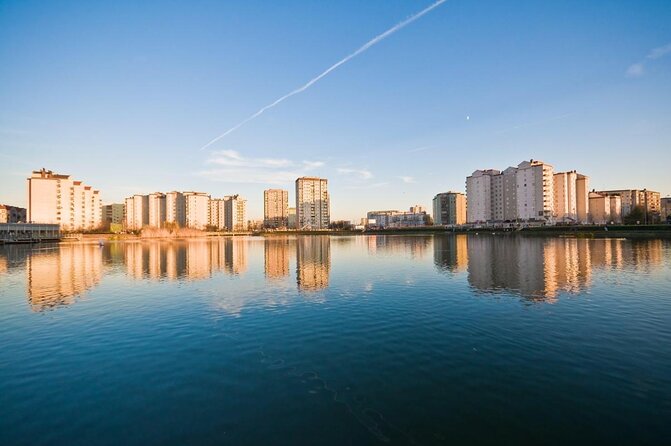
- Koneser area: the old vodka factory setting and stories tied to the industrial architecture
- Ząbkowska Street: a classic Praga stretch with cafés and historic buildings
- Street-art and movie-street details: Szwedzka Street, Stalowa Street (the street of films), and walls with famous street art
- Transit and transport history: the remains of a horse-drawn tram depot and other local landmarks
- Two cathedrals close together: the Russian Orthodox Cathedral of St. Mary Magdalene plus the finish at St. Florian and St. Michael the Archangel
Warsaw rebuilt itself twice over. Here is how else we saw it
- Warsaw: Chopin Concert in the Old Town
★ 4.8 · 2,287 reviews - Warsaw: Traditional Galar Cruise on The Vistula River
★ 4.6 · 1,640 reviews - Warsaw: Old Town Highlights Walking Tour in English
★ 4.7 · 1,516 reviews - Warsaw Concert: Chopin – Painted by Candlelights with Wine
★ 4.8 · 1,442 reviews
Why Praga’s story is worth your time
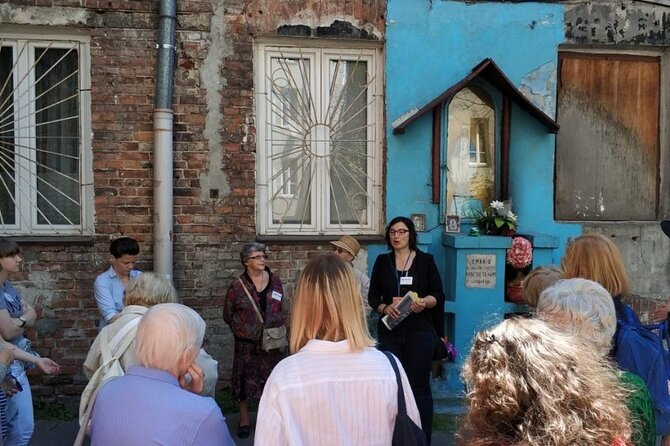
Warsaw has the famous postcard core, but Praga is where the city feels less staged. This walk focuses on the right-sized chunk of the district: enough time to understand the layers, without sprinting from one landmark to another. You get the sense of how Praga works day to day, while still learning the older background that shaped it.
The best part is the balance. You will see industrial past and religious landmarks, then shift to everyday streets like Ząbkowska. It is not just monuments on a map. It is also the living neighborhood around them, including the complicated topics that residents care about, like gentrification and displacement.
And because the group stays small, the guide can answer questions as you go. That matters in a district like Praga, where the “why” often needs a human explanation, not just a label on a wall.
Price and value: $28.68 for a 2.5-hour guided route
At $28.68 per person for about 2 hours 30 minutes, this is a solid deal for a guided walking tour in Warsaw. You are not paying extra for ticketed sights along the main route, since the listed stops have free admission on the walking itinerary.
What you are really buying is time and interpretation. Praga has a lot going on, and if you arrive with only a self-guided plan, you might miss connections between industrial buildings, street art, and the way communities changed over time. A good guide turns scattered sights into a readable story.
One thing to remember: the old vodka factory area includes an optional museum component, but the Polish Vodka Museum entrance is not included (70 PLN). If you want that museum time, plan for the extra cost.
Where the walk starts and ends, and how to plan your timing
You start at Strzelecka 46 (00-001 Warszawa). The tour finishes at the Cathedral of St. Michael the Archangel and St. Florian the Martyr, at Floriańska 3, 03-707 Warszawa. That ending spot is practical, because it puts you near public transportation options, so you can connect to the rest of your day without a long backtrack.
The tour is offered in English, runs roughly 2 hours 30 minutes, and has a maximum group size of 10. That is long enough for a proper neighborhood walk, but not so long that it becomes a endurance test.
If you like to avoid sold-out tours, book ahead. This one tends to be snapped up about a month in advance on average.
Stop 1: Strzelecka 46, a quick Praga setup
The meeting at Strzelecka 46 is more than a formality. You get a short introduction to Praga first, which helps you understand what you are about to see. It sets the tone for the district: industrial edges, old neighborhoods, and the ongoing tension between preservation and change.
This is where a guide can steer your attention. If you know what to look for early, later stops make more sense, especially around street art and historic architecture.
Below are the other Warsaw trips we have logged
- Warsaw: Old Town Guided Walking Tour★ 4.9 · 599 reviews
- Half-Day Polish Food Walking Tour with Guide and Dinner★ 4.5 · 381 reviews
- Warsaw: Warsaw Ghetto Private Walking Tour with Hotel Pickup★ 4.9 · 369 reviews
- Old Town Warsaw Walking Tour★ 4.5 · 333 reviews
- Warsaw: Jewish History Guided Walking Tour in English★ 4.7 · 324 reviews
Stop 2: Centrum Praskie Koneser and the old vodka factory stories
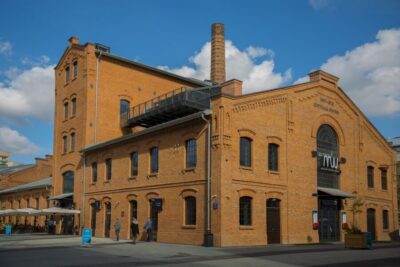
Next comes Centrum Praskie Koneser, the old vodka factory area. The key draw here is the setting itself: industrial architecture you can still recognize as part of the old production world. It is one of those places where the building tells part of the story before anyone speaks.
The guide’s job is to connect the architecture to human history. Expect the kind of tales that feel vivid and specific, including lighthearted details. The route also connects to the optional museum later, but the guided walk focuses on the neighborhood and the factory’s role in it, not just ticketed interiors.
If you are curious about spirits, you might want to keep your energy for the museum option nearby. Just remember, museum entrance costs extra.
Stop 3: Ząbkowska Street, Praga’s favorite walking strip
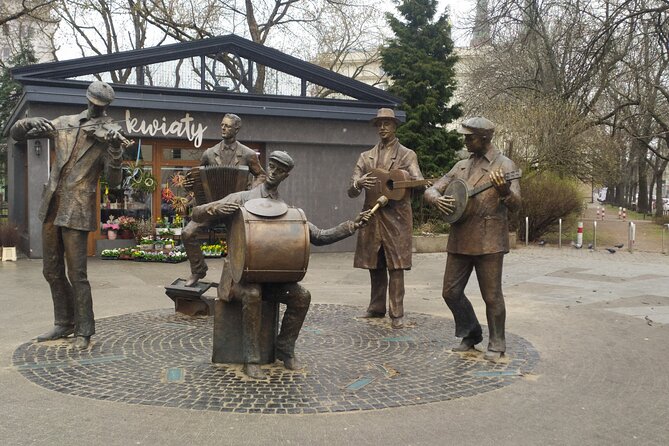
Then you walk down Ząbkowska, often described as one of Praga’s most popular streets. This is where the district shifts from industrial settings to daily life. You will see cafés, older buildings, and the kind of street layout that makes the neighborhood feel walkable and lived-in.
This stop is valuable because it gives context. After the factory atmosphere, Ząbkowska shows you what people actually do in this district now. It helps you connect history to present-day rhythm.
Also, it is a good moment to slow down. If you like photographing façades, doorways, and street textures, this is the stretch where you will naturally pause.
Stop 4: Praga Północ streets, street art, and old transport traces
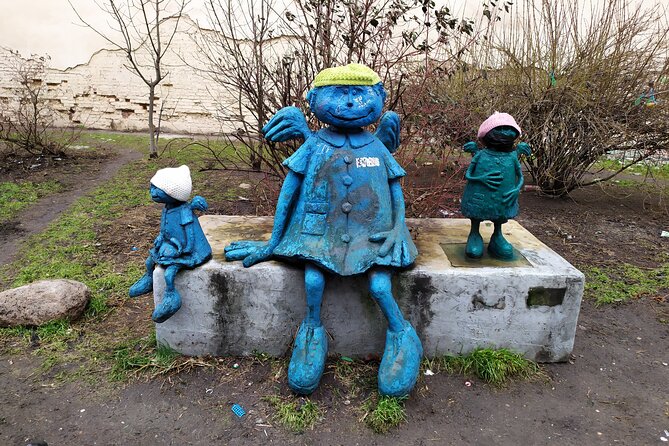
The longest portion of the walk runs through Praga Północ, where the guide threads multiple landmarks into one coherent story. You will pass:
- Szwedzka Street
- Konopacki Palace
- Walls with famous street art
- Stalowa Street, known as the street of films
- Remains of a horse-drawn tram depot
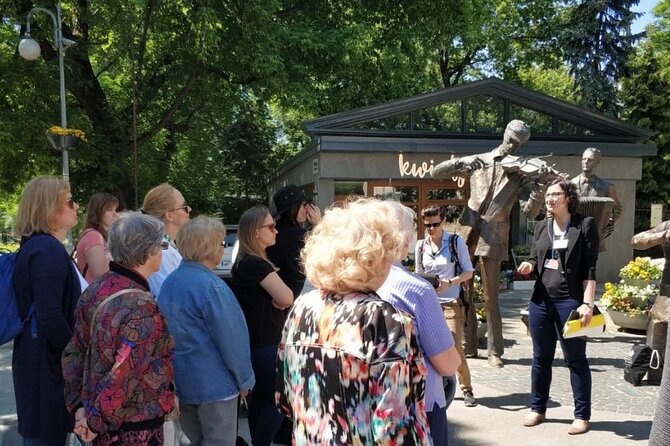
- The street band memorial
- The Cathedral of St. Florian and St. Michael the Archangel (seen on the way through, then revisited at the finish)
This part is where Praga’s “layer cake” feeling becomes real. The street art is not treated like decoration only. You get explanations tied to place, community, and public memory. The transport remains add another angle. Even when you cannot picture the original horse-drawn trams perfectly, seeing the traces helps you imagine how people moved before modern systems fully took over.
Stalowa Street being called the street of films is the kind of detail that makes you look differently at what is around you. You start noticing how a street’s identity can form through culture, not just geography.
And because the group size stays small, you can ask follow-up questions right here, when your brain is already engaged.
Stop 5: The Russian Orthodox Cathedral of St. Mary Magdalene
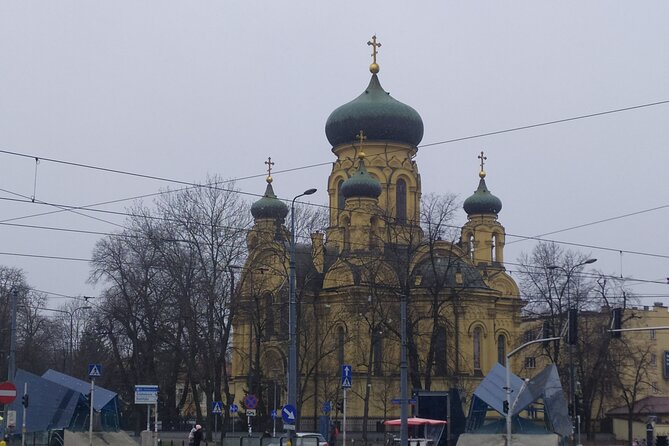
After street-level Praga, you step into a more explicitly religious landmark: Warsaw’s Metropolitan Cathedral of St. Mary Magdalene, a Russian Orthodox cathedral that is one of the remaining sites of its kind in Warsaw.
This stop matters because it shifts the story from district-level identity to wider historical forces. Warsaw has layers of different influences, and the survival of places like this is part of what makes the city’s history tangible.
Even if you are not a cathedral person, this is still worth the short stop. It is one of those places that changes how you understand what you have been walking through.
Stop 6: Finishing at the Cathedral of St. Michael the Archangel and St. Florian
The walk ends at the Cathedral of St. Michael the Archangel and St. Florian the Martyr. You get a final view of the St. Florian and St. Michael setting, with the day’s main themes wrapped up around this finish point.
It is also a practical finish. You can easily connect onward from here by tram, bus, and metro.
I like finishing at a place that is both meaningful and transit-friendly. It keeps the tour feeling like it belongs to the neighborhood rather than being an artificial loop.
What makes the guide experience feel different
The guides in this kind of tour are the difference between a walk and a story. The feedback for this tour repeatedly points to guides who are good at pacing, patient with questions, and able to explain big topics without turning them into lectures.
Two names come up often: Olivia and Aga. Both are praised for being able to tailor the walk to the group. One review highlights that the pace was flexible for a slow-moving family member. That tells you something important. This tour is not a constant stride. It is built for real conversation.
Olivia also gets credit for including the local perspective on dispossession and gentrification, rather than only focusing on improvements. That approach helps you avoid the common tourist trap in neighborhoods undergoing change. You see what is happening now and how people feel about it.
Another big win is that guides share practical recommendations for where to eat and shop after the tour. You are leaving with more than photos. You are leaving with ideas that fit Praga’s vibe.
About the optional Polish Vodka Museum at 70 PLN
The tour highlights Centrum Praskie Koneser as an old vodka factory setting. However, the Polish Vodka Museum entrance is not included and is listed at 70 PLN.
Here is the smart way to handle it: decide based on your interests. If you like industrial history and want deeper museum context, adding the museum can be a nice follow-on. If you prefer to stay focused on street-level stories and architecture, you can skip it and spend that time wandering Ząbkowska or stopping for a meal with what the guide recommends.
Either way, the guided portion still gives you the factory context. The museum is just the extra layer.
How to get the most out of a 2.5-hour Praga walk
A walking tour works best when you show up ready to look. I suggest you wear comfortable shoes and plan for uneven sidewalks, since this is an urban neighborhood walk.
Bring your curiosity, too. This itinerary includes industrial buildings, transport traces, and street art. If you ask even one or two good questions, the guide can often connect dots you would not catch alone.
Also, if your group has mobility needs, pick this tour deliberately. It is described as suitable for most travelers, and the pacing is known to be accommodating.
Finally, use the finish location to your advantage. Once you are at Floriańska, you can hop on transit and keep exploring, rather than ending the day stuck far from everything.
Potential snags to know before you go
Two issues come up in the real world for tours like this, and they are worth checking early.
Language. The tour is offered in English. Other language guides may be available only if booked that way and if they are available. If you need Spanish, for example, confirm what is actually scheduled in your booking messages before tour day.
Refund expectations. If something interrupts your attendance, refund outcomes can depend on timing and the operator’s process. One case mentioned partial refund handling after a last-minute issue, and another case involved disagreement about what happened around language. The takeaway is simple: message the operator quickly when plans change, and keep your booking confirmations handy.
Most likely, you will have no issues. This tour’s overall rating is strong, and the guide quality is the main reason people come back for more than one walk.
Should you book this Warsaw Praga Guided Historical Walking Tour?
If you want to see Praga beyond the obvious sights, this is a great pick. I would book it if you like walking with a guide who connects buildings, streets, and social change into one readable route. The small group size and the guide’s responsiveness to pace make it feel friendly, not rushed.
I would think twice only if you need a specific non-English language and you are not sure it will be available. For most people, English plus a guide who is skilled at explaining context is exactly what you want.
If you like neighborhoods where the story is still being written, this one is worth your time. You finish with a sense of Praga as a real Warsaw community, not a background set.
FAQ
How long is the Warsaw Praga Guided Historical Walking Tour?
It runs about 2 hours 30 minutes.
What does the tour cost?
The price is $28.68 per person.
What language is the tour offered in?
The tour is offered in English.
Where is the meeting point?
You meet at Strzelecka 46, 00-001 Warszawa, Poland.
Where does the tour end?
The tour ends in front of the Cathedral of St. Michael the Archangel and St. Florian the Martyr, Floriańska 3, 03-707 Warszawa.
How many people are in a group?
The tour has a maximum of 10 travelers.
Is the Polish Vodka Museum included?
No. Entrance to the Polish Vodka Museum is not included and costs 70 PLN.
Do I get a mobile ticket?
Yes. The tour includes a mobile ticket.
Is free cancellation available?
Yes. You can cancel up to 24 hours in advance for a full refund.
Is the tour suitable for people with limited mobility, and are service animals allowed?
The tour is described as suitable for most travelers and it allows service animals. It is also near public transportation.
More Tours in Warsaw


More Tour Reviews in Warsaw


Warsaw, Keep Looking
Recently written up around Warsaw

More Warsaw City Tours.
 ★ 4.8Chopin Concert in the Old TownFrom $262,287 reviews
 ★ 4.6Traditional Galar Cruise on The Vistula RiverFrom $201,640 reviews
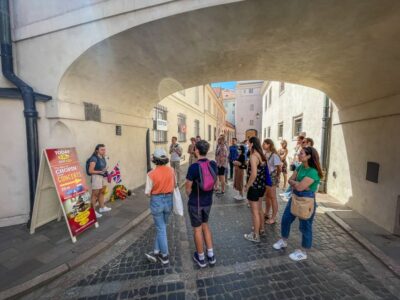 ★ 4.7Old Town Highlights Walking Tour in EnglishFrom $261,516 reviews
 ★ 4.8Warsaw Concert: Chopin – Painted by Candlelights with WineFrom $251,442 reviews
 ★ 3.6City Sightseeing Hop-On Hop-Off Bus TourFrom $411,415 reviews
 ★ 4.7POLIN Museum of the History of Polish Jews TicketFrom $121,142 reviews
 ★ 5.0#1 Pub Crawl Warsaw with Optional Premium 1 Hour Open BarFrom $28790 reviews
 ★ 4.6Polish Vodka Museum Tour with TastingFrom $22788 reviews
Also on these Poland lists