
REVIEW · RETRO FIAT AND VINTAGE BUS TOURS
Warsaw: WWII Private Tour by Retro Minibus with Hotel Pickup
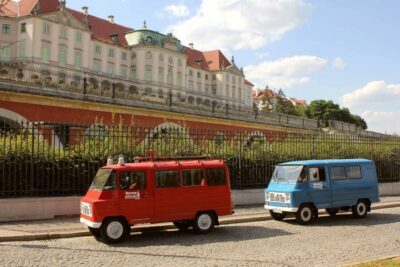
Warsaw hits harder when you ride in time. This WWII-focused private tour uses a retro Żuk minibus plus expert storytelling to connect major sites with the political events behind them. I especially like how the guide links the German invasion and Soviet occupation to everyday life in Warsaw, and I like the way you compare current streets with archival photographs. The main drawback to plan for is that it is a fast, three-hour run with walking at each stop, and the vintage minibus is not air-conditioned.
You get hotel pickup within 3 km of the city center (and it can be worth meeting closer in if your hotel is farther out, since transfer time counts). The result is a tight route that feels focused, not random, and it works well if you want context and emotional weight without losing your way through a self-guided museum sprint.
In This Review
- Key things that make this WWII minibus tour worth it
- A WWII Story You Can Read on Warsaw’s Streets, 3 Hours at a Time
- From 1939 to Dual Occupation: The Setup That Makes Everything Else Make Sense
- The Ghetto Stops: Wall Fragments, Waliców Street, and Chłodna’s Wooden Bridge
- Muranów on Wartime Rubble: Remembrance, POLIN Area, and 1943’s First Clashes
- Soviet Crimes and Polish Suffering: Deportations, Katyń, and the East
- The Warsaw Uprising of 1944: The Last Bid for Independence and the City’s Devastation
- Guides That Can Make Heavy Facts Human: Konrad, Lucas, and Adam
- Price, Comfort, and Practicalities: Is It Good Value?
- Who This Tour Suits Best, and Who Should Skip It
- Should You Book This WWII Private Tour in Warsaw?
- FAQ
- How long is the Warsaw WWII private tour?
- Is hotel pickup included, and how far does it go?
- What’s included in the price?
- Is the tour private, and what language is it in?
- Are there age or child height restrictions?
- Can I cancel and get a refund?
Key things that make this WWII minibus tour worth it
- A story-driven route that moves from 1939 chaos to occupation to resistance.
- Ghetto Wall fragments and memorial sites, not just a photo stop.
- Waliców Street unrestored tenement and the wooden bridge over Chłodna Street, explained in context.
- Muranów on wartime rubble, with remembrance around the Ghetto Heroes area.
- Soviet repression coverage including deportations and the Katyń massacres through local monuments.
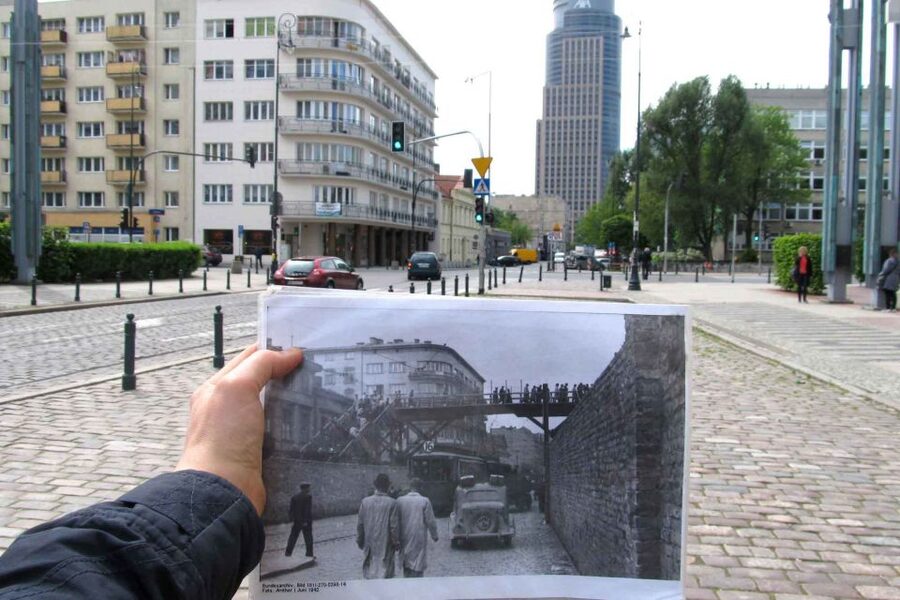
- Archival photos paired with today’s streets, so history has sharper edges.
More wartime history routes we have written up in Warsaw
- World War 2 in Warsaw walking tour in English
★ 4.7 · 237 reviews - Warsaw for WWII Buffs – private tour with hotel pickup
★ 5.0 · 166 reviews - From Warsaw: Tour of the Wolf’s Lair, Hitler’s HQ by Car
★ 4.7 · 116 reviews - Majdanek Concentration Camp & Lublin Full Day Private Tour from Warsaw
★ 5.0 · 70 reviews
A WWII Story You Can Read on Warsaw’s Streets, 3 Hours at a Time
This is the kind of tour where the city stops being a postcard backdrop and starts acting like evidence. You spend a compact three hours moving between the places where Warsaw’s wartime story happened, then you connect those locations to the larger forces that shaped them: Nazi occupation in one direction, Soviet repression in another.
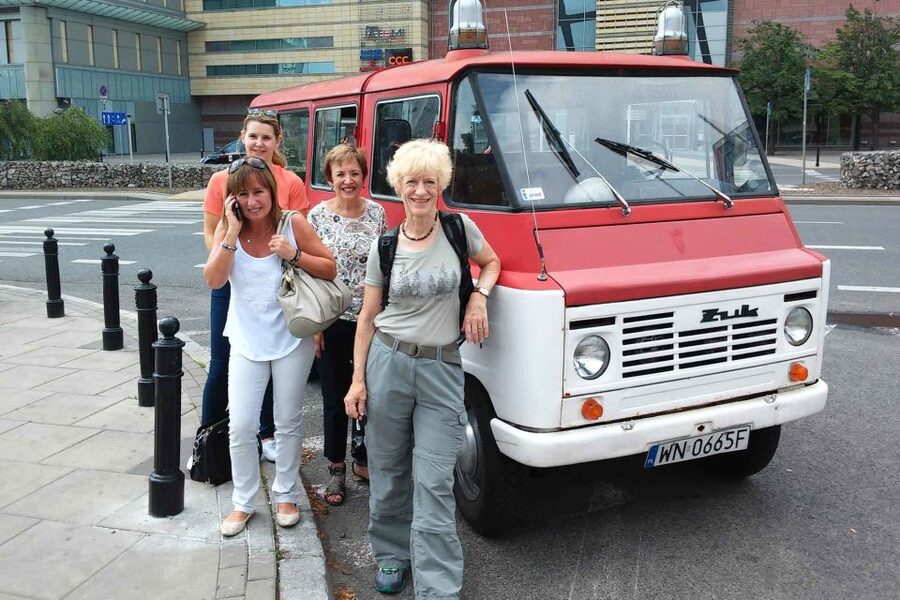
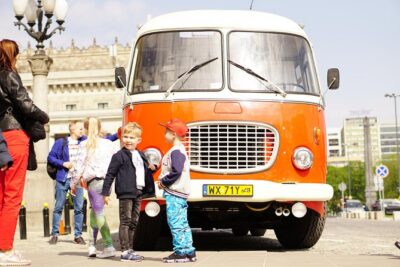
The format matters. You are traveling by retro communist minibus for the transfers, then doing walking segments at each stop. That means you can cover more ground than a purely on-foot route, but you still get enough time outside to actually see details like building damage, memorial placement, and the physical remnants that survived.
A private group also helps you keep the pace human. You are not just herded along. The guide can set context, then slow down at the locations that need it most. The emotional tone is serious, but the way it is told is practical: what happened, where it happened, and how it shaped daily life.
From 1939 to Dual Occupation: The Setup That Makes Everything Else Make Sense
Most Warsaw sightseeing tells you what is there. This tour starts with why it exists. Before you reach the central wartime landmarks, your guide sets the international situation before 1939, then explains the German invasion of Poland and the parallel Soviet occupation of eastern territories.
That framing is not academic trivia. It changes how you read the rest of the route. When you understand that Warsaw was being squeezed from more than one political direction, you also start to understand why resistance looked different, why fear and survival dominated daily decisions, and why some choices were limited to what people could realistically risk.
You also get a clearer picture of how these conditions fueled one of Europe’s largest resistance movements. It is not just about bravery in the abstract. It is about networks, pressure, and the brutal math of occupation.
The Ghetto Stops: Wall Fragments, Waliców Street, and Chłodna’s Wooden Bridge
The tour’s center of gravity is Warsaw’s Jewish tragedy during the Holocaust. Before the war, the city was home to roughly 300,000 Jews. In 1940, Nazi authorities created the Warsaw Ghetto and imprisoned hundreds of thousands of people in inhuman conditions.
You do not stay in generalities. You see a preserved fragment of the former Ghetto Wall. Even if you have read about the ghetto before, a wall segment like this hits differently because it is not a concept, it is material.
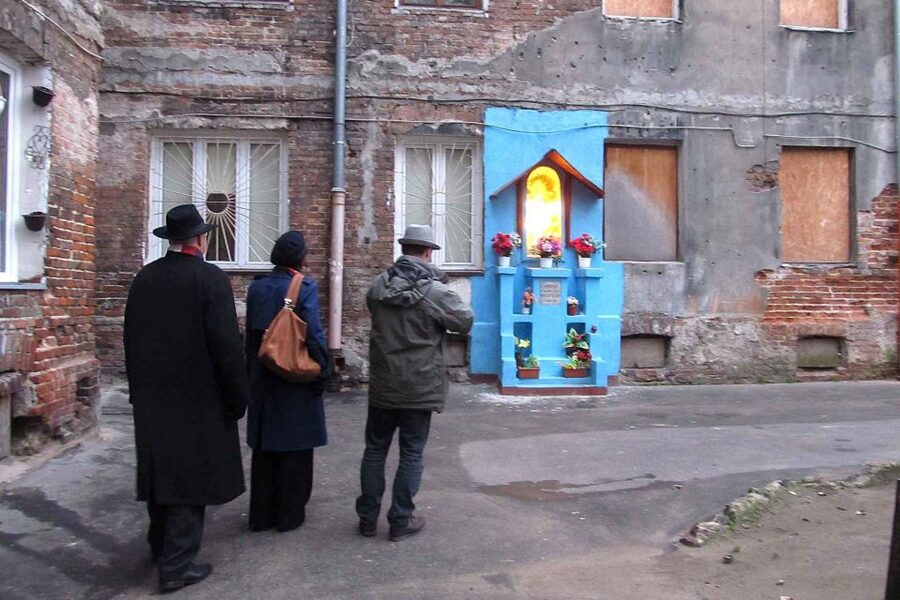
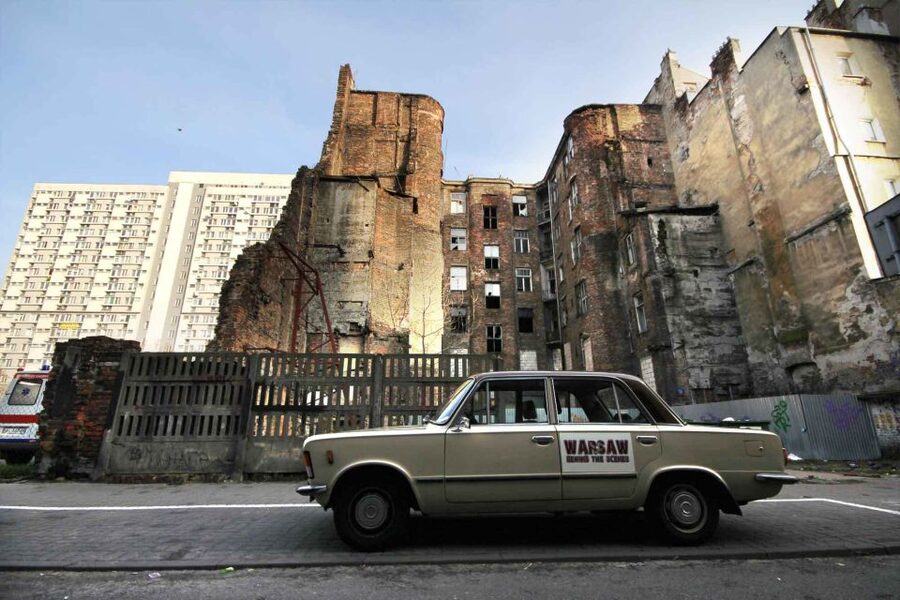
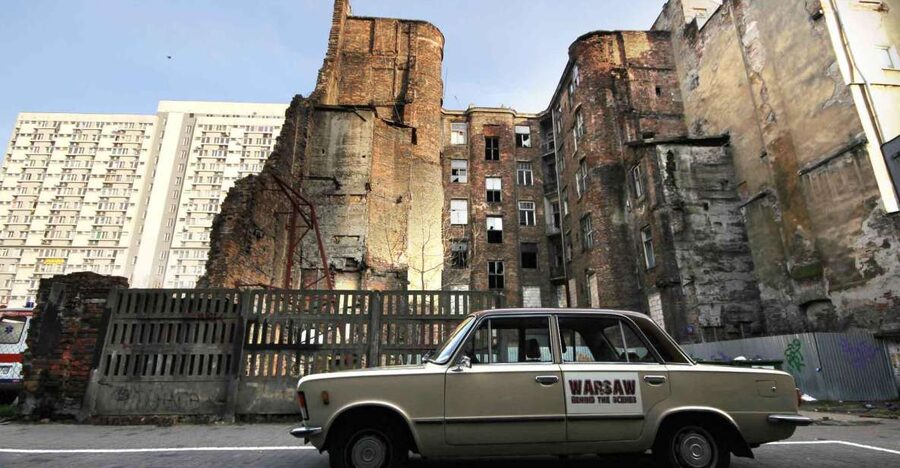
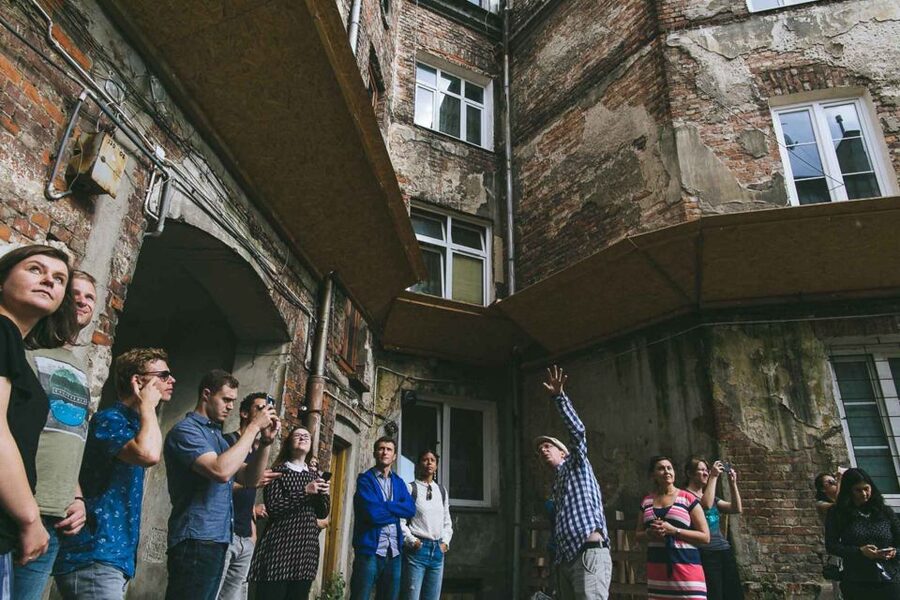
From there, the route goes to Waliców Street for one of the last ruined tenement houses left intentionally unrestored. That matters for two reasons. First, it keeps the destruction visible. Second, it prevents the site from becoming a sanitized reenactment.
Nearby, you also learn about the wooden ghetto bridge over Chłodna Street. The key detail here is design: the bridge was built high above street traffic to connect sealed sections of the ghetto. That is the kind of fact that makes occupation feel real in a new way. You start seeing infrastructure as control.
If you are sensitive to harsh topics, pace yourself. There is a lot of emotional information in a short time, and it is okay if you take an extra moment at the wall fragment to regroup.
Muranów on Wartime Rubble: Remembrance, POLIN Area, and 1943’s First Clashes
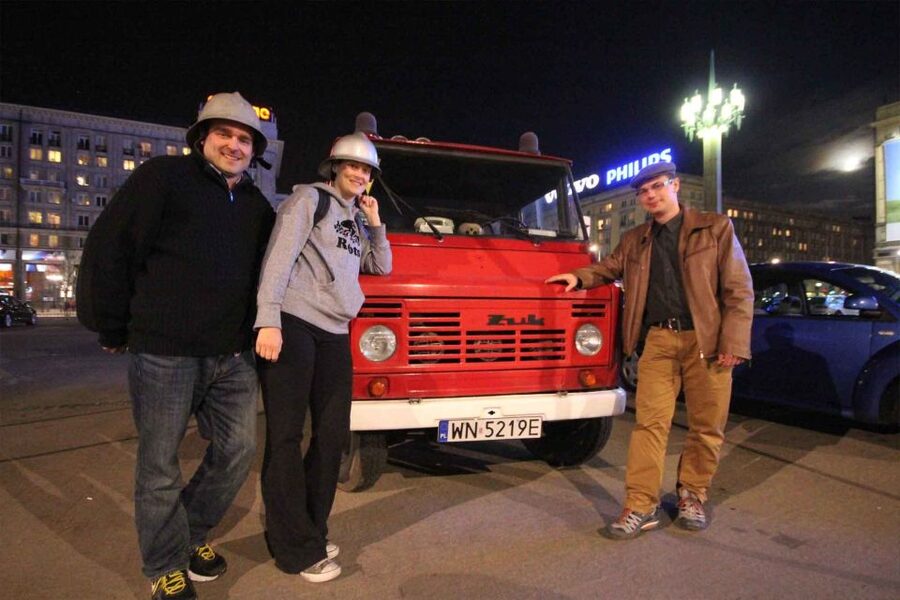
Next comes Muranów, a district constructed entirely on wartime rubble. That is a hard phrase, but it is also a strong way to explain what reconstruction looked like after mass destruction. Instead of treating the neighborhood as something that simply existed, you learn it was built on the aftermath.
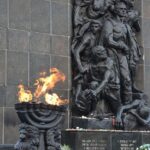
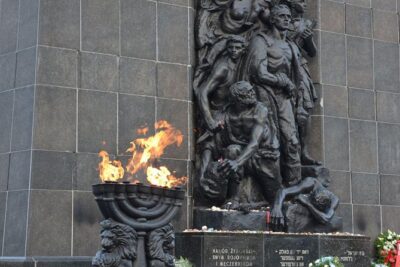
You visit the area around the Monument to the Ghetto Heroes, then you are in the vicinity of the POLIN Museum of the History of Polish Jews. The tour also connects the location to the site of the first armed clashes of the 1943 Ghetto Uprising.
That connection is where the tour earns its keep. Many tours touch on uprisings like bullet points. Here, the guide ties the uprising to specific places where resistance began and escalated. You also get the sense that this area is more than a museum zone. Today, it is used for remembrance and dialogue, so the ground feels active, not only historical.
There is one practical thing I suggest: bring your questions. If you wonder how daily life shifted from ghetto confinement to organized resistance, or what changed between early clashes and later events, your guide can usually make the timeline click.
Warsaw rebuilt itself twice over. Here is how else we saw it
- Warsaw: Chopin Concert in the Old Town★ 4.8 · 2,287 reviews
- Warsaw: Traditional Galar Cruise on The Vistula River★ 4.6 · 1,640 reviews
- Warsaw: Old Town Highlights Walking Tour in English★ 4.7 · 1,516 reviews
- Warsaw Concert: Chopin – Painted by Candlelights with Wine★ 4.8 · 1,442 reviews
- Warsaw: City Sightseeing Hop-On Hop-Off Bus Tour★ 3.6 · 1,415 reviews
Soviet Crimes and Polish Suffering: Deportations, Katyń, and the East
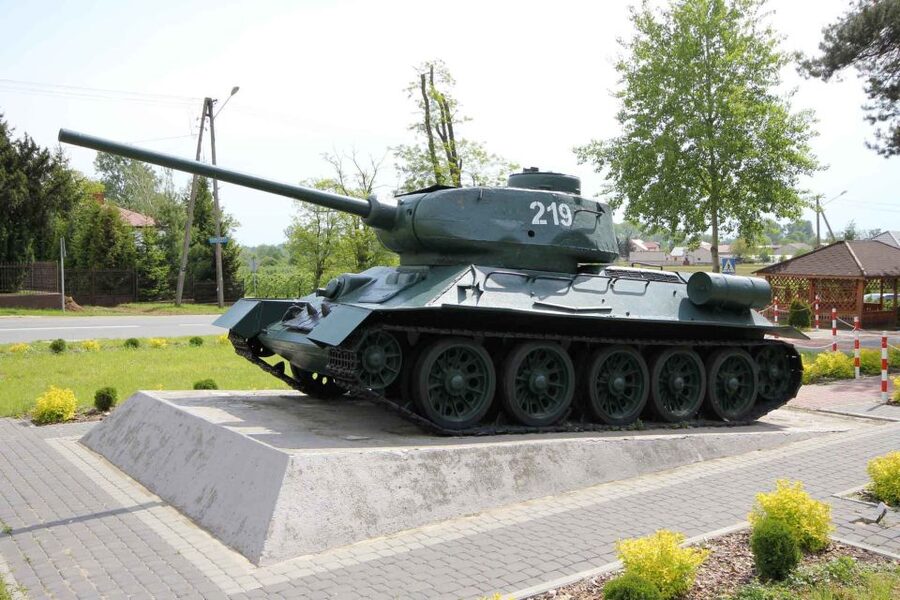
The tour does not stop at Nazi crimes. It also covers Soviet repression of Polish citizens, including mass deportations to Siberia and the Katyń massacres.
You see this commemorated through local monuments, including the Monument to the Fallen and Murdered in the East. Including this part of the story is important, because it stops the tour from presenting World War II in one simplified storyline.
Even within a three-hour tour, the goal here is balance and clarity: you learn that Poland’s wartime suffering was not limited to one occupying force. That context helps you understand why postwar years could bring another wave of fear and political change, not freedom.
For many visitors, this is also the portion that turns background knowledge into real emotional weight. You might know the names. You do not always know how close remembrance is to everyday Warsaw streets.
The Warsaw Uprising of 1944: The Last Bid for Independence and the City’s Devastation
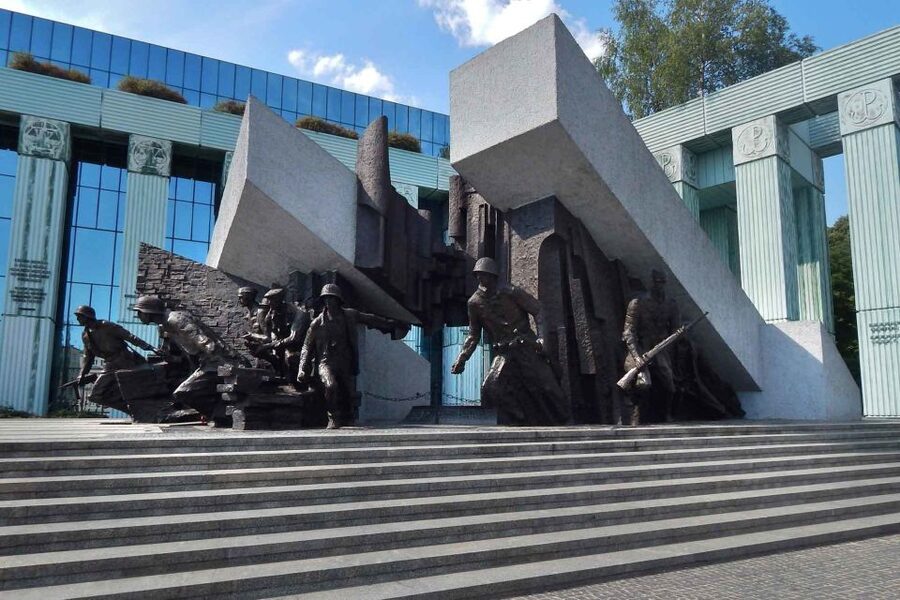
The final chapter focuses on the Warsaw Uprising of 1944, described as the city’s last attempt to regain independence before the arrival of the Red Army. Your guide explains how the uprising ended, then moves into the aftermath.
After the defeat, Nazi forces deliberately destroyed most of Warsaw. You also learn that the Soviet army entered the ruins in January 1945, beginning a new political era. That sequence is essential, because it explains why liberation did not automatically feel like an uncomplicated turning point.
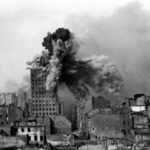
As you move through these closing moments, the archival photographs you have been using as reference points become more powerful. You compare wartime images with today’s streets and you see the scale of destruction without guessing. It turns memory into a visual comparison you can actually track.
This tour is not designed to make you feel numb. It is designed to make you see patterns. The city’s visible scars connect to the political choices people faced, then to the consequences that followed.
Guides That Can Make Heavy Facts Human: Konrad, Lucas, and Adam
The biggest reason this tour earns a strong rating is the quality of the guide. On confirmed departures, Konrad stood out for being funny and kind, while still handling serious history with the respect it deserves. Lucas was praised as an engaging historian and storyteller, the kind who can connect details without losing the thread. Adam was another guide recognized for bringing a lot of facts and making the route feel easy to follow.
This matters more than it sounds. WWII history has a way of becoming a list of dates. A good guide keeps it readable, ties it to places you can stand in front of, and adjusts the pace so you can actually take it in.
If you are traveling with teens or mixed ages, the storytelling also helps. One of the guides was able to strike up a conversation even with a silent teenager, which tells you the approach can stay flexible.
Price, Comfort, and Practicalities: Is It Good Value?
At $165 per person for a three-hour private tour with hotel pickup, the price can feel steep until you account for what you get. You are paying for a professional English-speaking local guide and a retro minibus that does real work, meaning transport plus a more “of-the-era” travel feel than a standard van.
You also get a structure that is hard to replicate well on your own. The route is tight, and the key sites are explained with context that connects the ghetto, uprisings, and Soviet repression into one coherent story.
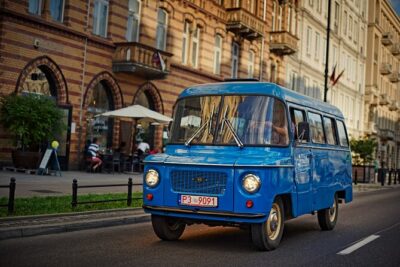
Comfort details are worth knowing upfront. The vehicles are vintage, so they may not have air-conditioning, and some may not have seat belts even though that is permitted for historic vehicles. In winter, the minibus has heating. Also, there are no long, food-pause breaks built in, because food and drinks are not included.
A few practical tips that can make your day smoother:
- Wear comfortable shoes, because there are walking segments at each stop.
- Dress for weather. You are outside for memorial areas and ghetto wall sights.
- Keep luggage minimal. Large bags and luggage are not allowed.
- Think about your pickup spot. Pickup and drop-off within 3 km is included, but transfer time counts toward the tour duration.
Who This Tour Suits Best, and Who Should Skip It
This tour is a strong fit if you want more than a “see the sights” overview. It is especially good for people who like context and can handle emotional subject matter thoughtfully.
It is also a solid choice if you are interested in Jewish history, Polish resistance, and the darker sides of WWII that are sometimes skimmed in shorter tours. The route covers the Warsaw Ghetto, both wartime uprisings you are told about, and Soviet crimes including Katyń.
On the other hand, it is not suitable for children under 15. It is also not designed for people who want minimal walking or who get uncomfortable in un-air-conditioned vintage vehicles. Finally, unaccompanied minors are not allowed.
If you are traveling with kids, there is a height rule too. The tour can be booked instantly online for adults and children over 150 cm. For a child under 150 cm, you need to contact the operator in advance to check seat booster availability, because seat boosters are mandatory under Polish law.
Should You Book This WWII Private Tour in Warsaw?
I think you should book it if you want your Warsaw experience to have meaning, not just landmarks. The tour is built around specific wartime sites, and the guide uses archival photographs to keep the story anchored to what the city used to look like.
It is also a good bet if you care about structure. Many history tours feel scattered. Here, the narrative moves from pre-1939 tension to German invasion and Soviet occupation, then onto the ghetto, resistance uprisings, Soviet repression, and the final destruction and political shift after 1945.
Skip it if you are looking for a relaxing sightseeing stroll, or if you are not ready for heavy topics in a compact three-hour window. Also, if your hotel is outside the 3 km comfort zone, you may want to consider meeting closer to the center to avoid spending too much of the tour time in transit.
FAQ
How long is the Warsaw WWII private tour?
The tour lasts 3 hours.
Is hotel pickup included, and how far does it go?
Yes. Pickup and drop-off are included within a 3 km radius of the city center. Pickup transfer time is counted in the total tour duration.
What’s included in the price?
The price includes a professional English-speaking local guide and transportation by retro communist minibus. Food and drinks are not included.
Is the tour private, and what language is it in?
It is a private group tour with a live English-speaking guide.
Are there age or child height restrictions?
It is not suitable for children under 15. Booking is instant online for adults and children over 150 cm. If a child is under 150 cm, you must contact the operator in advance about seat booster availability.
Can I cancel and get a refund?
You can cancel up to 24 hours in advance for a full refund, and free cancellation is available.
Vintage Rides Around Warsaw

Warsaw, Keep Looking


Wartime History in Warsaw
Recently written up around Warsaw

More Retro Fiat and Vintage Bus Tours.
 ★ 5.0Private Tour: Warsaw City Sightseeing by Retro FiatFrom $108562 reviews
 ★ 5.0Discover the Dark Side of Warsaw in Praga District by Retro BusFrom $42327 reviews
 ★ 4.9Nowa Huta Guided Tour in Vintage CarFrom $75277 reviews
 ★ 4.52.5-Hour Dark Side – Praga District by a Retro BusFrom $41248 reviews
 ★ 5.0Private Tour: Warsaw’s Jewish Heritage by Retro FiatFrom $108208 reviews
 ★ 5.0Warsaw City Sightseeing in a Retro BusFrom $42196 reviews
 ★ 5.0Private Historical Tour of Warsaw by a Retro Fiat with PickupFrom $108190 reviews
 ★ 4.9Warsaw Must-Sees: 4-Hour Private Tour by Retro FiatFrom $105123 reviews
Also on these Poland lists