
REVIEW · JEWISH HERITAGE AND GHETTO TOURS
Warsaw Uprising Museum (1944) + POLIN Museum : SMALL GROUP /inc. Pick-up/
A half-day that hits hard and then teaches. Warsaw is a living story, and this small-group route links two museums that explain the city from different angles, with hotel pickup and admission tickets included.
I like how the Warsaw Uprising Museum turns history into an experience. You do not just read panels, you get sounds, images, and even a short 3D simulation that shows what Warsaw looked like after the fighting. One thing to consider: this trip is more “transport plus audio guidance” than a deep, live lecture, so if you want a dedicated guide talking non-stop, you may want a different format.
In This Review
- Key points at a glance
- Two Warsaw museums in one focused half-day
- The price, and what you get for it
- Warsaw Uprising Museum: a 1944 time machine
- What I recommend inside
- A possible drawback to flag
- POLIN Museum: where centuries of Jewish life become personal
- Time management tip
- Door-to-door pickup and small-group size, the real convenience win
- If you are wheelchair using
- Audio guides: how to use them without getting overwhelmed
- Who this tour fits best
- Should you book this Warsaw Uprising Museum plus POLIN combo?
Key points at a glance
- Door-to-door car or van pickup means less hunting and fewer taxi hassles
- Tickets are included for both the Warsaw Uprising Museum and POLIN
- Audio guides come with the tour, in many languages including English and options like Hebrew and Yiddish
- A focused 4-hour loop keeps you from wasting time between two major sites
- The Uprising Museum uses multimedia like sounds, 1000 exhibits, and a 5-minute 3D flight simulation
- POLIN blends personal stories with media features like a virtual library and hands-on style exhibit elements
Further Jewish heritage and ghetto routes documented in Warsaw
- Warsaw: POLIN Museum of the History of Polish Jews Ticket
★ 4.7 · 1,142 reviews - Warsaw: Warsaw Ghetto Private Walking Tour with Hotel Pickup
★ 4.9 · 369 reviews - Warsaw: Jewish History Guided Walking Tour in English
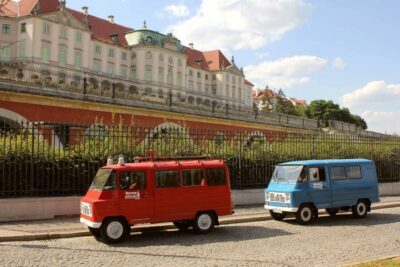
★ 4.7 · 324 reviews - Private Tour: Warsaw’s Jewish Heritage by Retro Fiat
★ 5.0 · 208 reviews
Two Warsaw museums in one focused half-day
Warsaw can feel big, and museum time can vanish fast. This is the rare plan that stays practical: roughly 4 hours total, small group size, and round-trip pickup so you spend your energy inside the museums, not in the street trying to coordinate transit.
I also like that the schedule is balanced. You get 1 hour 15 minutes at each stop. That is enough time to see what matters, use the audio guide at a sensible pace, and still have room to linger without turning the whole day into a sprint.
And yes, it is intense. Both places deal with real loss, real identity, and real history. If you come ready for that emotional weight, the payoff is huge.
The price, and what you get for it
At about $114.28 per person, this is not a budget-only outing. But it is not just “a ride.” Your ticket cost for both museums is included, plus audio guides, plus door-to-door transport by car or van, plus a driver or coordinator to help you through the handoff between places.
Here is how I would think about value:
- If you like efficiency, you are paying to eliminate the friction: booking museum entries, figuring out the best transit route, and timing everything so you arrive without stress.
- If you like to wander independently, you can potentially save money by doing it all on your own. Some people prefer a taxi and buying tickets directly, then using the audio guides when they want. The tradeoff is that you manage everything.
For most visitors, the “included tickets plus pickup” structure is what makes this good value. You get two top-tier Warsaw museums in one compact plan, without turning the day into logistics.
Warsaw Uprising Museum: a 1944 time machine
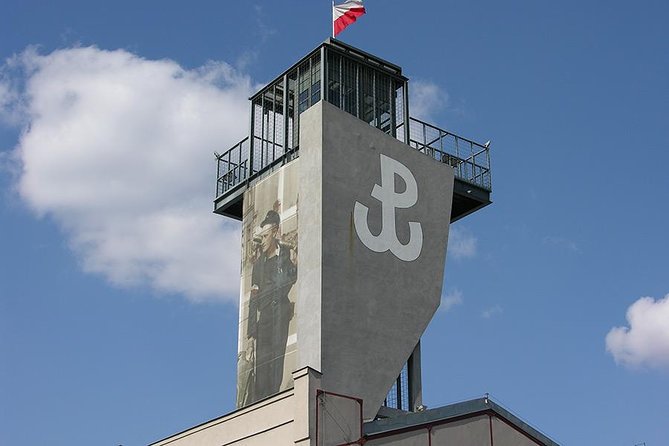
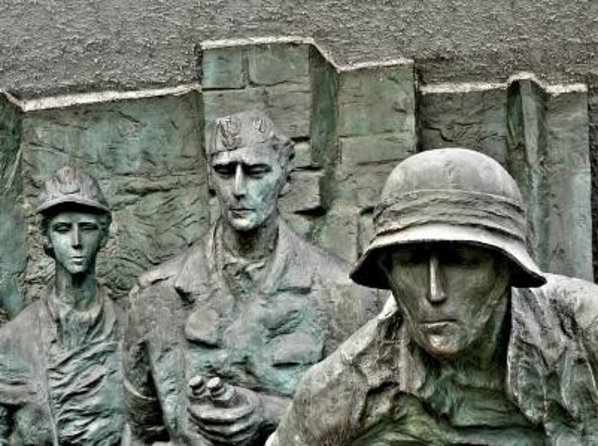
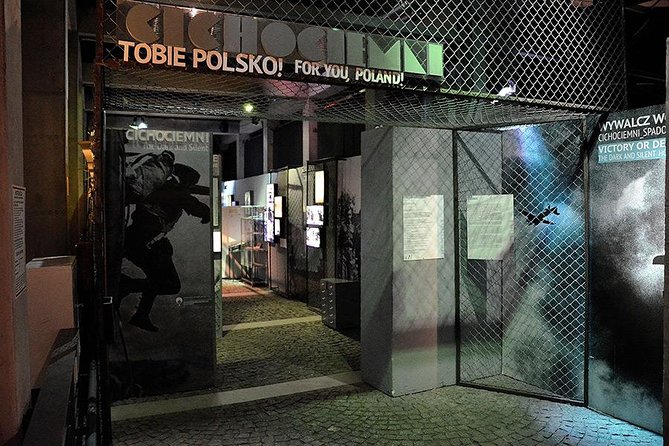
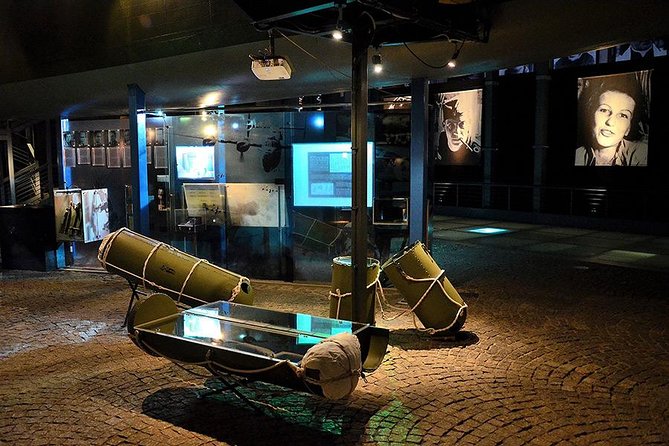
This stop carries the weight of its subject immediately. The Warsaw Uprising Museum is built to show 1944 as a lived reality, not a distant textbook chapter. Instead of quiet rooms full of only text, you move through phases and moments presented with images and sounds, and the museum leans hard into atmosphere.
Here are the concrete elements that make it more than a standard visit:
- You can see over 1000 authentic exhibits, plus about 1500 photographs and movies.
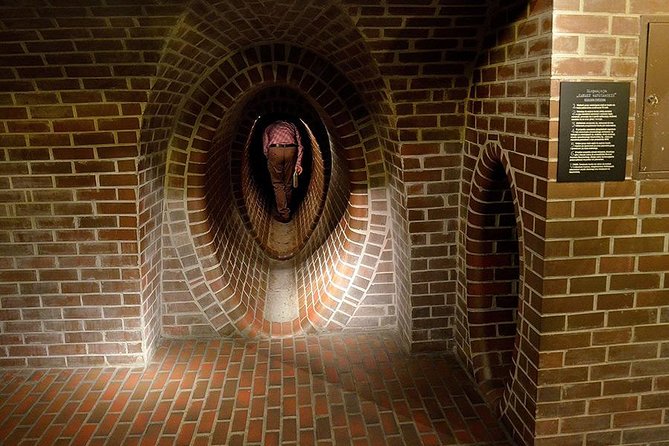
- There is a 5-minute 3D simulation that shows a flight over demolished and desolate Warsaw.
That 3D segment is short, which is good. You are not stuck watching something long. But it is memorable because it ties the story to physical space, the way a city looks after it has been broken.
What I recommend inside
Go in expecting emotions, then plan your energy. Use the audio guide, but do not feel forced to absorb every label at full speed. If you try to read everything, you will burn through your 1 hour 15 minutes fast.
Also, give yourself a moment to pause between “phases.” The museum is structured around the sequence of events. When you let that sequence land, the big question in the exhibition becomes clearer: what drove people to rise, and what did the cost of that hope look like afterward?
More wartime history routes we have written up in Warsaw
- World War 2 in Warsaw walking tour in English★ 4.7 · 237 reviews
- Warsaw for WWII Buffs – private tour with hotel pickup★ 5.0 · 166 reviews
- From Warsaw: Tour of the Wolf’s Lair, Hitler’s HQ by Car★ 4.7 · 116 reviews
- Majdanek Concentration Camp & Lublin Full Day Private Tour from Warsaw★ 5.0 · 70 reviews
- Wolf’s Lair Private Day Trip from Warsaw★ 5.0 · 50 reviews
A possible drawback to flag
This is not positioned as a guided walkthrough where a person talks continuously from room to room. You will have an audio guide, plus assistance from the coordinator for the ticket process and entry, but the museum’s power comes from its own multimedia storytelling. If you want someone narrating every moment in real time, you might feel like the human commentary is light.
POLIN Museum: where centuries of Jewish life become personal
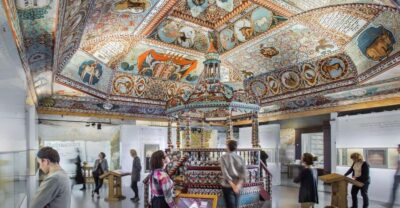
After the Uprising Museum, POLIN feels like a shift in tone, but not in seriousness. POLIN is the Museum of the History of Polish Jews, and it frames the story across many centuries, showing how Jewish communities shaped Polish culture, economy, and science.
What makes POLIN work so well is how it balances big history with human details. You are not only learning dates and events. You are learning how people lived, how communities interacted, and how culture moved back and forth between Polish and Jewish worlds.
Key things you can expect:
- The museum uses multimedia exhibits, including a virtual library.
- In that virtual library, you can view multimedia presentations of works connected to Hebrew and Yiddish literature, including Talmud and other religious, philosophical, and moral texts.
- There is a hands-on style option where anyone can print a title page from a 16th-century book on a press.
- In more traditional gallery spaces, you meet family and neighborly relations and explore the Jewish-Christian relationship.
If you care about seeing history as daily life, POLIN is built for you. It gives you context for how communities lived together for hundreds of years, and how cultures intertwined.
Time management tip
Because you have about 1 hour 15 minutes, pick a few paths instead of trying to see everything. Start with the exhibits that match what you want to understand most: community life, literature, or relationships. Then use the audio guide to connect the dots.
If you are sensitive to the emotional tone of historical loss, you will still find POLIN educational and grounding rather than purely bleak. It is about survival, creativity, and contribution as much as it is about hardship.
Door-to-door pickup and small-group size, the real convenience win
This tour is small group capped at 15. That matters more than you might think when you are going between two major attractions with similar entry procedures. Smaller groups usually mean less waiting around, less crowding during pickup, and fewer headaches when you arrive at the same time slot.
The biggest practical win is the door-to-door transport. You do not ride a bus. The plan uses a car or van, which typically makes the street-level experience easier, especially if your hotel is in a busy area.
Pickup also works like this: you share your hotel or apartment address when you book. On the day of the trip, the coordinator or driver waits before you enter the building with a card showing your name and surname. That detail helps a lot, because in Warsaw you can lose time simply finding the correct spot outside your entrance.
If you are wheelchair using
The tour notes wheelchair accessibility. Since transport is by car or van and both stops are major sites, this is often a safer bet than trying to cobble together multiple independent transit legs.
Audio guides: how to use them without getting overwhelmed
Audio guides are included, in English and many other languages. The language lists provided are extensive and include options such as Hebrew, Yiddish, Polish, Russian, German, French, and Italian. Availability depends on what is offered for your group, so it is worth double-checking when you book which language you will get.
A simple way to get the most value:
- Use the audio guide to choose a few key exhibits, not to force a full museum sweep.
- If you feel you are getting lost, pause your pace and restart the audio from a point that clearly explains the next area.
- For the Uprising Museum, prioritize the sequence of events, because the storytelling is built around phases.
Audio guides add a lot of value here because both museums use multimedia storytelling. Without them, you might still enjoy the visuals, but you will miss some of the structure and meaning.
Who this tour fits best
This half-day works especially well if you want to see two of Warsaw’s most important museums without spending your day navigating transit and timing.
It is a good choice for:
- First-time visitors who want a strong “Warsaw history” snapshot
- People who like audio guides and prefer learning at their own pace
- Visitors staying near hotels where door-to-door pickup genuinely saves time
It may be less ideal if:
- You expect a fully guided, live commentary style tour through both museums
- You are traveling super-budget and already comfortable doing museum tickets and transit on your own
- You want extra time at only one museum, because this format is intentionally tight and evenly split
Should you book this Warsaw Uprising Museum plus POLIN combo?
I think this is a smart booking for most visitors who want maximum museum impact in a compact schedule. The blend of multimedia storytelling at the Uprising Museum and the culture-and-identity focus at POLIN makes for a well-balanced visit, and the included tickets plus pickup reduce the usual Warsaw museum friction.
Book it if you want convenience and you are happy using an audio guide instead of constant live narration. Skip it and go DIY only if you are confident with transit, you know you want extra time at one museum, and you are comfortable handling tickets yourself.
If you are trying to make one “history-heavy but meaningful” half-day in Warsaw, this is a solid plan.
Warsaw, Keep Looking



Wartime History in Warsaw


Jewish Heritage and Ghetto Routes in Warsaw


Recently written up around Warsaw



More Jewish Heritage and Ghetto Tours.
 ★ 4.7Schindler’s Factory & Ghetto Guided TourFrom $571,694 reviews
 ★ 4.9Jewish Quarter and Former Ghetto TourFrom $191,441 reviews
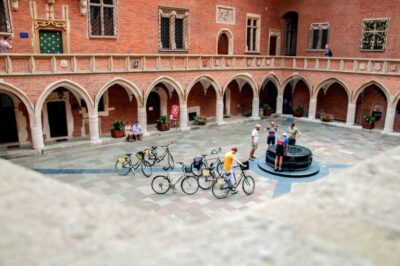 ★ 4.9Bike Tour of Old Town, Jewish Quarter and the GhettoFrom $371,155 reviews
 ★ 4.7POLIN Museum of the History of Polish Jews TicketFrom $121,142 reviews
 ★ 4.8Kazimierz, Schindler’s Factory & Ghetto Guided TourFrom $81460 reviews
 ★ 5.0Full Bike Tour – the Old Town, Jewish Qtr & the Ghetto NEW BIKESFrom $35437 reviews
 ★ 4.9Warsaw Ghetto Private Walking Tour with Hotel PickupFrom $84369 reviews
 ★ 4.9Bike Tour of the Old Town, Kazimierz, and the GhettoFrom $26350 reviews
Also on these Poland lists